Leave Your Message

China Top Vertical Axis Wind Turbine Manufacturers?

Choosing China’s top Vertical Axis Wind Turbine manufacturers requires more than comparing website rankings. The list changes. Company reputations, product designs, and export records develop every year. A reliable review should examine factory experience, engineering capability, testing procedures, and after-sales support. It should also separate proven performance from attractive marketing claims.

Vertical axis systems can suit locations with changing wind directions, compact sites, and turbulent urban airflow. Yet every project has different conditions. A 3-meter rooftop installation faces different risks from a coastal microgrid project. Buyers should request certified power curves, noise data, startup wind speeds, material specifications, and warranty terms. Factory audits can reveal assembly quality, blade balancing, corrosion protection, and generator consistency. These details matter. They affect maintenance costs and long-term output.

This guide will introduce notable Chinese manufacturers and explain how their strengths differ. Some may focus on small residential turbines. Others may provide hybrid solar-wind systems, commercial units, or customized engineering services. Claims should be checked against independent test reports, customer references, and documented installations. No shortlist is perfect. Public information can be incomplete, and production quality may vary between models. That is why careful comparison remains essential. The most suitable supplier is not always the largest one. It is the manufacturer that matches local wind conditions, project scale, budget, compliance requirements, and service expectations with clear evidence.

China Top Vertical Axis Wind Turbine Manufacturers?

Vertical Axis Wind Turbine Technology in China

China Top Vertical Axis Wind Turbine Manufacturers?

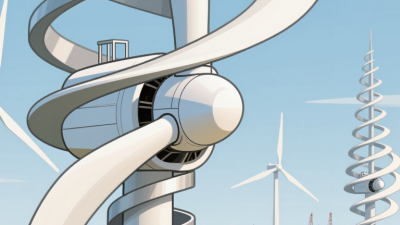
Vertical axis wind turbine technology in China is moving from experimental projects toward practical distributed energy systems. Unlike horizontal turbines, these machines accept wind from changing directions. This feature suits rooftops, coastal facilities, farms, and dense industrial areas. Some designs use curved blades, while others use bucket-shaped rotors. Each structure creates different starting torque, noise, and maintenance requirements.

Chinese manufacturers are improving permanent-magnet generators, lightweight composite blades, and intelligent power controllers. Field engineers often examine vibration, bearing temperature, and output changes during gusty weather. These details matter more than a polished product brochure. A turbine that starts at low wind speed may still produce limited energy in turbulent urban air. That weakness is easy to overlook.

Testing quality remains uneven. Some projects need longer outdoor trials before buyers can judge annual performance. Salt spray, ice, dust, and irregular wind can expose design problems quickly. Certification, structural calculations, and grid compatibility should guide any supplier evaluation. Manufacturers with transparent test data deserve greater attention than companies making broad efficiency claims. The technology is promising, but it is not magic. Real sites still decide whether a vertical axis system works.

Key Factors for Evaluating Chinese VAWT Manufacturers

When evaluating Chinese vertical axis wind turbine manufacturers, inspect evidence beyond polished brochures. A credible supplier should provide dated power curves, test conditions, noise measurements, and durability records. Ask how these figures were collected. Laboratory results may not represent coastal salt, mountain turbulence, or dusty industrial sites.

Factory experience is visible in small details. Check weld consistency, bearing protection, cable routing, and controller sealing. Request a video of assembly and a quality inspection report for a recent unit. Field references matter more than impressive capacity claims. Speak with operators who have monitored turbines through strong winds and seasonal temperature changes. This is where weaknesses appear.

Technical depth should match your project. Review rotor materials, overspeed protection, braking methods, generator efficiency, and remote monitoring functions. Ask whether the control system supports local grid requirements. Independent certifications can strengthen confidence, but verify their scope and validity. One certificate does not prove long-term performance.

Commercial reliability also deserves careful attention. Clarify production lead times, spare-part availability, warranty exclusions, installation support, and response procedures. A dependable manufacturer explains failures openly and documents corrective action. Be cautious when answers remain vague. I would compare at least three factories using the same technical checklist. My assessment could still be imperfect, especially when field data is limited. That uncertainty should appear in the purchasing decision, not be hidden.

China Top Vertical Axis Wind Turbine Manufacturers? Key Factors for Evaluating Chinese VAWT Manufacturers

The chart presents a practical 100-point procurement framework for evaluating VAWT manufacturers. The weighting emphasizes energy performance, structural reliability, manufacturing capability, compliance, and long-term service rather than company or brand names.

Evaluation framework: the percentages represent recommended assessment weights for an initial supplier comparison and should be validated against the project site, turbine design, applicable standards, and contract requirements.

Leading Chinese Vertical Axis Wind Turbine Manufacturers

China Top Vertical Axis Wind Turbine Manufacturers?

China’s leading vertical axis wind turbine manufacturers operate within a rapidly expanding wind industry. The Global Wind Energy Council’s Global Wind Report 2025 records 117 GW of new wind capacity worldwide in 2024. China contributed a major share of this growth. However, the report does not separate vertical axis systems from the wider market. That limitation matters.

Leading Chinese manufacturers should therefore be assessed through engineering evidence, not online rankings. Buyers should examine rated output, start-up wind speed, noise levels, vibration control, and performance in turbulent urban airflow. A compact rotor turning beside a warehouse is useful only if it produces stable energy over time. IEC 61400 testing, traceable component records, and independent power-curve measurements strengthen credibility. Factory visits can also reveal practical details, including weld quality, bearing protection, and maintenance access.

The International Renewable Energy Agency reported 4,448 GW of global renewable capacity by the end of 2024. Wind power remained a core contributor. Still, vertical axis turbines occupy a smaller and less documented segment. Claims of superior performance deserve careful verification. Some models look efficient in controlled tests but lose output at changing wind angles. That gap is easy to miss. A reliable Chinese supplier should publish long-term field data, realistic capacity factors, and clear warranty conditions. Procurement teams should remain cautious, because attractive specifications do not replace independent operating records.

China Top Vertical Axis Wind Turbine Manufacturers? - Leading Chinese Vertical Axis Wind Turbine Manufacturers

Evaluation Dimension Relevant Industry Information What to Verify from a Chinese Manufacturer Purchasing Significance
Product Architecture Vertical-axis wind turbines are mainly based on lift-driven Darrieus designs or drag-driven Savonius designs. Hybrid configurations may combine both operating principles. Rotor type, blade profile, operating principle, generator location, and whether the design is intended for grid-connected or standalone use. The architecture affects starting behavior, efficiency, noise, maintenance access, and suitable wind conditions.
Rated Power Configuration Chinese suppliers commonly offer small and distributed wind systems for residential, agricultural, telecom, lighting, monitoring, and microgrid applications. Rated power should not be compared without the rated wind speed. Rated power, rated wind speed, cut-in wind speed, cut-out wind speed, maximum permissible wind speed, and power-curve data. A lower rated wind speed can be more relevant than a higher nameplate rating at a low-wind site.
Generator Technology Permanent-magnet generators are widely used in small wind systems because they can operate without external field excitation and can be paired with power electronics. Generator type, voltage, phase configuration, efficiency curve, insulation class, protection rating, bearing arrangement, and thermal design. Generator efficiency and thermal management influence annual energy output and service life.
Power Electronics Variable-speed wind turbines normally require a rectifier, controller, inverter, or hybrid charge-management system to match variable generator output with the load. Controller topology, MPPT function, battery compatibility, inverter waveform, grid synchronization, overload protection, and remote monitoring options. The electronics determine system compatibility, energy quality, battery performance, and protection behavior.
Performance Evidence Annual energy production depends on the site wind-speed distribution, turbulence, air density, rotor height, wake effects, and the complete system power curve. Independent test reports, power curves, test conditions, measurement uncertainty, air-density assumptions, and the method used to calculate annual energy yield. A tested power curve is more useful for project planning than a maximum output figure alone.
Structural Design Vertical-axis machines transfer aerodynamic loads through the rotor and shaft assembly. Fatigue loading, vibration, and cyclic stress are important design considerations. Material specifications, shaft design, weld quality, fatigue analysis, rotor balancing, vibration limits, and structural safety factors. Structural reliability affects warranty risk, noise, maintenance frequency, and resistance to severe weather.
Safety and Protection Small wind systems require protection against overspeed, electrical faults, excessive wind, overheating, and abnormal vibration. Mechanical braking or electrical diversion load, emergency shutdown, overvoltage protection, grounding, lightning protection, and fault alarms. A complete protection package is essential for unattended or remote installations.
Standards and Certification IEC 61400-2 addresses the design requirements of small wind turbines, while IEC 61400-12-1 provides methods for measuring wind-turbine power performance. Applicable certificates, accredited laboratory reports, electrical safety documents, electromagnetic compatibility evidence, and conformity declarations for the destination market. Documentation requirements vary by country and may affect customs clearance, grid connection, and insurance approval.
Materials and Corrosion Protection Wind turbines installed in coastal or humid environments require suitable coatings, sealed electrical components, corrosion-resistant fasteners, and appropriate enclosure protection. Blade material, coating system, galvanization or paint specification, stainless-steel content, enclosure rating, and environmental operating limits. Environmental protection can significantly influence service life and maintenance costs.
Manufacturing and Quality Control Reliable production requires traceability of raw materials, dimensional inspection, generator testing, rotor balancing, electrical safety checks, and final-load testing. Quality-management certification, incoming-material inspection, production test records, serial-number traceability, and factory acceptance procedures. Documented quality control helps reduce variation between prototype performance and delivered units.
Installation Requirements Although vertical-axis turbines can accept wind from changing directions without yaw alignment, energy yield still depends strongly on installation height, turbulence, obstacles, and foundation design. Foundation drawings, tower or rooftop loading data, clearance requirements, cable specifications, lifting method, installation manual, and commissioning procedure. Correct siting and installation are necessary to achieve the supplier’s stated performance.
Noise and Vibration Noise and vibration are influenced by rotor speed, blade aerodynamics, bearing condition, structural resonance, generator design, and mounting method. Sound-pressure test data, measurement distance, rotational-speed range, vibration limits, balancing records, and rooftop mounting recommendations. This is especially important for residential, urban, hospitality, and rooftop projects.
After-Sales Support Long-term operation requires access to replacement bearings, controllers, generators, blades, fasteners, wiring, and technical troubleshooting. Warranty terms, spare-parts availability, response time, installation training, troubleshooting procedures, software support, and service coverage in the target market. Support capability can be more important than initial equipment price for remote or multi-unit projects.
Application Suitability Vertical-axis systems may be considered for distributed generation, hybrid solar-wind systems, battery charging, remote monitoring, agricultural facilities, coastal installations, and educational or demonstration projects. Site wind assessment, expected annual energy demand, local regulations, grid or battery interface, maintenance access, and total installed cost. The best supplier is determined by site conditions and system requirements rather than product rating alone.

Product Types, Applications, and Performance Comparison

China Top Vertical Axis Wind Turbine Manufacturers?

Product Types, Applications, and Performance Comparison

China’s vertical axis wind turbine manufacturers commonly produce Darrieus, Savonius, and hybrid designs. Darrieus turbines use curved blades and deliver higher efficiency at stronger wind speeds. Savonius models use scoop-shaped blades and start more easily in weak, turbulent airflow. Hybrid units combine both approaches. They suit locations where wind direction changes frequently. H-rotor designs are also available, often with straight blades and simpler maintenance access.

Applications vary by operating conditions. Small Savonius turbines can power streetlights, weather sensors, monitoring stations, and remote communication equipment. Hybrid turbines may support farms, coastal facilities, and low-rise buildings.

Urban installations need careful noise and vibration checks. Nearby walls can create turbulence, reducing output. Roof mounting looks convenient, but structural loading and maintenance space require professional review.

Performance comparisons should include rated power, cut-in speed, noise, vibration, swept area, and annual energy yield. A turbine rated at 5 kilowatts may produce far less energy at a low-wind site. Laboratory figures can mislead. Real-world data matters more.

Ask manufacturers for wind-class assumptions, power curves, material specifications, and endurance-test records. Check corrosion protection for coastal projects and bearing performance during cold starts.

My own comparison method would track monthly output for a full year. Short tests can hide seasonal weakness. Some product data remains incomplete, and that deserves honest scrutiny.

How to Select a Reliable Chinese VAWT Manufacturer

Choosing a reliable Chinese VAWT manufacturer requires more than comparing catalog prices. A polished brochure can still hide weak testing. Ask for the turbine’s rated power, cut-in speed, survival wind speed, noise data, and expected annual energy output. These figures should match your site conditions, not only laboratory results.

Request evidence of factory quality controls and product testing. Check whether the manufacturer follows relevant small wind turbine standards, such as IEC 61400-2, where applicable. Examine photographs of blade roots, welds, bearings, braking systems, and generator assemblies. A serious supplier should explain material grades, salt-spray protection, sealing methods, and maintenance intervals. It should also provide inspection records, load calculations, and a traceable serial-number system.

Visit the factory, if possible. Watch how blades are balanced and how electrical cabinets are tested. Speak with previous customers about delivery accuracy, faults, spare parts, and warranty response. Do not rely on one reference. Ask for a realistic performance estimate using your wind-speed data. This is where many buyers become overconfident. Low wind speed can make an attractive turbine financially disappointing. I would also clarify who pays for replacement bearings, remote troubleshooting, and on-site installation. A written contract matters. So does a practical after-sales team that answers technical questions clearly, even when the answer is inconvenient.