The 2026 search for top Vertical Axis Wind Turbine suppliers needs more than a polished product list. It requires evidence.
Global wind power reached approximately 1,133 GW by the end of 2024, according to IRENA’s Renewable Capacity Statistics 2025. GWEC’s Global Wind Report 2025 recorded more than 117 GW of new wind capacity added in 2024. However, most installations still use horizontal-axis machines. Vertical-axis projects remain a smaller, less standardized segment.
That difference matters.
The U.S. Department of Energy and NREL identify flexible wind-direction response as a potential advantage of vertical-axis designs. Urban turbulence, rooftop constraints, and offshore maintenance may create useful applications. Yet noise, fatigue loading, low starting torque, and limited commercial operating data remain serious questions.
Alexander M. Gorlov, the inventor associated with the helical turbine, described his concept as having blades “arranged in a helical form.” That geometry can smooth torque across each rotation. It does not automatically guarantee lower costs or higher annual energy production.
This supplier guide compares manufacturers through documented deployments, rated output, certification, warranty terms, service capacity, and transparent performance data. Claims without test conditions deserve caution. Some market reports also combine prototypes, small devices, and utility-scale turbines, which can distort comparisons.
The shortlist may not be perfect.
Still, it offers a practical starting point for developers, engineers, and buyers assessing the 2026 Vertical Axis Wind Turbine market. Each supplier should be judged against local wind speed, turbulence, installation height, grid requirements, and lifecycle economics.
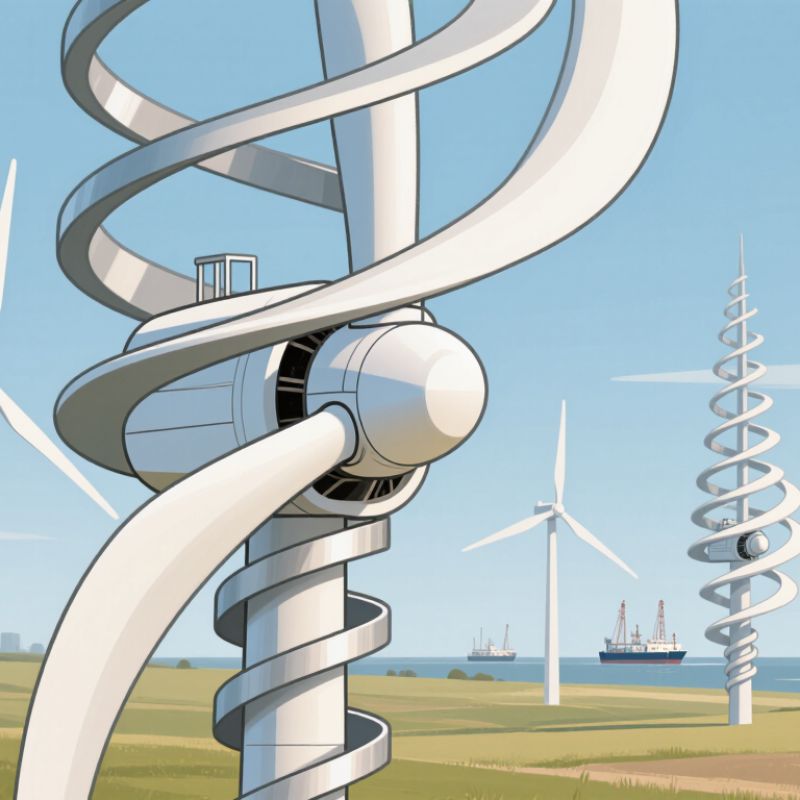
Vertical axis wind turbines are gaining attention in 2026 because they accept wind from changing directions. This suits urban roofs, coastal facilities, farms, and industrial sites with turbulent airflow. Unlike horizontal machines, many vertical designs keep the generator closer to ground level. That can simplify inspection and reduce crane dependence. However, lower installation height may also limit exposure to stronger winds.
Current technology is moving toward lighter composite blades, quieter bearings, and improved power electronics. Helical rotors can deliver smoother torque, while straight-blade systems may offer simpler manufacturing.
Small units increasingly connect with batteries, sensors, and hybrid solar systems. Field experience shows that turbulence is not automatically useful wind. Poor placement can increase vibration, noise, and maintenance costs.
The 2026 supplier market includes engineering firms, specialist manufacturers, and integrated energy contractors. Buyers should examine certified power curves, fatigue-test data, warranty coverage, and local service capacity. A compact turbine producing power at low wind speed sounds attractive, but test conditions require careful checking. Suppliers with transparent operating data deserve more confidence than those relying on dramatic peak ratings.
Installation permits, structural loading, bird impact studies, and grid-connection rules also affect project economics. Costs remain difficult to compare because foundations, controls, batteries, and maintenance are often excluded. Some market forecasts seem overly optimistic. Real projects still need twelve months of measured wind data.
2026 Top Vertical Axis Wind Turbine Suppliers?
Key Criteria for Evaluating Vertical Axis Wind Turbine Suppliers
Choosing a vertical axis wind turbine supplier requires more than comparing rated power. Examine the supplier’s engineering experience, turbine design, and documented field performance. Ask for data from sites with similar wind speeds, turbulence levels, and installation heights. A turbine performing well in a coastal test area may struggle on a turbulent urban roof. Check starting wind speed, noise levels, vibration control, maintenance access, and expected service life. Clear technical drawings matter too.
Reliable suppliers provide independent test results, safety documentation, warranty terms, and realistic energy estimates. Review the generator, bearings, braking system, and corrosion protection. Ask how technicians diagnose faults and how quickly replacement parts arrive. References from operating customers can reveal practical problems that brochures often omit. No supplier is perfect. That matters.
Tips: Request monthly production data, not only annual projections. Compare power curves under real conditions. Confirm who handles installation, inspections, software updates, and repairs. Read every warranty exclusion carefully. A low purchase price can become expensive when parts, cranes, or specialist labor are unavailable. Also evaluate grid connection requirements and local permitting support. Weak communication during the sales process may indicate future delays. Keep written records of every technical promise. Recheck assumptions before signing.
Leading Vertical Axis Wind Turbine Suppliers in 2026 are attracting interest in dense urban and coastal environments. Their systems use vertical blades, which can accept wind from changing directions. This may reduce yaw equipment and simplify installation. However, efficiency depends heavily on turbulence, tower height, and maintenance access.
The Global Wind Energy Council reported more than 117 GW of new wind capacity in 2023. IRENA recorded global wind capacity above 1,000 GW during the same period. These figures describe the entire wind sector, not vertical axis machines. That distinction matters. Vertical axis turbines remain a smaller, less standardized market. Public supplier rankings are still limited.
Reliable 2026 suppliers should provide measured power curves, fatigue testing, and independent field data. Look for projects operating through winter storms, salt exposure, and frequent start-stop cycles. A clear warranty also signals technical confidence. The U.S. Department of Energy emphasizes performance validation and lifecycle costs when assessing emerging wind technologies. Buyers should compare annual energy output, not only rated kilowatts. A compact turbine may look impressive on a rooftop, yet nearby buildings can create severe turbulence. That weakness is often underreported. Suppliers with transparent test methods deserve closer attention, even when their published output appears less dramatic.
This chart compares representative rated-power classes commonly used in published small and distributed vertical-axis wind turbine specifications. It presents technology capacity ranges rather than company or brand data.
Rated power is the maximum electrical output under specified wind conditions. Actual production depends on wind speed, turbine design, installation height, air density, and site conditions.
2026 Top Vertical Axis Wind Turbine Suppliers?
When comparing vertical axis wind turbine suppliers, start with design, not brochure power. H-rotor machines usually accept changing wind directions without yaw systems. Savonius designs offer stronger starting torque but often lower efficiency. Darrieus systems can reach higher aerodynamic performance, yet they may need assisted starting and careful structural control. Supplier data should show swept area, rated power, cut-in speed, noise, vibration, and measured capacity factor. The Global Wind Energy Council reported 117 GW of new wind capacity in 2024, but this figure mainly reflects large horizontal-axis projects. It does not validate small vertical-axis claims.
Performance depends heavily on location. Rooftops create turbulence, while coastal sites may provide cleaner airflow. Ask for independently monitored results, not only laboratory curves. IRENA’s Renewable Power Generation Costs report places new onshore wind near USD 0.033 per kWh in 2023, but that benchmark cannot be copied directly to vertical-axis systems. Smaller turbines often face higher costs per watt, added support structures, and more frequent maintenance. The comparison is imperfect. That matters.
Tip: Request a three-year cost model covering installation, inverter replacement, bearings, inspections, and downtime. Check whether testing follows IEC 61400-2 or an equivalent method. For farms, compare annual energy yield at your actual wind distribution. For buildings, examine rooftop loading, acoustic limits, access, and safety clearances. The strongest supplier is not always the cheapest. It is the one that publishes verifiable field data and admits performance limits.
| Anonymous Supplier Profile | Primary VAWT Design | Typical Rated Capacity | Rotor Configuration | Cut-in Wind Speed | Typical Rated Wind Speed | Indicative Capacity Factor | Noise and Visual Impact | Indicative Equipment Cost | Best-Fit Applications | Key Advantages | Key Limitations |
|---|---|---|---|---|---|---|---|---|---|---|---|
| Profile A — Commercial H-Rotor Supplier | Lift-based Darrieus H-rotor with fixed-pitch or variable-pitch blades | 10–100 kW per turbine | Two- or three-blade straight vertical rotor; direct-drive or geared generator | 3–5 m/s | 10–13 m/s | 20–35% at a suitable site | Low to moderate; no yaw system and compact visual profile | Approximately US$3,000–7,000 per kW for equipment only | Distributed commercial power, farms, industrial sites, remote microgrids | Higher aerodynamic efficiency than drag-based designs; accepts wind from any direction | Requires careful structural balancing, vibration control, and strong support bearings |
| Profile B — Helical Darrieus Supplier | Lift-based helical or twisted-blade Darrieus rotor | 1–30 kW per turbine | Two- or three-blade helical rotor with permanent-magnet generator | 2.5–4.5 m/s | 9–12 m/s | 15–30% at a suitable site | Low; smoother torque generally reduces cyclic loading and tonal variation | Approximately US$4,000–9,000 per kW for equipment only | Urban-edge sites, telecom stations, educational facilities, small commercial buildings | Smoother torque than many straight-blade rotors; omnidirectional operation | Blade manufacture can be more complex; turbulence and rooftop siting may reduce output |
| Profile C — Small Savonius Supplier | Drag-based Savonius rotor | 100 W–5 kW per turbine | Two- or three-bucket, half-cylinder or molded-profile rotor | 1.5–3 m/s | 7–10 m/s | 5–18% at a suitable site | Low; slow rotational speed and compact rotor dimensions | Approximately US$2,000–8,000 per kW for equipment only | Battery charging, sensors, signage, low-power lighting, small off-grid systems | High starting torque; simple construction; performs comparatively well at low wind speeds | Lower peak efficiency and energy yield than lift-based VAWTs; unsuitable for large power production |
| Profile D — Hybrid Lift-and-Drag Supplier | Combined Savonius starter with Darrieus lift rotor | 1–20 kW per turbine | Inner drag rotor and outer helical or straight-blade lift rotor | 2–4 m/s | 9–13 m/s | 12–28% at a suitable site | Low to moderate; depends on rotor diameter and operating speed | Approximately US$4,000–10,000 per kW for equipment only | Remote monitoring, distributed generation, rural facilities, hybrid solar-wind systems | Improved self-starting behavior with better peak efficiency than a pure Savonius rotor | More components, higher maintenance requirements, and added aerodynamic losses from the starter rotor |
| Profile E — Building-Integrated VAWT Supplier | Compact helical or modular Darrieus system designed for built environments | 300 W–10 kW per unit | Short-height rotor, often installed in arrays or on dedicated rooftop frames | 3–5 m/s | 10–14 m/s | 5–20% in favorable urban-edge conditions | Low to moderate; building turbulence can increase vibration and noise | Approximately US$5,000–15,000 per kW for equipment only | Commercial rooftops, campuses, transport facilities, low-rise industrial buildings | Compact footprint; no yaw mechanism; can complement photovoltaic installations | Rooftop wind is highly site-sensitive; turbulence, structural loads, and access can reduce economics |
| Profile F — Medium-Scale Remote-Power Supplier | Robust straight-blade or helical Darrieus system with battery and inverter integration | 20–150 kW per turbine | Steel-supported vertical rotor with permanent-magnet generator and power electronics | 3–5 m/s | 10–14 m/s | 18–32% at a suitable site | Moderate; foundation and tower design are important for vibration management | Approximately US$3,500–8,000 per kW for equipment only | Island grids, mines, agricultural processing, remote industrial loads, microgrids | Omnidirectional operation and potentially lower balance-of-plant complexity in changing wind directions | Limited availability of standardized large-scale components; site engineering is usually required |
Data basis: Values are indicative technology ranges for 2026 market screening and are not company quotations. Actual performance depends on wind-speed distribution, turbulence intensity, rotor height, air density, grid connection, foundation design, maintenance strategy, and local installation costs. Equipment-cost ranges exclude civil works, shipping, permitting, electrical interconnection, batteries, taxes, and commissioning.
Global wind capacity reached about 1,136 GW after a record 117 GW addition in 2024, according to the Global Wind Energy Council’s Global Wind Report 2025. This growth does not make every vertical axis wind turbine suitable for your site. A supplier should provide measured power curves, turbulence data, noise figures, and maintenance records. Marketing claims are not enough.
Check whether testing follows recognized requirements, such as IEC 61400-2 for small wind turbines and IEC 61400-12-1 for power performance measurement. Ask for results from conditions resembling your location. A rooftop beside a concrete parapet may experience swirling air, not smooth wind. That difference can sharply reduce annual energy output.
Study the supplier’s experience with similar installations, including coastal salt exposure, winter icing, and limited crane access. Request references, spare-parts lead times, warranty exclusions, and remote-monitoring details. The supplier should also explain expected annual energy using local wind-speed distributions, not only rated power. Rated power can look impressive.
Use an independent engineer to review the assumptions. I have found that simple payback calculations often ignore inverter replacement, access equipment, and lost production during repairs. That is an uncomfortable but necessary check. A reliable supplier welcomes site measurements, publishes limitations, and revises its forecast when the evidence changes.