What Is the Best Mobile Solar Light Tower in 2026?
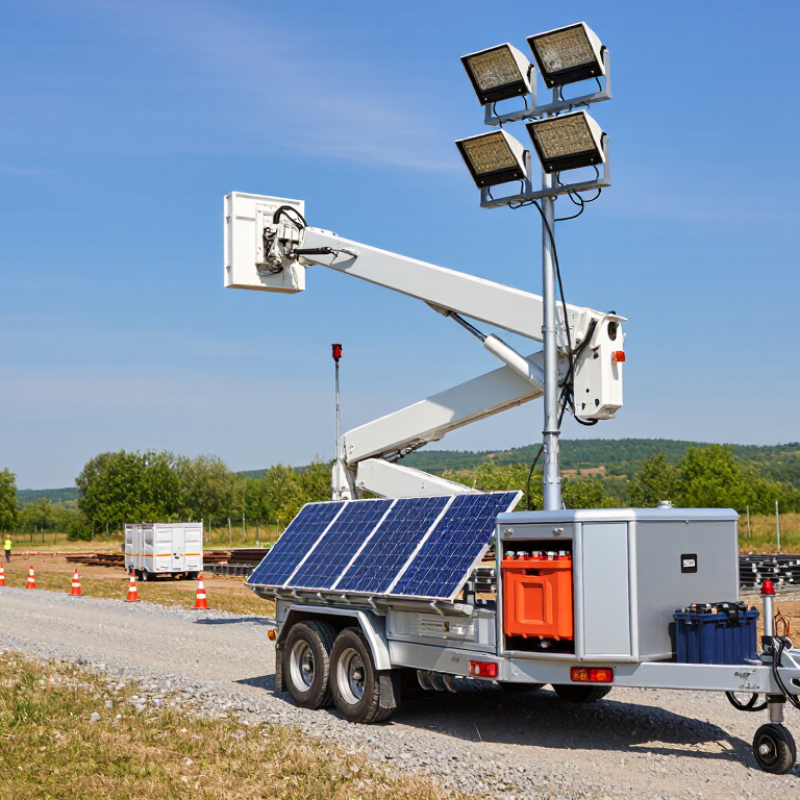
Choosing the best Mobile Solar Light Tower in 2026 means looking beyond advertised brightness. The International Energy Agency’s Renewables 2024 report says global renewable capacity additions reached nearly 510 gigawatts in 2023, with solar photovoltaic power accounting for about three-quarters. That growth supports a wider shift toward solar equipment, but it does not make every tower suitable for every site. A roadside repair crew, a construction yard, and an emergency work zone have different lighting needs.
The International Energy Agency’s World Energy Outlook 2020 quoted its Executive Director, energy economist Fatih Birol: “Solar PV is the new king of electricity markets around the world.” His remark concerns the broader energy market, not mobile lighting specifically. Still, it helps explain why buyers are taking solar-powered equipment more seriously. For a tower, the practical questions are more concrete: How many hours can it run after a cloudy day? Can one person tow and position it? Does the mast illuminate the work area evenly, without leaving dark corners?
Small details matter. Battery capacity, panel size, lamp output, charging time, and service access should be compared together, not in isolation. Not every site has reliable sun. A solar tower may need careful placement, and its real-world runtime can fall short of a brochure figure. That is worth admitting. This introduction sets up a grounded comparison of 2026 options, weighing operating performance, portability, durability, and total ownership costs against the conditions crews actually face.
Define Job-Site Lighting Needs with EN 12464-2 Illuminance Requirements
A mobile solar light tower is useful only when it provides suitable light across the actual work area. EN 12464-2 addresses lighting for outdoor workplaces and links requirements to specific tasks. A loading zone, pedestrian route, and detailed assembly area do not have identical needs. Small details matter.
Start by identifying the tasks, work boundaries, and operating hours. Then consult the relevant EN 12464-2 task category for maintained illuminance, uniformity, and glare considerations. Avoid choosing a tower from lumen output alone; that figure does not show how evenly light reaches the ground. Measure where people work, not just beneath the mast.
On site, place the tower and check illuminance across the task area with a suitable lux meter. Include edges, access routes, and spots where equipment may cast shadows. A quick reading can mislead. Recheck after repositioning the mast or changing the work layout. For a solar unit, also consider winter daylight, cloudy periods, battery capacity, and required nightly runtime. A tower that meets the target early in the evening may not maintain it through a full shift. Real sites change, and the lighting plan should be checked again.
What Is the Best Mobile Solar Light Tower in 2026?
Define Job-Site Lighting Needs with EN 12464-2 Illuminance Requirements
The chart shows selected values from the standardized illuminance scale, not task-specific EN 12464-2 requirements. Use the applicable standard tables and project risk assessment to set the required maintained illuminance for each work area. When comparing mobile solar light towers, also check uniformity, glare, mounting height, runtime, and battery performance.
Size Solar Panels and Batteries by Daily kWh Load and Runtime
Choosing a mobile solar light tower starts with the lights’ real daily energy use, not the panel’s advertised wattage. Check each fixture’s input power, then multiply total kilowatts by operating hours. For example, four 150-watt lights running eight hours use 4.8 kWh per night. Include controls and other electrical loads, too. Small details matter.
Size the battery for usable energy, not its label capacity. If you need one night of autonomy and plan to use only 80 percent of battery capacity, 4.8 kWh of lighting requires about 6 kWh nominal storage. More backup means a larger battery. It also means more weight on the trailer.
Then size the array around local peak-sun hours and system losses. With four peak-sun hours and a conservative 75 percent overall charging factor, replacing 4.8 kWh takes roughly 1.6 kW of panels. Cloudy weeks can change that estimate. Check seasonal sunlight, shading, battery limits, and actual runtime before choosing equipment. I would leave some margin; field conditions rarely match a neat worksheet.
What Is the Best Mobile Solar Light Tower in 2026? Size Solar Panels and Batteries by Daily kWh Load and Runtime
Sizing estimates assume 4.5 peak-sun-hours per day, 75% overall solar-system yield, lithium battery capacity limited to 80% usable depth of discharge, and a 10% allowance for system losses. Panel area is approximate at 200 W per square metre. Actual output varies with season, shade, temperature, panel orientation, and site conditions; allow additional capacity for cloudy periods or multiple nights of autonomy.
Verify IP65 Protection (IEC 60529) and Battery Safety (IEC 62619)
A mobile solar light tower works outdoors, where dust, rain, vibration, and hurried setup can expose weak points. Check that its stated IP65 rating refers to the complete assembled equipment, not only a separate light or battery enclosure. Under IEC 60529, the first “6” indicates dust-tight protection, while “5” covers water jets under defined test conditions. It does not mean the tower can be submerged or safely cleaned with every pressure washer.
Ask for an IEC 60529 test report that identifies the same model and configuration you plan to buy. Look closely at cable glands, door seals, connectors, and charging ports; these are easy to overlook. A gasket may look perfect and still be pinched after assembly. That detail matters. Also confirm that covers remain closed during operation and that the rating applies after normal installation, not just in a laboratory setup.
For the lithium battery, request documentation showing the battery system was evaluated to IEC 62619 for industrial applications. Check that the report matches the installed battery, and ask how its management system handles overcharge, overheating, and short circuits. Verify the permitted operating temperature, especially if the tower will sit in direct summer sun. A certificate helps, but it cannot replace clear documentation or sensible inspection.
Rank Options by Autonomy, Serviceability, and Cost per Operating Hour
What Is the Best Mobile Solar Light Tower in 2026?
A useful ranking starts with autonomy under real working conditions, not a best-case runtime claim. Compare hours of usable light at the brightness crews actually need. A tower that runs through a long shift with battery capacity left is more dependable than one that barely reaches dawn. Cloud cover, winter daylight, and dusty panels can change the result. Ask for test conditions. Not just a headline number.
Serviceability matters when a site cannot wait. Check whether batteries, lamps, and charge controllers are accessible with common tools. Clear fault indicators and replaceable parts can shorten downtime. Cost per operating hour should include purchase price, routine maintenance, battery replacement, and expected idle time. Divide that total by realistic operating hours over the equipment’s service life. The estimate will never be perfect; usage and weather vary. Still, consistent assumptions make comparisons fairer.
Tips: Track actual runtime, repair hours, and fuel-free operating days during a trial. Keep the log simple. A weekly note on cloud cover and light settings can explain why one tower performs differently. Don’t rank on price alone.