Quzhou Kingway Energy Technology Co., Ltd

Leave Your Message
When global buyers compare solar equipment, the Solar Inverter often deserves more attention than the panel name. It converts direct current into usable alternating current and manages the system’s daily stability. A weak choice can create heat, downtime, difficult repairs, or disappointing energy yields. Small details matter. This guide introduces leading manufacturers serving different markets, project sizes, and operating conditions. It avoids treating market visibility as proof of quality.
Reliable evaluation requires more than a polished website or an impressive efficiency figure. Buyers should examine independent test reports, warranty terms, service networks, software support, and replacement procedures. Certifications must match the destination market and the installation environment. A coastal project may need stronger corrosion protection, while a remote farm may prioritize remote diagnostics and simple maintenance. Installer feedback can reveal practical problems that brochures rarely mention. Still, field opinions are not universal evidence.
The manufacturers discussed here are considered through documented performance, product range, technical support, financial credibility, and long-term availability. No supplier is perfect. Even respected brands can face firmware issues, delayed parts, or regional service gaps. That is worth admitting. The best choice depends on grid rules, climate, battery plans, budget, and expected operating hours. Use this overview as a careful starting point, then verify current specifications and local support before signing a purchase agreement. This approach helps global buyers reduce risk and select equipment that performs beyond the showroom.
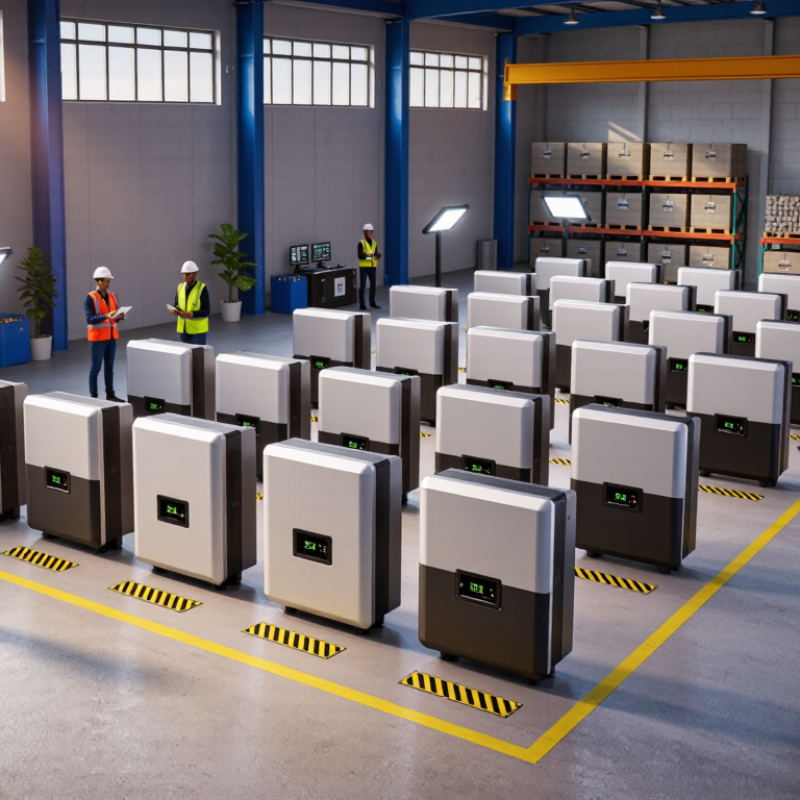
A solar inverter is the system’s electrical translator. It converts direct current from solar modules into alternating current for buildings and utility grids. Modern units also track maximum power, monitor faults, manage voltage, and support grid stability. Without this equipment, panels cannot deliver usable electricity.
The scale is substantial. The IEA PVPS Trends 2024 report recorded about 456 GW of new photovoltaic capacity in 2023, lifting global capacity above 1.6 TW. Every installation depends on inverters that operate safely across changing sunlight, heat, and grid conditions. Manufacturer quality therefore matters beyond the purchase price. Buyers should examine conversion efficiency, thermal design, protection functions, cybersecurity, warranty terms, and local service capacity. A clear testing record is valuable. Compliance with standards such as IEC 62109 and grid-connection requirements also reduces project risk.
Field conditions are rarely perfect. Dust collects on rooftops, voltage fluctuates, and firmware updates can be overlooked. A detailed specification sheet cannot predict every site problem. This is where experienced technical support and spare-parts planning become practical advantages. The IRENA Renewable Capacity Statistics 2025 report shows that solar capacity reached roughly 1,865 GW worldwide by the end of 2024. That growth increases the need for dependable after-sales support, not just higher nameplate efficiency. Still, “reliable” should remain a claim to verify through independent testing, failure data, and documented service response times. Some buyers focus too heavily on efficiency. That may be an incomplete decision.
| Evaluation Dimension | String Inverter | Central Inverter | Microinverter | Hybrid Inverter | Why It Matters to Global Buyers |
|---|---|---|---|---|---|
| Primary Function | Converts DC power from one or more photovoltaic strings into AC power. | Converts the combined DC output of a large solar array into grid-compatible AC power. | Converts DC to AC at or near each individual solar module. | Combines solar conversion with battery charging, discharging, and energy management. | The correct topology affects system design, installation cost, monitoring, and service requirements. |
| Typical Project Scale | Residential, commercial, and small utility-scale systems. | Large commercial and utility-scale solar plants. | Residential and small commercial systems, especially where module-level control is useful. | Homes and commercial sites requiring backup power or time-shifted energy use. | Manufacturers should offer product families that match the buyer’s target market and project size. |
| Module-Level Optimization | Limited; performance is generally managed at string or MPPT level. | Limited; plant-level design and string configuration are more important. | High; each module can operate more independently from neighboring modules. | Varies by architecture; may use string-level or module-level optimization. | Useful for roofs with shading, multiple orientations, or unavoidable module mismatch. |
| Common Peak Efficiency Range | Approximately 97%–99%, depending on design and operating conditions. | Approximately 98%–99%, depending on model and plant configuration. | Approximately 95%–98%, depending on module power and model design. | Typically lower than or comparable to standard PV conversion when battery charging and discharging are included. | Buyers should compare weighted or European efficiency, not peak efficiency alone. |
| Maximum Power Point Tracking | Usually provides multiple MPPT inputs to support separate roof orientations or strings. | Often uses multiple MPPT channels or a dedicated plant-level DC design. | MPPT is typically performed for each module or module pair. | May include PV MPPT plus separate battery control logic. | MPPT count and voltage range influence usable roof area and energy yield. |
| Battery Compatibility | Usually requires a separate battery inverter or compatible storage system. | May support plant-scale battery systems through separate power-conversion equipment. | Requires a compatible AC- or DC-coupled storage solution. | Designed specifically for integrated PV, battery, and energy-management functions. | Compatibility affects battery choice, backup capability, lifecycle cost, and future expansion. |
| System Monitoring | Typically string-level monitoring through a local interface or cloud platform. | Plant-level monitoring with data loggers, communications gateways, and SCADA integration. | Detailed module-level monitoring, subject to gateway and communications availability. | Monitors solar production, battery status, loads, grid flow, and backup operation. | Reliable monitoring reduces diagnosis time and supports remote operations across borders. |
| Installation Considerations | Requires correct string sizing, DC protection, ventilation, and accessible mounting. | Requires civil works, high-voltage design, plant controls, and specialized commissioning. | Requires module-level cabling, trunk connections, and appropriate communications equipment. | Requires coordinated design of PV, batteries, backup circuits, protection, and load management. | Installation support, manuals, training, and local technical partners are important manufacturer differentiators. |
| Grid and Safety Compliance | Must comply with the applicable country or utility requirements for anti-islanding, voltage, and frequency. | Must meet utility interconnection, power-quality, protection, and plant-control requirements. | Requires compliant module-level equipment and system-level protection. | Must comply with both grid-interactive and battery-storage safety requirements. | Valid certificates and local approvals are essential for legal installation and grid connection. |
| Climate Protection | Check the certified operating temperature, humidity, ingress protection, and corrosion resistance. | Check enclosure protection, cooling design, altitude rating, dust control, and service access. | Check rooftop temperature exposure, moisture protection, connectors, and long-term cable reliability. | Check both inverter and battery environmental ratings, ventilation, and thermal-management requirements. | Products should be matched to local heat, cold, humidity, salt mist, dust, and altitude conditions. |
| Manufacturer Selection Priorities | Product reliability, MPPT flexibility, service network, spare parts, and software support. | Bankability, utility references, plant controls, commissioning capability, and long-term service. | Module-level reliability, communications stability, replacement process, and installer training. | Battery interoperability, backup performance, firmware management, and lifecycle support. | A strong manufacturer combines tested products, transparent documentation, compliance evidence, warranty support, and regional after-sales service. |
Note: Efficiency ranges and product characteristics are typical market ranges and vary by model, operating temperature, system voltage, loading, certification requirements, and installation conditions.