Leave Your Message

2026 Best Solar Inverter for Global Buyers

Choosing the 2026 best Solar Inverter requires more than comparing efficiency figures. Global buyers must examine grid standards, operating temperatures, battery compatibility, monitoring tools, and local technical support. A model designed for Germany may not suit a rural installation in Kenya, Australia, or Brazil. Voltage ranges differ. So do certification requirements.

Fatih Birol, Executive Director of the International Energy Agency, said, “Solar PV is now the cheapest source of electricity in history.” His statement highlights solar’s growing importance, but affordable panels still need dependable power conversion. The Solar Inverter controls energy flow, protects connected equipment, and influences system performance every day. Small design choices matter. Cooling channels, MPPT accuracy, surge protection, and firmware stability can affect years of operation.

This guide evaluates leading inverter options through a practical global-buyer lens. It considers residential, commercial, hybrid, and off-grid applications. It also examines efficiency, warranty coverage, installation complexity, after-sales service, and independent reliability evidence. Real-world performance may differ from laboratory ratings. That deserves attention.

No single inverter is perfect. Some offer excellent software but limited service networks. Others provide strong hardware at a higher upfront cost. Buyers should verify installer qualifications, regional compatibility, replacement procedures, and documented safety certifications before purchasing. Prices and product availability can change quickly in 2026. Therefore, this comparison should support careful decisions, not replace professional electrical advice. Experiences from different climates may also challenge our assumptions. That is worth remembering.
2026 Best Solar Inverter for Global Buyers

Solar Inverter Basics and Its Role in a Solar Power System

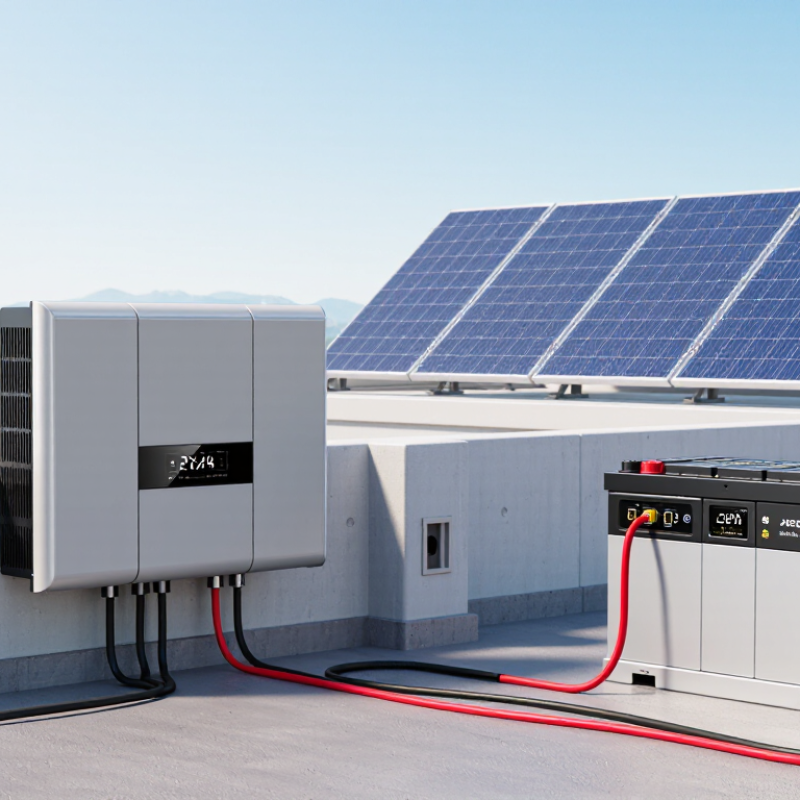
A solar inverter converts a photovoltaic array’s direct current into usable alternating current. It also synchronizes output with the grid, manages voltage, and records operating data. Without this conversion, household appliances cannot use the panels’ electricity. Modern inverters may include maximum power point tracking, fault detection, and battery controls. These features matter during cloudy mornings and sharp afternoon load changes.

Scale is growing quickly. The IEA PVPS Trends in Photovoltaic Applications 2024 report recorded about 407 GW of new photovoltaic capacity in 2023. Global installed capacity passed 1.4 TW. Every added system increases the need for reliable power conversion. NREL’s PVWatts modeling guidance uses inverter efficiency near 96%, showing why small conversion losses can become significant over many years. A two-percent loss sounds minor. It is not.

In field work, inverter selection starts with voltage, temperature, grid rules, and load behavior. A rooftop system in a hot desert needs different thermal planning than one in a cool coastal town. Check the inverter’s maximum input voltage at the site’s coldest temperature. Then check its continuous output under heat. Datasheets often present perfect conditions. Real roofs are rarely perfect. Oversizing the array can improve yearly production, but excessive oversizing may increase clipping and shorten useful flexibility. The choice deserves measurement, not guesswork.

Key Types of Solar Inverters for Different Global Applications

2026 Best Solar Inverter for Global Buyers

Key Types of Solar Inverters for Different Global Applications

In 2026, the best solar inverter depends on the site, grid, climate, and energy goals. A string inverter suits many homes with unshaded roof sections. It is cost-effective and easier to service when panels receive similar sunlight. However, one shaded panel can reduce output across its connected string.

Microinverters work beneath individual panels. They fit complex roofs, partial shading, and small systems that may expand later. They also provide panel-level monitoring, which helps technicians identify weak production. The extra equipment can raise installation costs. That trade-off deserves careful review.

Hybrid inverters connect solar panels, batteries, household loads, and the public grid. They are useful where outages occur or electricity prices change during the day. Off-grid inverters serve remote cabins, farms, and clinics with battery storage. Utility-scale projects often use central inverters because they handle high power efficiently. Yet central systems require careful thermal management and planned maintenance.

Real projects are rarely perfect.

A reliable selection process checks local grid codes, voltage ranges, frequency settings, protection functions, and required certifications. Installers should also examine humidity, dust, salt air, and winter temperatures. In field assessments, a technically powerful inverter can perform poorly when ventilation is restricted. Battery compatibility is another common oversight. Some systems support only specific voltage windows or communication protocols. Independent testing data and a clear service process matter more than impressive marketing figures.

2026 Best Solar Inverter for Global Buyers - Key Types of Solar Inverters for Different Global Applications

Inverter Type Best-Fit Application Typical System Size Typical DC Input / AC Output Typical Peak Efficiency Battery Compatibility Key Advantages Important Limitations
String Inverter Residential and small commercial grid-connected PV systems with relatively uniform roof orientation and limited shading. Approximately 3–100 kW per inverter, depending on the model and project design. Commonly supports high-voltage PV strings; AC output is usually single-phase for homes or three-phase for commercial sites. About 97%–99% Usually requires a separate battery inverter or an explicitly designed hybrid model. Good cost efficiency, simple maintenance, high efficiency, and easy expansion using multiple units. One shaded or poorly performing string can reduce the output of the connected MPPT circuit; roof design must be considered carefully.
Microinverter Residential rooftops with multiple roof orientations, partial shading, complex roof geometry, or small PV arrays. Typically 0.2–2.5 kW per unit, installed at individual modules or small module groups. Module-level DC conversion to AC; output is generally connected to a single-phase or three-phase building circuit. About 95%–97% Battery storage normally needs a separate AC-coupled or compatible storage system. Independent module-level optimization, improved monitoring, flexible design, and reduced impact from module mismatch. Higher equipment count and installation cost; rooftop electronics may experience greater heat and weather exposure.
Hybrid Inverter Homes and small businesses requiring solar generation, battery storage, backup power, and grid interaction in one coordinated system. Approximately 3–30 kW for many residential and light-commercial systems. Combines PV input, bidirectional battery connection, and AC grid/load output; voltage ranges vary by market and model. About 96%–98.5% Designed for direct connection to compatible high-voltage or low-voltage battery systems. Supports self-consumption, time-of-use shifting, backup circuits, and energy management with fewer major components. Battery voltage, communication protocol, backup rating, and grid-code compatibility must match the selected battery and local regulations.
Off-Grid Inverter / Charger Remote homes, telecommunications sites, agricultural facilities, islands, and locations without a reliable utility connection. Approximately 1–20 kW for many stand-alone systems; larger systems may use parallel units. Receives power from batteries and may include PV charge-control input or generator/utility AC input. About 90%–95% Requires a battery bank; common battery architectures include 12 V, 24 V, 48 V, and higher-voltage designs. Can supply loads without a utility grid and coordinate solar, batteries, and backup generators. System sizing must account for battery capacity, surge loads, seasonal solar availability, and generator support.
Central Inverter Utility-scale solar farms and large commercial plants with large, relatively uniform PV blocks. Usually hundreds of kilowatts to several megawatts per inverter station. Aggregates many PV strings into a high-power DC input and delivers medium-voltage AC through transformer equipment. About 98%–99% Battery storage is normally connected through a dedicated battery power-conversion system or an integrated utility-scale solution. High power density, efficient operation at large scale, centralized service, and potentially lower cost per watt. A central failure can affect a large PV block; DC collection, protection, ventilation, and service planning are critical.
Commercial Three-Phase String Inverter Factories, warehouses, retail buildings, schools, agricultural facilities, and distributed commercial rooftops. Approximately 20–125 kW per unit, with multiple inverters used for larger projects. Multiple MPPT inputs with three-phase AC output; commonly used with 400 V or 480 V class low-voltage distribution systems, subject to local standards. About 98%–99% May operate with AC-coupled storage or a compatible hybrid architecture. Scalable, easier to service than one large central unit, and well suited to multiple roof sections or electrical zones. Requires coordinated protection, export-control settings, and compliance with the commercial site's three-phase grid requirements.
Power-Optimized String System Rooftops with moderate shading, module mismatch, multiple orientations, or a need for detailed module-level performance monitoring. Approximately 3–100 kW per inverter, with module-level power electronics paired with a string inverter. Power optimizers condition DC at module or sub-string level before conversion to AC by the string inverter. About 96%–99%, depending on optimizer and inverter losses Usually requires a compatible storage inverter or designated hybrid configuration. Reduces mismatch losses, supports module-level monitoring, and retains much of the service simplicity of a string architecture. Adds components and installation steps; the optimizer and inverter must be electrically and digitally compatible.
Battery Energy Storage Inverter Commercial, industrial, and utility projects that use batteries for peak shaving, frequency support, backup, or renewable-energy shifting. From tens of kilowatts to multiple megawatts, often installed in parallel units. Bidirectional DC battery conversion to AC grid or load output; may be configured for low-voltage or medium-voltage connection. About 95%–99% per conversion stage Purpose-built for lithium-ion or other approved battery chemistries, subject to battery-management-system compatibility. Enables charging and discharging control, grid services, backup operation, and integration with solar or other generation. Project economics depend on battery capacity, cycle life, thermal management, interconnection rules, and energy-management software.

Performance figures and system sizes are representative industry ranges rather than universal specifications. Final selection should be verified against local grid codes, voltage and frequency requirements, certification rules, climate conditions, battery compatibility, and the project's electrical design.

Essential Features to Compare in the Best Solar Inverter

2026 Best Solar Inverter for Global Buyers
Essential Features to Compare in the Best Solar Inverter

Choosing the best solar inverter starts with real site conditions, not impressive packaging. Roof direction, shade, heat, and local grid rules can change performance. I would compare maximum efficiency, but I would not trust that number alone. Ask for the European or California efficiency rating, operating temperature range, and standby consumption. A model reaching high efficiency in a laboratory may perform differently on a dusty roof at 40°C.

MPPT design deserves close attention. Independent MPPT channels can manage panels facing different directions or receiving partial shade. Check the MPPT voltage window and maximum input current against the planned array. An oversized panel string can create clipping or shorten equipment life. Small details matter. Very much.

For battery systems, confirm usable voltage ranges, charging power, backup switching time, and battery communication protocols. Hybrid inverters should also support the intended export limits and islanding protection. Look for recognized electrical safety certifications, an IP rating suited to the installation area, and documented surge protection. Remote monitoring helps, but it should show daily production, fault codes, and historical data without hiding key information behind an account.

Warranty length is only one measure of reliability. Examine repair procedures, replacement timelines, and available technical support in the target country. I have seen buyers focus on peak output while overlooking weak ventilation and difficult maintenance access. That mistake is expensive. A careful comparison should include installation conditions, future battery plans, and realistic service availability, even when the final choice feels less powerful.

Global Standards, Safety Rules, and Grid Compatibility

Choosing the best solar inverter for global buyers in 2026 requires more than comparing efficiency percentages. Safety certification, grid behavior, and local approval often determine whether a system operates reliably.

Look for evidence of testing under IEC 62109 safety requirements. Anti-islanding performance should match IEC 62116 or the applicable national rule. Grid connection settings may follow IEC 61727, EN 50549, IEEE 1547, or another regional standard. These references are not interchangeable. A certificate must match the exact inverter model, firmware, and market version.

Check voltage and frequency ranges before purchase. A home in a 230-volt, 50-hertz region needs different settings from a 120-volt, 60-hertz installation. Confirm export limits, reactive power control, fault ride-through, and restart behavior with the utility. Ask for independent test reports, not only a sales datasheet. Details matter.

Practical inspections should include enclosure protection, cable glands, cooling paths, and emergency shutdown access. Dusty rooftops expose weak designs quickly. A high efficiency rating can still disappoint when ventilation is poor. I have seen project plans overlook firmware approval, causing avoidable commissioning delays. That mistake is easy to repeat. Buyers should also verify installer licensing, warranty support, and spare-parts access in the destination country. Local grid rules change, and older guidance may no longer be enough.

How to Choose the Right Solar Inverter for Your Market

Choosing the right solar inverter starts with the market, not the product brochure. IEA PVPS reported more than 1.6 terawatts of global photovoltaic capacity by the end of 2023. That scale hides major regional differences. Check grid voltage, frequency, phase configuration, and export rules before comparing efficiency figures. A unit designed for a 230-volt single-phase network may fail commercially in a 400-volt three-phase market.

Climate changes the decision. In hot regions, examine thermal derating, ventilation, and enclosure protection. Coastal projects need stronger corrosion resistance. High-altitude sites require careful cooling calculations. Fraunhofer ISE’s 2024 Photovoltaics Report places modern inverter efficiency near 98–99%. The remaining losses still matter on large arrays. For battery systems, verify voltage windows, communication protocols, emergency shutdown, and backup performance. IEC 62109 certification and local grid compliance should be documented, not merely claimed.

Service capacity often decides long-term value. Ask for local spare parts, repair procedures, monitoring access, and realistic warranty conditions. A practical commissioning check should include insulation resistance, MPPT behavior, temperature readings, and fault-history records. Do not rely on laboratory efficiency alone. A spreadsheet can miss unstable grids, dust, weak internet coverage, or delayed technical support. I would also question oversized equipment; it may look safer, yet low loading can reduce economic performance. The cheapest inverter is rarely the lowest-cost choice.

2026 Best Solar Inverter for Global Buyers

Key grid parameters to consider when selecting a solar inverter for different markets

Inverter compatibility depends on the local grid frequency, nominal voltage, and phase configuration. Most European, UK, and Australian residential systems use 230 V at 50 Hz, while the United States and Canada commonly use 120 V at 60 Hz. Japan commonly uses 100 V, with regional grid frequencies of 50 Hz or 60 Hz. Always confirm local electrical codes, interconnection rules, and certification requirements before purchase.