What Is the Best Lighting Tower Generator from China?
Choosing the best Lighting Tower Generator from China requires more than comparing wattage or factory prices. Construction sites need dependable light, stable power, safe lifting, and simple maintenance. A tower may illuminate a road at midnight, yet still fail if its mast jams or its alternator overheats.
Market evidence shows why careful selection matters. The United Nations Environment Programme’s 2024 Global Status Report for Buildings and Construction identifies buildings and construction as major energy and emissions contributors worldwide. This pressure is encouraging contractors to examine fuel consumption, LED efficiency, hybrid systems, and lower-noise operation. The International Energy Agency’s World Energy Outlook 2024 also highlights the accelerating shift toward cleaner and more efficient energy technologies. These trends influence modern site-lighting equipment, even when diesel remains practical for remote projects.
Performance must be verified against recognized standards. ISO 8528 provides a useful framework for generator performance and testing, while local emissions rules may include EU Stage V or U.S. EPA requirements. Buyers should request tested lux levels, engine documentation, fuel-consumption data, noise readings, and warranty terms. Supplier experience matters here. A reliable Chinese manufacturer should explain component brands, production testing, spare-parts access, and service response times without hiding limitations.
The “best” model is not universal. A highway project may need long runtime and wide coverage. A residential site may prioritize quiet operation and compact transport. Published market reports often use different definitions, so their growth figures should not be treated as exact truth. That is an important weakness. Real purchase decisions should combine report data, site trials, independent inspections, and transparent factory communication.
What Is a Lighting Tower Generator and How Does It Work?
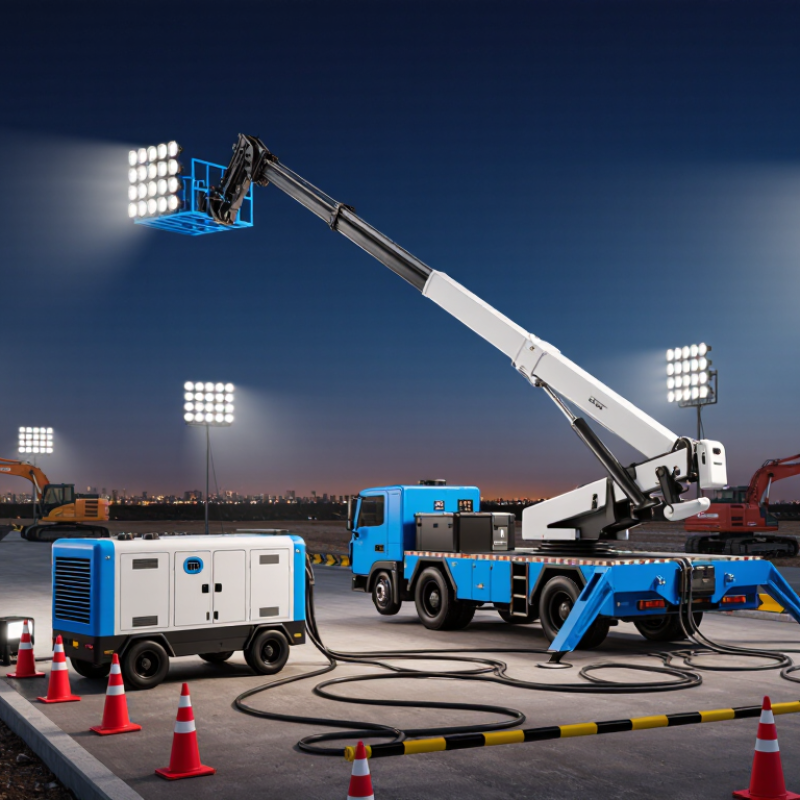
A lighting tower generator combines a power unit, alternator, mast, and lamps on one mobile frame. The engine burns fuel and turns the alternator. The alternator then produces electricity for the lighting system. Hydraulic or electric controls raise the mast, often above seven metres. Operators can illuminate roads, construction areas, emergency work zones, and outdoor events within minutes.
Lamp choice changes the machine’s real performance. The U.S. Department of Energy reports that LED lighting uses at least 75% less energy than incandescent lighting and can last up to 25 times longer. This matters because lower electrical demand allows a smaller generator, reduced fuel use, and longer nighttime operation. UNEP’s United for Efficiency programme also identifies lighting as roughly 15% of global electricity consumption. These figures are not tower-specific, but they explain why efficient lamps matter.
From practical inspections, stability deserves equal attention. A bright tower is not automatically a safe or economical tower. Buyers should check wind-rating data, mast locking systems, grounding, fuel autonomy, noise readings, and service access. A Chinese unit may offer strong value, but factory claims need independent test records. Ask for measured lux levels, not only lamp wattage. One weakness remains easy to miss: published fuel consumption often reflects ideal laboratory loads. Real sites are colder, uneven, and poorly maintained. That gap deserves honest calculation.
Which Features Define a High-Quality Chinese Lighting Tower Generator?
A high-quality Chinese lighting tower generator should begin with dependable illumination, not impressive claims. In field use, LED fixtures should provide even light across work areas, with minimal glare and dark corners. Adjustable light heads help crews direct beams toward roads, equipment, or elevated platforms. A practical tower should also extend smoothly and lock securely in windy conditions.
The generator itself needs stable output, efficient fuel use, and simple controls. A diesel engine with strong cooling performance can support long night shifts, especially in humid or dusty environments. Check the fuel tank size carefully. More capacity can reduce refueling, but it also increases transport weight. That trade-off is easy to overlook. Automatic shutdown protection should monitor low oil pressure, overheating, and overload conditions. These safeguards protect both workers and equipment.
Mobility is another defining feature. A reinforced frame, balanced lifting points, and reliable brakes make relocation safer on uneven ground. Inspect welds, cable connections, and access panels before purchase. Service access matters when filters or lamps need replacement at a remote site. Noise levels should also be verified through measured data, not vague descriptions. No generator is perfect. Some units offer excellent brightness but compromise on compactness or operating noise. Buyers should compare tested performance, spare-part availability, technical documents, and warranty response. A trustworthy supplier welcomes these questions and provides clear answers.
How Do Chinese Lighting Tower Generators Compare by Power and Fuel Type?
Chinese lighting tower generators vary mainly by output, duty cycle, and fuel type. Most diesel models serve between 3 and 10 kW continuously. Larger units may reach 12 kW, but buyers should check prime power, not standby power. A 5 kW diesel unit often consumes about 0.8 to 1.3 litres per hour at medium load. Actual use changes with lamps, battery charging, wind, and maintenance. The U.S. Energy Information Administration reports diesel fuel at roughly 137,000 Btu per gallon, compared with about 120,000 Btu for gasoline in its Monthly Energy Review. This difference supports diesel’s stronger endurance, though it does not guarantee lower operating cost.
Gasoline lighting towers usually suit short projects and lighter transport. They commonly deliver about 2 to 6 kW. Refuelling is simple, but consumption can rise sharply under continuous heavy loads. Hybrid units combine a smaller engine with batteries, often reducing engine runtime during quiet periods. Solar-assisted models produce cleaner site lighting, but cloudy weather and winter hours remain practical weaknesses. The International Energy Agency reported strong global growth in battery storage during 2023 and 2024, yet site lighting still needs careful capacity planning. Battery-only designs may struggle with twelve-hour shifts.
I would compare fuel consumption at 50%, 75%, and full load. Catalogue figures can look excellent. Field results may not. Check ISO 8528 ratings, tank autonomy, lamp wattage, noise data, and cold-start performance before choosing the best Chinese configuration.
How Can You Evaluate Performance, Safety, and Long-Term Value?
What Is the Best Lighting Tower Generator from China?
A strong lighting tower should be judged by measured performance, not catalog brightness. The IEA’s Electricity 2024 report expects global electricity demand to grow by about 4% in 2024 and 2025. Temporary power will therefore face heavier use and tighter fuel budgets. Request test data at 25%, 50%, 75%, and 100% load. Check lux readings at several distances, engine response, fuel consumption, and voltage stability. A 6,000-watt lamp is meaningless if light falls sharply at the worksite edge.
Safety needs physical evidence. ISO 8528-5 provides guidance for generator performance and load response, while IEC 60529 defines protection levels through IP ratings. Ask for the exact IP test result, emergency-stop function, grounding method, cable protection, and mast locking system. Inspect the unit running, if possible. Listen for unstable speed, smoke, or excessive vibration. The European Environment Agency’s noise guidance shows why site exposure matters; a small decibel increase can feel surprisingly harsh near workers.
Long-term value includes service access, spare-part availability, battery life, and corrosion protection. Calculate total cost using fuel burn, oil changes, transport, and expected operating hours. I once focused too heavily on purchase price. That was a mistake. A cheaper tower may lose value through weak welds, poor seals, or difficult maintenance. Require independent factory inspection, serial-number traceability, and a documented endurance test. Supplier promises are useful, but records are better.