Leave Your Message

What Is a Hydraulic Excavator Used For?

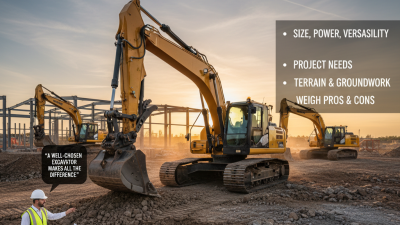
A Hydraulic Excavator is more than a machine for digging holes. On a busy site, its boom reaches over a truck, its bucket cuts into compacted soil, and its tracks steady the machine on uneven ground. Contractors use excavators for trenching, foundation work, grading, demolition, material handling, and quarry operations. The exact attachment matters: a narrow bucket suits utility trenches, while a breaker can tackle concrete. Small choices change the work.

The scale of excavation is easy to underestimate. The U.S. Geological Survey’s Mineral Commodity Summaries reports substantial U.S. production of construction sand and gravel, materials used in roads and buildings. Extracting and moving those materials requires coordinated digging, loading, and hauling. Caterpillar’s Performance Handbook also details how machine size, reach, bucket capacity, and operating conditions affect performance. These sources offer useful context, but they do not make every job predictable. Ground conditions can change within a few metres.

A Hydraulic Excavator’s value comes from matching its configuration to the task, not simply choosing the largest machine. Operators consider digging depth, lift capacity, access, and the material’s weight. A machine that fits the site can reduce unnecessary repositioning and keep trucks moving. Still, specifications are not the whole story. Poor ground, limited visibility, or an attachment mismatch can slow work. The machine is powerful, but not magical. Understanding its uses means looking at both what it can do and what the site demands.
What Is a Hydraulic Excavator Used For?

Hydraulic Excavators: Main Components and Working Principles

A hydraulic excavator turns engine power into controlled movement through a pump, valves, cylinders, and motors. The pump sends pressurized oil through hoses; control valves direct it to the boom, arm, and bucket cylinders. Extending a cylinder pushes metal sections outward, while retracting it pulls them back. A swing motor rotates the upper structure, and travel motors drive the tracks. The operator feels the system through the controls, but oil temperature and leakage can quietly affect response. Small details matter.

SAE International’s J1179 standard specifies how excavator bucket digging force is measured, giving engineers a consistent way to compare performance. Force depends on cylinder pressure, cylinder area, and linkage geometry—not engine power alone. Hydraulic-fluid cleanliness also matters: particles can wear pump surfaces and make valve movement less precise. The U.S. Department of Energy’s guide, Improving Pumping System Performance, notes that pumping systems can account for nearly 20% of electricity use in some manufacturing facilities. That figure is not an excavator efficiency rating, but it shows why pump losses deserve attention. In the field, operators may notice heat before they notice reduced digging speed. The system is powerful, yet not perfectly efficient.

Primary Digging and Earthmoving Applications

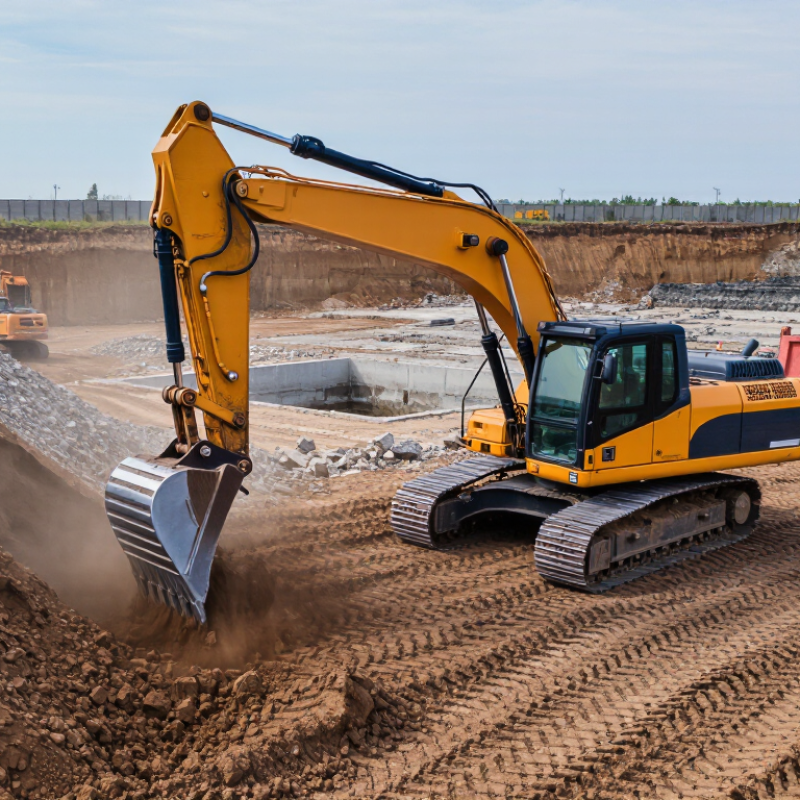
A hydraulic excavator is used to break ground, remove soil, and move it where a job requires. Its boom, arm, and bucket work together, powered by hydraulic pressure. The operator can dig a deep trench or skim a thin layer from the surface by adjusting the bucket’s angle and reach. It sounds straightforward, but uneven ground can make a clean cut harder than expected.

On construction sites, excavators dig foundations, drainage channels, and utility trenches. They also load loosened earth into trucks or place it in a nearby pile. For broader earthmoving, a machine can strip topsoil, shape slopes, and clear material from a work area. A grading bucket helps spread soil more evenly, though it does not replace careful surveying. Small changes in the ground can affect the final level.

The bucket choice and machine position matter. A narrow trench bucket can reduce over-digging, while a wider bucket moves more material per pass. Operators need to watch for buried services and keep the machine stable on soft or sloped ground. The best approach is not always the fastest one. Wet clay, for example, may cling to the bucket and slow loading.

Construction, Mining, and Demolition Uses

A hydraulic excavator is used on construction sites to dig foundations, shape drainage channels, and move soil. Its boom, arm, and bucket work together through hydraulic power, allowing operators to reach below and beside the machine. A narrow trench may need a smaller bucket for accurate digging. For larger earthworks, a wide bucket can shift more material with each pass. The ground still matters: soft, uneven soil can affect stability and productivity.

In mining, excavators remove overburden and load blasted rock or ore into haul trucks. On a dusty bench, the operator must keep the truck positioned safely and avoid spilling material around its tires. Machine size and bucket capacity should match the site and the haul fleet. Bigger is not always better. Excessive machine weight can create access and ground-pressure problems, while dust and abrasive material increase wear on components.

During demolition, an excavator may use a hydraulic breaker to fracture concrete or a shear to cut structural material. Crews often work in planned stages, keeping people clear of the machine’s swing area and controlling dust near the work zone. Attachments make the machine adaptable, but they do not make every structure safe to approach. Operators can misjudge reach, especially on uneven ground; careful positioning and repeated checks remain essential, even when the task seems routine.

What Is a Hydraulic Excavator Used For? - Construction, Mining, and Demolition Uses

Work Area Typical Tasks How the Excavator Is Used Common Attachments Key Considerations
Building and general construction Excavating foundations, digging trenches, moving soil, and loading material into haul trucks. The boom, arm, and bucket dig and lift earth; the upper structure can rotate to place material beside the machine or into a vehicle. General-purpose bucket, trenching bucket, grading bucket, hydraulic thumb. Select machine size and reach to suit the excavation and site access. Check underground utilities and keep the machine on stable ground.
Road and utility work Preparing roadbeds, shaping ditches, installing drainage, and excavating for water, sewer, or other utility lines. Operators dig to the required line and grade, place excavated material nearby, and help with backfilling and site preparation. Trenching bucket, grading bucket, compaction attachment, hydraulic breaker. Protect buried services, manage traffic and pedestrian access, and use suitable trench-protection measures where required.
Mining and quarrying Loading blasted rock or soil into haul trucks, removing overburden, and handling material around a pit or quarry. Larger excavators are used for repeated digging and truck loading; the bucket capacity and machine configuration are matched to the material and haul fleet. Heavy-duty digging bucket, rock bucket, specialized material-handling attachment. Ground conditions, rock abrasiveness, bench geometry, truck positioning, and visibility affect safe and productive operation.
Demolition Breaking concrete, dismantling structures, sorting debris, and loading rubble for removal. Standard excavators can perform ground-level demolition and debris handling. Purpose-built high-reach machines are used for selected elevated demolition work. Hydraulic breaker, concrete pulverizer, demolition shear, grapple. Use attachments suited to the material and machine. Establish an exclusion zone and follow a planned demolition sequence; high-reach work requires specialized equipment and procedures.
Land clearing and site preparation Removing stumps, moving brush and soil, clearing debris, and preparing ground for construction. The excavator uses its bucket or an appropriate attachment to pull, lift, sort, and relocate material. Grapple, rake, bucket, hydraulic thumb. Check for buried hazards and unstable ground. Use attachments compatible with the excavator and the material being handled.

Specialized Attachments for Different Tasks

A hydraulic excavator becomes more useful when its attachment matches the material and the job. A digging bucket handles soil and trenching; a wider grading bucket shapes a driveway or smooths a slope. For broken concrete, a hydraulic breaker delivers repeated impacts through its tool point. The cab vibrates. Dust rises. That work needs careful control, not just more power. A grapple can sort branches, rock, or demolition debris, while an auger drills holes for posts and foundations.

The scale of material handling is substantial. The U.S. Geological Survey’s Mineral Commodity Summaries 2024 estimated U.S. construction sand and gravel production at about 960 million metric tons in 2023. That figure helps explain why bucket capacity and wear matter at pits and construction sites.

But a bigger attachment is not automatically better. Operators and site managers should check hydraulic flow, pressure, machine lift limits, and coupler compatibility before fitting one. An undersized breaker may work slowly; an oversized tool can strain the carrier.

Small details matter. Tooth wear, for example, can change how cleanly a bucket cuts. Attachment choice also depends on ground conditions, operator skill, and the space available. A spec sheet cannot show every awkward corner.

Job-Site Factors That Shape Excavator Use

What Is a Hydraulic Excavator Used For?

Job-Site Factors That Shape Excavator Use

An excavator’s best use depends on the ground, available space, and work planned for the day. In loose soil, a wider bucket may move material quickly, while compacted ground can call for a narrower bucket and slower passes. Wet clay changes the equation. Tracks may sink, and spoil piles can become difficult to manage.

Access matters as much as digging power. On a tight urban site, the machine needs room to turn without striking fences, parked equipment, or exposed services. Before digging, crews should confirm where buried utilities run and set clear exclusion zones. A machine with a long reach can work across a wider area, but it may feel less steady when lifting heavy loads at full extension. Close work is often safer and more controlled.

The job also shapes the attachment and machine size. A trench for drainage needs a different bucket from a broad foundation cut, and hauling distance affects how efficiently excavated soil can be moved. Rain, slope, and nearby structures may limit where the machine can travel or swing. Small details matter. Planning can still miss a soft patch or an awkward truck position; checking conditions as work progresses helps crews adjust rather than force the original plan.