10 Best Mobile Air Compressors for 2026
Choosing a Mobile Air Compressor is not just a horsepower decision. The right model must deliver steady airflow, start reliably, and fit the worksite. A tire repair bay needs different performance from a remote construction crew. Weight, tank capacity, noise, and power source matter, too.
The U.S. Department of Energy’s Improving Compressed Air System Performance sourcebook notes that compressed air can account for about 10% of industrial electricity use, with higher shares at some facilities. That figure concerns industrial systems, not portable units alone. Still, it highlights why efficiency and correct sizing deserve attention. Compressed-air auditor Ron Marshall’s practical guidance can be distilled into one useful line: “Measure demand before buying horsepower.” This is a paraphrase, not a verbatim quotation.
This 2026 guide compares ten mobile compressors by practical criteria: airflow, portability, durability, operating noise, and value. It also considers the details buyers notice on a real job: fitting a unit into a vehicle, reaching a distant work area, and keeping tools running without frustrating pressure drops. No single model wins every task. A compact unit may be easier to move, yet struggle with sustained tool use. That trade-off is easy to miss in a spec sheet. The rankings aim to make those compromises clearer, while recognizing that published specifications cannot replace hands-on testing.
How Mobile Air Compressors Work and Where They Are Used
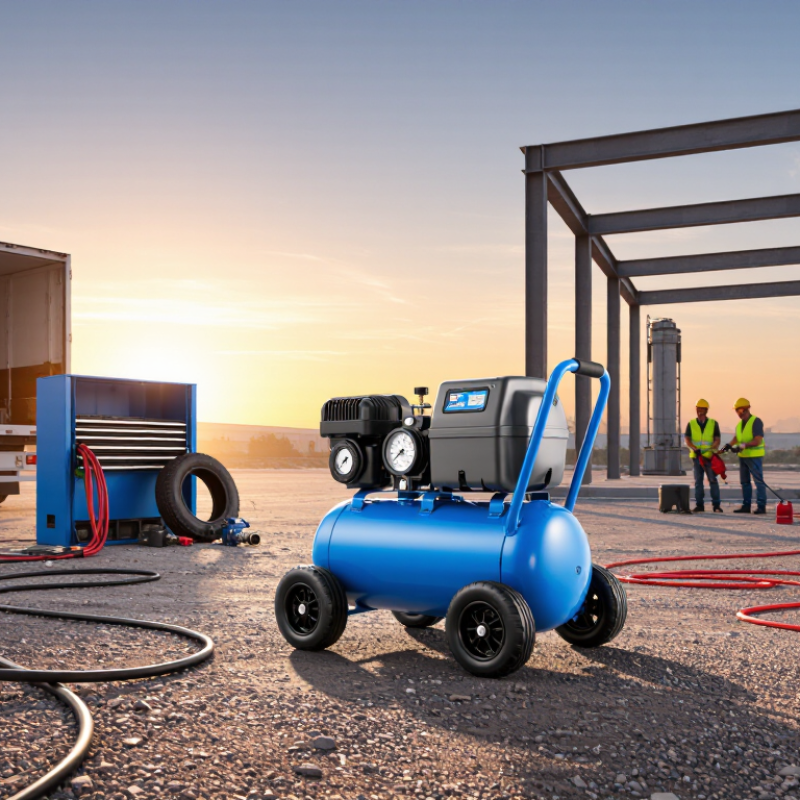
A mobile air compressor turns mechanical power into stored, pressurized air. An engine or electric motor drives a pump, which draws in ambient air and compresses it. The receiver tank buffers short bursts; a regulator and hose deliver air at usable pressure. When a tool consumes air, pressure falls, and the pump cycles to restore it. That is the basic loop. Condensation can collect inside the tank, so draining it and checking filters matter.
On a road crew, a compressor may inflate tires, run impact tools, or power nailers and spray equipment. Service vans use smaller units for roadside repairs; construction crews may need higher airflow for several tools. A machine’s pressure rating alone can mislead. Match its airflow, measured in CFM or L/min, to the tool’s demand and duty cycle. Short hoses and clean fittings help; undersized lines can make a capable unit feel weak. Not always obvious.
The U.S. Department of Energy’s guide, Improving Compressed Air System Performance, puts compressed air at roughly 10% of U.S. industrial electricity use. That figure describes industrial systems overall, not mobile compressors alone. Portable units still benefit from leak checks, well-matched tools, and sensible idle time. Output ratings can vary with pressure, temperature, and testing conditions. Compare specifications carefully: real job-site demand rarely stays constant.
Types of Mobile Air Compressors Available in 2026
Portable air compressors in 2026 fall into several practical types. Reciprocating, or piston, units suit short tasks such as inflating tires, trim work, and occasional tool use. They cycle on and off, so tank size and recovery time matter. Small electric models are easier to carry indoors; larger towable units trade portability for higher airflow. A heavy unit is still mobile, technically.
Rotary screw compressors are designed for steadier, extended air demand on work sites. The Compressed Air and Gas Institute’s technical handbook distinguishes screw and reciprocating designs by their operating principles and typical duty profiles. For buyers, compare delivered airflow at the required pressure, not just the tank volume. The U.S. Department of Energy’s 2016 compressed-air sourcebook reports that compressed air can account for about 10% of industrial electricity use. That makes power demand and leaks worth checking, even on a mobile setup.
Power source adds another distinction: battery, corded electric, and fuel-powered towable models. Battery units can reduce setup hassle for brief, lighter jobs, but runtime and recharge time constrain use. Electric towables avoid onsite fuel use where suitable power is available; fuel-powered units offer greater independence from outlets. The categories blur. A contractor moving between indoor finishing and outdoor roadwork may need different machines, despite both being called “mobile.” Check noise, weight, outlet access, and the tool’s actual air consumption before choosing.
Key Features to Compare Before Choosing a Model
Before comparing mobile air compressors, check the tools you plan to run. Maximum pressure matters, but airflow, measured in CFM, often determines whether a nailer or tire inflator works smoothly. Numbers can mislead. Compare airflow at the pressure your tool requires, not just the largest figures on a product label. Also confirm the power source suits your worksite, whether that means a vehicle outlet, a rechargeable battery, or household power.
Portability involves more than weight. Look at handle shape, wheel size, and whether the unit fits behind a car seat or in a crowded service van. A small tank is easier to carry, but it may make the motor restart more often during longer tasks. Check the duty cycle, too. A compressor that needs frequent cooling breaks can slow a busy repair session. That trade-off is annoying.
Gauge readability and hose length are easy to overlook. A clear gauge helps when setting tire pressure in dim light, while a longer hose can keep the compressor on the ground instead of balanced on a curb. Consider noise if you work indoors or near other people. Cold mornings may affect battery performance and startup, so check the manual’s operating range. Honestly, a compact model can still feel awkward when its fittings are hard to reach. Examine those details before choosing.
Ten Best Mobile Air Compressors for 2026 by Use Case
For 2026, the best mobile air compressor depends on the job, not a universal ranking. Roadside tire inflation favors a compact unit with a clear pressure gauge and easy battery or vehicle-power access. Framing and roofing crews need stronger airflow and fast recovery. Trim work and finish spraying call for steadier output, while fleet, farm, and remote-site maintenance benefit from durable tanks, practical handles, and dependable power options. Ten useful buying categories include these tasks, plus motorcycle tires, emergency service, and multi-tool crews. A neat ranking can still mislead.
Check delivered airflow at working pressure, not just the highest pressure printed on a label. Tank size affects stored air, but recovery speed matters when tools run continuously. Also compare weight, noise, duty cycle, hose reach, and power needs against the actual worksite. The U.S. Department of Energy’s Improving Compressed Air System Performance guide estimates that leaks can waste 20–30% of compressor output in industrial systems. That figure does not predict mobile-unit performance, but it shows why fittings and hoses deserve attention.
Tips: Test the compressor with your intended tool before a long shift. Listen for leaks. Note how quickly pressure returns. For remote work, check whether the power source and extension setup suit the site. Small details count. I would still leave room for imperfect conditions: cold weather, a long hose, or back-to-back jobs can change what feels like the “best” choice.
Safe Operation and Basic Maintenance Practices
A mobile air compressor should sit on firm, level ground, away from standing water and loose debris.
Before starting it, inspect the power cord, hose, couplings, and pressure gauge for cuts, cracks, or loose connections. Never skip this check. Confirm that the tool or tire’s pressure requirement stays within the compressor’s rated limit, then adjust the regulator before opening the air supply. Wear eye protection, and keep the nozzle pointed away from people. The air stream can carry grit with surprising force. Leave space around the motor and cooling vents, especially during long jobs.
Switch off and unplug the unit before disconnecting accessories or cleaning it. Follow the manual’s instructions for releasing stored pressure and draining moisture from the tank; trapped water can encourage corrosion.
Small checks matter.
After the compressor cools, inspect the air filter and fittings, and clear dust from the vents with a suitable method. It is tempting to trust a familiar machine, but that confidence can make a worn hose easy to overlook. Respect the stated duty cycle, too. A brief pause is cheaper than an overheated motor or a damaged seal.