Leave Your Message

China Top 10 Wind Turbine Manufacturers for Global Buyers

China’s wind industry spans global-scale developers and manufacturers with distinct strengths. This guide compares ten Chinese Wind Turbine makers for buyers assessing projects across different markets. Aerodynamicist Albert Betz’s work is often paraphrased this way: “No turbine can capture all the wind’s energy.” That limit matters. Rated output alone cannot tell buyers how a machine will perform at a particular site.

The comparison considers turbine platforms, operating track records, export experience, service networks, and the clarity of available technical information. Buyers should also examine rotor diameter, hub height, power curves, grid compatibility, and maintenance plans. A turbine designed for steady coastal winds may not suit a turbulent inland ridge. Small details matter: crane access, spare-parts lead times, and technician coverage can shape a project’s real costs. Names to watch include Goldwind, Envision, Mingyang, Windey, Sany, Shanghai Electric, Dongfang, CRRC, United Power, and CSSC Haizhuang. Their offerings and international reach change over time, so this list is a guide, not a permanent ranking. And public product data cannot replace independent engineering review. That limitation deserves attention. A strong manufacturer on paper may still be a poor match for one site. The sections ahead give global buyers a practical starting point, while leaving room for project-specific questions.
China Top 10 Wind Turbine Manufacturers for Global Buyers

China’s Wind Turbine Industry and Its Global Role

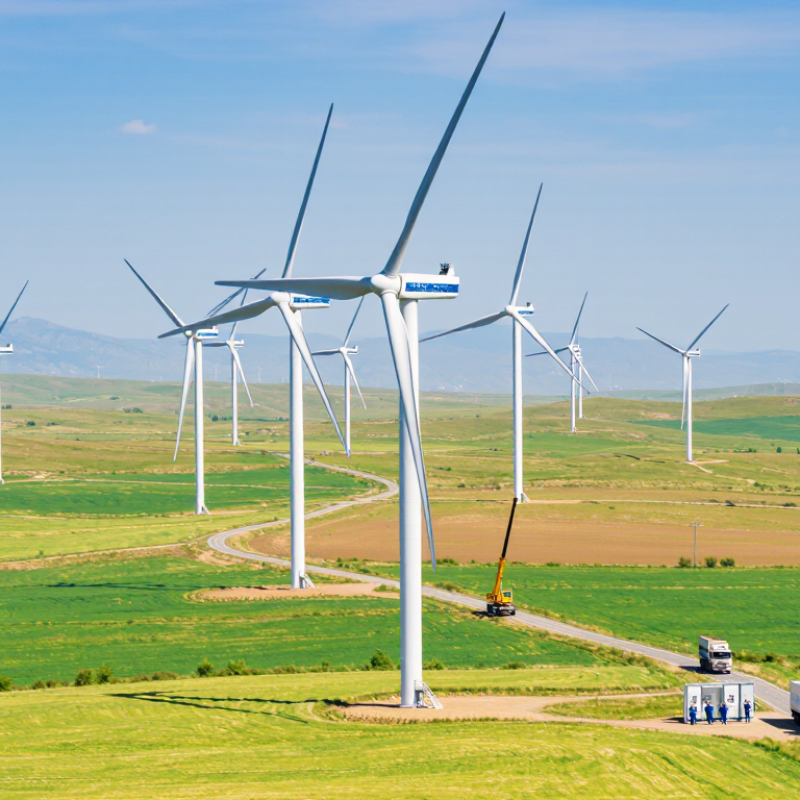
China’s wind turbine industry has become a major part of the global clean-energy supply chain. Manufacturing clusters produce towers, blades, generators, power electronics, and control systems at scale. This breadth can support competitive pricing and steady component supply, though shipping distance still matters. Scale is not everything. Product fit matters too.

Chinese manufacturers serve projects across varied regions, where grid conditions and local climates differ. Export readiness involves more than turbine capacity: port access, maintenance coverage, and spare-parts availability also shape project performance. On a coastal site, salt spray and typhoon exposure may require different protections than a dry inland plateau. Small details matter. A delayed replacement part can outweigh a modest equipment-price advantage.

Global buyers should compare independently verified power curves, availability data, warranties, and service plans. Ask how performance figures were measured and under which operating conditions. Published numbers can look precise, yet actual output depends on wind quality, curtailment, and project design. Claims need context. China’s industry has a substantial global role, but service networks and documentation may not be equally strong everywhere. That gap deserves attention.


Criteria for Selecting the Top 10 Manufacturers

Selecting leading Chinese turbine manufacturers requires evidence beyond nameplate capacity. GWEC’s Global Wind Report 2024 estimates that China added 75.9 GW of wind capacity in 2023, out of 116.6 GW worldwide. That scale makes production capacity relevant, but it does not prove project-level reliability. Compare independently verified type certificates, power curves, noise data, and performance for the exact turbine platform offered. Check whether certification covers your project’s hub height, rotor, and operating conditions. Small mismatches matter.

Operational records deserve equal weight. Request multi-year fleet availability, failure rates, spare-part lead times, and warranty exclusions; ask how the figures were audited. IRENA’s Renewable Power Generation Costs in 2023 reported a global weighted-average onshore wind LCOE of USD 0.033 per kWh, down 3% from 2022. This is a benchmark, not a project guarantee. Compare bids using site-specific wind studies, curtailment assumptions, grid-code tests, and lifecycle service costs. Details matter. A lower quoted price may shift costs into maintenance or delayed parts. This is easy to overlook. Check reference projects with similar turbulence, temperatures, salt exposure, and grid conditions, and speak with operators where possible. Public datasets rarely capture every failure, so use rankings as screening tools rather than final verdicts.

Profiles of 10 Leading Chinese Wind Turbine Manufacturers

China’s wind-turbine manufacturers serve different project needs, so a useful profile compares capabilities rather than treating the market as uniform. Across ten leading manufacturer profiles, buyers may encounter utility-scale onshore specialists, offshore developers, and makers of direct-drive or geared systems. Other profiles emphasize typhoon-resistant designs, cold-weather operation, modular transport, blade production, digital monitoring, or long-term service support.

Look beyond rated capacity. Ask how a turbine performs at the site’s wind speeds, temperatures, and grid conditions. A nacelle delivered to a coastal port, for example, may face different handling needs from equipment bound for a remote inland ridge. Compare warranty terms, spare-parts access, maintenance response, and independently verifiable operating records. Details count. Still, specification sheets can flatter a machine; site-specific data deserves more weight. No profile is automatically the right fit. Buyers should also check whether projected output, installation schedules, and service plans match the realities of their project.

Key Turbine Technologies and Product Differences

Wind turbine differences start with the site, not the nameplate rating. Onshore projects often prioritize transportable blades, simpler access, and service crews that can reach the tower by road. Offshore machines face salt spray, stronger maintenance constraints, and costly vessel access. Their coatings, sealing systems, and remote monitoring therefore deserve close review.

Drive-train design also changes operating behavior. Geared turbines use a gearbox to connect slower rotor speeds with faster generators; direct-drive designs remove that gearbox but may require larger generators and different materials. Neither option is automatically better. Ask for documented availability, maintenance intervals, and performance data across the wind conditions expected at the site. Power converters and pitch controls matter, too. They help manage changing wind, grid requirements, and turbine loads.

Blade length and tower height influence energy capture, transport, foundations, and noise. A longer blade may improve output in moderate winds, yet it can complicate road transport and increase structural demands. Small details matter. Buyers should compare certified power curves, cold-weather packages, corrosion protection, and spare-parts plans—not just rated capacity. Even strong specifications can disappoint if local service coverage is thin. And forecasts are not guarantees; site measurements and independent engineering review remain essential.

China Top 10 Wind Turbine Manufacturers for Global Buyers - Key Turbine Technologies and Product Differences

Anonymized technology profiles for comparison—not a ranked list or a company-by-company specification sheet. Capacity and rotor-diameter figures are indicative ranges found across commercially announced turbine product classes; individual models and project configurations vary.

Profile Typical rated capacity Typical rotor diameter Common drivetrain Typical application Key technology or product difference Buyer consideration
01 — Geared onshore platform 3–5 MW About 150–190 m Three-stage gearbox with doubly fed induction generator (DFIG) Onshore sites with moderate-to-good wind resources A mature, widely used configuration; the gearbox allows a relatively compact generator at high rotational speed. Compare gearbox service requirements, local spare-parts access, and the turbine’s certified wind-class suitability.
02 — Medium-speed onshore platform 4–6 MW About 165–200 m Single-stage gearbox with permanent-magnet generator Onshore projects seeking a balance between generator size and drivetrain speed Uses fewer gearbox stages than a conventional high-speed geared design while retaining a gearbox. Check the drivetrain maintenance plan and whether the project’s grid and operating conditions match the offered configuration.
03 — Direct-drive onshore platform 4–8 MW About 170–220 m Direct-drive permanent-magnet generator Onshore projects where reduced gearbox complexity is a priority Eliminates the gearbox; the generator is typically larger and rotates at rotor speed. Assess nacelle mass, transport limits, generator service arrangements, and availability of qualified technicians.
04 — Low-wind-site platform 3–6 MW About 170–220 m Geared, medium-speed, or direct-drive, depending on model Sites with lower average wind speeds or strong seasonal variation Longer blades and a relatively low specific power can increase energy capture at lower wind speeds. Compare independently assessed energy-yield estimates, noise limits, loads, and site-specific turbine suitability—not capacity alone.
05 — High-altitude or complex-terrain platform 3–6 MW About 160–200 m Configuration varies by model; commonly geared or direct-drive Mountainous or high-elevation onshore sites Project versions may use adaptations for site elevation, temperature, transport, and local atmospheric conditions. Confirm the permitted operating elevation, site-specific load assessment, access-road constraints, and installation method.
06 — Cold-climate onshore platform 3–6 MW About 160–200 m Configuration varies by model Sites exposed to low temperatures, icing, or severe winter conditions Cold-climate options can include low-temperature components and blade-heating or ice-detection systems. Verify the actual temperature and icing design limits, operating strategy, and any required site-specific certification.
07 — Medium-to-large offshore platform 8–12 MW About 220–240 m Medium-speed or direct-drive, depending on model Fixed-bottom offshore wind farms Designed for offshore-scale output, with marine-environment protection and larger blades than typical onshore models. Review corrosion protection, offshore service access, installation-vessel compatibility, and project-specific certification.
08 — Large direct-drive offshore platform 10–16 MW About 230–260 m Direct-drive permanent-magnet generator Large fixed-bottom offshore projects Removes the gearbox and pairs a large, low-speed generator with an offshore-scale rotor. Compare nacelle and component dimensions, lifting requirements, port capacity, and the supplier’s offshore service capability.
09 — Large geared offshore platform 12–18 MW About 230–260 m Geared or medium-speed drivetrain, depending on model High-capacity offshore projects Uses a gearbox to match rotor speed to generator requirements; the specific design and service approach vary by model. Evaluate drivetrain reliability data, planned maintenance intervals, component replacement strategy, and access during bad weather.
10 — Floating-wind-compatible platform About 8–16 MW, depending on turbine model About 220–260 m, depending on turbine model Geared, medium-speed, or direct-drive Offshore sites deeper than typical fixed-bottom foundations can economically serve Floating use depends on turbine, floating foundation, mooring system, and control strategy being engineered as an integrated system. Confirm turbine-platform compatibility, dynamic-load design, motion-control studies, port assembly needs, and project certification.

Factors Global Buyers Should Assess Before Choosing a Supplier

Choosing a wind turbine supplier requires more than comparing rated power and purchase price. Ask for independently verified performance data, including output across realistic wind speeds and operating temperatures. Check whether the proposed turbine suits your site’s wind conditions, terrain, grid connection, and transport access. A model that performs well elsewhere may not fit your project. Small details matter.

Review component traceability, quality-control records, delivery schedules, and warranty exclusions. Ask who handles commissioning, spare parts, and urgent service calls, and request response-time commitments in writing. Speak with operators at comparable sites, then ask what caused downtime and how quickly repairs were completed. A low quote can hide expensive delays or limited service coverage. That takes time. Check that technical documents and any required certifications apply to the exact turbine configuration and destination market. A spreadsheet can still miss practical risks, such as a narrow access road or slow replacement-part shipping. I would revisit those assumptions before signing.