

Mobile Lighting Trailer Supplier
What should I do if the light sensor of the mobile solar lighthouse is broken?
What should I do if the light sensor of the mobile solar lighthouse is broken?
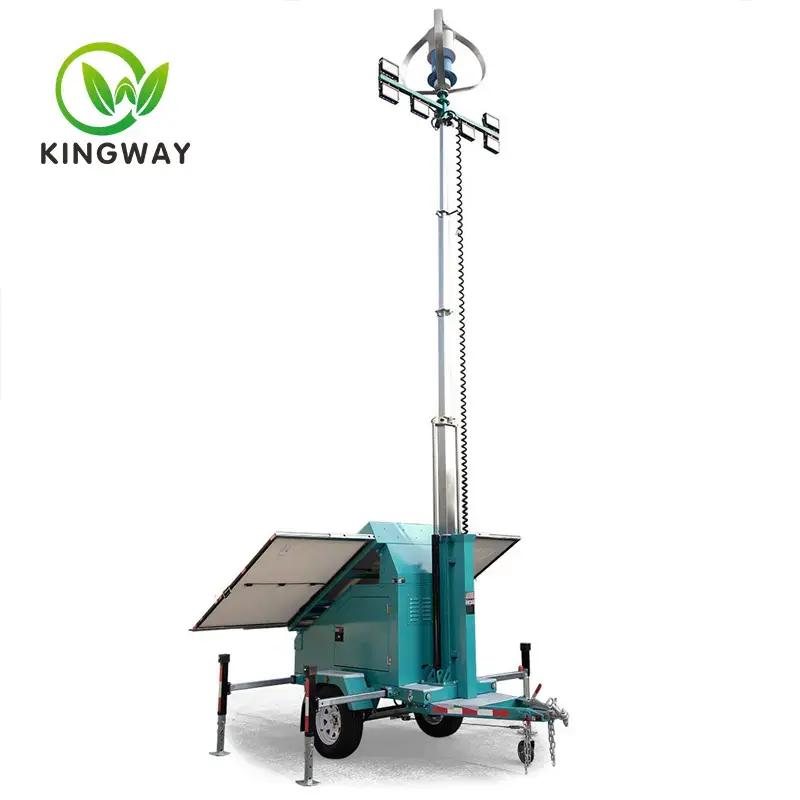
As an efficient Solar Energy utilization device, the role of the light sensor ofthe mobile solar lighthouse is crucial. The light sensor can sense the changes in ambient light, thereby controlling the switch of the lighthouse to achieve energy saving and environmental protection. However, when the light sensor fails, how should we effectively handle the fault? This article will provide you with a series of troubleshooting methods and precautions.
1. Preliminary inspection
Before any troubleshooting, you must first conduct a preliminary inspection. Check whether there is obvious physical damage or abnormality on the appearance of the light sensor, such as cracked shell, loose connection wires, etc. At the same time, ensure that the power supply of the sensor is normal and there is enough power to support its operation.
2. Signal detection
Use professional test tools to detect the output signal of the light sensor and observe whether it is stable and continuous. If the signal is abnormal, it may be caused by damage to the internal components of the sensor or external interference.
3. Comparative analysis
Compare the data of the faulty sensor with the data of the sensor that works normally and analyze the differences. If the data deviation is large or the fluctuation is obvious, it can be preliminarily judged that the sensor is faulty.
4. Environmental factor troubleshooting
Consider the impact of environmental factors on the sensor, such as temperature, humidity, light, etc. After eliminating the interference of environmental factors, further determine whether there is a problem with the sensor itself.
V. Common fault types and treatment methods
1. No signal output
Fault phenomenon: The sensor has no signal output and cannot provide data to the system.
Treatment method: First check whether the power connection of the sensor is normal to ensure stable power supply. Then check whether the signal line of the sensor is intact and there is no break or short circuit. If all of the above are normal, it may be that the internal components of the sensor are damaged and a new sensor needs to be replaced.
2. Unstable signal
Fault phenomenon: The output signal of the sensor fluctuates greatly and is unstable.
Treatment method: Check whether the installation position of the sensor is stable to avoid signal fluctuations caused by vibration or movement. Then check the working environment of the sensor and eliminate the influence of environmental factors such as strong electromagnetic interference and high temperature. If the problem is still not solved, it may be that the internal components of the sensor are aging or damaged and need to be replaced.
3. Reading deviation
Fault phenomenon: There is a large deviation between the sensor reading and the actual value.
Treatment method: Check the calibration of the sensor to ensure that the sensor has been properly calibrated. Then check the installation position and environmental factors of the sensor to eliminate the reading deviation caused by improper installation or environmental factors. If the problem persists, it may be that the internal components of the sensor are damaged or aged and need to be replaced.
4. Communication failure
Fault phenomenon: The sensor and the host computer communicate abnormally and cannot transmit data.
Handling method: Check the connection of the communication line to ensure that the line is intact. Then check whether the communication protocol and address settings are correct to ensure that the sensor and the host computer can communicate normally. If all of the above are normal, the sensor communication module may be damaged and need to be replaced.
VI. Troubleshooting precautions
Safety first: When troubleshooting solar sensor faults, be sure to follow the safety operating procedures to ensure personal safety and equipment safety. Especially when dealing with faults involving power supply and lines, the power supply should be cut off and corresponding protective measures should be taken.
Accurate judgment: Fault judgment should be accurate and comprehensive to avoid omissions or misjudgments. When dealing with faults, various possible causes should be considered comprehensively and checked one by one.
Professional tools: Use professional testing tools and methods to judge and handle faults to ensure accuracy and effectiveness. Avoid using non-professional tools or methods to cause misjudgment or damage to equipment.
Timely processing: Once a sensor fault is found, it should be promptly processed or replaced to avoid the fault from expanding or affecting the operation of the entire system. At the same time, the sensor should be regularly maintained and serviced to extend its service life.
VII. Conclusion
Solar sensor fault judgment and processing methods are key links to ensure the stable operation of the Solar Energy System. By mastering the correct judgment steps and processing methods, we can effectively handle sensor failure problems and ensure the normal operation of the solar energy system. At the same time, strengthening daily maintenance and maintenance work can reduce the incidence of sensor failures and improve the reliability and stability of the system. With the continuous development of solar technology and the expansion of application fields, we believe that the solar sensor fault judgment and processing methods will continue to improve and progress
If the problem persists after you replace the sensor, it may mean that the cause of the problem is not just the sensor itself, but something else. Here are some further troubleshooting and troubleshooting steps:
Recheck power and connections: Make sure the sensor is powered properly, the voltage is stable, and all connections are secure and not loose or falling off
Analysis of environmental factors: Check that the sensor is operating under the specified environmental conditions and check if there are extreme fluctuations in temperature or humidity, which may affect the performance of the sensor
Electromagnetic interference check: Identify and analyze potential sources of electromagnetic interference in the surrounding environment, evaluate their specific impact on the sensor signal, and take appropriate shielding and isolation measures to effectively mitigate the impact of such interference
Calibration and adjustment: Perform operations according to the calibration process and specifications provided by the manufacturer, and use a calibration device to adjust the sensor output to ensure its accuracy. Based on the feedback from the calibration results, make appropriate adjustments to the position, angle and other relevant parameters of the sensor, and retest it to ensure that it can be restored to normal function and performance
Software analysis: Use professional software to read sensor data and check the consistency and trend of the data to identify any abnormal patterns. Analyze the fault diagnosis report provided by the software, and perform the corresponding troubleshooting and repair work according to the suggestions in the report
Replacement method: If the sensor problem is suspected, the faulty component can be accurately identified by replacing the suspected faulty sensor. Before performing the replacement operation, make sure that the power is completely turned off to ensure the safety of the operation. Replace the suspected faulty sensor with a known good sensor, then restart the system and test to verify that the fault has been successfully eliminated
Check other parts of the system: Sometimes the problem may not be with the sensor, but with other parts of the system connected to it, such as a control circuit board failure that prevents the control signal from being received and sent. At this time, the control circuit board needs to be repaired and replaced.
Record the troubleshooting process: During the troubleshooting process, the troubleshooting steps, replaced components, and test results after the troubleshooting should be recorded in detail for subsequent review and reference
Seek professional help: If you encounter difficulties or cannot solve the problem when troubleshooting the solar sensor, it is recommended to seek professional help in a timely manner. You can contact the sensor manufacturer or professional troubleshooting personnel for technical support and troubleshooting solutions
Third-party repair services: If necessary, you can contact a third party to provide solar repair services. They can provide customers with product consultation, installation appointments, repair and maintenance services, etc.
Through the above steps, you should be able to further diagnose and solve the sensor failure problem. If the problem still cannot be solved, it is recommended to contact professional technical support personnel for on-site inspection and repair.