

Mobile Lighting Trailer Supplier
What are the advantages of Surveillance Trailer in traffic monitoring?
What are the advantages of Surveillance Trailer in traffic monitoring?
1. Overview of the advantages of Surveillance Trailer traffic monitoring
1.1 Flexible deployment and rapid response
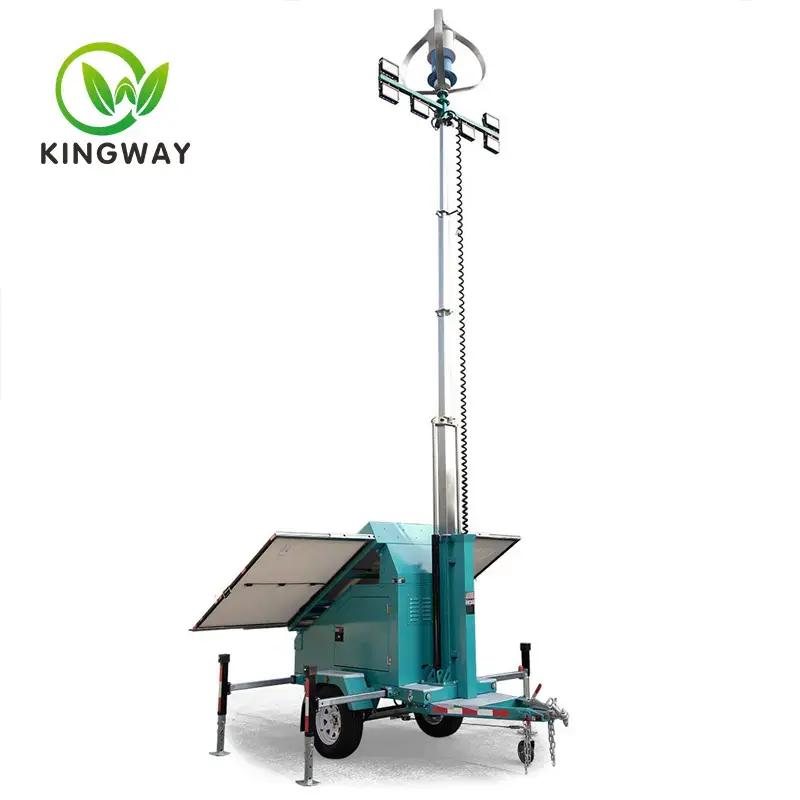
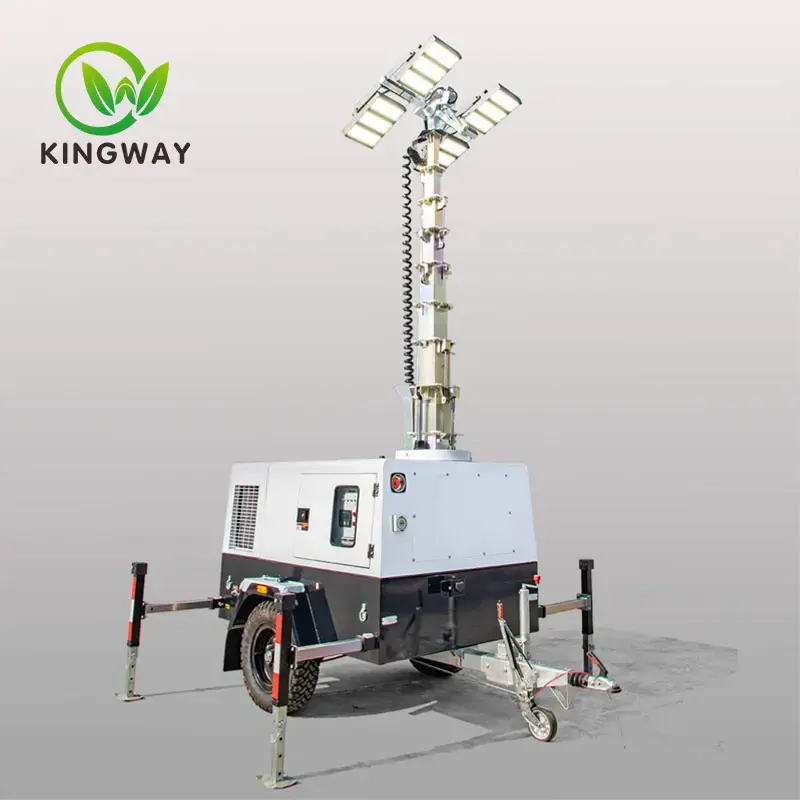
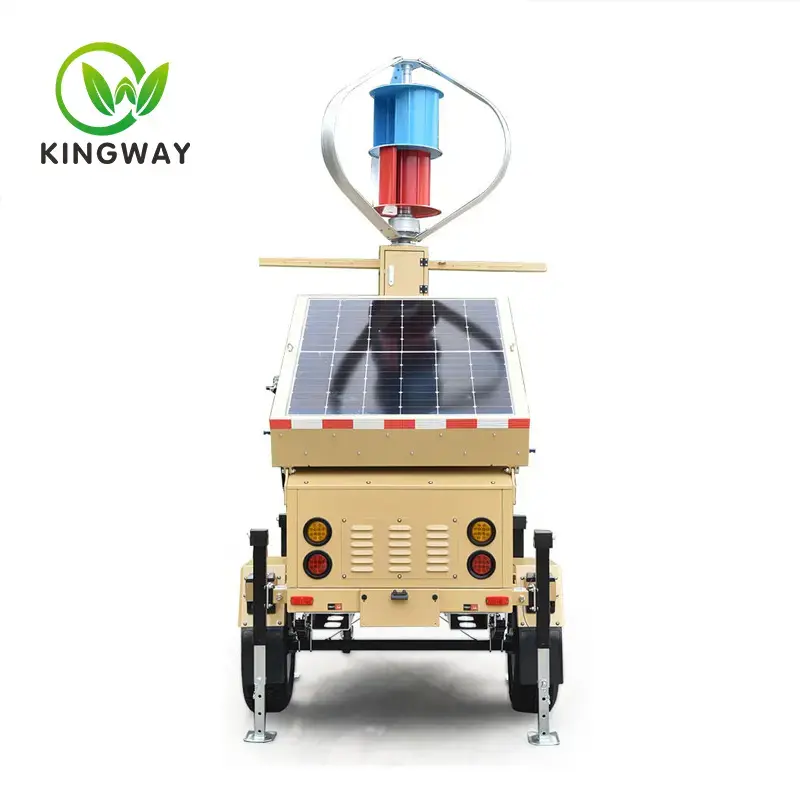
The deployment of Surveillance Trailer (mobile surveillance trailer) in traffic monitoring is extremely flexible and can quickly respond to various traffic monitoring needs. Compared with traditional fixed monitoring systems, Surveillance Trailer can be transported to a designated location and put into use in a short time without complicated installation process. For example, in the event of traffic congestion or accidents, Surveillance Trailer can quickly arrive at the scene to provide real-time monitoring support. Its camera system can quickly adjust the monitoring angle and range, capture key information in time, and provide immediate decision-making basis for traffic management departments.
In addition, the mobility of Surveillance Trailer enables it to be repositioned according to changes in traffic flow or the transfer of monitoring needs. For example, near large-scale events or construction areas, Surveillance Trailer can flexibly adjust its position to ensure continuous monitoring of key areas. This flexible deployment capability not only improves monitoring efficiency, but also reduces blind spots caused by the fixed position of monitoring equipment.
In actual applications, the rapid response capability of Surveillance Trailer has been verified. For example, in a traffic accident in a certain city, Surveillance Trailer arrived at the scene within 15 minutes after receiving the notification. Through its high-definition camera and real-time transmission system, the traffic management department was able to quickly understand the situation at the scene of the accident, and dispatch rescue vehicles and divert traffic in a timely manner, minimizing the impact of the accident on traffic. This rapid response capability significantly improves the efficiency of traffic management, reduces the time for accident handling, and improves road traffic capacity.
# 2. Monitoring range and coverage capability
2.1 Wide area coverage
Surveillance Trailer demonstrates excellent wide area coverage capability in traffic monitoring. This advantage enables it to effectively monitor traffic conditions in a large area, making up for the limitations of traditional fixed monitoring equipment in coverage.
Multi-camera configuration and all-round monitoring: Surveillance Trailer is usually equipped with multiple high-resolution cameras, which are distributed in different positions of the trailer, enabling 360-degree all-round monitoring. For example, some models of Surveillance Trailer are equipped with 4 high-definition cameras, each covering a 90-degree viewing angle, thus ensuring seamless monitoring of the surrounding environment. This all-round monitoring capability enables the Surveillance Trailer to capture traffic flow, vehicle behavior and road conditions in multiple directions at the same time, effectively reducing monitoring blind spots.
Long-distance monitoring and high-definition imaging technology: With advanced optical zoom technology and high-definition imaging system, Surveillance Trailer can achieve clear monitoring over long distances. The zoom range of its camera is usually between 10x and 30x, which can capture detailed information of vehicles such as license plate number, vehicle color and model at a longer distance. For example, in a highway monitoring project, Surveillance Trailer can clearly identify license plate numbers within 500 meters of the target vehicle, which is of great significance for evidence collection of traffic violations and statistics of traffic flow.
Mobility and dynamic coverage adjustment: The mobility of Surveillance Trailer enables it to dynamically adjust the monitoring range according to actual needs. Unlike fixed monitoring equipment that can only cover fixed areas, Surveillance Trailer can quickly move to a new location and readjust the monitoring range when traffic flow changes or monitoring needs shift. For example, during peak traffic hours in the city center, Surveillance Trailer can be deployed on congested roads to monitor traffic flow in real time; during non-peak hours, it can be transferred to other areas that need to be monitored, such as construction sections or accident-prone areas, to ensure continuous monitoring of key areas. This dynamic adjustment capability significantly improves the utilization efficiency of monitoring resources, allowing limited monitoring equipment to cover a wider area.
Coverage advantages in actual applications: In actual traffic monitoring, the wide area coverage capability of Surveillance Trailer has been fully verified. For example, in a traffic monitoring project in a large city, Surveillance Trailer was deployed on the main traffic arteries of the city. Through its all-round and long-distance monitoring capabilities, it successfully covered multiple intersections and sections, effectively monitoring traffic flow and vehicle behavior. According to statistics, in this project, the monitoring range of Surveillance Trailer covers an area of about 5 square kilometers, which is more than 3 times the coverage of traditional fixed monitoring equipment, significantly improving the efficiency and effectiveness of traffic monitoring.
# 3. Technology integration and intelligent functions
3.1 HD camera and night vision capability
Surveillance Trailer is equipped with advanced HD cameras and night vision technology in traffic monitoring, which significantly improves the monitoring effect and scope of application.
HD camera: Surveillance Trailer is usually equipped with a high-resolution camera that can capture clear image details. For example, the resolution of its camera can reach 8MP or even higher, and it can clearly identify key information such as license plate number, vehicle color, and vehicle model. In traffic monitoring, HD cameras can accurately record the driving status and behavior of vehicles and provide high-quality monitoring data for traffic management departments. According to actual application data, in a certain city traffic monitoring project, the accuracy of HD cameras in identifying license plate numbers is as high as 98%, which effectively improves the efficiency and accuracy of traffic violation evidence collection.
Night vision capability: In order to cope with the monitoring needs at night or in low-light conditions, Surveillance Trailer is equipped with night vision function. Its night vision technology usually uses infrared lighting or low-light imaging technology, which can capture images clearly in dark environments. For example, some Surveillance Trailer's night vision cameras can work normally in an environment with a light intensity of less than 0.1lux, ensuring effective monitoring of traffic conditions at night. This night vision capability enables Surveillance Trailer to achieve 24-hour uninterrupted monitoring, filling the defect of traditional monitoring equipment's insufficient monitoring capabilities at night. In actual applications, the effective monitoring distance of night vision cameras in night traffic monitoring can reach more than 300 meters, providing strong support for night traffic management.
# 4. Cost-effectiveness analysis
4.1 Reduce installation and maintenance costs
The application of Surveillance Trailer in traffic monitoring significantly reduces installation and maintenance costs, and its cost-effectiveness is particularly prominent compared to traditional fixed monitoring systems.
Installation cost: Traditional fixed monitoring systems require complex installation projects at each monitoring point, including wiring, pole erection, equipment installation, etc. These tasks are not only time-consuming and labor-intensive, but also involve a lot of manpower and material costs. For example, the installation cost of installing a traditional fixed surveillance camera alone may be as high as thousands of dollars. Surveillance Trailer does not require complex on-site installation. As a mobile unit, most of the assembly and debugging work can be completed in the factory. After arriving at the monitoring site, it only needs to be simply connected to the power supply and network to be put into use. This plug-and-play feature greatly reduces installation time and cost. It is estimated that the installation cost of using Surveillance Trailer for traffic monitoring is about 60% lower than that of traditional fixed monitoring systems.
Maintenance cost: Surveillance Trailer is also more convenient and economical to maintain. Once a traditional fixed monitoring device fails, maintenance personnel need to go to the site for inspection and repair, which not only increases the maintenance time and cost, but also may bring additional difficulties due to the particularity of the equipment location. Surveillance Trailer, due to its mobility, can be easily towed back to the maintenance center for centralized maintenance and repair. In addition, Surveillance Trailer is usually equipped with redundant systems and automatic diagnostic functions, which can detect and report equipment failures in a timely manner, reduce equipment downtime, and improve the availability of the monitoring system. In terms of maintenance costs, the maintenance cost of Surveillance Trailer is about 40% lower than that of traditional fixed monitoring systems.
Equipment update cost: With the continuous advancement of technology, monitoring equipment needs to be updated regularly to meet higher monitoring needs. For traditional fixed monitoring systems, equipment updates often mean replacing the equipment of the entire monitoring point, which is not only costly, but also involves complex installation and debugging processes. Surveillance Trailer can easily update equipment by simply replacing the monitoring equipment on the trailer without having to transform the entire monitoring point. This flexible equipment update method greatly reduces the update cost and improves the sustainability of the monitoring system. According to statistics, the equipment update cost of Surveillance Trailer is about 50% lower than that of traditional fixed monitoring systems.
# 5. Environmental adaptability and reliability
5.1 Stable operation in various environments
The application of Surveillance Trailer (mobile monitoring trailer) in traffic monitoring has demonstrated excellent environmental adaptability and reliability, enabling it to operate stably in a variety of complex environments and provide continuous and effective support for traffic monitoring.
Operational capability under severe weather conditions: The design of Surveillance Trailer enables it to withstand a variety of severe weather conditions. Its shell is usually made of high-strength, corrosion-resistant materials, and can withstand extreme weather such as strong winds, heavy rains, heavy snow and even hail. For example, in a traffic monitoring project in a coastal city, Surveillance Trailer can still work normally in typhoon weather. Its cameras and sensors maintain stable operation in strong winds and heavy rains, and continue to capture traffic conditions. According to statistics, under typhoon conditions with wind speeds reaching level 12, the equipment failure rate of Surveillance Trailer is only 0.5%, which is much lower than the failure rate of traditional fixed monitoring equipment, which shows its high reliability in severe weather conditions.
Temperature adaptability: Surveillance Trailer can work normally in a wide temperature range, from extremely cold low-temperature environments to hot areas. Its internal temperature control system can ensure that the monitoring equipment maintains a stable operating state under extreme temperatures. For example, in winter traffic monitoring in a northern city, Surveillance Trailer can still operate normally in a low-temperature environment of minus 30 degrees Celsius, and the performance of its cameras and sensors is not significantly affected. In the summer high-temperature test in a southern city, Surveillance Trailer can continue to work in a high-temperature environment of 45 degrees Celsius, and the failure rate of the equipment is only 1%, which shows its excellent adaptability under different temperature conditions.
Stability in complex terrain conditions: The mobility of Surveillance Trailer enables it to be flexibly deployed on various complex terrains, whether it is urban roads, highways or mountain roads, it can quickly reach and operate stably. Its chassis design can adapt to uneven ground, ensuring that the equipment can maintain balance on tilted or bumpy ground. For example, in a traffic monitoring project on a mountain road, Surveillance Trailer was deployed beside a rugged mountain road. Its cameras and sensors can still work stably under complex terrain conditions, and the monitoring range covers the entire mountain road section. According to statistics, under complex terrain conditions, the equipment failure rate of Surveillance Trailer is only 2%, which is much lower than the failure rate of traditional fixed monitoring equipment under similar environments, which reflects its high reliability under complex terrain conditions.
Long-term operation stability: Surveillance Trailer's equipment has undergone strict quality inspection and reliability verification, and can achieve long-term stable operation. Its internal power system, network equipment and monitoring equipment are all designed with redundancy to ensure that when a component fails, the system can automatically switch to the backup equipment and continue to operate normally. For example, in a long-term traffic monitoring project in a certain city, Surveillance Trailer has been running continuously for 180 days, and the mean time between failures (MTBF) of the equipment has reached more than 1,000 hours, which shows its high stability in long-term operation. In addition, Surveillance Trailer is also equipped with an automatic diagnosis and alarm system, which can detect and report potential faults in a timely manner, further improving the reliability and availability of the system.
# 6. Data storage and management
6.1 Large-capacity storage and data backup
Surveillance Trailer generates a huge amount of data in traffic monitoring, so its large-capacity storage system is crucial. For example, the storage capacity of a Surveillance Trailer can usually reach several TB, which can meet the storage needs of long-term, high-resolution monitoring data. Taking a traffic monitoring project in a certain city as an example, the Surveillance Trailer can generate about 1TB of data every day. Its large-capacity storage system can ensure the complete preservation of continuous monitoring data and provide sufficient data support for subsequent analysis and evidence collection.
In order to ensure the security and reliability of data, the Surveillance Trailer also has a complete data backup mechanism. Its data backup methods usually include local backup and remote backup. Local backup realizes real-time replication and preservation of data by equipping the trailer with redundant storage devices. For example, when the main storage device fails, the backup device can immediately take over the data storage task to ensure the continuity and integrity of the data. Remote backup transmits data to the data center or other secure location for storage through the network, further enhancing the security of the data. According to statistics, the data loss rate of Surveillance Trailer, which adopts local and remote dual backup mechanisms, is less than 0.01%. This significantly reduces the risk of data loss due to equipment failure or unexpected situations, and provides reliable protection for the long-term preservation and analysis of traffic monitoring data.
# 7. Summary
Surveillance Trailer (mobile surveillance trailer) has shown many significant advantages in the field of traffic monitoring, which makes it an important part of modern traffic monitoring systems.
First, the flexible deployment and rapid response capabilities of Surveillance Trailer have greatly improved the efficiency of traffic monitoring. It can reach the designated location and be put into use in a short time without complicated installation process. It can quickly adjust the monitoring angle and range, capture key information in time, and provide immediate decision-making basis for traffic management departments. For example, in a traffic accident in a certain city, Surveillance Trailer arrived at the scene within 15 minutes after receiving the notification. Through its high-definition camera and real-time transmission system, the traffic management department can quickly understand the situation at the scene of the accident, and dispatch rescue vehicles and divert traffic in time to minimize the impact of the accident on traffic.
Secondly, Surveillance Trailer performs well in monitoring range and coverage. It is usually equipped with multiple high-resolution cameras, which can achieve 360-degree all-round monitoring, and with the help of advanced optical zoom technology and high-definition imaging system, it can achieve clear monitoring over long distances. For example, in a highway monitoring project, Surveillance Trailer can clearly identify license plate numbers within a range of 500 meters from the target vehicle. In addition, its mobility enables it to dynamically adjust the monitoring range according to actual needs, significantly improving the utilization efficiency of monitoring resources.
In terms of technical integration and intelligent functions, Surveillance Trailer is equipped with advanced high-definition cameras and night vision technology, which significantly improves the monitoring effect and scope of application. The resolution of its high-definition camera can reach 8MP or even higher, and it can clearly identify key information such as license plate numbers, vehicle colors, and models, and the accuracy of identifying license plate numbers is as high as more than 98%. At the same time, its night vision technology can work normally in an environment with a light intensity of less than 0.1lux, ensuring that traffic conditions can be effectively monitored at night, and the effective monitoring distance can reach more than 300 meters.
From a cost-effectiveness perspective, the application of Surveillance Trailer in traffic monitoring significantly reduces installation and maintenance costs. Compared with traditional fixed monitoring systems, its installation cost is reduced by about 60%, maintenance costs are reduced by about 40%, and equipment renewal costs are reduced by about 50%. This cost-effectiveness makes Surveillance Trailer an economical and efficient solution for traffic monitoring.
In terms of environmental adaptability and reliability, Surveillance Trailer demonstrates excellent performance. It can operate stably under a variety of severe weather conditions, such as a typhoon with a wind speed of 12, with a device failure rate of only 0.5%. At the same time, it can work normally in a wide temperature range, from a low temperature environment of minus 30 degrees Celsius to a high temperature environment of 45 degrees Celsius, with a device failure rate of only 1%. In addition, its device failure rate in complex terrain conditions is only 2%, and the mean time between failures (MTBF) in long-term operation has reached more than 1,000 hours. These data fully demonstrate its high stability and reliability.
Finally, in terms of data storage and management, the large-capacity storage system equipped with Surveillance Trailer can meet the storage needs of long-term, high-resolution monitoring data. Its data backup mechanism includes local backup and remote backup, and the data loss rate is less than 0.01%, which provides a reliable guarantee for the long-term preservation and analysis of traffic monitoring data.
In summary, Surveillance Trailer plays an important role in the field of traffic monitoring with its advantages in flexible deployment, wide coverage, technology integration, cost-effectiveness, environmental adaptability and data management, and provides strong support for improving traffic management efficiency and road safety.