

Mobile Lighting Trailer Supplier
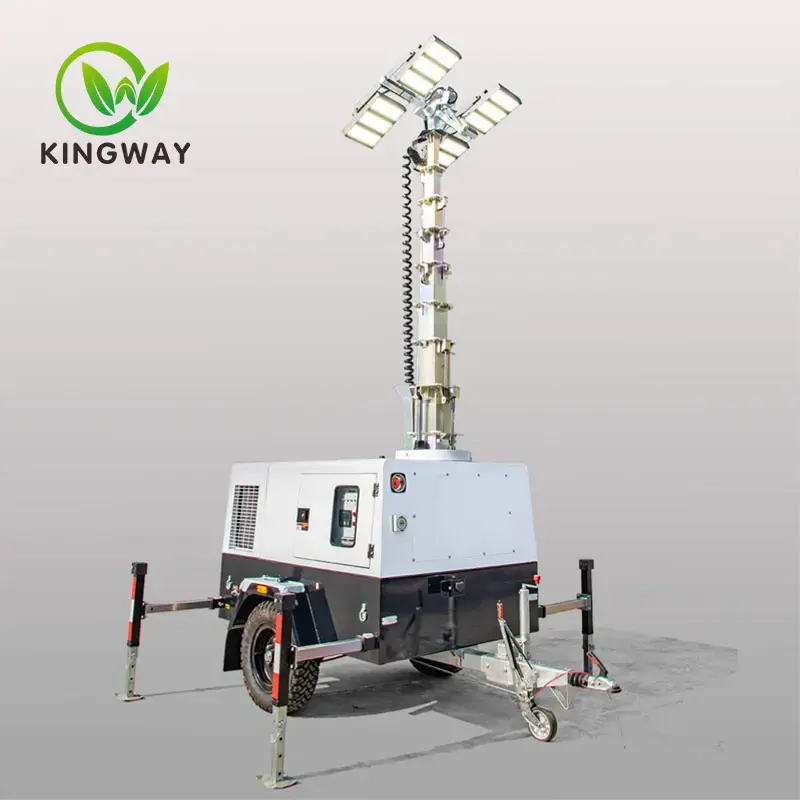
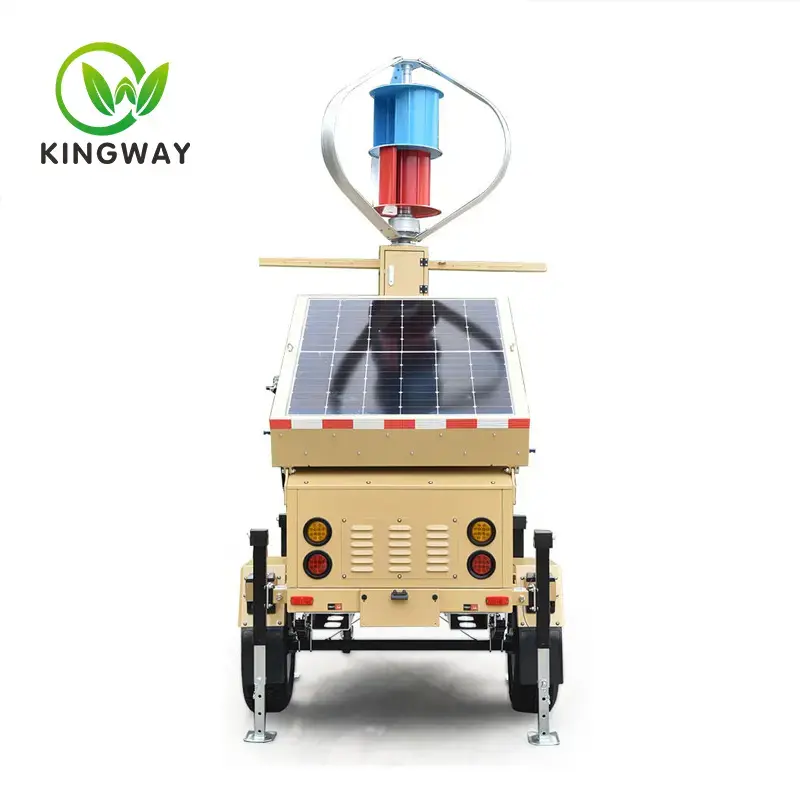
The Rise and Prospects of the Solar Lighting Mobile Trailer Rental Market
The Rise and Prospects of the Solar Lighting Mobile Trailer Rental Market
I. Market Rise: A Triple Resonance of Policy, Demand, and Technology
The explosive growth of the solar lighting mobile trailer rental market is no accident; it is the inevitable result of the combined effects of policy guidance, application-specific needs, and technological breakthroughs.
1. Policy Dividends Build the Foundation for Development
The dual drivers of the national "Dual Carbon" strategy and industry regulations have opened up growth potential for the market. The "Action Plan for the Development of Key Areas of Safety and Emergency Equipment," jointly issued by the Ministry of Industry and Information Technology and six other departments in 2023, specifically listed high-power mobile lighting equipment as a key product for promotion, requiring a penetration rate of over 90% in key industries by 2025. Furthermore, the implementation of the National IV emission standards for non-road machinery in 2024 has accelerated the phase-out of traditional fuel-powered lighting equipment. The revised and strengthened construction site lighting standards in the "Work Safety Law" have directly driven a 25% increase in government emergency procurement orders. Intensive policy support has transformed solar lighting mobile trailers from "optional equipment" into "must-have equipment."
2. Expansion of Applications Drives Rental Demand
The explosive growth of diverse application scenarios has become a core driver of the rental market. In the construction infrastructure sector, the penetration rate of nighttime construction in railway, highway, and water conservancy projects exceeded 82% in 2023. Expressway expansion and reconstruction projects in the Yangtze River Delta region have invested 680 million yuan in lighting equipment annually. The flexible demand for equipment in short-term projects makes the rental model more economical. Demand in the emergency rescue sector has grown even more significantly, with its market share jumping from 18% in 2019 to 27% in 2023. During the 2022 Henan floods, 37 solar lighting trailers created a 20-kilometer illumination belt within two hours, operating continuously for 122 hours, demonstrating their irreplaceable nature. Furthermore, the addition of emerging scenarios such as agricultural planting, outdoor events, and rural revitalization has further broadened the market.
3. Technological iterations break through application bottlenecks
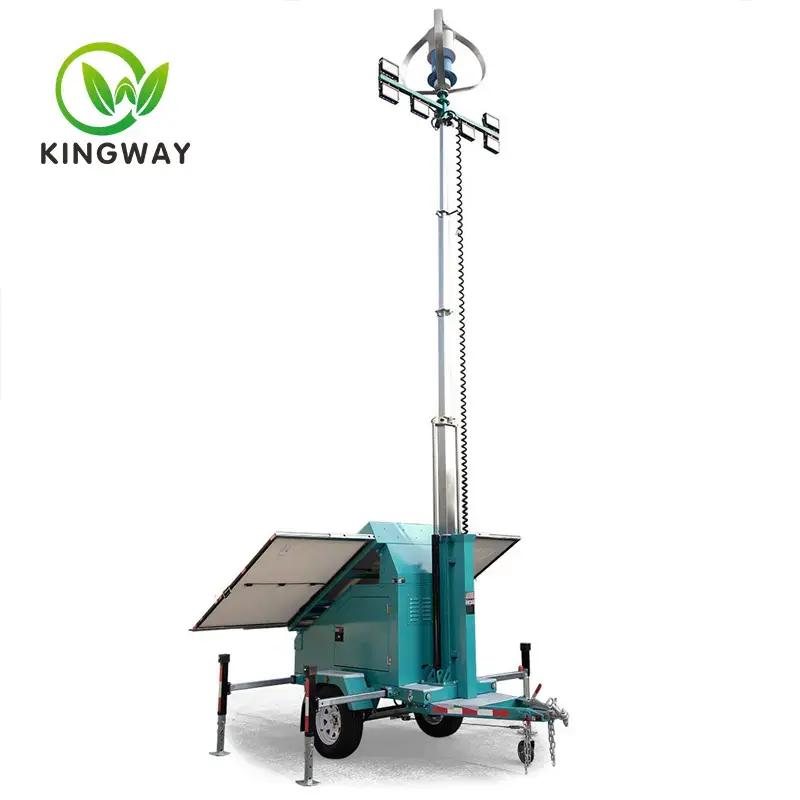
Breakthroughs in photovoltaic and energy storage technologies have addressed the core pain points of solar lighting equipment. The current mainstream product utilizes modular monocrystalline silicon panels ranging from 800W to 1.5kW, coupled with an intelligent tracking system to increase power generation efficiency by 30%. The lithium iron phosphate energy storage module ensures continuous illumination for five rainy days, maintaining a discharge retention rate exceeding 90% even in -20°C temperatures. Compared to traditional Diesel Light Towers, solar-powered models achieve three breakthroughs: Economically, they save 120,000 yuan in fuel costs annually and reduce maintenance costs by 70%. Environmentally, each unit reduces carbon emissions by 35 tons annually, while noise levels drop below 53dB. Deployment time has been shortened from several hours to under 15 minutes, allowing a single person to complete the task. Technological upgrades have significantly increased the reuse rate and customer satisfaction of leased equipment.
II. Leasing Model: Reshaping Value in the Asset-Light Trend
The rise of the leasing model is essentially a choice for businesses to optimize operational efficiency and cost structure. Its core value lies in three dimensions.
1. Disruptive Cost Structure Optimization
For small and medium-sized enterprises, the leasing model completely alleviates the financial pressure of equipment procurement. Taking a 1.5kW solar lighting trailer as an example, the purchase cost is approximately 120,000 yuan, while the rental price is only 80-150 yuan per day. For short-term projects, the rental cost is only 1/50 of the purchase price. More crucial is the difference in operating costs: Traditional diesel equipment has an average annual fuel and maintenance cost of over 15,000 yuan, while solar rental equipment has almost zero operating costs, and the leasing company assumes responsibility for equipment depreciation and technology upgrades. Data shows that engineering contractors who adopt the leasing model reduce lighting equipment-related expenses by an average of 42%.
2. Professionalization and Upgrading of Service Capabilities
Leading leasing companies have shifted from "equipment leasing" to "solutions providers." Leading companies offer three core services: customized solution design, matching equipment models to site size, lighting duration, and environmental conditions. For example, specialized equipment with salt-fog coating and IP68 protection is available for offshore wind power projects. Full-cycle technical support, using IoT modules to enable remote equipment monitoring and shorten fault response times to within two hours. Furthermore, some companies have integrated value-added services, including smart models equipped with 4G routers that provide both lighting and Wi-Fi hotspot services. By 2023, the proportion of aftermarket service revenue for leading companies reached 18%, a 10 percentage point increase from five years ago, confirming the trend of service upgrades.
3. Maximizing Asset Efficiency
The leasing model optimizes resource allocation through equipment turnover. Statistics show that the average annual usage of engineering lighting equipment is only around 120 days, with an idle rate as high as 67%. Leasing platforms can increase equipment utilization to over 85%. A rental company in East China uses an intelligent dispatching system to rapidly switch equipment between scenarios such as municipal projects, rural weddings, and emergency drills. This has resulted in an average annual revenue increase of 2.3 times compared to its own equipment. This sharing economy model not only reduces waste of social resources but also creates sustainable profits for the rental company.
III. Outlook: Three Growth Engines of a 20 Billion Yuan Market
According to industry forecasts, China's mobile lighting equipment market will reach 20 billion yuan by 2030, with the rental market expected to exceed 8 billion yuan, achieving a compound annual growth rate of 9.7%. This growth will primarily come from the following sources.
1. Technological Integration Breaks Through Performance Ceilings
The next generation of solar lighting trailers will evolve towards "intelligent + multifunctional." The integration of AI technology has become a new trend. Models equipped with behavior recognition can automatically detect abnormal intrusions and issue alerts, while working with intelligent dispatching systems to autonomously plan patrol routes. Regarding hardware, with photovoltaic conversion rates exceeding 25% and the commercialization of solid-state batteries, the lighting radius of future products will expand to 150 meters, with a self-sustaining power of up to 30 days. Furthermore, the level of equipment integration continues to increase, with the emergence of complex products integrating environmental monitoring, video surveillance, and emergency broadcasting. In 2023, during flood relief efforts in the Yangtze River Delta, their overall efficiency increased by 35% compared to traditional models.
2. Emerging Markets Unleash Increasing Potential
Lower-tier markets and overseas markets are becoming dual growth engines. Domestically, county-level markets account for 28% of sales, and the demand for infrastructure construction driven by rural revitalization has driven a 55% year-on-year increase in demand for small solar lighting trailer rentals. In overseas markets, the infrastructure boom in Southeast Asia and Africa offers a broad platform. In 2023, China's exports of related products increased by 31% year-on-year, with a 27% market share in the African mining sector. These regions, characterized by low grid coverage and high diesel costs, are well-suited to the advantages of solar lighting trailers, creating a new blue ocean for the rental business.
3. Model Innovation Reshapes the Industry Ecosystem
The rental industry is transforming from single-equipment leasing to a "platform + service" model. Some companies have established digital rental platforms, enabling real-time equipment location, power monitoring, and online ordering, resulting in a 22% increase in customer renewal rates. Even more imaginative are cross-industry integration models: collaborating with outdoor equipment brands to launch small camping lighting trailers, tapping into the leisure consumer market; and providing integrated charging and lighting mobile service stations for new energy vehicle manufacturers, exploring new energy service scenarios. These innovations not only expand revenue streams but also establish differentiated competitive advantages.
IV. Conclusion: The Era of Green Lighting Rental Has Arrived
The rise of the solar lighting mobile trailer rental market embodies the deep integration of green development concepts with the needs of the real economy. From policy initiatives to technological breakthroughs, from application expansion to model innovation, multiple forces are driving this industry from its infancy to maturity. For rental companies, seizing opportunities for technological upgrades, deeply understanding the needs of niche scenarios, and building professional service capabilities will be key to gaining a leading position in this $8 billion market. For users, the win-win value proposition of obtaining more efficient and environmentally friendly lighting solutions at a lower cost is the key to sustained market growth.