

Mobile Lighting Trailer Supplier
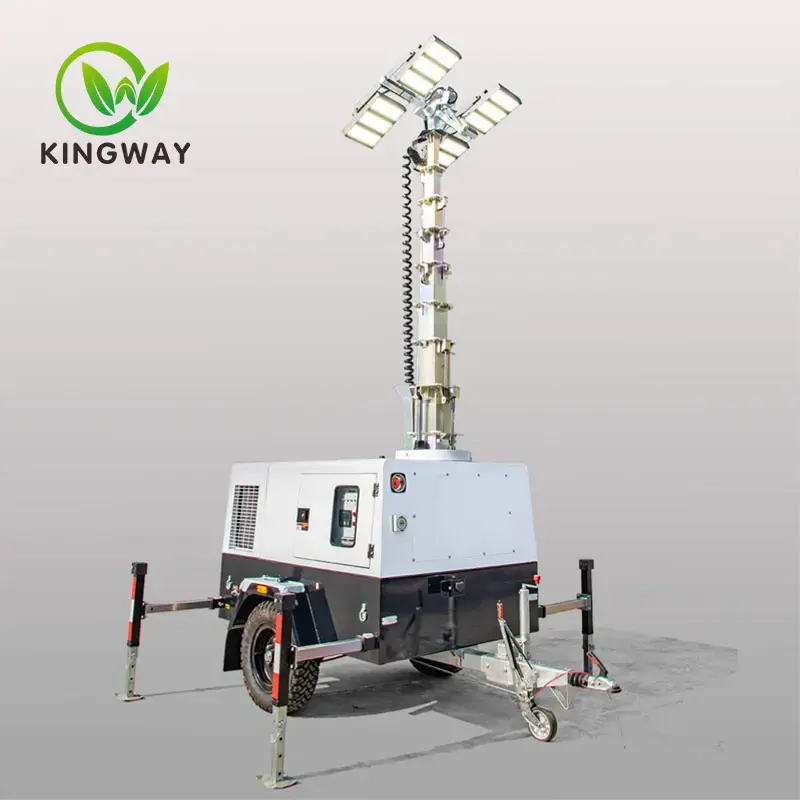
Solar-Powered Surveillance Trailers: An Ideal Solution for Temporary Construction Site Monitoring
Solar-Powered Surveillance Trailers: An Ideal Solution for Temporary Construction Site Monitoring
Safety management, progress monitoring, and property protection at temporary construction sites have long been a major pain point in the construction, road construction, and large-scale engineering projects. Traditional fixed surveillance equipment relies on mains power, requires complex wiring, and struggles to adapt to the frequently changing construction environment. Hiring temporary security personnel is costly, has limited coverage, and carries the risk of human negligence. The advent of solar-powered surveillance trailers has completely overcome this dilemma. With their core advantages of requiring no wiring, being mobile, and energy-efficient, they have become the preferred solution for temporary construction site monitoring.
I. The Core Pain Points of Temporary Construction Site Monitoring: Why Are Traditional Solutions Failed?
To understand the necessity of solar-powered surveillance trailers, we must first understand the conflicts between the unique surveillance needs of temporary construction sites and traditional solutions:
Power Supply Challenges: Limited Mains Power Coverage and High Wiring Costs
Most temporary construction sites are located in suburban areas, new urban areas, or the wild. Mains power access points are far away, and laying cables requires excavation. This not only results in a long construction period (typically one to two weeks), but also in cabling costs that can reach tens of thousands of yuan per project. Furthermore, the removal of cables after the project is completed incurs additional losses.
Low Flexibility: Fixed Equipment Cannot Adapt to Dynamic Construction Scenarios
Construction sites constantly change as projects progress—from foundation excavation to main construction, work areas, material storage locations, and entrances and exits are frequently relocated. Once installed, traditional fixed surveillance systems are difficult to move, making them prone to "blind spots."
Complex Maintenance: Lack of Equipment Stability in Harsh Environments
Construction sites are subject to dust, rain, and frequent mechanical vibration. External wiring and power connectors of traditional surveillance equipment are easily damaged, resulting in a high failure rate. Furthermore, reliance on mains power means that surveillance becomes completely ineffective during power outages, creating opportunities for theft and vandalism. Low Cost Control: Dual Consumption of Manpower and Equipment
If a "fixed surveillance + security patrol" model were used to cover the site, the monthly salary per person would be approximately 4,000-6,000 RMB, and the annual cost for a team of 3-5 people would exceed 200,000 RMB. Furthermore, manual patrols have time gaps and limited field of view, making 24-hour, all-around surveillance difficult.
These pain points have left project owners facing a dilemma of "high investment and poor results" in surveillance management. The emergence of solar-powered surveillance trailers precisely addresses these issues.
II. Solar Monitoring Trailer: Four Core Advantages, Suitable for All Temporary Construction Scenarios
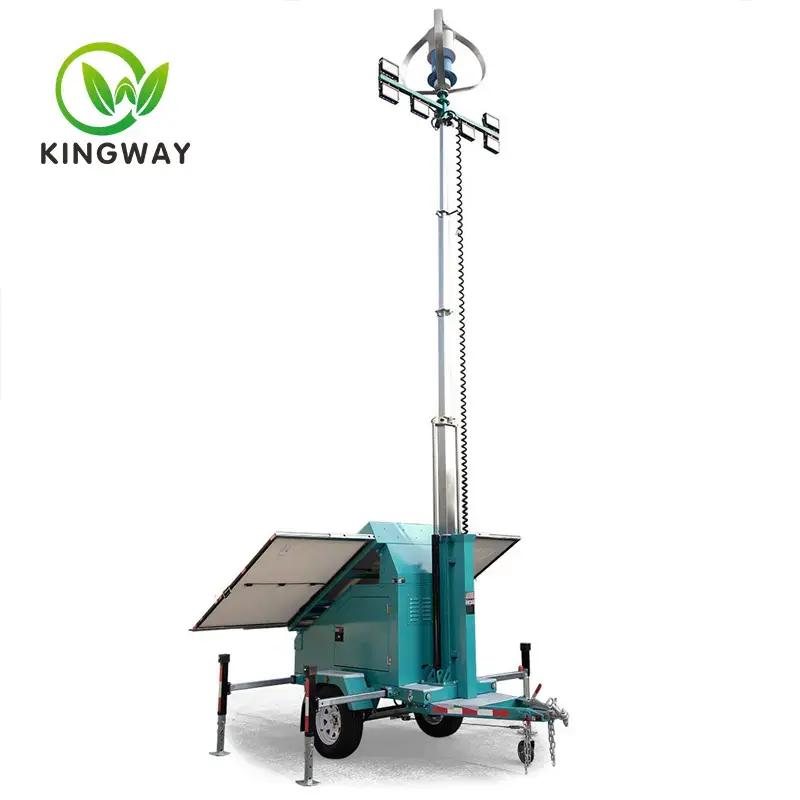
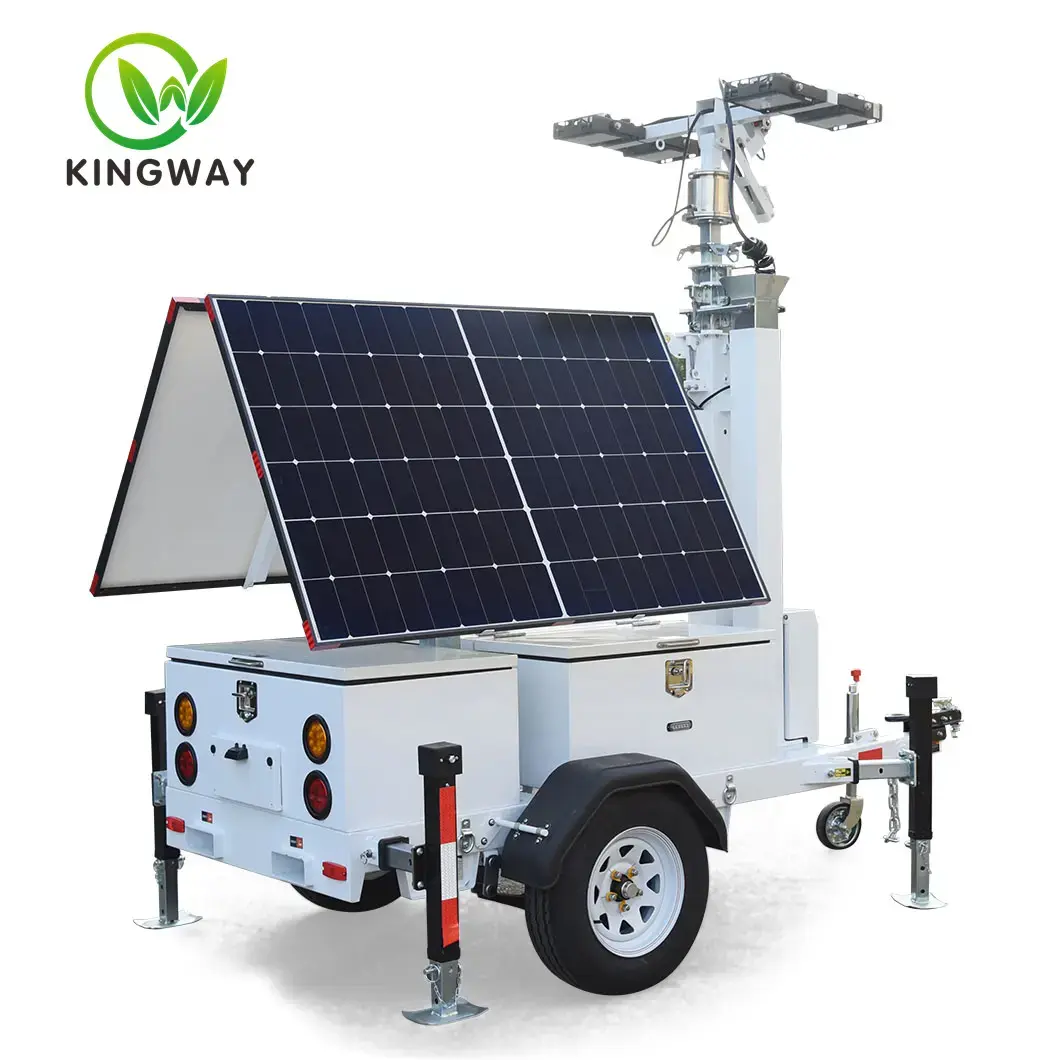
The solar monitoring trailer is an integrated monitoring device that combines a Solar Power System, high-definition monitoring equipment, a mobile trailer platform, and an intelligent management terminal. Its core advantages lie in mobility, autonomy, intelligence, and affordability, perfectly meeting the needs of temporary construction sites:
1. No Wiring Required, Solar Powered: Eliminates reliance on mains electricity
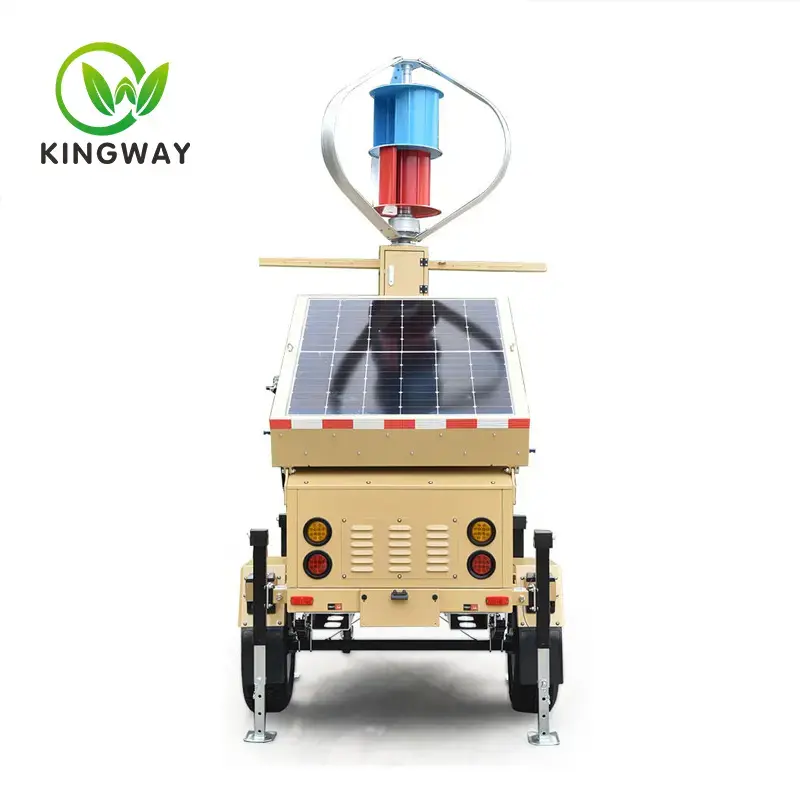
The solar monitoring trailer's core power comes from a combination of high-efficiency monocrystalline silicon solar panels (with a conversion efficiency of 23%-25%) and a large-capacity lithium battery pack (typically 12V/100Ah-200Ah, supporting over 1,500 deep charge and discharge cycles). Under sufficient sunlight, the battery fully charges in 4-6 hours, and a full charge provides 3-7 days of continuous operation (including nighttime and rainy days). Some high-end models also feature a dual solar and wind power system to further enhance power stability in extreme weather conditions.
No mains power connection or cabling required. Installation and commissioning can be completed in 15-30 minutes after the device arrives on site, significantly reducing pre-construction preparation costs and preventing monitoring interruptions caused by damaged wiring.
2. Flexible Mobility and On-Demand Deployment: Adaptable to Dynamic Construction Scenarios
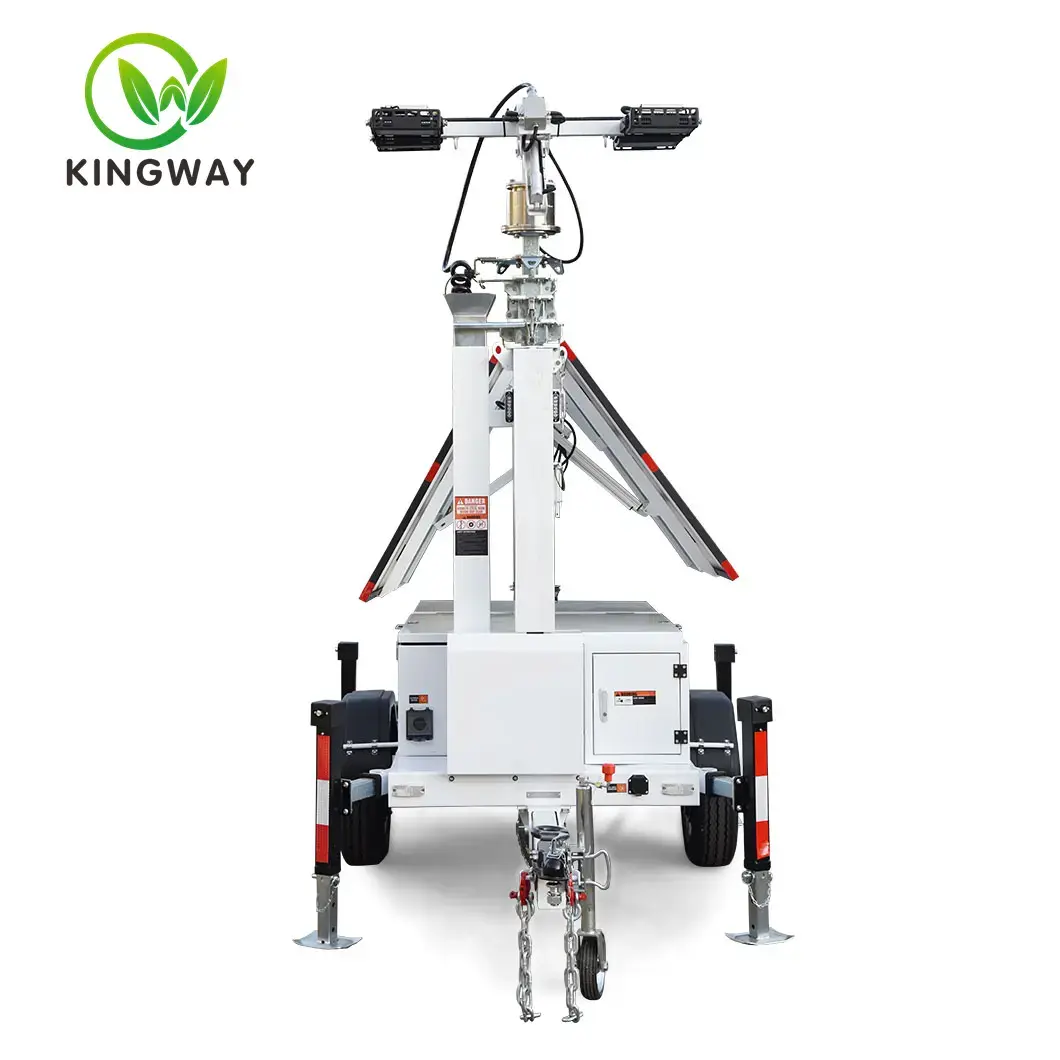
The device is equipped with a high-strength carbon steel trailer chassis, swivel wheels, and a towing hook, making it easily movable by forklifts or pickup trucks. Whether it's a foundation work area, a material warehouse, a temporary entrance, or a remote construction site, the monitoring location can be adjusted at any time according to needs. Select models also feature a "lift mast design," allowing the monitoring height to be adjusted from 2 to 5 meters. Combined with a 360° panoramic pan/tilt (350° horizontal rotation and 90° vertical rotation), a single device can cover an area with a radius of 50-100 meters, effectively reducing the number of monitoring devices deployed.
3. Intelligent Monitoring, Active Warning: Beyond the Management Value of "Passive Recording"
Modern solar-powered surveillance trailers are no longer simply "recording devices" but rather "site management terminals" integrated with multiple intelligent functions:
High-definition Night Vision + AI Recognition: Equipped with a 4- to 8-megapixel starlight-level camera, they deliver clear nighttime images even in low-light conditions as low as 0.01 Lux. They support AI-powered human and vehicle recognition, as well as intrusion detection. When strangers or unauthorized vehicles enter the security zone, or exhibit dangerous behaviors such as "not wearing a helmet" or "climbing over fences," the device immediately triggers an audible and visual alarm (with a built-in 110dB tweeter and flashing warning light).
4G/5G Wireless Transmission: Requires no wired network. 4G/5G modules transmit real-time video footage and alarm information to mobile apps and computer backends. Construction managers can remotely view site conditions, retrieve recordings, and issue voice commands (e.g., "Do not approach"), enabling them to monitor construction progress from afar. Anti-vandalism Design: The device features an IP66-rated waterproof and dustproof casing, resistant to heavy rain, sandstorms, and other harsh weather. The battery pack is equipped with a tamper-resistant lock and alarm. If anyone attempts to dismantle the device, a remote alarm is triggered, reducing the risk of theft.
4. Controllable Costs and Long-Term Energy Savings: Reduced Lifecycle Expenses
From a cost perspective, the total cost of solar-powered surveillance trailers (including initial investment and ongoing maintenance) is significantly lower than traditional solutions:
Upfront Investment: A single device typically costs between 15,000 and 50,000 yuan (depending on configuration). If it replaces three security personnel, the cost is recouped in 6-12 months.
End-of-Life Expenses: Solar power provides zero electricity costs, requires no external wiring, and requires only quarterly cleaning of the solar panels and battery status checks, resulting in an average annual maintenance cost of less than 500 yuan.
High Reusability: After a project is completed, the device can be moved to the next construction site for continued use, with a service life of 5-8 years, significantly reducing long-term procurement costs.
III. Solar Monitoring Trailer Application Scenarios: Covering All Areas of Temporary Construction
Due to its strong adaptability, solar monitoring trailers have been widely used in various temporary construction scenarios, becoming a "standard tool" for project management:
1. Construction Sites
For residential and commercial complex construction projects, these can be deployed at site entrances and exits (to monitor personnel and vehicle entry and exit, and record attendance), material storage areas (to prevent theft of materials such as rebar and cables), high-altitude work areas (to monitor construction personnel's safe and standardized operation), and around foundation pits (to prevent unauthorized personnel from approaching and causing accidents).
2. Road and Bridge Construction Scenarios
In linear projects such as highway expansion and bridge erection, these can be deployed at intervals along the construction route to monitor the operating status of construction machinery and the diversion of passing vehicles. They can also provide real-time monitoring of nighttime construction noise and dust pollution (some models can integrate noise and PM2.5 sensors).
3. Municipal Engineering and Emergency Repair Sites
For temporary scenarios such as water pipeline repairs and power line maintenance, solar-powered surveillance trailers can be quickly deployed to establish security zones, prevent unauthorized personnel from entering the work area, and record the construction process for later accountability.
4. Mines and Field Construction Camps
In remote mines and field construction camps, where utility power and internet coverage are difficult, solar-powered surveillance trailers provide 24-hour security monitoring to ensure the safety of personnel and equipment. They also enable remote collaboration with headquarters via 4G data transmission.
VI. How to Choose a Solar-Powered Surveillance Trailer? Key Parameters to Avoid Pitfalls
With a wide variety of products on the market, engineers should focus on the following key parameters when purchasing to avoid "high price, low performance":
1. Power Supply System: Prioritize "High-efficiency Photovoltaic + Large-Capacity Lithium Battery"
Solar Panel Type: Monocrystalline silicon > Polycrystalline silicon (higher conversion efficiency and better low-light performance);
Battery Capacity: Choose based on local sunshine conditions. In rainy areas, a 200Ah or higher lithium battery is recommended to avoid power outages during rainy days;
Battery Life: Requires a battery life of 3 days or more on a full charge. Supports dual-mode charging with "light control" and "time control" to automatically adapt to lighting conditions. 2. Surveillance Performance: Clarity and night vision are key.
Camera Pixels: At least 4 megapixels (supporting 1080P HD recording), 8 megapixels recommended for key areas.
Night Vision: Starlight-level night vision is preferred (rather than infrared) to avoid white-out images and loss of detail.
Pan-Tilt (PTZ) Functionality: 360° panoramic rotation and "auto-cruise" and "fixed-point monitoring" functions are required to reduce manual operation.
3. Transmission and Management: Stable Internet connection + Intelligent Backend
Network Module: Supports 4G full network access (China Mobile, China Unicom, and China Telecom). 5G modules are optional in some regions to ensure stable signal in remote areas.
Management Platform: Supports centralized management of multiple devices, allowing real-time video viewing, alarm reception, and recording export via mobile apps and desktops. No additional annual fees are required.
4. Hardware Quality: Suitable for Harsh Construction Environments
Protection Level: Body ≥ IP66, Camera ≥ IP67, ensuring water and dust resistance;
Chassis Material: Preferred carbon steel with anti-corrosion treatment, load-bearing capacity ≥ 500kg to prevent trailer deformation;
Lifting Mast: Electric (not manual) for smooth lifting and a height adjustment range of 2-5 meters.
5. After-Sales Service: Focus on Warranty and Response Speed
Warranty Period: Solar panels and Lithium Batteries for ≥ 3 years, main unit for ≥ 1 year;
Service Capabilities: Manufacturers are required to provide 24/7 technical support, with on-site repair services available in remote areas.
V. Real-World Case Study: The Surveillance Upgrade Path for a Highway Expansion Project
A highway expansion project in a certain province faced long-standing surveillance challenges: the construction section stretched 15 kilometers across multiple work surfaces. Traditional fixed surveillance cabling cost over 300,000 yuan. Furthermore, due to the scattered sections, security patrols required a team of eight, resulting in a monthly labor cost of 50,000 yuan. In 2024, the project introduced six solar-powered surveillance trailers, achieving the following improvements:
Improved deployment efficiency: All six devices were fully installed within one day, eliminating the need for wiring and reducing initial investment by 60% compared to traditional solutions.
Enhanced surveillance coverage: Using a 360-degree pan/tilt system and a 5-meter mast, the six devices provide full coverage of the entire road section. AI-powered intrusion detection has reduced nighttime material theft to zero.
Implemented remote management: Project managers can monitor the progress of each work area in real time via a mobile app and immediately address any instances of workers not wearing safety helmets, resulting in a 40% reduction in safety incidents.
Significantly reduced costs: The elimination of an eight-person security team resulted in annual labor savings of 600,000 yuan, with the equipment investment paying for itself within 12 months.
This case demonstrates that solar-powered surveillance trailers are more than just monitoring tools; they are core equipment for improving the management efficiency of temporary construction sites and reducing operating costs.