

Mobile Lighting Trailer Supplier
Solar-Powered Surveillance Trailers: All-Weather Intelligent Guardians in Border Security Operations
Solar-Powered Surveillance Trailers: All-Weather Intelligent Guardians in Border Security Operations
In the era of globalization, border security has become a core component of national security systems in every country. From vast deserts and Gobi deserts to winding mountain jungles, from long coastlines to complex riverine intersections, the diverse terrain, complex environments, and potential security threats in border areas pose severe challenges to traditional security measures. The emergence of solar-powered surveillance trailers, with their core advantages of "zero carbon emissions, flexible deployment, and all-weather monitoring," is gradually becoming the "intelligent guard" in border security operations, fundamentally transforming the traditional passive model of border security, which relies on fixed base stations and manual patrols.
First, the pain points of border security: Why is it urgent to upgrade traditional security measures? The core requirements of border security can be summarized as "full coverage, no blind spots, real-time response, and continuous operation." However, traditional security solutions often struggle to meet these requirements simultaneously. Key pain points are concentrated in the following three areas:
Large deployment limitations and numerous blind spots: Fixed monitoring base stations rely on power grids and wired networks. However, most border areas (such as deserts, plateaus, and remote mountainous areas) have extremely low power grid coverage, resulting in high cabling costs and vulnerability to damage. Human patrols are limited by terrain, climate (such as heavy rain, snow, and high temperatures), and personnel availability, making 24/7 uninterrupted coverage difficult and prone to blind spots.
High maintenance costs and poor reliability: Traditional diesel-powered mobile monitoring equipment not only consumes a lot of fuel and requires frequent maintenance, but also suffers from noise and exhaust pollution, making it difficult to deploy in ecologically sensitive border areas (such as those surrounding nature reserves). Furthermore, fuel-powered equipment has a high failure rate in extreme environments such as low temperatures and dust, making long-term stable operation unreliable. Slow response and weak coordination: Traditional surveillance relies heavily on manual on-site judgment. When unusual situations such as illegal border crossings, smuggling, and illegal fishing are discovered, manual reporting and coordination with law enforcement are required. This cumbersome process delays optimal action. Furthermore, monitoring equipment used by different departments often lacks standardized standards, making data sharing difficult and creating information silos.
These pain points are driving the transformation of border security towards green, mobile, and intelligent approaches, and solar-powered surveillance trailers are crucial for addressing these challenges.
II. The Core Value of the Solar Surveillance Trailer: Reducing the Burden and Increasing Efficiency for Border Security
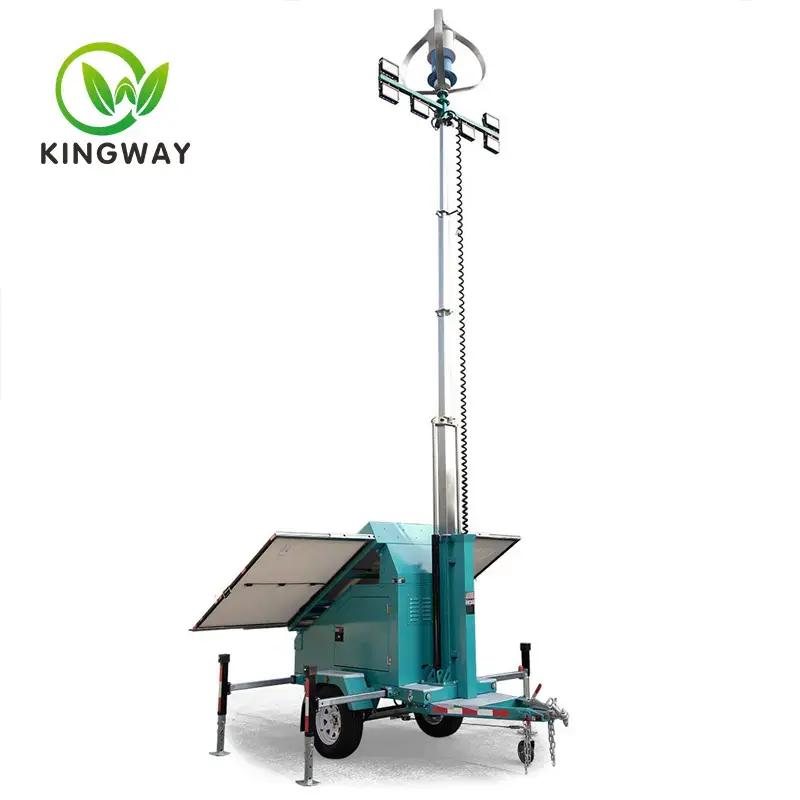
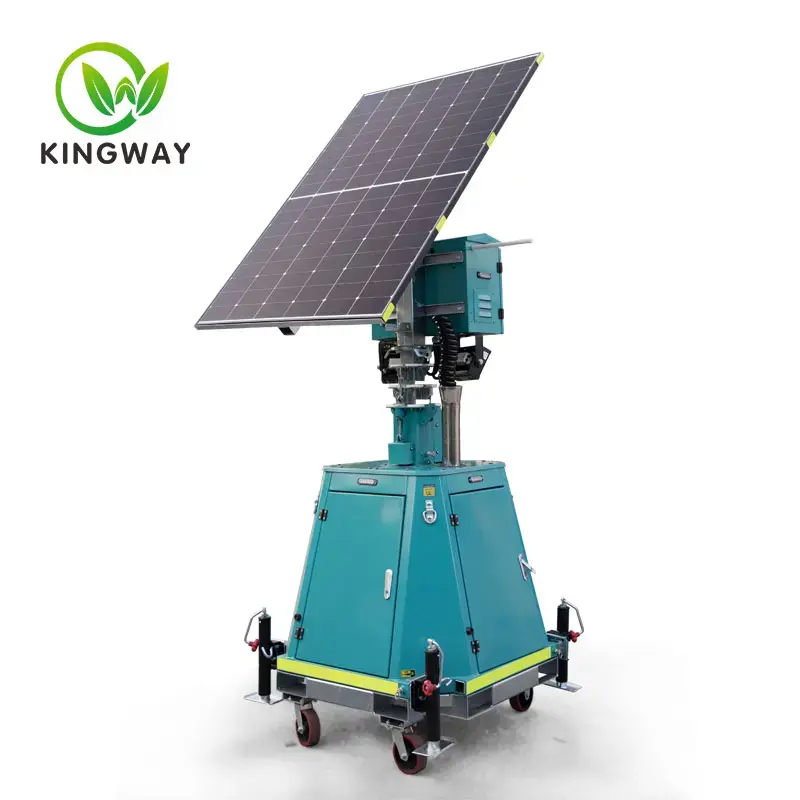
The solar surveillance trailer is a new type of security equipment that integrates solar power, intelligent monitoring, wireless transmission, and flexible mobility. Its core value lies in addressing the challenges of traditional border security, including power supply, deployment, operation and maintenance, and response, through a combination of green energy and intelligent technology. This is reflected in the following four aspects:
1. Zero-Carbon Autonomous Power Supply: Eliminating Grid Dependence and Adapting to Extreme Environments
Equipped with high-efficiency monocrystalline silicon solar panels on its roof and a large-capacity lithium battery energy storage system, the trailer enables 24-hour autonomous operation, utilizing solar power generation and storage during the day and lithium battery power supply at night, without relying on the grid or fuel. Even in inclement weather such as continuous rain, dust storms, and other severe conditions, the energy storage system ensures stable operation for 7-15 days, perfectly adapting to the complex climatic conditions of border areas. Furthermore, its zero fuel consumption and zero exhaust emissions not only reduce long-term operation and maintenance costs but also protect the border ecosystem, making it particularly suitable for security needs in nature reserves and ecologically fragile areas.
2. Flexible and Rapid Deployment: "Stop and Go," Covering Blind Spots
The trailer's lightweight design allows for easy towing by pickup trucks and off-road vehicles. Whether in deserts, mountains, grasslands, or mudflats, it can quickly reach the designated location, enabling a "stop and go" deployment model. From arrival to monitoring activation, the entire process takes only 30 minutes for one or two people. This flexibility enables rapid coverage of blind spots left by fixed base stations, making it particularly suitable for scenarios such as temporary border control points, security for major events, and emergency support for emergencies. It completely overcomes the limitations of traditional base stations, which often require long construction cycles and fixed locations.
3. Intelligent and Precise Monitoring: From "Passive Monitoring" to "Active Warning"
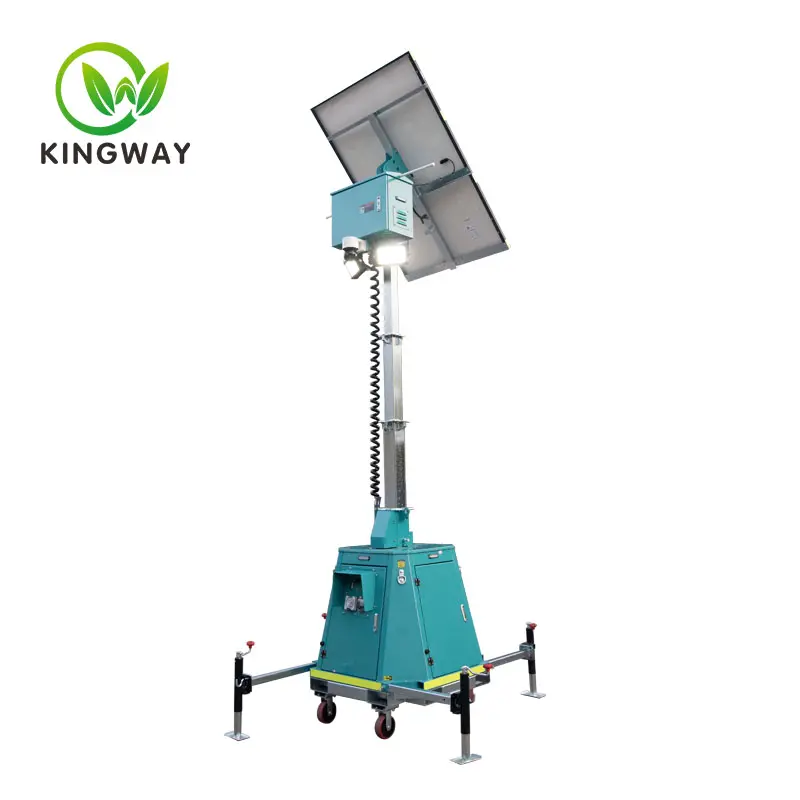
The solar-powered surveillance trailer is equipped with multi-dimensional monitoring equipment, including a high-definition infrared pan-tilt camera, a thermal imager, an acoustic warning sensor, and a vibration sensor, enabling multi-dimensional monitoring using "visual + auditory + vibration":
The high-definition infrared camera supports 360° rotation and 10-30x optical zoom, enabling clear identification of people and vehicles within a range of 200-500 meters, even in dark conditions.
The thermal imager accurately locates targets based on temperature differences, effectively avoiding interference from vegetation and camouflage.
When the sensors detect unusual sounds (such as engine roars or people shouting) or vibrations (such as vehicles running over or people climbing), the system automatically triggers an alert, proactively identifying risks without requiring human intervention. More importantly, the device's built-in AI algorithm automatically identifies behaviors such as people crossing the border, vehicles illegally entering, and suspicious items left behind. It also filters out invalid information like animal activity and minor disturbances, significantly reducing false alarms and freeing border enforcement officers from the tedious task of sifting through massive amounts of surveillance footage.
4. Wireless Collaborative Transmission: Breaking Down Information Silos and Enabling Real-Time Interaction
The trailer is equipped with a 4G/5G wireless communication module and an optional satellite communication terminal, which transmits surveillance footage and warning information in real time to the border command center and law enforcement officers' mobile phones or tablets. This enables seamless collaboration between front-end monitoring, back-end command, and on-site enforcement. When an anomaly occurs, the command center can remotely adjust the camera angle and zoom in on target details. It also sends the precise location and on-site footage to nearby patrol officers, guiding them in a swift response. This reduces response time from traditional hours to minutes. Furthermore, multiple trailers can form a distributed monitoring network, enabling data sharing and coordinated warnings, forming a more comprehensive border security system.
Third, Practical Scenarios: How Do Solar-Powered Surveillance Trailers Protect Border Security?
From land borders to maritime borders, from routine control to emergency response, solar-powered surveillance trailers have been deployed in border security operations in numerous countries around the world, demonstrating their significant practical value. The following are typical use cases:
1. Land Borders: Preventing Illegal Crossing and Smuggling
Across a country's northern desert border, local border defense authorities long faced the challenges of difficult patrols and frequent smuggling. The desert lacks power grid coverage, making fixed base stations difficult to deploy. Manual patrols could only cover a 20-kilometer radius daily, and smuggling vehicles often exploited nighttime and inclement weather to circumvent patrols. After introducing solar-powered surveillance trailers, border control authorities deployed five of them along high-smuggling routes, forming a distributed network with one monitoring point every 10 kilometers.
Infrared cameras can clearly identify smuggling vehicles at night from 300 meters away, and AI algorithms automatically distinguish between "normal grazing vehicles" and "modified smuggling vehicles."
Once a target is detected, the system immediately sends an alert to the command center and nearby patrol teams, who then conduct precise interception based on real-time footage.
In the first year of operation, smuggling cases in the area have decreased by 72%, patrol manpower costs have been reduced by 40%, and there has not been a single interruption in surveillance due to equipment power outages.
2. Maritime/River Borders: Combating Illegal Fishing and Illegal Immigration
A country's southern river border stretches 500 kilometers, and illegal fishing and illegal immigration are prominent problems. Traditional patrol vessels are not only costly but also struggle to cover shallows and reed marshes. By deploying solar-powered surveillance trailers equipped with waterproof pan-tilt cameras and radar detection, comprehensive monitoring of riverbanks and shallows is achieved.
The waterproof cameras can identify fishing boats and rubber dinghies within a 150-meter range, while the radar can detect moving targets within 500 meters.
When unlicensed fishing vessels or suspicious individuals are detected, the system automatically transmits their coordinates to nearby law enforcement vessels and records the target's trajectory as evidence.
Since implementing this solution, illegal fishing cases have decreased by 65%, the success rate of illegal immigration interception has increased to 80%, and the system saves approximately 2 million yuan in fuel and maintenance costs annually.
3. Emergency Security: Rapid Response to Border Incidents
When natural disasters such as earthquakes and floods strike border areas, traditional security facilities are easily damaged. Solar-powered surveillance trailers can be quickly deployed as "emergency monitoring stations":
They no longer rely on damaged power grids, providing independent power supply to ensure security monitoring at disaster relief sites and temporary shelters.
They transmit real-time on-site footage to the disaster relief command center via wireless transmission, helping commanders understand the disaster situation and dispatch resources.
During earthquake relief efforts along a certain border, 10 solar-powered surveillance trailers were deployed within 24 hours, effectively preventing risks such as post-disaster theft and secondary disasters.
Fourth, Future Trends: How can solar-powered surveillance trailers be upgraded to "border smart hubs"?
With the continuous iteration of technology, solar-powered surveillance trailers are evolving from single monitoring devices to intelligent border hubs. Future development will focus on three key areas:
In-depth AI algorithm optimization: Integrating big data analysis to achieve predictive early warning of border personnel behavior patterns and smuggling routes, upgrading from passive response to proactive prevention. Furthermore, the introduction of technologies such as facial recognition and license plate recognition enables rapid identification of suspicious targets.
Multi-device collaboration: Integrating with drones, unmanned boats, intelligent patrol robots, and other equipment to form an integrated "air-ground-water" surveillance network. The trailer acts as a "ground base station," providing charging and data relay services for drones, while the drones extend the trailer's surveillance range, achieving comprehensive "point-line-surface" coverage.
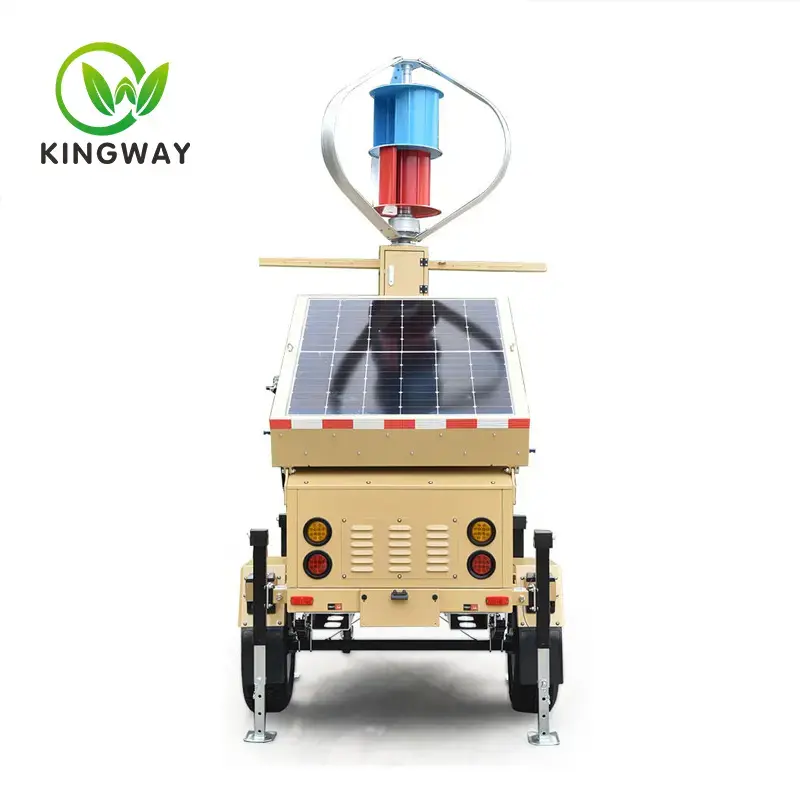
Energy efficiency is further enhanced: More efficient perovskite solar cells (with conversion efficiencies exceeding 30%) and new energy storage batteries are used to further extend equipment life. Furthermore, a complementary wind and Solar Power System is introduced to adapt to the changing climate conditions in border areas, ensuring uninterrupted operation.
Fifth, Conclusion: Green and Intelligent, Reshaping the New Ecosystem of Border Security
Border security is the "first line of defense" for national security. The emergence of solar-powered surveillance trailers not only addresses many of the pain points of traditional border security but also injects new vitality into it with their green, flexible, and intelligent features. From deserts to rivers, from daily control to emergency support, they leverage technology to reduce the burden on border law enforcement personnel, safeguard border ecosystems with a zero-carbon approach, and improve security efficiency through real-time response. In the future, with the deep integration of intelligent technology and green energy, solar-powered surveillance trailers will become the core hub of border security, helping countries build safer, more efficient, and more sustainable border security systems—ensuring that every inch of the border is protected 24/7 by "smart guards."