

Mobile Lighting Trailer Supplier
Solar-Powered Monitoring Trailers: A Viable Option for Remote Wildlife Monitoring
Solar-Powered Monitoring Trailers: A Viable Option for Remote Wildlife Monitoring
Remote monitoring remains a core requirement in global ecological conservation and wildlife research. Researchers need to obtain long-term, stable observational data without disrupting animals' natural behavior, while conservation agencies need to monitor the movements of rare species in real time to prevent risks such as poaching and habitat destruction. However, traditional remote monitoring solutions are often limited by two major challenges: power supply stability and deployment flexibility. The emergence of solar-powered monitoring trailers provides efficient and sustainable solutions to these two pain points.
First, the core pain points of remote wildlife monitoring: Why do traditional solutions struggle to meet these needs?
Before exploring the value of solar-powered monitoring trailers, we must first understand the unique characteristics of remote wildlife monitoring scenarios. Most monitoring areas are located in forests, grasslands, plateaus, or wetlands far from human settlements. These areas commonly face two major constraints:
Power Supply Dilemma: Off-grid, Monitoring "Out of Service" is the norm
Traditional remote monitoring equipment (such as infrared cameras and high-definition cameras) relies on batteries. Once the batteries run out, the devices enter a "hibernation" state, resulting in interrupted data collection. Choosing fuel generators for power not only requires frequent fuel transportation (extremely high transportation costs in remote areas), but also generates noise and exhaust, disturbing wildlife and undermining the principle of "non-intrusive" monitoring. This undermines the low-carbon approach to ecological conservation.
Deployment Challenges: Complex Terrain Makes Fixed Equipment "Impossible to Move"
Some monitoring solutions opt for fixed monitoring stations. However, the terrain in remote areas is often rugged and complex—steep mountain slopes, muddy wetlands, dense jungles, and so on. This makes the construction of basic infrastructure (such as poles and wiring) extremely difficult, time-consuming, and labor-intensive, and can also cause secondary damage to local habitats. Furthermore, fixed monitoring stations have a limited monitoring range. If the observation area needs to be adjusted, the entire equipment is almost impossible to reuse, and the cost is high.
These pain points have left many remote wildlife monitoring projects facing the dilemma of "sustainable monitoring without sustainability and flexible coverage without flexibility." The design of solar-powered monitoring trailers precisely addresses these issues.
Second, the adaptability of solar-powered monitoring trailers: Why are they an "ideal partner" for remote monitoring?
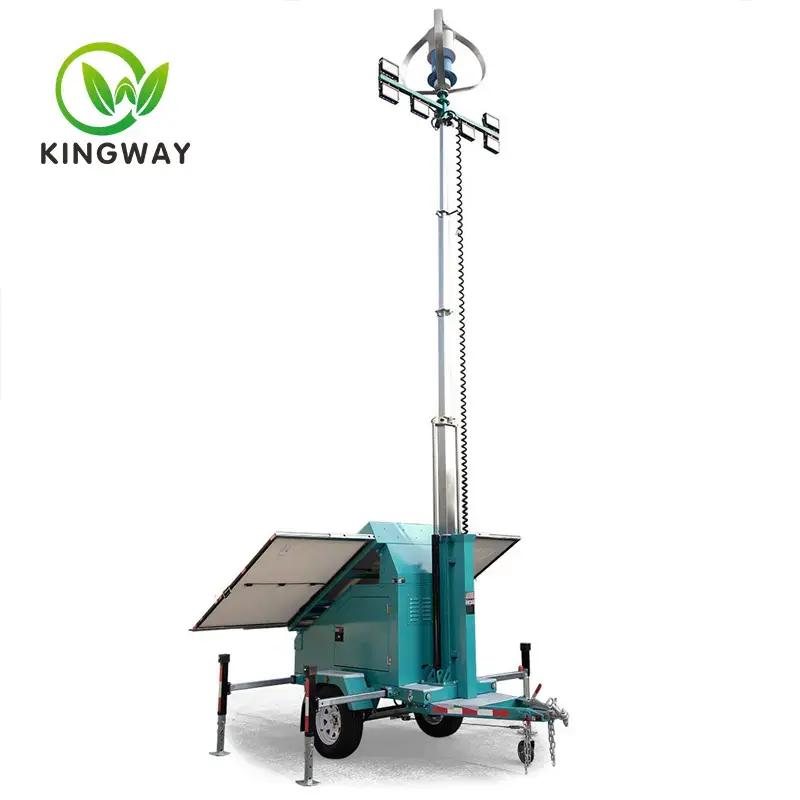
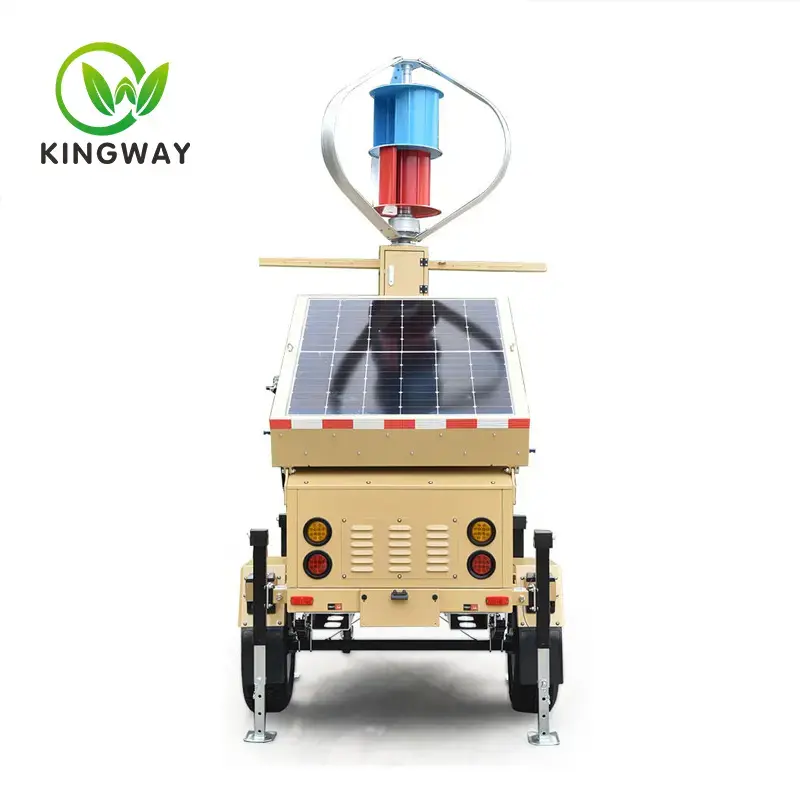
The solar-powered monitoring trailer seamlessly integrates a Solar Power System with a mobile monitoring platform, perfectly meeting the needs of remote wildlife monitoring from three key perspectives: power supply, deployment, and adaptability.
1. Solar Power: A Zero-Dependence, Zero-Interference Sustainable Energy Solution
The solar-powered monitoring trailer's core advantage lies in its autonomous power supply. Equipped with high-efficiency monocrystalline silicon solar panels (with a conversion rate exceeding 22%) and a large-capacity lithium-ion battery (supporting a wide operating temperature range of -30°C to 60°C), the trailer's rooftop features a "daytime energy storage, nighttime power supply" cycle. Even in rainy weather, the battery ensures stable operation for 3-7 days (the specific duration can be customized based on the monitoring device's power), completely eliminating reliance on the power grid or fuel.
Finally, solar power is silent and emission-free, ensuring no disruption to wildlife habits, fully adhering to the core principle of "contactless monitoring." This sustainability is particularly critical for projects requiring long-term monitoring (months or even years), such as tracking migratory bird migrations and observing the breeding of rare species.
2. Mobile Design: Flexible Deployment to Adapt to Multi-Scenario Monitoring Needs
The solar-powered monitoring trailer utilizes a lightweight trailer structure (typically weighing 500-1000kg) and can be towed by off-road vehicles or small trucks, easily navigating complex terrains such as forests, grasslands, and plateaus. Once at the monitoring site, no complex infrastructure is required—one or two people can deploy the solar panels, debug the monitoring equipment, and set up anchor points within 30 minutes before the system is operational.
This flexibility offers two key benefits:
Multi-region Coverage: If the monitoring area needs to be adjusted (e.g., tracking seasonal herbivore migration), the trailer can be towed to relocate without having to rebuild the equipment, significantly reducing redundant investment.
Emergency Response: When emergencies arise (e.g., poaching leads or injured animals), the trailer can be quickly deployed to the target area for real-time monitoring and data transmission, supporting emergency response.
3. Environmental Adaptability: Withstands Extreme Conditions, Ensuring Stable Monitoring
Remote wildlife monitoring areas often face harsh environments—high and low temperatures, heavy rain, and dust storms—posing extremely high demands on equipment stability. The solar-powered monitoring trailer's design takes these factors into account:
The body is constructed of corrosion-resistant steel with a waterproof coating to withstand heavy rain and high humidity, preventing component rust.
The solar panels and monitoring equipment compartment are equipped with a temperature control system, ensuring operational performance in temperatures as low as -40°C or as high as 60°C.
The camera utilizes a high-definition infrared night vision lens (with a range of 50-100 meters), enabling clear capture of animal activity even in the dark, enabling 24-hour uninterrupted monitoring.
Third, Practical Application Cases: How can solar-powered monitoring trailers contribute to global wildlife conservation?
Theoretical applicability must be proven in practice. In recent years, solar-powered surveillance trailers have been deployed in numerous wildlife monitoring projects around the world, demonstrating significant value:
Case 1: Kenyan Grasslands, Africa – Elephant Migration and Poaching Prevention Monitoring
The Maasai Mara National Reserve in Kenya is a key migratory route for African elephants, but poaching and illegal intrusions have long plagued local conservation agencies. In 2023, local conservation organizations introduced 10 solar-powered surveillance trailers, deployed at key elephant migration points.
The trailers are equipped with high-definition cameras and an AI recognition system that automatically identifies the number of elephants in a group and the proportion of calves, transmitting real-time data back to the conservation center.
When a suspicious vehicle (commonly used by poachers) approaches, the system automatically triggers an alarm, allowing conservation personnel to use remote communication to drive it away and dispatch patrols.
Solar power ensures uninterrupted operation year-round, reducing data interruption rates by 92% compared to previous battery-powered solutions, and successfully intercepting three poaching incidents.
Case Study 2: Canadian Forests in North America – Monitoring Black Bear Hibernation
The temperate forests of British Columbia, Canada, are the primary habitat of black bears. Researchers need to monitor the bears' hibernation status (e.g., hibernation duration and burrow location) during winter. However, temperatures in the region can drop as low as -35°C, and the snow is deep, making traditional equipment inaccessible.
The research team selected a solar-powered monitoring trailer equipped with low-temperature-resistant energy storage batteries and snow-resistant solar panels (coated with a snow-repellent coating that automatically melts snow), providing a stable power supply even in blizzards. The trailer's onboard infrared thermal imaging camera can penetrate burrows to clearly monitor the bears' body temperature and activity levels, providing valuable continuous data for research on the impact of climate change on black bear hibernation cycles.
Case Study 3: Tibetan Plateau in Asia – Monitoring Tibetan Antelope Lambing Grounds
The Hoh Xil region of the Tibetan Plateau is the core lambing ground for the Tibetan antelope. The monitoring area, located at an altitude of over 4,500 meters, features thin air, large temperature swings between day and night, and no power grid coverage. In 2024, the local forestry department introduced a solar-powered monitoring trailer, enabling full-time monitoring of the lambing grounds.
The trailer features a lightweight design and can be towed by a high-altitude off-road vehicle to the monitoring point at an altitude of 4,800 meters.
The solar panels are optimized for the high-UV environment of the plateau, increasing the conversion rate to 24%, ensuring efficient energy storage even in low-light conditions.
The equipment transmits data via satellite (addressing the lack of 4G signal on the plateau), allowing researchers to monitor the lambing status of Tibetan antelopes in real time from their laboratory thousands of miles away, avoiding the safety risks and ecological disruption associated with frequent visits to high-altitude areas.
Fourth, the Core Technical Advantages of Solar Monitoring Trailers: More Than Just "Power + Mobility"
In addition to the basic features of "solar power" and "mobility," modern solar monitoring trailers integrate several advanced technologies to further enhance the efficiency and accuracy of remote wildlife monitoring:
1. Intelligent Data Processing: AI Recognition Reduces Labor Costs
High-end solar monitoring trailers are equipped with an AI image recognition system that automatically identifies common wildlife (such as deer, bears, elephants, and birds), counts their numbers, and records their movements, eliminating the need for manual video review. For example, in bird monitoring projects, the system can automatically distinguish migratory bird species and generate real-time "migration time - population size" reports, reducing researchers' data analysis time by over 70%.
2. Multi-network Adaptability: Data Transmission Even in Areas Without Signal
For remote areas with network blind spots, the trailer supports dual-mode data transmission: 4G/5G and satellite. When mobile network coverage is available, 4G/5G (low-cost, high-speed) is prioritized; when network coverage is unavailable, it automatically switches to satellite communication to ensure uninterrupted data. For extreme areas without network coverage, such as the polar regions and the deep sea, it can also be equipped with a Beidou satellite module to meet global monitoring needs.
3. Remote Management: Operate and Maintain Equipment Without On-site Visits
Through the cloud-based management platform, users can remotely monitor solar panel power generation efficiency, battery charge, and device operating status, and even adjust camera angles and parameters. If a device malfunctions, the system automatically sends an alert and locates the fault point, significantly reducing the frequency and cost of on-site maintenance.
Fifth, Future Trends: How Can Solar Monitoring Trailers Promote the Evolution of Wildlife Monitoring?
With the continuous advancement of technology, the application of solar-powered monitoring trailers in remote wildlife monitoring will become more extensive:
Lighter and Modular: Future trailers will utilize lighter composite materials and support the rapid replacement of monitoring modules (such as acoustic monitoring and environmental sensors), allowing for flexible configuration based on the monitoring needs of different species (such as birds and large mammals).
Higher-Efficiency Energy Systems: The use of perovskite solar panels (with a conversion rate expected to exceed 30%) and solid-state batteries will further improve power supply stability and endurance, enabling uninterrupted year-round operation even in extreme environments such as extreme cold and drought.
Multi-Device Collaborative Monitoring: Solar-powered monitoring trailers will form a "ground-to-ground" monitoring network with drones and infrared cameras. The trailers will serve as fixed monitoring nodes, while drones will patrol large areas and infrared cameras will cover detailed areas. The data from these three systems will be integrated in real time to achieve comprehensive monitoring of wildlife habitats.
Conclusion: Choosing a Solar Monitoring Trailer Is Choosing Sustainable Ecological Protection
For wildlife conservation organizations, scientific research teams, or ecotourism attractions, the core requirements for remote monitoring are "stability, flexibility, and non-intrusiveness." Solar monitoring trailers perfectly meet these three requirements: they break free from the constraints of the power grid and fuel, achieving a sustainable energy supply; they adapt to complex terrain and can be flexibly deployed at any monitoring point; and they are noiseless and emission-free, truly "not disturbing" the natural lives of wildlife.
With global awareness of ecological protection growing, choosing a solar monitoring trailer is not only about choosing an efficient monitoring tool, but also about choosing a conservation philosophy that coexists with nature. Whether you need to monitor elephants on the African grasslands or Tibetan antelope on the Qinghai-Tibet Plateau, a solar monitoring trailer can be your reliable partner for remote monitoring.