

Mobile Lighting Trailer Supplier
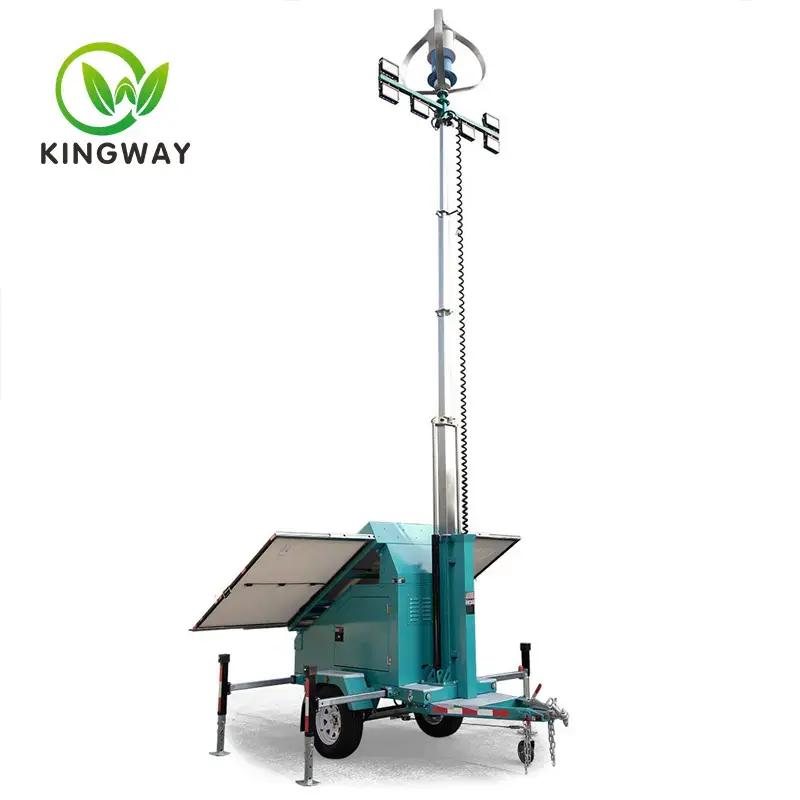
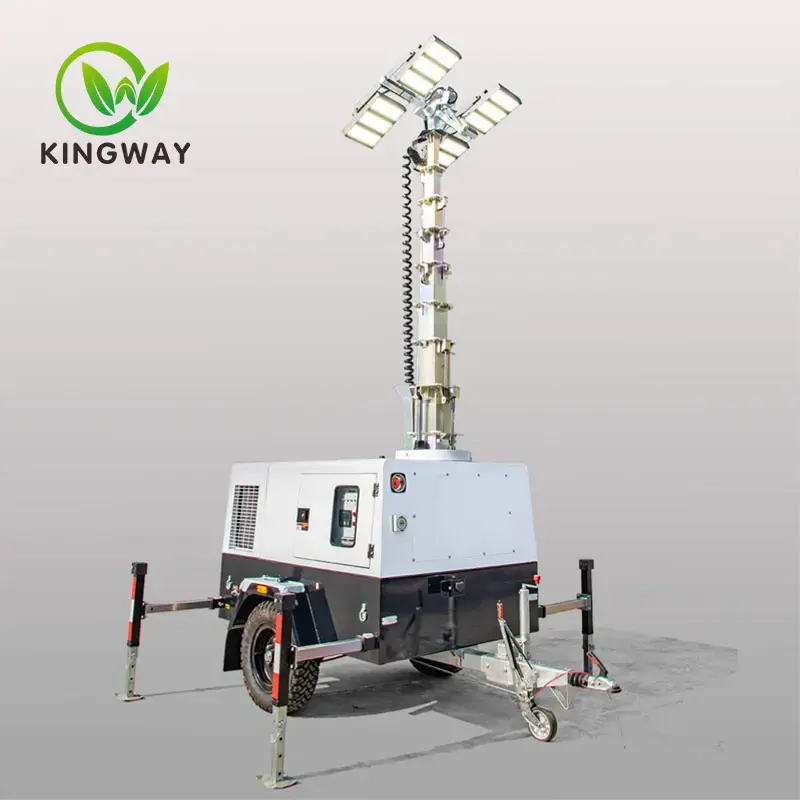
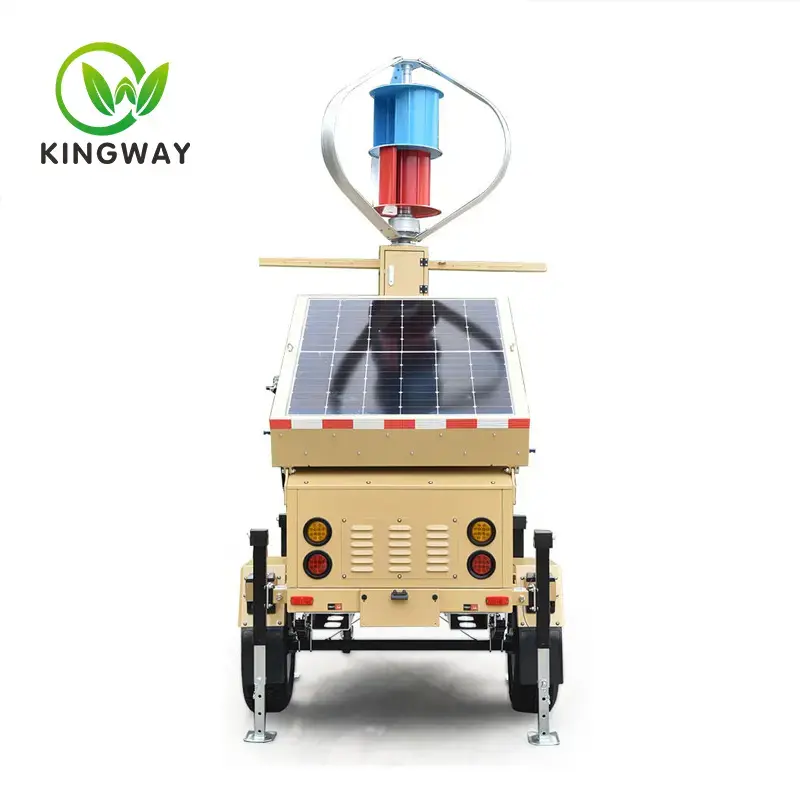
Solar Mobile Lighting Trailer Power Selection Guide
Solar Mobile Lighting Trailer Power Selection Guide
For outdoor operations, emergency rescue, large-scale events, and other scenarios, solar mobile lighting trailers have become a popular choice in overseas markets due to their zero fuel consumption and zero carbon emissions. However, many buyers often fall into the misconception of "higher power is better" or "price alone, ignoring power" when selecting a model. This ultimately leads to insufficient lighting that affects operational safety, or excessive power that increases procurement and maintenance costs. This article will explain the core principles of power selection and help you find the "golden power" that suits your needs.
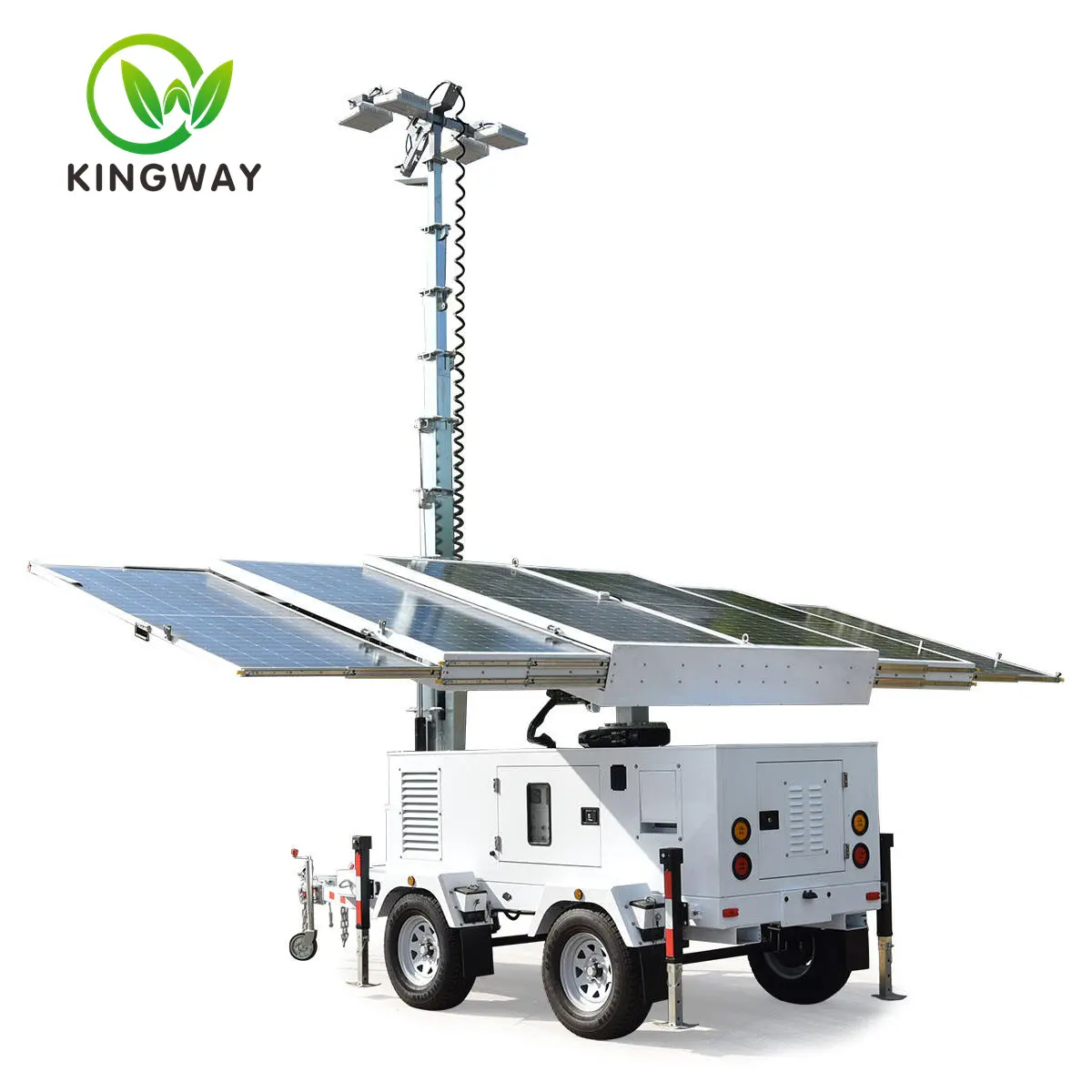
First, let's clarify: Why is power selection a "core decision" for solar lighting trailers?
The power of a solar mobile lighting trailer (usually referring to the total power of the lamps, measured in watts) directly determines two key performance indicators:
Lighting effect: Low power results in insufficient light intensity and limited coverage. For example, during nighttime construction work, lamps under 50W may not be able to provide sufficient lighting for workers more than 10 meters away, increasing safety risks.
Battery life: Given a fixed solar panel power and battery capacity, the higher the lamp power, the shorter the battery life on a single charge. For example, a trailer equipped with a 100Ah battery and a 200W lamp has a theoretical battery life of approximately 4-5 hours. If the power is increased to 400W, the battery life is reduced to 2-2.5 hours (a 10%-20% battery reserve should be reserved).
Power is also closely tied to various configurations, including solar panel size, battery capacity, and trailer load capacity. Choosing the wrong power can lead to an imbalance in the entire system. For example, pairing a low-power lamp with an oversized solar panel will waste Solar Energy. A high-power lamp paired with a small-capacity battery will frequently experience issues with the battery not being fully charged during the day and insufficient at night.
II. Four Key Factors Influencing Power Selection: Comprehensive Considerations from Requirements to Environment
1. Core Scenario: Power Baselines for Different Applications
This is the primary basis for power selection. Different scenarios have significantly different requirements for "light intensity" and "battery life." The following is a power reference for common scenarios in the overseas market:
Application Scenario
Core Requirements
Recommended Total Luminaire Power Range
Supporting Recommendations
Small Outdoor Work (e.g., Municipal Maintenance, Garden Construction)
Local Lighting, 4-6 Hours of Battery Life
100-200W
Paired with 150-200W Solar Panels, 100-150Ah Batteries
Medium-Sized Construction Site/Warehouse Lighting
100-300㎡ Coverage, 8-10 Hours of Battery Life
200-500W
Paired with 300-500W Solar Panels, 200-300Ah Battery
Large-scale projects (e.g., bridge construction, mining operations)
300-800㎡ coverage, strong light
500-1000W
Paired with 600-1200W solar panels and 400-600Ah batteries
Emergency rescue (e.g., post-disaster lighting, temporary medical centers)
Quick deployment, over 12 hours of battery life
200-400W
Optional dual-battery configuration with a USB charging port
Outdoor events/sports (e.g., football matches, markets)
Soft lighting, multi-area coverage
300-600W
Paired with adjustable brightness fixtures to adapt to different time periods
Note: The above power consumption is the total power consumption of the fixtures. If using a multi-lamp design (e.g., four 100W lamps), ensure that the total power consumption matches the solar system.
2. Lighting Coverage and Height: Use "Area + Height" to Calculate Power
If you know the specific lighting area (e.g., "A 200㎡ construction site needs to be illuminated, and the pole height is 5 meters"), you can estimate power using the following logic:
Coverage area <100㎡, pole height 3-5 meters: Single lamp power 50-100W, total power 100-200W;
Coverage area 100-300㎡, pole height 5-8 meters: Single lamp power 100-150W, total power 200-500W;
Coverage area >300㎡, pole height 8-12 meters: A multi-lamp design with a total power of 500-1000W is recommended, with 360° rotatable lamp heads to minimize blind spots. Key Note: Light intensity must comply with local safety standards. For example, the EU EN 12464 standard stipulates a minimum light intensity of 20 lux for nighttime work on construction sites. If the power is insufficient, it may fail local safety inspections.
3. Ambient Lighting Conditions: Dynamic Adjustment Required for Different Regions
Solar lighting trailers' core energy source is sunlight. Therefore, the duration and intensity of sunlight in the purchasing location directly influence the power selection:
High-sunlight regions (such as the Middle East and tropical Africa): For regions with an average annual sunshine duration of >6 hours, the lamp power can be appropriately reduced (e.g., if 500W is required, choose 400W). This will compensate for the power difference and reduce battery capacity requirements.
Low-sunlight regions (such as Northern Europe and high-latitude areas of North America): With only 2-4 hours of sunlight in winter, a combination of moderate power, large batteries, and high-efficiency solar panels is recommended. For example, a 300W lamp could be paired with a 500W high-efficiency monocrystalline silicon solar panel (conversion efficiency >23%) and a 400Ah battery to ensure at least 6 hours of battery life even in winter.
Rainy/foggy regions (such as Southeast Asia and some European countries): Consider rainy/cloudy backup battery life. It is recommended to select a power lower than the actual requirement. 10%-15% of the lighting fixtures, or increase the battery capacity (e.g., add an additional 100Ah battery) to avoid vacuum operation during continuous rainy and cloudy days.
4. Additional Features: Don't Ignore "Hidden Power Consumption"
Many solar lighting trailers have integrated additional features, which consume additional power and should be calculated when selecting a model:
USB charging port (for charging mobile phones and walkie-talkies): Each port consumes approximately 5-10W. If two ports are required, an additional 20W should be reserved.
Warning lights/strobe lights (for road construction and emergency situations): Consume approximately 10-30W and should be included in the total power consumption.
Surveillance cameras/small speakers: Consume approximately 15-30W. If these are required, the total power consumption should be increased by at least 50W. For example, if you need a construction site lighting trailer with two USB ports and a warning light, and you originally estimated the required lighting power to be 300W, you should reserve a total power of 300W + 20W + 20W = 340W to avoid power overload during actual use.
III. Avoid Three Common Power Selection Misconceptions to Reduce Procurement Risk
Myth 1: "The higher the power, the better the lighting effect."
Truth: Power and lighting performance are not linearly correlated. Exceeding the required power can lead to two major problems:
Dazzling light: Using a 500W fixture for minor repairs, for example, can cause visual fatigue for workers and affect work efficiency;
Cost surge: The purchase price of a 500W trailer is 30%-50% higher than a 200W trailer. Furthermore, the solar panels and batteries are larger, which increases shipping costs (especially for overseas shipping, which is priced by volume/weight). Misconception 2: "Only consider lamp power and ignore the matching of solar panels and batteries."
Truth: A solar lighting trailer is a closed-loop system consisting of "lamp - solar panel - battery," and all three must work together:
Wrong example: A 400W lamp is paired with a 200W solar panel. Even with full sunlight, the solar panel can only charge 1200Wh per day (200W x 6 hours). A 400W lamp consumes 400Wh per hour, providing only 3 hours of battery life, completely insufficient for nighttime operations.
Correct matching formula: Solar panel power ≈ lamp power × 1.2-1.5 times; Battery capacity (Wh) ≈ lamp power × expected battery life × 1.2 (allowing a 20% margin for backup).
Misconception 3: "Ignoring Future Expansion Needs"
Truth: If you may expand the lighting area or add additional functions in the future, you should reserve power margin when initially selecting a model.
For example, if you currently only need to illuminate a 200㎡ construction site (200-300W recommended), but plan to expand to 400㎡ in one year, you should directly select 500W lamps and pair them with expandable solar panel mounts (which can support the addition of one or two solar panels later) to avoid duplicate purchases.
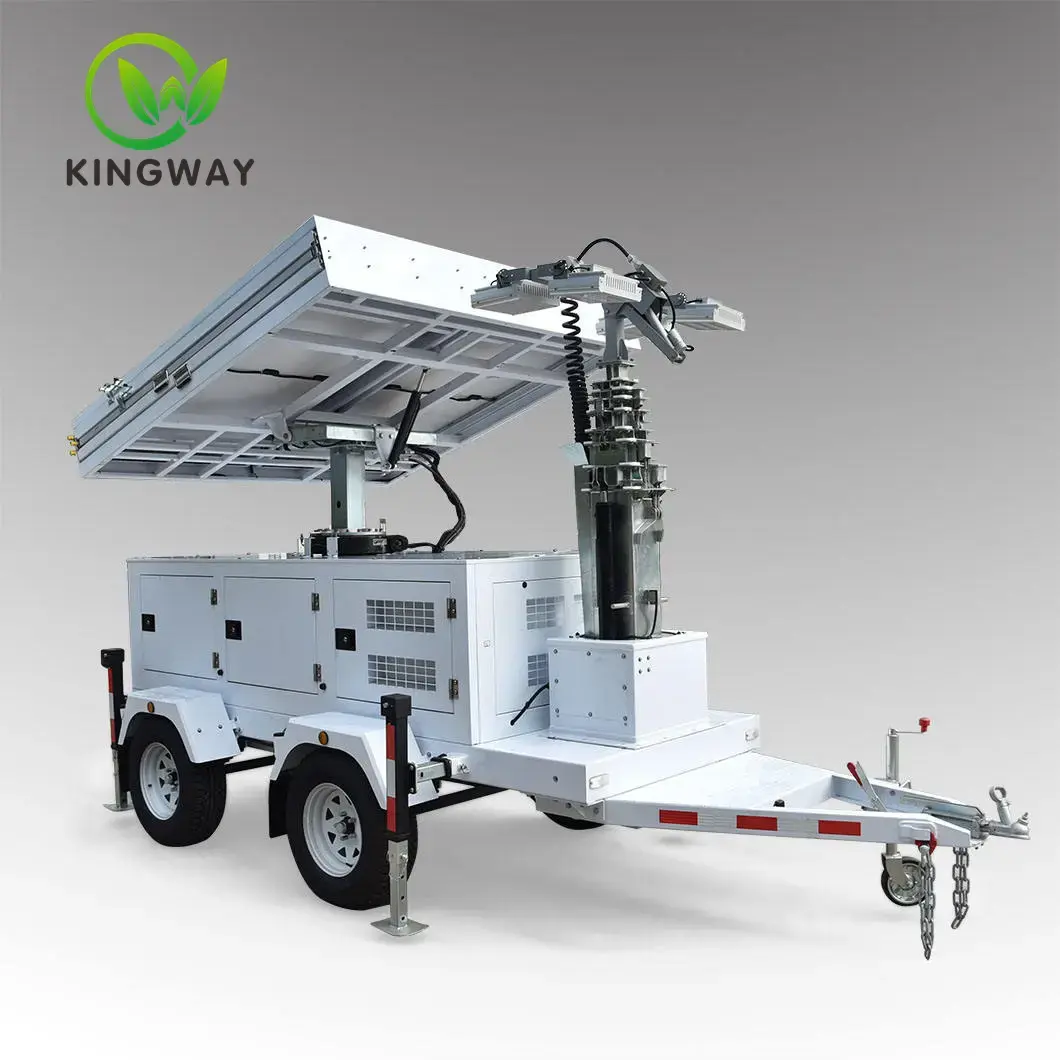
IV. Summary: Choosing "Suitable Power" in 3 Steps Makes Solar Lighting Trailers More Practical
Identify the Scenario: Define the core use (e.g., construction site/emergency/event), coverage area, and battery life to determine the initial power range.
Calculate the Environment: Adjust the power based on the lighting conditions and climate characteristics of the purchase location (low-light areas can appropriately reduce lamp power and increase battery capacity).
Check Support Options: Confirm additional functional requirements, calculate hidden power consumption, ensure the solar panels, batteries, and lamp power are compatible, and reserve capacity for future expansion.