
Mobile Lighting Trailer Supplier
Safety certification standards to pay attention to when purchasing mobile lighting trailers
Safety Certification Standards to Consider When Purchasing Mobile Lighting Trailers
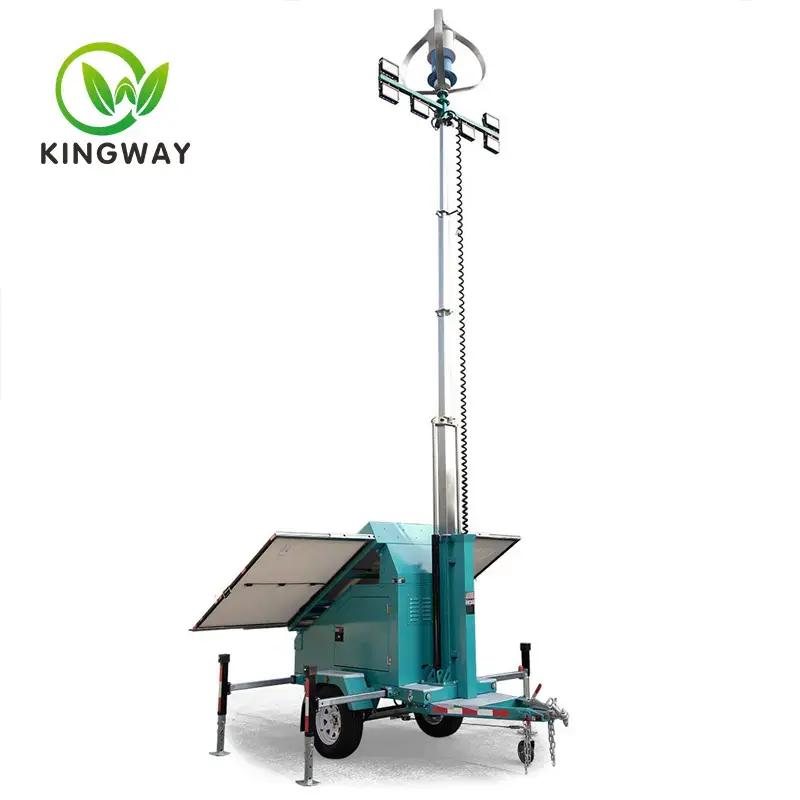
Mobile lighting trailers serve as the "mobile lighting hub" in global construction, emergency rescue, and large-scale events. Their safety performance is directly related to operational efficiency, personnel safety, and compliance costs. For international professional buyers, ignoring safety certification standards during purchase can not only result in goods being held up during customs clearance due to non-compliance with destination market regulations, but can also cause safety incidents such as electrical failures and fires during subsequent use, resulting in financial losses and brand risks.
This article systematically breaks down the core safety certification standards for mobile lighting trailers, analyzing the applicable scenarios and key indicators of different certifications. This will help international buyers establish a sound certification screening process, ensure the compliance and safety of purchased products from the source, and improve cross-border trade efficiency.
I. Safety Certification: The "Passport" and "Safety Lock" for Exporting Mobile Lighting Trailers
Safety certification for mobile lighting trailers is not an "optional add-on" but a mandatory threshold for product entry into target markets and a technical barrier to ensure safe use. Its core value lies in three dimensions:
Market Access Compliance: Major global economies (such as the EU, North America, and Australia) have enacted legislation to clarify safety standards for mobile lighting trailers. Products without corresponding certifications are prohibited from import and sale, leading to the risk of trade defaults.
Safety in Use: Certification testing covers key aspects such as electrical safety, protective performance, and environmental adaptability, effectively preventing hazards such as short circuits, leakage, and casing cracks, protecting both workers and equipment.
Controllable Trade Costs: Confirming certification compliance in advance avoids additional costs such as returns, rework, and fines due to product non-compliance, thereby shortening delivery cycles.
II. Analysis of Global Mainstream Safety Certification Standards: Accurate Matching by Target Market
Safety certification systems vary across regions. International buyers should verify certification qualifications based on the final destination of the purchased product. The following are the mainstream certification standards and key requirements for the four core markets:
1. EU Market: CE Certification (Mandatory)
CE certification is a mandatory certification for products entering the 27 EU countries and the European Economic Area (EEA). Mobile lighting trailers must comply with the following two key directives:
Low Voltage Directive (LVD, 2014/35/EU): This addresses product electrical safety. Testing includes power supply voltage adaptability, insulation resistance, ground continuity, and protection against electric shock to ensure there is no leakage or risk of electric shock within the rated voltage range.
Electromagnetic Compatibility Directive (EMC, 2014/30/EU): This requires that products operate without generating excessive electromagnetic radiation that interferes with other equipment and must be immune to interference from the external electromagnetic environment to prevent electromagnetic interference from causing lighting interruptions or control system failures.
Additional Note: If the product is used in potentially explosive environments (such as oil fields or chemical plants), ATEX certification is also required to ensure compliance with explosion-proof rating requirements (such as Ex d IIB T4 Ga).
2. North American Market: UL and CSA Certification
Safety certification for mobile lighting trailers in the North American market is primarily voluntary, but uncertified products face difficulties entering mainstream channels. Core certifications include:
UL Certification (US): Issued by Underwriters Laboratories (UL), this certification focuses on testing electrical system safety (such as wire current carrying capacity and connector heat resistance), structural stability (such as trailer frame impact resistance), and protective performance (such as corrosion resistance and rain intrusion). Common certification standards include UL 153 (Safety Standard for Portable Luminaires) and UL 2231 (Safety Standard for Power Supply Units).
CSA Certification (Canada): Developed by the Canadian Standards Association (CSA), its testing requirements are similar to UL. "UL+CSA Dual Certification" allows for coverage in both the US and Canadian markets, reducing duplicate testing costs.
3. Global Applicability: IP Certification
The IP (Ingress Protection) rating is a core indicator for measuring the dust and water resistance of mobile lighting trailers. It applies to all markets and consists of two digits:
The first digit (dust protection rating) ranges from 0 to 6, with higher numbers indicating greater dust resistance. Mobile lighting trailers must meet at least IP5X (protection against solid foreign objects ≥1mm in diameter and completely protected against dust ingress).
The second digit (water resistance rating) ranges from 0 to 9K, with higher numbers indicating greater water resistance. Considering outdoor use in rainy and muddy environments, products must meet at least IP65 (protection against water jets). For use near water (e.g., docks or flood rescue operations), they must be upgraded to IP67 (protection against short-term immersion in water).
4. Certifications in Other Core Markets
Australian Market: SAA certification is required. Testing standards refer to IEC international standards, focusing on electrical safety and electromagnetic compatibility. After certification, the "RCM mark" must be affixed for legal sale.
Middle East Market: The Gulf Cooperation Council (GCC) requires products to obtain GCC certification and comply with the "Technical Regulations for Low-Voltage Electrical Equipment," covering electrical safety, mechanical safety, and EMC requirements.
Southeast Asian Market: Requirements vary significantly from country to country. For example, Singapore requires PSB certification, and Malaysia requires SIRIM certification. It is recommended to confirm specific compliance requirements with local importers in advance.
III. Purchasing Mistakes: Avoid "Certification Traps" and Ensure Validity
Some suppliers may provide "fake," "expired," or "non-compliant" certifications to reduce costs. International buyers should be wary of the following three common mistakes:
Mistake 1: Examining the certification mark without checking the scope of certification
Confirm that the "product model" and "specifications" on the certification certificate are identical to the actual product being purchased to avoid suppliers using "certifications for low-end products in the same series" as high-end products.
Mistake 2: Confusion about "certification types" and ignoring regional differences.
For example, selling "CE-certified" products directly into North America or using "UL certification" to cover the Canadian market (it's important to verify whether it includes CSA certification) can result in invalid compliance.
Mistake 3: Ignoring Certification Validity and Renewal Status
Some certifications, such as GCC and SAA, require periodic updates to test standards, requiring suppliers to provide "valid certification documents from the past 12 months," not expired historical certificates.
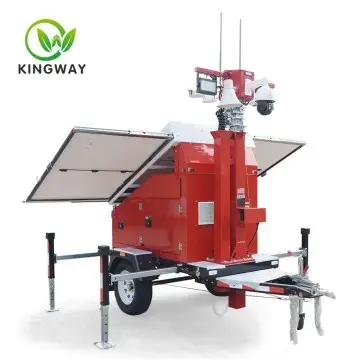
IV. Action Recommendations: Key Points for the Full Process, From Certification Verification to Procurement
To ensure that purchased mobile lighting trailers meet safety standards and market requirements, we recommend the following steps:
Define your target market and create a list of certifications.
Before purchasing, compile a list of mandatory and optional certifications based on the product's final destination (e.g., "CE+IP65" for EU exports, "UL+IP65" for North American exports), and clearly specify certification requirements in the purchase contract.
Require suppliers to provide "complete certification documentation."
In addition to reviewing the certification certificates, request test reports, specifically verifying that the test items (e.g., insulation testing under the LVD Directive, radiation testing under the EMC Directive) fully cover the standard requirements.
Upgrade certification levels based on actual usage scenarios.
If the product is intended for use in special environments (e.g., hot deserts, high-humidity coastal areas, or explosive mining areas), request additional environmental adaptability test reports (e.g., high- and low-temperature testing, salt spray testing) or explosion-proof certification (e.g., ATEX, IECEx);
Regularly verify certification validity.
For long-term suppliers, we recommend quarterly spot checks on their certification status to ensure product certifications are updated as standards are updated. (For example, if the EU EMC Directive is updated, suppliers will need to re-test and obtain new certificates.)