

Mobile Lighting Trailer Supplier
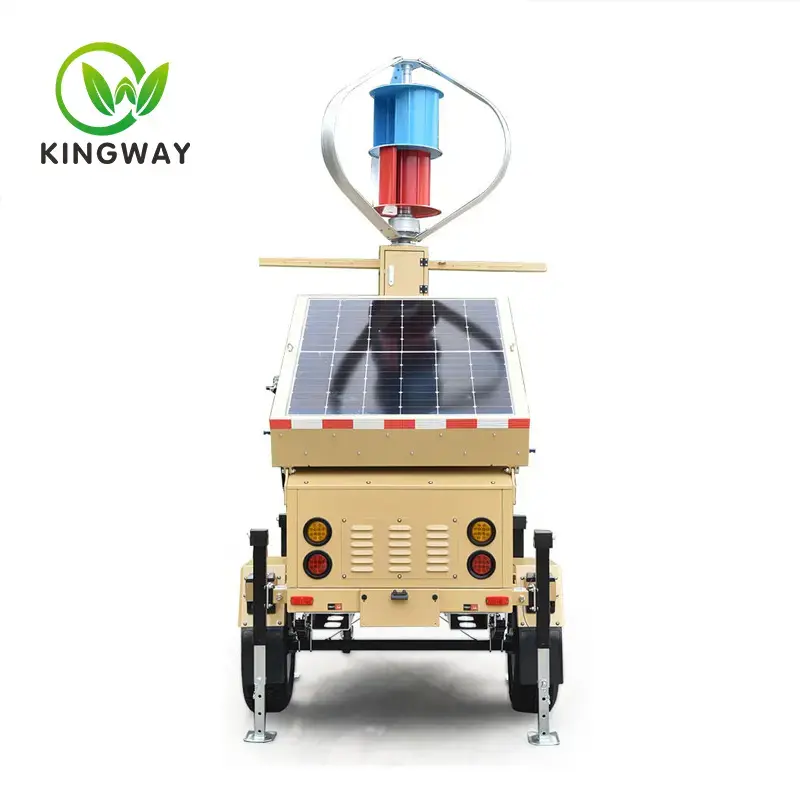
Purchasing Solar-Powered Portable Lighting Towers: A Guide to Essential Core Parameters
Purchasing Solar-Powered Portable Lighting Towers: A Guide to Essential Core Parameters
Solar-powered portable lighting towers are indispensable in various scenarios, including nighttime construction work, emergency rescue, outdoor sporting events, and temporary power supply in remote areas. Their advantages include being clean and environmentally friendly, requiring no external power source, and offering flexible mobility. However, product quality varies greatly in the market. To accurately select equipment that meets your needs and offers high cost-effectiveness, it's crucial to focus on a series of core parameters—these directly determine the lighting effect, battery life, safety, and scenario adaptability. Below is an analysis of key parameters that global buyers should know to help you avoid purchasing pitfalls.
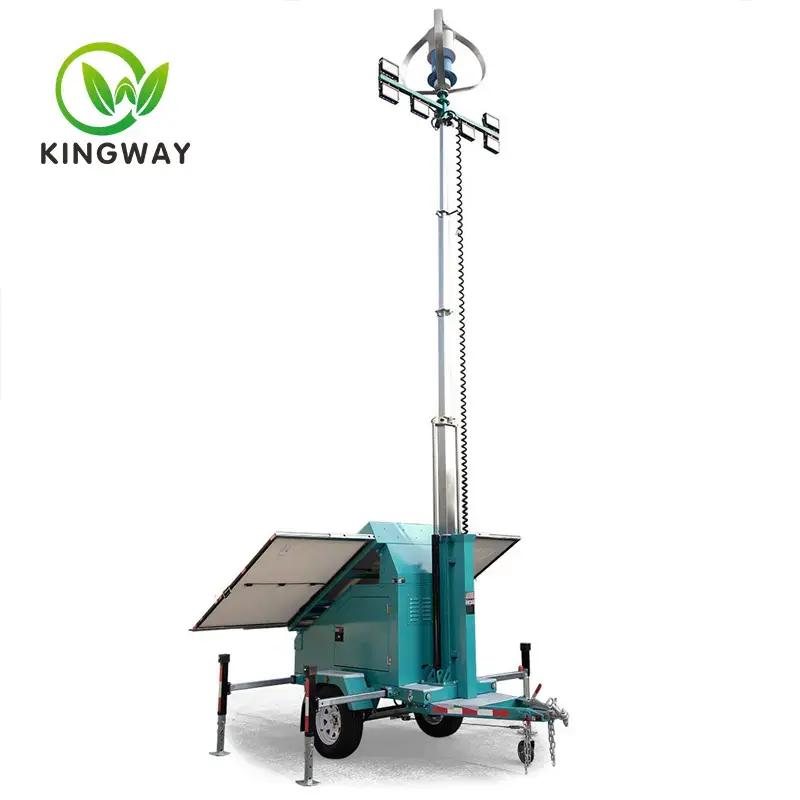
I. Lighting Performance Parameters: Determining Core Performance
Lighting is the core function of a light tower, and related parameters directly affect operational efficiency and environmental safety. These should be considered from three dimensions: brightness, range, and adaptability.
Light Source Type and Power: Currently, LED light sources are the mainstream (energy-saving and long lifespan). Pay attention to the power of a single lamp and the total power (unit: W). The higher the total power, the stronger the brightness. For example, 300W-600W is suitable for large construction sites, while 100W-200W is suitable for small-scale operations or emergency scenarios. It's also necessary to confirm that the light source is from a well-known brand to avoid problems like rapid light decay and poor color rendering caused by inferior LEDs.
Color Temperature and Color Rendering Index (CRI): Color temperature (unit: K) determines the lighting atmosphere—3000K-4000K warm white light is suitable for outdoor activities and emergency rescue, providing soft and non-glaring light; 5000K-6000K cool white light is suitable for construction and warehousing operations, offering strong penetration and high visibility. The color rendering index (CRI≥80 is best) directly affects the color reproduction of objects; the higher the index, the more accurately it presents material colors and environmental details, reducing operational errors.
Lighting Range and Illumination Distance: The core focus is on "effective coverage area (unit: ㎡)" and "maximum illumination distance (unit: m)". For example, high-quality equipment can achieve effective coverage of 3000-5000㎡, with a maximum illumination distance of 100-150m. When purchasing, the area of the application scenario should be calculated to avoid blind spots, and attention should be paid to light uniformity (whether there is concentrated light spot or dim edges).
Dimming Function: Equipment supporting multi-level dimming (such as 50%/75%/100% power adjustment) is more energy-efficient and can flexibly switch according to ambient brightness and needs, extending battery life, especially suitable for long-term nighttime operation scenarios.
II. Solar Power Supply System Parameters: Ensuring Battery Life Stability
The core advantage of solar-powered mobile lighting towers lies in their self-sufficiency. The power supply system parameters directly determine battery life and environmental adaptability, and are core procurement indicators:
Solar Panel Configuration: Focus on "type, power, and conversion efficiency". Currently, monocrystalline silicon solar panels have a higher conversion efficiency (18%-23%) than polycrystalline silicon (15%-18%), making them suitable for areas with insufficient sunlight or high latitudes. The higher the solar panel power (unit: W), the faster the charging speed; for example, a 100W-200W solar panel can fully charge a battery in 4-6 hours under sufficient sunlight. Additionally, it's necessary to confirm whether the solar panel has wind-resistant and anti-corrosion coatings to extend its outdoor lifespan.
Battery performance: As the core of energy storage, attention should be paid to "type, capacity, and cycle life." The mainstream types are lithium-ion batteries and lead-acid batteries: lithium-ion batteries are lightweight (easy to move), have a long cycle life (over 2000 cycles), and excellent low-temperature performance, but are more expensive; lead-acid batteries offer high cost-effectiveness and are easy to maintain, but are heavier and have a shorter cycle life (500-1000 cycles). Capacity is measured in "Ah (ampere-hours)". A larger capacity means longer battery life. For example, a 200Ah-400Ah battery can provide 8-24 hours of continuous operation under full-load lighting conditions. The appropriate battery should be selected based on the required operating time. It is also necessary to confirm that the battery has overcharge, over-discharge, and short-circuit protection functions to avoid safety hazards.
Battery life and charging compatibility: The battery life under "full load/half load" conditions must be clearly defined, as well as the number of days the equipment can operate continuously in cloudy or rainy weather (high-quality equipment can support 3-5 days of operation without sunlight). Furthermore, it should be determined whether the equipment supports backup charging methods (such as mains power or diesel auxiliary charging) to improve reliability in extreme environments, especially suitable for emergency scenarios.
III. Mobility and Deployment Parameters: Adapting to Multiple Usage Scenarios
"Flexible mobility and convenient deployment" are the core selling points of solar-powered mobile lighting towers. Related parameters must be tailored to actual usage scenarios:
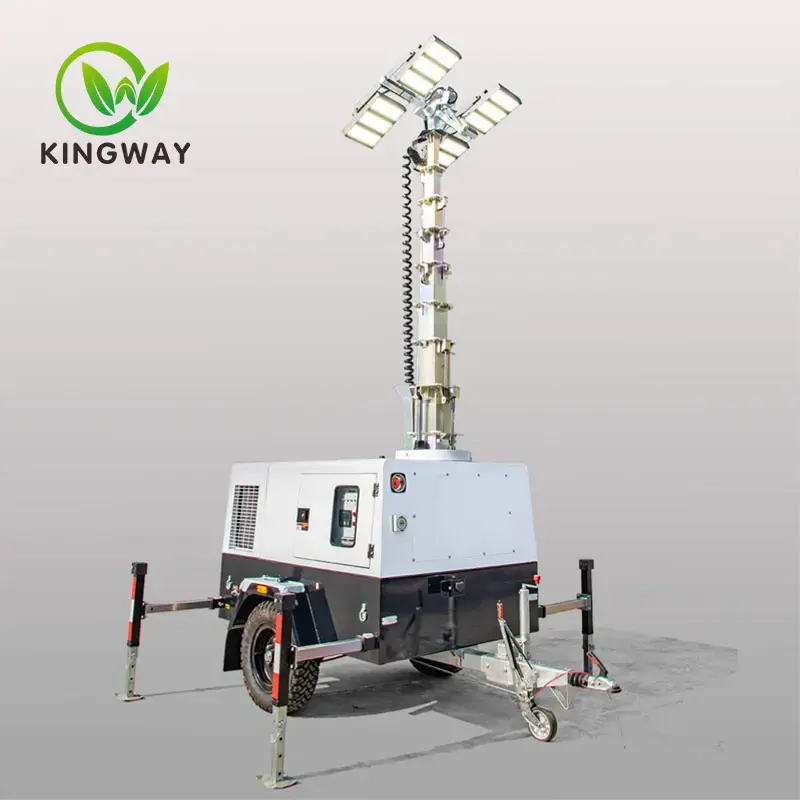
Mobility Design:Focus on the total weight of the equipment (unit: kg). Lightweight equipment (50-150kg) is easier to handle manually, while heavy equipment (over 150kg) must have towing capabilities (such as towing hooks, compatible with trailers) and be equipped with solid rubber wheels (puncture-resistant, suitable for rough terrain).
Deployment Efficiency:For emergency scenarios, prioritize "rapid deployment" equipment, such as equipment that can be deployed and lit within 5 minutes. Also consider the lifting height (unit: m). The higher the lifting height (usually 6-10m), the wider the lighting coverage. Some equipment is equipped with a hydraulic lifting system for easier operation.
Terrain Adaptability:Does the equipment have adjustable outriggers (height adjustable, with anti-slip pads) to adapt to mountainous, muddy, and uneven terrain, improving deployment stability? Some equipment supports a folding design for compact storage and easy transport.
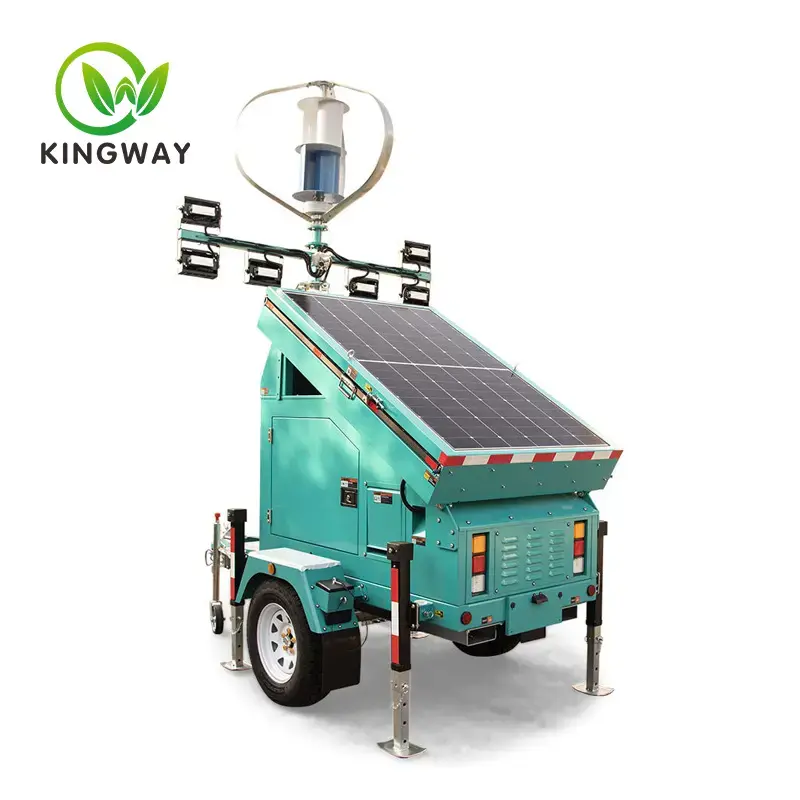
IV. Structural and Protection Parameters: Coping with Complex Outdoor Environments
Solar-powered mobile lighting towers are primarily used in harsh outdoor environments. Structural strength and protection levels directly determine their lifespan and safety:
Structural Materials: The main frame should ideally be made of aluminum alloy or high-strength steel, with rust-proof and corrosion-resistant treatments (such as powder coating or galvanizing) to withstand environments with high salt spray at the seaside and high dust levels at construction sites. The lamp head housing should be made of engineering plastic or aluminum alloy for impact resistance and drop protection.
Wind Resistance Rating: Outdoor use requires resistance to strong winds. A higher wind resistance rating (typically ≥8, some high-end products reach 10) ensures better stability and prevents damage from being blown over.
Protection Rating (IP Rating): The IP rating consists of two digits. The first digit represents the dustproof rating, and the second represents the waterproof rating. It is recommended to choose IP65 or higher (completely dustproof and able to withstand heavy rain) to ensure normal operation in rain, snow, and sandstorms.
Safety Design: Does it have grounding protection and leakage protection functions? Does the lamp head have an anti-glare design to prevent strong light from affecting the operator's vision? Are the cables made of aging-resistant and wear-resistant materials to reduce the risk of failure during outdoor use?
V. Intelligent Functions and Additional Configurations: Enhancing Ease of Use
High-Quality Solar-powered mobile lighting towers optimize the user experience through intelligent design and practical configurations. When purchasing, pay close attention to the following:
Intelligent Control: Supports remote control operation (remote control distance ≥ 50m), facilitating remote adjustment of the switch, brightness, and height; features light-sensing automatic control function, automatically turning the lighting on or off according to ambient light to save energy; some devices are equipped with a timer function, allowing preset working hours without manual supervision.
Status Monitoring: Is it equipped with a power display screen to view the remaining battery power and charging status in real time, facilitating advance usage planning; some high-end products support remote monitoring (network connection required), allowing viewing of equipment operating data via mobile phone or computer.
Additional Functions: Does it have an emergency power supply interface (such as USB or AC socket) to charge small devices like mobile phones and walkie-talkies, enhancing its practicality in emergency scenarios? Some devices are equipped with warning lights and strobe functions, suitable for scenarios requiring alerts, such as road construction and disaster relief.
VI. Warranty and Compliance Parameters: Ensuring Long-Term Use Value
When purchasing internationally recognized equipment, warranty and compliance are crucial to avoiding future disputes and require verification of the following:
Warranty Period: Reputable brands typically offer a 1-year or 1000-hour warranty for the entire machine (whichever comes first). Core components (solar panels, batteries, LED light sources) have longer warranty periods (e.g., 2-3 years). The warranty coverage (excluding damage caused by human error) and after-sales response mechanism must be clearly defined.
International Certifications: The equipment must have internationally recognized certifications, such as CE (EU safety certification), RoHS (environmental certification), and FCC (electromagnetic compatibility certification), to ensure compliance with the electrical standards and environmental requirements of the destination country and avoid import customs clearance issues.
Production Standards: Products must comply with ISO9001 quality management system certification. The manufacturer must possess sufficient production capacity and R&D capabilities (e.g., annual production capacity of over 8000 units, export to 150+ countries) to ensure consistent product quality and after-sales support.
Procurement Summary: Need-Based Selection and Precise Matching
The core logic for procuring solar-powered mobile lighting towers is "scenario determines needs, needs match parameters":
For large construction sites and open-pit mines, priority should be given to "high-power light sources, large coverage area, long battery life, and high wind resistance";
For emergency rescue and temporary events, emphasis should be placed on "rapid deployment, lightweight design, multiple charging modes, and intelligent control";
For high-latitude, low-sunlight areas, "high-conversion-efficiency monocrystalline silicon solar panels and large-capacity Lithium Batteries" should be selected.
Furthermore, it is recommended to prioritize brands with extensive industry experience and global service networks. Their products have undergone practical testing in different regions and scenarios, ensuring higher quality and better after-sales service. By comprehensively considering the above parameters, procurement pitfalls can be effectively avoided, and a solar-powered mobile lighting tower that can meet current needs and has long-term use value can be selected.