

Mobile Lighting Trailer Supplier
Professional knowledge of mobile monitoring lighting trailer operation
Professional knowledge of mobile monitoring lighting trailer operation
Overview of mobile monitoring lighting trailer
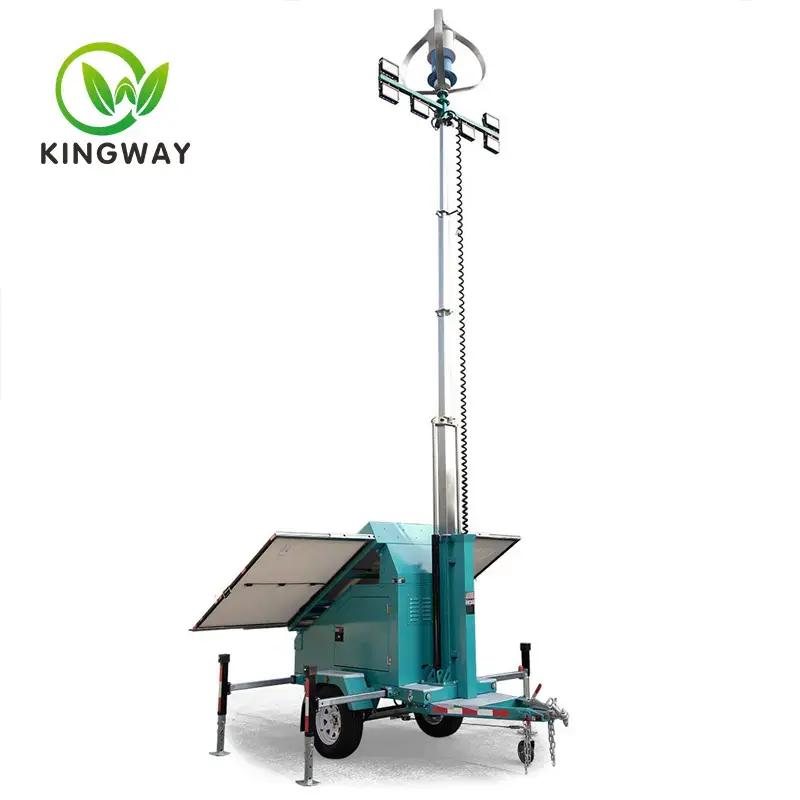
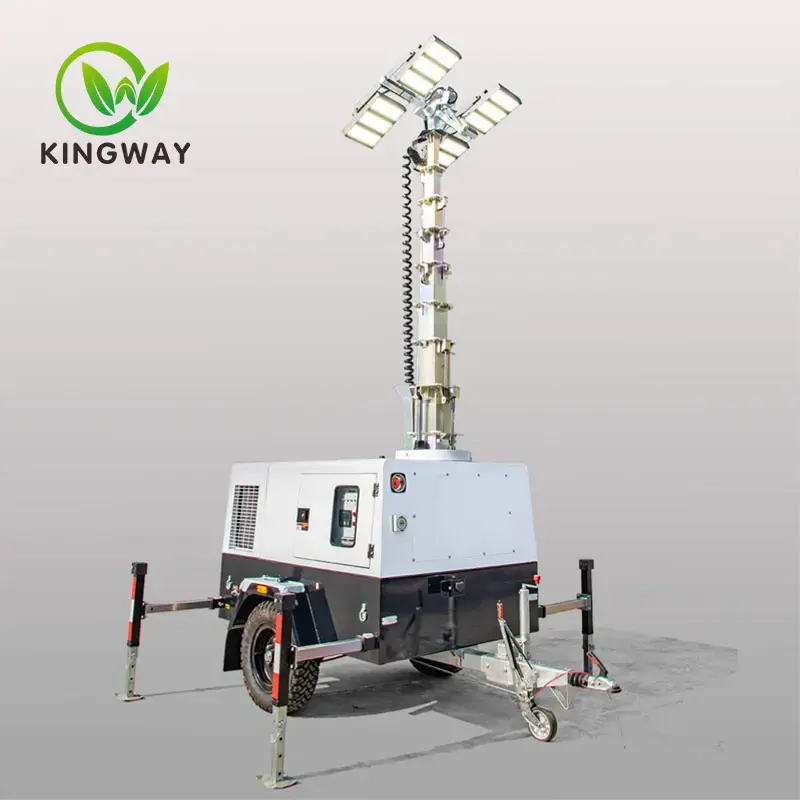
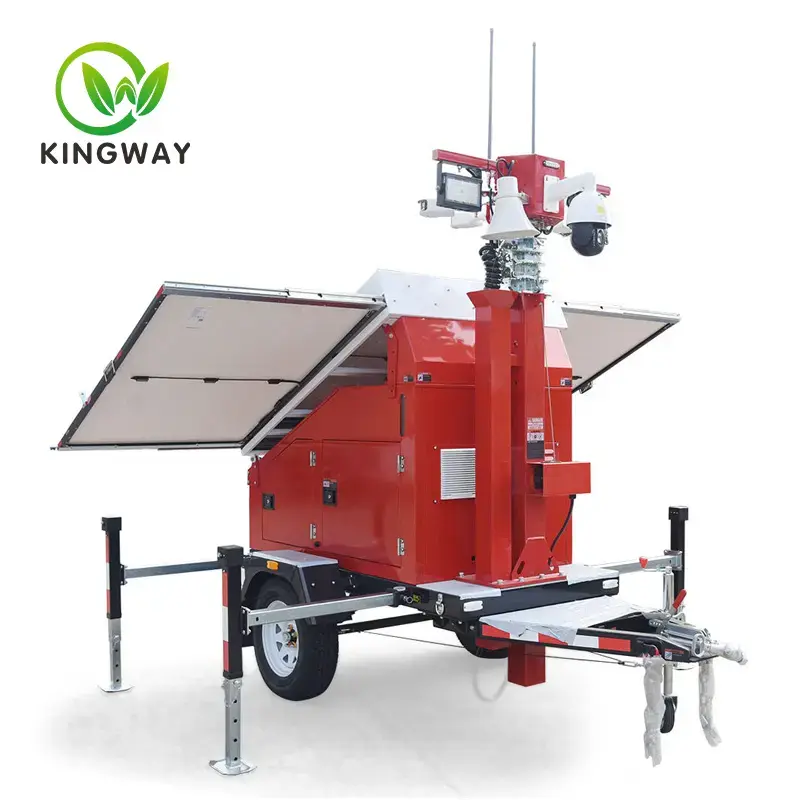
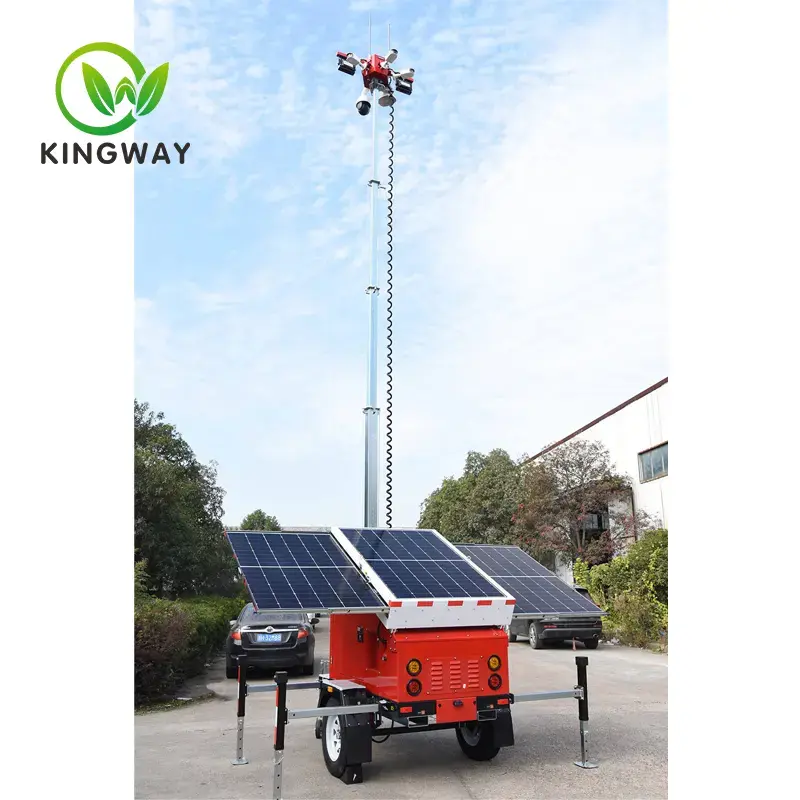
Mobile monitoring lighting trailer is a kind of equipment integrating lighting and monitoring functions. It is usually composed of trailer, lighting system, monitoring system, power system and other parts. It can provide strong lighting support and real-time monitoring for the work site in various complex environments. It is widely used in construction sites, emergency rescue, traffic management, outdoor activities and other fields.
Operation of lighting system
Pre-start inspection: Check whether the light pole and lamps are damaged or loose, ensure that the lifting mechanism of the light pole is flexible, and the lamps are firmly installed. Confirm the cleanliness of the lamps. If there are impurities such as dust and dirt that affect the lighting effect, they should be cleaned in time.
Selection and use of light sources: Common ones include metal halide lamps, sodium lamps, LED lamps, etc. Metal halide lamps and sodium lamps have high lighting intensity and wide coverage, which are suitable for large-area lighting; LED lamps have the advantages of long life, low energy consumption and high reliability, and can be used as supplementary lighting or in special occasions.
Light pole lifting operation: The operator can control the lifting and lowering of the light pole through the buttons on the control panel or the remote control. When raising the light pole, pay attention to the surrounding environment to ensure that there are no obstacles that hinder the light pole from rising; when lowering the light pole, operate slowly and steadily to avoid the light pole colliding with the base or other parts due to inertia.
Lighting angle adjustment: According to the lighting needs on site, use the adjustment device on the lamp or the remote control function of the control system to adjust the lighting angle up, down, left and right so that the light can accurately cover the area that needs to be illuminated and avoid lighting blind spots.
Operation of the monitoring system
Camera installation and debugging: Install the camera at a suitable position on the trailer to ensure that the camera's field of view can cover the key areas that need to be monitored. After the area is installed, debug the camera through the monitoring system host, including adjusting parameters such as focal length, aperture, and white balance to obtain a clear and stable image.
Monitoring host settings and use: Turn on the monitoring host, enter the monitoring interface, and name and number the camera so that it can be quickly identified and switched in the case of multiple cameras. According to actual needs, set the recording plan, such as recording time and recording frequency, to ensure that the monitoring screen at important moments can be effectively recorded.
Remote monitoring and data transmission: If the trailer is equipped with wireless transmission equipment, the monitoring screen can be transmitted to the remote monitoring center or designated mobile device in real time through the network. At the remote monitoring end, the operator can view the monitoring situation on site anytime and anywhere through the corresponding software or platform, and remotely control and operate the camera.
Operation of the power system
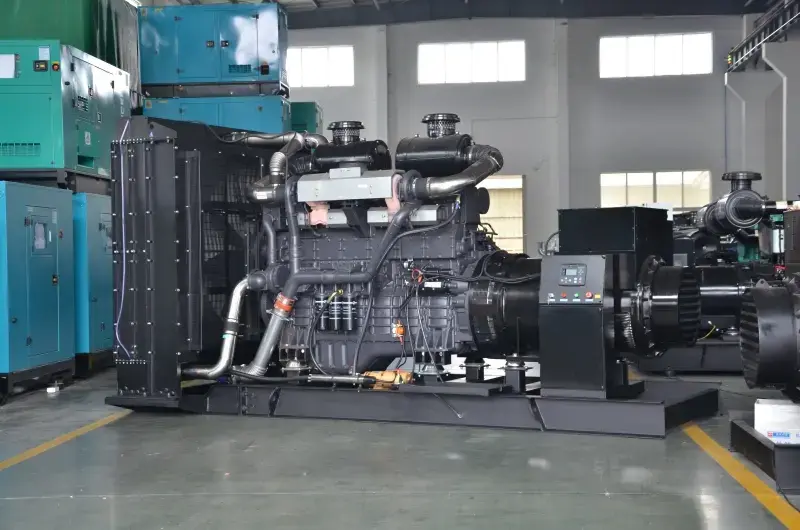
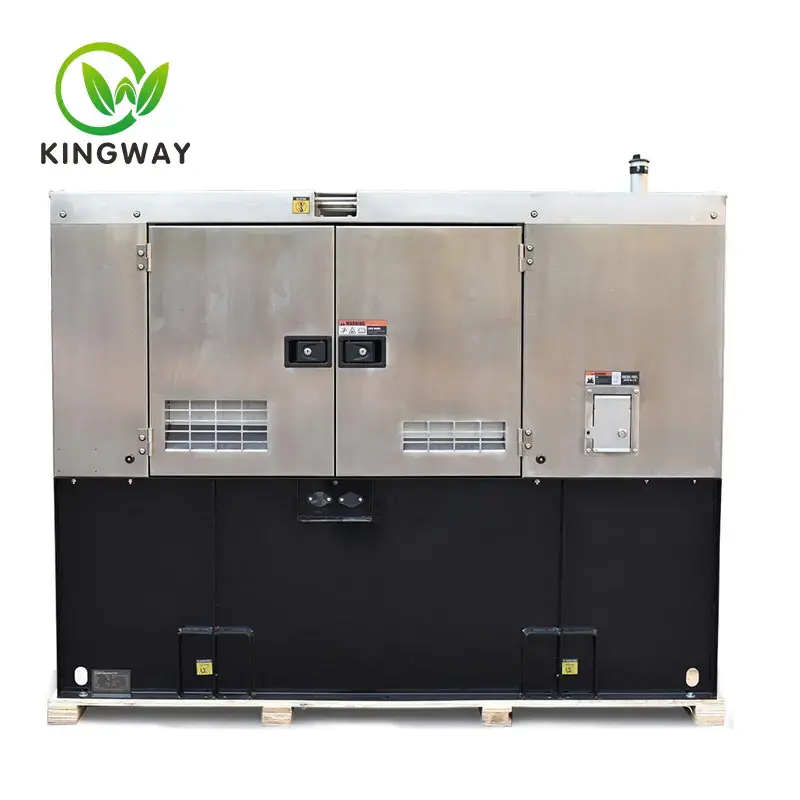
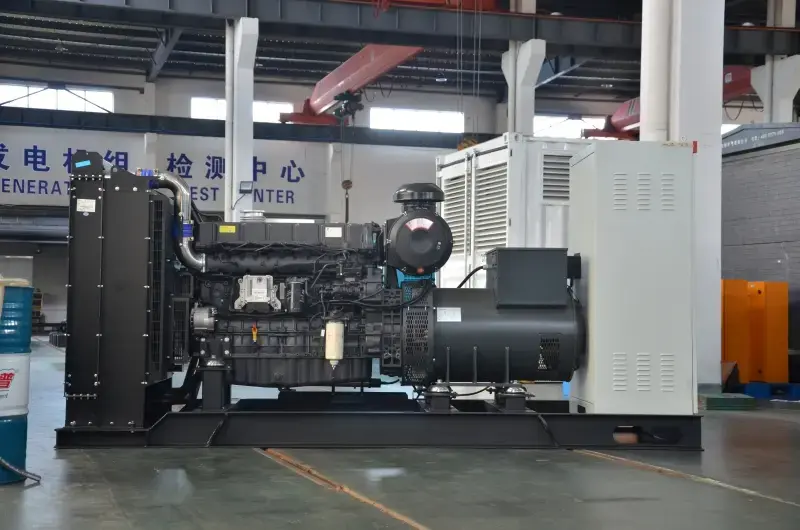
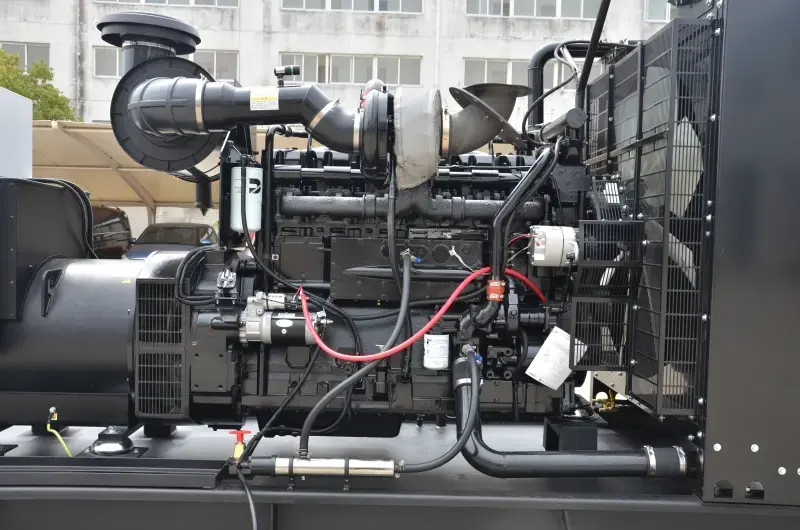
Start and operation of the Generator Set: Check whether the fuel, oil, coolant, etc. of the generator set are sufficient, and whether the connection parts are firm. Turn on the power switch of the generator set, press the start button, and start the generator set. After starting, observe the operating status of the generator set, including whether the parameters such as voltage, current, and frequency are stable within the normal range.
Mains access and switching: In places where there is a mains supply, the trailer can be connected to the mains power supply to provide power for the equipment. When connecting, pay attention to whether the voltage, frequency and other parameters of the power supply meet the equipment requirements to ensure safe use of electricity. When the mains and the generator set are available at the same time, you can switch between the two according to actual needs. Generally, the mains power is used first to save fuel and reduce the wear of the generator set.
Battery use and maintenance: The battery on the trailer is mainly used to provide backup power for monitoring systems, control systems and other equipment, as well as to provide power when starting the generator set. Check the battery voltage, electrolyte level, etc. regularly to ensure that the battery is in good condition. When the trailer is not used for a long time, the battery should be disconnected to prevent excessive discharge and damage to the battery.
Driving and towing of trailers
Pre-driving inspection: Check whether the braking system, steering system, tire pressure, etc. of the trailer are normal to ensure the safety and stability of the trailer during driving. Confirm whether the connection between the trailer and the towing vehicle is firm and reliable, including the towing rod, brake connection line, lighting connection line, etc.
Precautions during driving: During the towing of the trailer, you must abide by traffic rules and maintain a safe speed and distance. According to road conditions and weather conditions, adjust the driving speed reasonably to avoid sudden braking and sharp turns. Pay attention to the running status of the trailer. If there is any abnormal sound, shaking, etc., you should stop and check in time.
Operation of towing equipment: The towing vehicle should be operated smoothly when starting and stopping to avoid collision or damage to the trailer due to inertia. When reversing, be especially careful. You can use the rearview camera on the trailer or arrange for someone to direct to ensure reversing safety.
Daily maintenance and care of mobile monitoring lighting trailers
Cleaning and dust removal: Regularly clean the trailer body, lighting system, monitoring equipment, etc., remove dust, dirt and other debris to ensure normal heat dissipation and operation of the equipment. During the cleaning process, be careful to avoid using too wet rags or water guns to directly rinse electrical equipment to prevent short circuit failures.
Component inspection and tightening: Check whether the connecting bolts, nuts, etc. of the trailer components are loose. If they are loose, tighten them in time. Regularly inspect and replace wearing parts such as bulbs, camera shields, hydraulic components, etc. to ensure the integrity of the equipment.
Lubrication and maintenance: Regularly lubricate the active parts of the trailer, such as the lifting mechanism of the light pole and the axle of the trailer, to reduce friction and extend the service life of the parts. According to the instructions of the generator set, hydraulic system and other equipment, regularly replace consumables such as engine oil and hydraulic oil for maintenance.
Safety precautions
Operational safety: Operators must undergo professional training and be familiar with the various operating procedures and performance characteristics of the trailer. During operation, the operating manual must be strictly followed and no illegal operations are allowed. For example, when the light pole is raised, avoid moving the trailer to avoid overturning accidents.
Electrical safety: There are many electrical equipment on the trailer, so pay attention to electrical safety. When connecting or disconnecting electrical equipment, turn off the power first to avoid live operation. Regularly check whether the electrical circuit is damaged or aging, and eliminate safety hazards in time.
Environmental safety: When using a trailer, pay attention to the impact of the surrounding environment on the equipment. In flammable and explosive places, ensure that the trailer's electrical equipment and fuel system meet explosion-proof requirements to avoid safety accidents. In thunderstorms, try to avoid using the trailer's outdoor equipment to prevent lightning strikes.
Troubleshooting and emergency treatment
Common troubleshooting: If the lighting system fails, it may be caused by bulb damage, short circuit, poor contact, etc., which can be eliminated by replacing bulbs, checking lines, etc.; if the monitoring system has screen freezes, black screens, etc., it may be caused by network failure, storage device failure, camera failure, etc., and the network connection, storage device, camera and other components can be checked in turn.
Emergency treatment measures: During use, if there is a sudden failure, such as brake failure of the trailer, sudden extinguishing of the lighting system, etc., the operator should remain calm and take emergency treatment measures quickly. If the brake fails, it can be handled by reducing the speed, finding a safe area to stop, etc.; when the lighting system is extinguished, the emergency lighting equipment can be enabled to repair the fault as soon as possible.
Application scenarios and case analysis of mobile monitoring lighting trailers
Construction site: In large-scale construction sites, bridge construction and other places, mobile monitoring lighting trailers can provide all-weather lighting and monitoring support. Through reasonable lighting arrangement, it is ensured that the construction area can be constructed normally at night or in insufficient light, thereby improving construction efficiency. At the same time, the monitoring system can monitor the safety, quality, and progress of the construction site in real time, so that managers can grasp the situation on site and make decisions in time.
Emergency rescue: At emergency rescue sites such as natural disasters and traffic accidents, time is life. Mobile monitoring lighting trailers can quickly reach the scene, provide a bright lighting environment for rescue work, and help rescuers better carry out search and rescue, emergency rescue and other work. The monitoring system can transmit the scene picture to the command center in real time, provide accurate information for the commander, and realize remote command and dispatch.
Traffic management: In places such as traffic arteries and intersections, trailers can be used to divert traffic and deal with traffic accidents. Its lighting system can illuminate the scene of the accident, providing convenience for traffic police to investigate the scene and divert traffic; the monitoring system can record the process and on-site situation of the traffic accident, and provide a basis for the responsibility determination and subsequent handling of the accident.
Future development trends and technological innovation
Intelligence and automation: With the continuous advancement of science and technology, mobile monitoring lighting trailers will become more intelligent and automated. For example, by installing sensors, intelligent control systems, etc., functions such as automatic adjustment of lights, automatic cruising of monitoring equipment, automatic diagnosis and alarm of faults can be realized to improve the operating efficiency and reliability of the equipment.
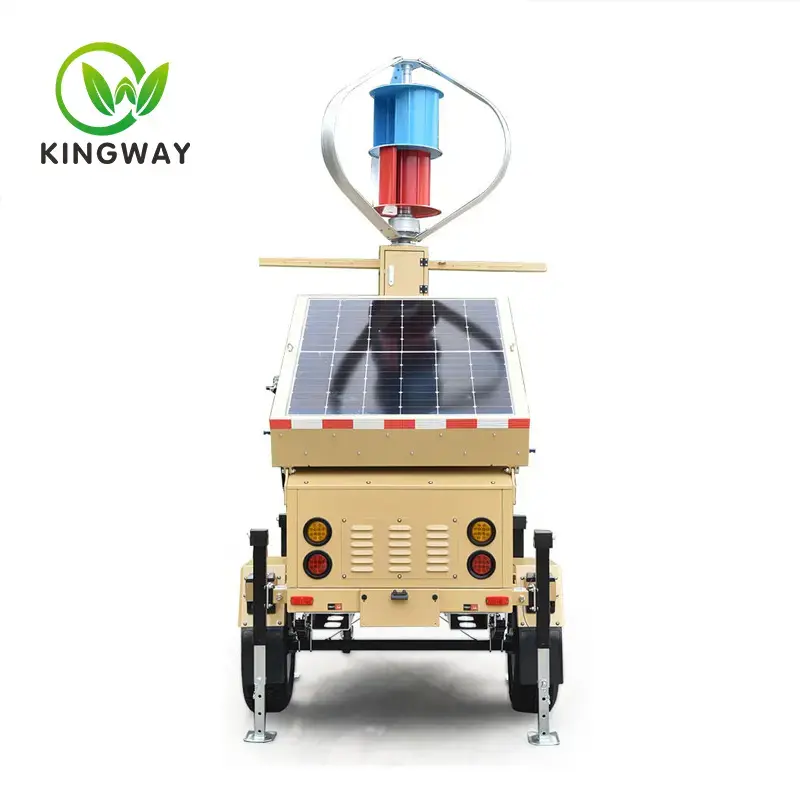
Energy saving and environmental protection: Under the background of increasingly stringent environmental protection policies, trailers will pay more attention to energy saving and environmental protection. Adopt efficient LED lighting technology, energy-saving generator sets, etc. to reduce the energy consumption and emissions of equipment. At the same time, it is possible to explore the use of renewable energy such as Solar Energy and wind energy to provide part or all of the power for trailers to achieve green lighting and monitoring.
Miniaturization and portability: In order to meet the needs of different users, mobile monitoring lighting trailers will develop in the direction of miniaturization and portability. Develop lighter and more compact trailer products for easy use in small spaces or remote areas. At the same time, improve the integration and reliability of the equipment so that it can still maintain powerful functions and performance on the basis of miniaturization.