

Mobile Lighting Trailer Supplier
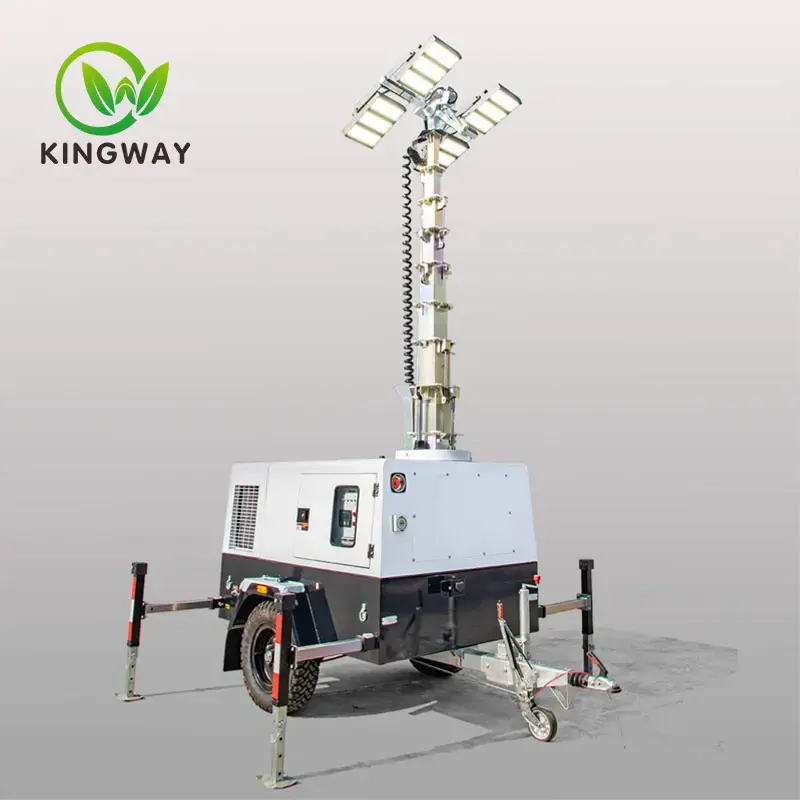
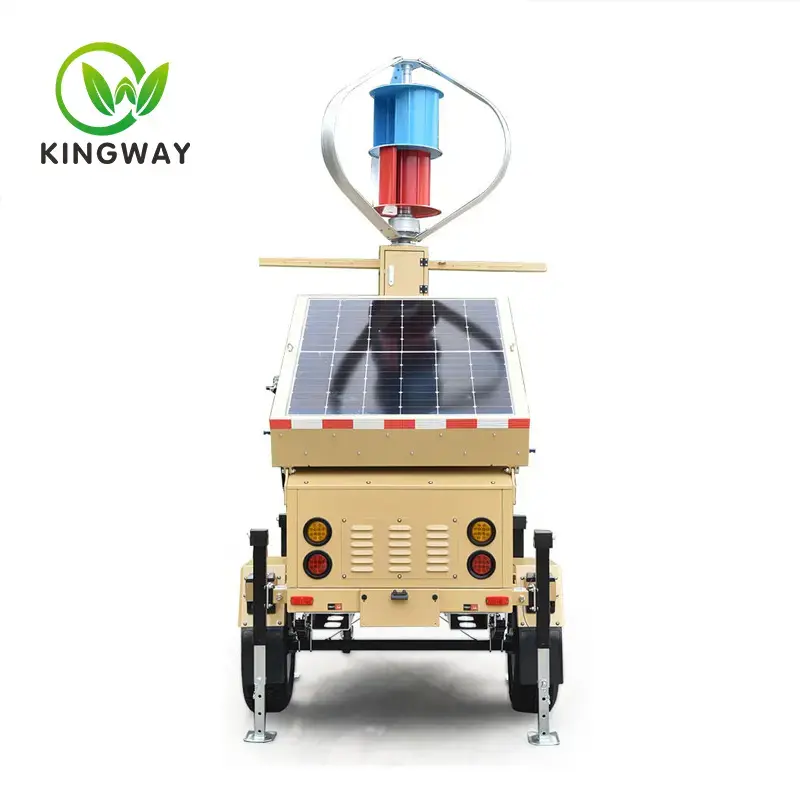
Monitor how trailer systems handle sudden changes in sunlight exposure
Monitoring trailer systems to cope with sudden changes in sunlight: a complete analysis of technology and strategies
In today's logistics, transportation, and various industry scenarios that require trailer operations, monitoring trailer systems play a vital role. It ensures the safety of cargo transportation, improves operational efficiency, and helps track trailer location and status in real time. However, these systems operate in a complex and changeable outdoor environment, and sudden changes in sunlight are undoubtedly a huge challenge. Strong direct sunlight and changeable weather conditions may interfere with key components such as sensors and cameras in the monitoring trailer system, affecting the accurate collection and transmission of data, and thus threatening the smoothness of the entire trailer operation process. This article will explore in depth how the monitoring trailer system cleverly copes with sudden changes in sunlight, and comprehensively analyze the solution to this key problem from technical principles to practical application strategies.
1. Basic composition and functions of monitoring trailer systems
1. Hardware components
Monitoring trailer systems are usually composed of multiple core hardware parts. First, there are high-precision positioning devices, such as GPS (Global Positioning System) receivers, which can determine the precise coordinates of the trailer's position on the earth in real time, with an error range of several meters, providing basic data for subsequent route planning and location tracking. Secondly, there are various sensors, including speed sensors, which are used to monitor the speed of the trailer to ensure that it operates within a safe and reasonable speed range; weight sensors, which are installed in the key load-bearing parts of the trailer to accurately measure the weight of the loaded goods to prevent overloading and avoid vehicle damage or traffic accident risks caused by overweight.
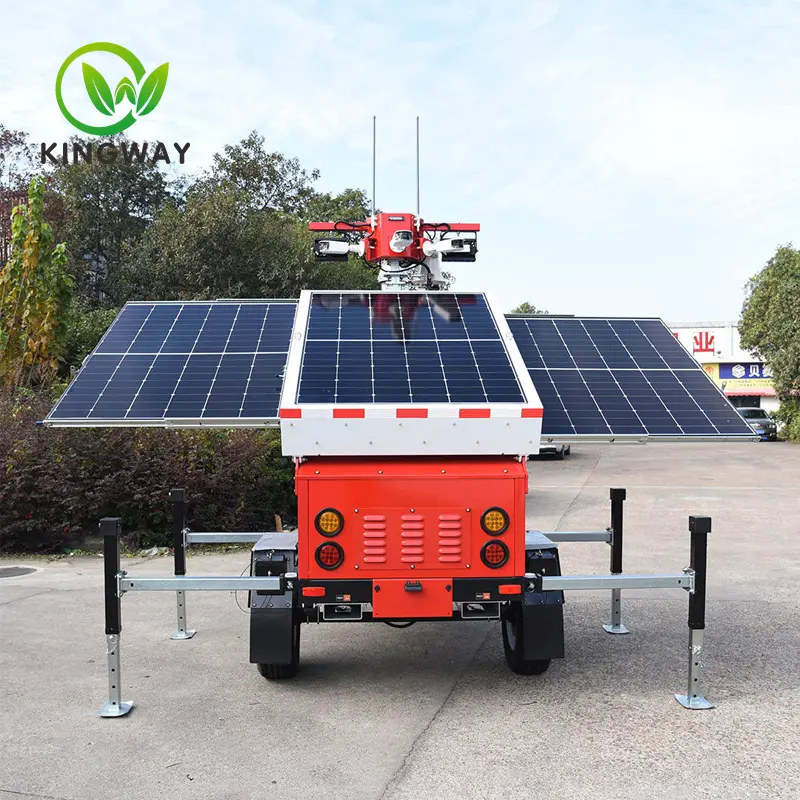
Furthermore, the camera system is an indispensable part of the monitoring trailer system. Cameras at multiple angles, front, back, left, and right, capture real-time images around the trailer in all directions, which not only allow operators to remotely view the loading status of the goods and whether any items have fallen or shifted, but also provide key accident scene video evidence in the event of a traffic accident, assisting in the determination of accident responsibility and subsequent handling procedures. In addition, there are some auxiliary hardware, such as data transmission modules, which are responsible for transmitting the information collected by these hardware back to the monitoring center stably and at high speed. Common ones include 4G and 5G communication modules based on mobile networks, and Wi-Fi transmission modules used in specific scenarios to ensure the real-time and integrity of data transmission.
2. Software functions
The software system that works closely with the hardware is the key to realizing the intelligent monitoring trailer system. The software platform has powerful data processing and analysis capabilities, and can receive massive data from hardware components and quickly screen, integrate and analyze them. For example, through real-time analysis of speed sensor data, the software can draw the driving speed curve of the trailer. Once abnormal acceleration or deceleration is found, the early warning mechanism is immediately triggered to remind the operator to pay attention and take corresponding measures.
In terms of route planning, the software uses GPS positioning data combined with electronic maps to plan the optimal driving route for the trailer. It will comprehensively consider multiple factors such as road conditions, traffic flow, height and width restrictions, avoid congested sections and potential dangerous areas, and ensure that the trailer can reach its destination efficiently and safely. At the same time, the software also has remote monitoring and control functions. Operators can view the real-time status of the trailer, including location, speed, cargo status, etc., anytime and anywhere through mobile phone applications or computer software, and can send instructions remotely, such as adjusting the driving speed, turning on or off specific sensors, etc., to achieve full control of the trailer operation.
2. The impact of sudden changes in sunlight exposure on the monitoring trailer system
1. Impact on sensors
The sudden change in sunlight intensity will first affect various sensors. Take the photoelectric speed sensor as an example. It calculates the trailer speed by detecting the reflection change of light on specific components. When sunlight shines directly on the sensor surface, the strong light may cause the photoelectric element inside the sensor to produce an oversaturated signal, resulting in signal distortion, thereby calculating an erroneous speed value. This will not only interfere with the software system's accurate judgment of the trailer's driving status, but may also cause false alarms, causing unnecessary troubles and safety hazards to operators.
Weight sensors are also not immune. The heat from the sun will cause the air temperature around the sensor to rise rapidly, and many weight sensors use a strain gauge structure, and their performance will be affected by temperature changes. The temperature rise may cause the resistance value of the strain gauge to change, which in turn affects the measurement accuracy of the sensor and causes deviations in the measured cargo weight. In some transportation scenarios with extremely high weight accuracy requirements, such as chemical raw materials and precious metal transportation, this error may cause serious economic losses or transportation safety issues.
2. Impact on the camera
The camera is one of the most light-sensitive components in the monitoring trailer system. Sudden changes in sunlight exposure will directly lead to a decrease in camera imaging quality. In a strong light environment, the camera's image sensor may be overexposed, the picture will be snow-white, and it will be impossible to clearly identify the objects and environmental details around the trailer. For example, under direct sunlight, the cargo bundling that was originally clearly visible may become blurred, and it is difficult for operators to determine whether there is a risk of loosening of the cargo.
When the sun is suddenly blocked by clouds or enters a shadow area, the camera will face the problem of insufficient light, causing the picture to darken and increase noise, which also affects the clarity and availability of the image. In addition, the reflection of sunlight may also form glare on the camera lens, interfering with normal imaging, causing light spots or virtual images to appear in the picture, further reducing the monitoring effect. For operators who rely on cameras for remote monitoring and accident prevention, these imaging issues undoubtedly greatly increase the difficulty and risk of their work.
3. Impact on data transmission
In addition to the direct impact on sensors and cameras, sudden changes in sunlight exposure may also indirectly affect the stability of data transmission. In high temperature and strong light environments, the electronic components of the data transmission module may experience performance degradation due to overheating. For example, the signal transmission and receiving chips of the mobile network communication module may weaken their transmission power and reduce their receiving sensitivity under long-term high temperature working conditions, resulting in slower data transmission speeds and even data loss or interruption.
In addition, strong sunlight may also interfere with the propagation of wireless communication signals. Ultraviolet rays and other components in sunlight can ionize molecules in the air and change the electromagnetic properties of the air, thereby affecting the propagation path and strength of wireless signals. In some open areas, the stability of data transmission under direct sunlight may be significantly reduced, making it impossible for the monitoring center to obtain real-time data of the trailer in a timely manner, affecting the monitoring and management of trailer operations.
3. Technical means for monitoring trailer systems to cope with sudden changes in sunlight
1. Sensor protection and calibration technology
In response to the problem of sensors being affected by sunlight, R&D personnel have adopted a variety of protection and calibration technologies. In terms of hardware protection, a special sunshade or protective shell is designed for the sensor. These protective devices are usually made of lightweight, high-strength materials, such as aluminum alloy or engineering plastics, and have good heat insulation and light-shielding properties. The sunshade can effectively block direct sunlight from the sensor surface through a reasonable structural design, reducing the interference of light on the internal components of the sensor. For example, the sunshade of some speed sensors adopts a multi-layer shutter structure, which can not only block sunlight from different angles, but also ensure the air circulation required for the sensor to work normally, avoiding performance degradation due to poor heat dissipation.
At the same time, a temperature compensation circuit is also integrated inside the sensor. Taking the weight sensor as an example, the temperature compensation circuit automatically adjusts the output signal of the sensor by real-time monitoring the temperature changes around the sensor to offset the influence of temperature changes on the measurement accuracy. When the temperature rises due to sunlight, the temperature compensation circuit will correct the resistance deviation caused by temperature changes according to the preset temperature-resistance relationship model to ensure that the weight signal output by the sensor is always accurate and reliable.
In addition, regular sensor calibration is also an essential link. The operator will use professional calibration equipment to calibrate the sensor according to the system prompt or according to the predetermined time period. During the calibration process, by applying a known standard signal or weight, the actual output value of the sensor is compared with the theoretical value, the error parameter is calculated, and the internal parameters of the sensor are adjusted to restore it to the optimal measurement accuracy. This regular calibration mechanism can effectively deal with the problem of sensor performance drift caused by environmental changes, component aging and other factors during long-term use, and ensure that the sensor can always provide accurate and reliable data in complex environments such as changes in sunlight.
2. Camera optics and image processing technology
In order to cope with the impact of sunlight on camera imaging, the monitoring trailer system has made a lot of innovations in the optical design and image processing algorithms of the camera. In terms of optical design, lenses with special coatings are used. These coatings include anti-reflective coatings, anti-glare coatings, etc., which can effectively reduce the reflection and scattering of sunlight on the lens surface, improve the transmittance of light, and allow more light to enter the camera's image sensor, so that a clear and bright picture can be obtained even in a strong light environment.
Anti-reflective coating forms multiple layers of thin films with different refractive indices on the surface of the lens, and uses the principle of light interference to cancel out reflected light, thereby reducing reflectivity. Anti-glare coating can absorb or scatter light within a specific wavelength range to reduce the generation of glare. For example, on the lenses of some high-end surveillance trailer cameras, multiple layers of nano-level anti-reflective coating are used, and its reflectivity can be reduced to less than 0.1%, greatly improving the image quality of the camera under direct sunlight.
In terms of image processing algorithms, adaptive exposure control algorithms and intelligent image enhancement algorithms have been developed. The adaptive exposure control algorithm can monitor the brightness information of the camera's shooting picture in real time, and automatically adjust the exposure parameters of the image sensor, such as shutter speed, aperture size, sensitivity, etc., according to changes in ambient light. In a strong light environment, the algorithm will automatically shorten the shutter speed, reduce the aperture, reduce the brightness of the picture, and avoid overexposure; when the light is dark, it will extend the shutter speed, increase the aperture, and increase the brightness of the picture to ensure that the image is clear and visible.
The intelligent image enhancement algorithm targets the problem of image quality degradation caused by changes in sunlight exposure. It processes the collected images in real time through a series of complex image processing techniques, such as contrast enhancement, sharpening, and noise reduction. The algorithm can automatically identify key objects and detail information in the image, perform targeted enhancement processing on them, and suppress noise and interference signals, so that the image can maintain high clarity and availability under various lighting conditions. For example, under direct sunlight, the image enhancement algorithm can effectively restore the detailed information of the goods lost due to overexposure, allowing operators to clearly view the status of the goods.
3. Data transmission optimization technology
In order to ensure the stability of data transmission under the environment of changing sunlight exposure, the monitoring trailer system adopts a variety of data transmission optimization technologies. At the hardware level, the data transmission module is optimized for heat dissipation. For example, adding a heat sink or using a more efficient heat dissipation material, such as a graphene heat dissipation film, can quickly dissipate the heat generated during the operation of the data transmission module, reduce the temperature of the electronic components inside the module, and ensure that it can still work normally in a high temperature environment.
At the same time, at the software level, advanced wireless communication protocols and data error correction coding technologies are used. In terms of wireless communication protocols, the system supports adaptive switching of multiple frequency bands and modulation methods. For example, in a frequency band where direct sunlight causes strong signal interference, the system will automatically switch to a frequency band with stronger anti-interference ability for data transmission, or use a more robust modulation method, such as QPSK (quadrature phase shift keying). Although the transmission rate may drop slightly, it can significantly improve the accuracy and stability of data transmission.
Data error correction coding technology can automatically detect and correct data errors caused by signal interference and other reasons during data transmission. Commonly used error correction coding methods include Hamming codes and convolutional codes. These coding methods add redundant information to the data so that the receiving end can infer the original correct data based on the redundant information when receiving erroneous data. For example, Hamming codes can detect double-bit errors while correcting single-bit errors, greatly improving the reliability of data transmission and ensuring that the monitoring center can accurately obtain real-time data of trailers.
IV. Practical application cases of monitoring trailer systems to cope with sudden changes in sunlight
1. Case 1: Successful practice of a logistics company
A large logistics company has a large fleet of trailers and needs to transport a large amount of goods between different cities and regions every day. Because its transportation routes cover a variety of complex geographical environments and climatic conditions, sudden changes in sunlight have a particularly significant impact on the monitoring trailer system. To solve this problem, the company adopted the various technical means mentioned above.
In terms of sensor protection, customized sunshades are installed for all trailer sensors, and the sensors are calibrated regularly. Through this measure, the measurement accuracy of the sensors has been significantly improved, and transportation accidents and operational losses caused by sensor errors have been greatly reduced. For example, during the transportation of high-value electronic products, the weight sensor accurately monitored the slight changes in the weight of the goods and promptly discovered the slight displacement of the goods caused by bumps during transportation. The operator quickly notified the driver to adjust the driving status, avoiding the risk of damage to the goods and saving the company hundreds of thousands of yuan in potential economic losses.
In terms of camera systems, the company uses high-definition cameras with advanced optical coatings and image processing algorithms. During an inter-provincial transport mission, the trailer passed through a mountain road with alternating direct sunlight and shadows. Thanks to the camera's adaptive exposure control and image enhancement algorithm, the operator can clearly see the road conditions and cargo status around the trailer in the monitoring center, successfully guiding the driver to avoid multiple potentially dangerous sections and obstacles, ensuring the smooth completion of the transport mission.
In terms of data transmission, the company optimized the heat dissipation of the data transmission module and adopted an adaptive wireless communication protocol. During a long-distance transport in hot weather, despite the strong sunlight, the data transmission module always worked stably. The monitoring center was able to obtain key data such as the trailer's location, speed, and cargo status in real time, and provide the driver with road condition information and dispatch instructions in a timely manner, ensuring transportation efficiency and safety.
2. Case 2: Upgrade of Port Trailer Monitoring System
The trailer monitoring system of a large port faces more complex sunlight exposure challenges. The port is located in a coastal area, with long direct sunlight exposure time and greater sunlight intensity reflected from the sea surface. In addition, the trailer operating environment in the port is complex, and trailers need to frequently shuttle between different areas such as docks, warehouses, and yards, and the angle and intensity of sunlight exposure change frequently.
To meet these challenges, the port management department has comprehensively upgraded the trailer monitoring system. In terms of sensors, in addition to installing sunshades and temperature compensation circuits, redundant sensor designs have also been introduced. For example, two sensors are installed at the key weight sensor position. Through the data fusion algorithm, the measurement data of the two sensors are comprehensively processed to further improve the measurement accuracy and reliability. During the transportation of a large equipment, one of the weight sensors was temporarily faulty due to the influence of sunlight, but the redundant sensor was promptly replaced to ensure the accurate acquisition of weight data and avoid the occurrence of transportation accidents.
In terms of the camera system, the port uses cameras with a higher level of protection, which can effectively resist seawater corrosion and strong wind interference. At the same time, combined with intelligent image analysis technology, the camera system can not only monitor the environment around the trailer in real time, but also automatically identify abnormal conditions during cargo loading and unloading, such as cargo falling, lifting equipment failure, etc., and issue alarms in time. During a cargo loading and unloading operation, the camera system promptly discovered signs of broken wire ropes of the lifting equipment. The operator quickly took measures to stop the operation and carry out repairs, avoiding possible cargo falling accidents and ensuring the safety of port operations.
In terms of data transmission, the port has established a dedicated wireless communication network, using high-gain antennas and signal relay equipment to ensure that the data transmission signal can be stably covered in the vast area of the port. At the same time, combined with data encryption technology, the security of data transmission is guaranteed to prevent data from being maliciously stolen or tampered with. Through these measures, the data transmission stability and reliability of the port trailer monitoring system have been greatly improved, providing strong support for the efficient operation of the port.
V. Future development trend of monitoring trailer systems to cope with sudden changes in sunlight
1. Improvement of intelligence and automation
With the continuous development of artificial intelligence and machine learning technologies, the ability of monitoring trailer systems to cope with sudden changes in sunlight will be more intelligent and automated. The system will be able to automatically learn the optimal working parameters of hardware components such as sensors and cameras under different lighting conditions, and automatically adjust these parameters according to real-time ambient light changes without manual intervention. For example, through deep learning algorithms, the system can analyze a large amount of sensor data and image samples under different lighting conditions, and establish a mapping relationship model between lighting conditions and hardware parameters. When encountering a new lighting environment, the system can quickly and accurately predict and set the optimal parameters to ensure the normal operation of the monitoring trailer system.
At the same time, the intelligent monitoring trailer system will also have self-diagnosis and fault warning functions. The system can monitor the operating status of each of its components in real time. Once it finds potential fault hazards caused by changes in sunlight, such as sensor performance degradation and camera image quality deterioration, it will immediately issue a warning signal and automatically take corresponding preventive measures, such as switching to backup components and adjusting working modes, which greatly improves the reliability and stability of the system.
2. Deepening of multi-sensor fusion and multi-source data fusion technology
In the future, the monitoring trailer system will further deepen the multi-sensor fusion and multi-source data fusion technology. By deeply fusing sensor data of different types and functions, the system can more comprehensively and accurately perceive the environment and its own status around the trailer, and effectively reduce the impact of factors such as sudden changes in sunlight on single sensor data. For example, combining visual sensors (cameras) with millimeter-wave radars, lidars and other sensors, visual sensors may have imaging problems in strong light environments, but millimeter-wave radars and lidars can continue to provide accurate distance, speed and other information without being affected by light. Through data fusion algorithms, the system can integrate the data of these sensors to build a complete environmental perception model, providing more reliable data support for the automatic driving and intelligent monitoring of trailers.
In terms of multi-source data fusion, in addition to sensor data, multiple external data sources such as meteorological data, traffic data, and geographic information will also be integrated. Meteorological data can provide early warning of the changing trend of sunlight intensity, and the system can adjust the trailer's operation plan and monitoring strategy in advance according to the weather forecast; traffic data can provide information such as road congestion and accidents, helping trailers plan more reasonable driving routes and avoid sections that may be affected by sunlight; geographic information helps the system understand the terrain and building shading of the trailer's location, and further optimizes the response measures to changes in sunlight. Through multi-source data fusion, the monitoring trailer system will have stronger environmental adaptability and decision-making capabilities.
3. Application of new materials and new energy technologies
The development of new materials and new energy technologies will also bring new opportunities for monitoring trailer systems to respond to sudden changes in sunlight. In terms of new materials, R&D personnel are exploring materials with higher optical performance, better heat dissipation performance and stronger environmental adaptability for the manufacture of key components such as sensors and cameras. For example, new quantum dot materials have excellent optical properties, which can improve the imaging quality of cameras under different lighting conditions; while new heat dissipation materials such as graphene can more efficiently dissipate the heat generated by sensors and electronic components during operation, ensuring that the system can operate stably under high temperature and strong light environments.
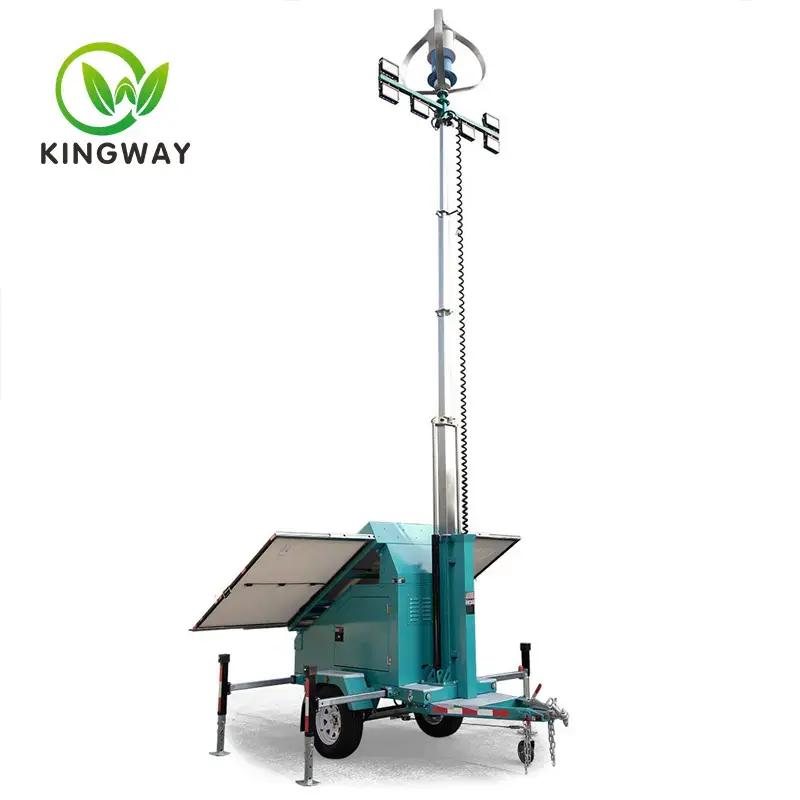
In terms of new energy technologies, Solar Energy technology has broad application prospects. The monitoring trailer system can be equipped with solar panels to convert sunlight into electrical energy to power the system. This can not only reduce the energy consumption cost of the system, but also reduce the impact of sunlight on the system to a certain extent. For example, in sunny areas, solar panels can provide sufficient power for the system to ensure that the system does not need to frequently replace batteries or rely on external power during long-term operation. At the same time, by reasonably designing the installation position and angle of the solar panel, it can also play a certain shading role, further reducing the direct impact of sunlight on the hardware components of the system.
VI. Conclusion
The monitoring trailer system has developed a variety of mature technical means and application strategies to deal with sudden changes in sunlight. From sensor protection and calibration, camera optics and image processing technology, to data transmission optimization technology, these measures can effectively reduce the impact of changes in sunlight on system performance and ensure the safety and efficiency of trailer operations. Practical application cases have fully demonstrated the effectiveness and reliability of these technologies, providing valuable reference experience for various industries.
Looking to the future, with the continuous development of technologies such as intelligence, automation, multi-sensor fusion, new materials and new energy, the ability of the monitoring trailer system to cope with sudden changes in sunlight will be further improved. The system will be more intelligent, efficient and reliable, and can operate stably in various complex and changing lighting environments, providing strong support for the digital transformation and intelligent upgrading of industries such as logistics and transportation. We have reason to believe that in the near future, the monitoring trailer system will be able to fully adapt to sudden changes in sunlight, bring new safety guarantees and operational efficiency improvements to trailer operations, and promote related industries to a better future.