

Mobile Lighting Trailer Supplier
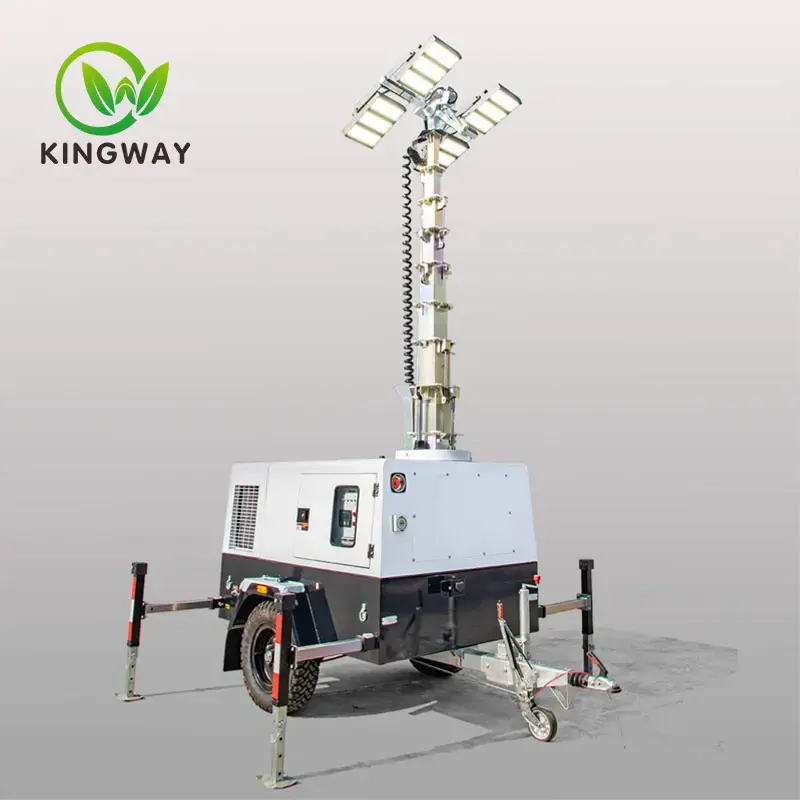
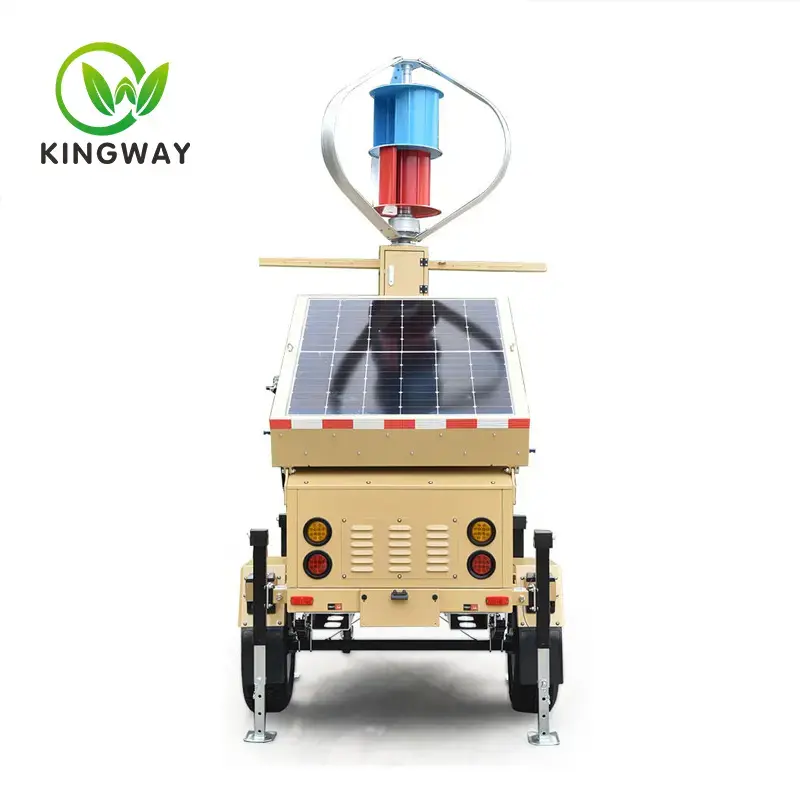
Mobile Lighting Monitoring Lighthouses Designed Specifically for Ports
Mobile Lighting Monitoring Lighthouses Designed Specifically for Ports
Mobile Lighting Monitoring Lighthouses Designed Specifically for Ports: Intelligent Barriers Safeguarding Shipping Safety
As key hubs in the global supply chain, ports operate 24/7, placing extreme demands on lighting and safety monitoring. In scenarios such as nighttime loading and unloading, emergency responses, and temporary berth expansion, the limitations and blind spots of traditional fixed lighting equipment are becoming increasingly apparent. Mobile lighting monitoring lighthouses, specifically designed for port scenarios, utilize integrated design and intelligent technology to become core equipment for solving the pain points of port operations. This article will analyze how mobile lighting monitoring towers reshape the new ecosystem of port safety operations from the following five dimensions:
1. Core Value: Dual Empowerment of Lighting and Monitoring, Strengthening the Port Safety Defense Line
2. Environmental Adaptability: Ultimate Protective Design to Meet the Challenges of Harsh Port Conditions
3. Flexible Deployment: Modular Structure to Meet Diverse Operational Needs
4. Intelligent Upgrade: Integration of IoT Technology for Efficient Remote Control
5. Application Value: Dual Breakthrough in Cost Reduction and Efficiency Improvement, Empowering Smart Port Construction
I. Core Value: Dual Empowerment of Lighting and Monitoring, Strengthening the Port Safety Defense Line
Safety risks in port operations often lie hidden in insufficient lighting and blind spots. The core advantage of mobile lighting monitoring towers lies in the deep integration of professional lighting and high-definition monitoring functions, forming a safety closed loop that is "visible, well-lit, and controllable."
In terms of lighting system design, to meet the needs of large-area port operations, high-power LED light source modules are adopted, with a single tower lighting power exceeding 1200W and a luminous flux exceeding 160,000 lumens. Combined with professional optical lenses, this achieves a 120° wide-angle uniform light distribution, effectively covering a range of 150 meters. The illuminance meets the international port operation standard requirement of over 300 lux, completely eliminating blind spots in areas such as container stacking areas and bulk cargo loading/unloading points. It also features intelligent dimming, automatically adjusting brightness according to ambient light intensity and work density, ensuring operational accuracy while avoiding light pollution interference with surrounding shipping.
The monitoring system is equipped with 2-megapixel high-definition network cameras, supporting wide dynamic range and starlight-level night vision technology. Even in low-light conditions at night, it can clearly capture details of personnel operations and equipment operating status. Through intelligent video analysis algorithms, it can achieve functions such as area intrusion detection, personnel fall recognition, and alarms for abnormal equipment movement. When unauthorized crane operations or unauthorized personnel entering dangerous areas are detected, audible and visual alarms are immediately triggered, and warning information is pushed to the control center, providing proactive prevention capabilities for safety management.
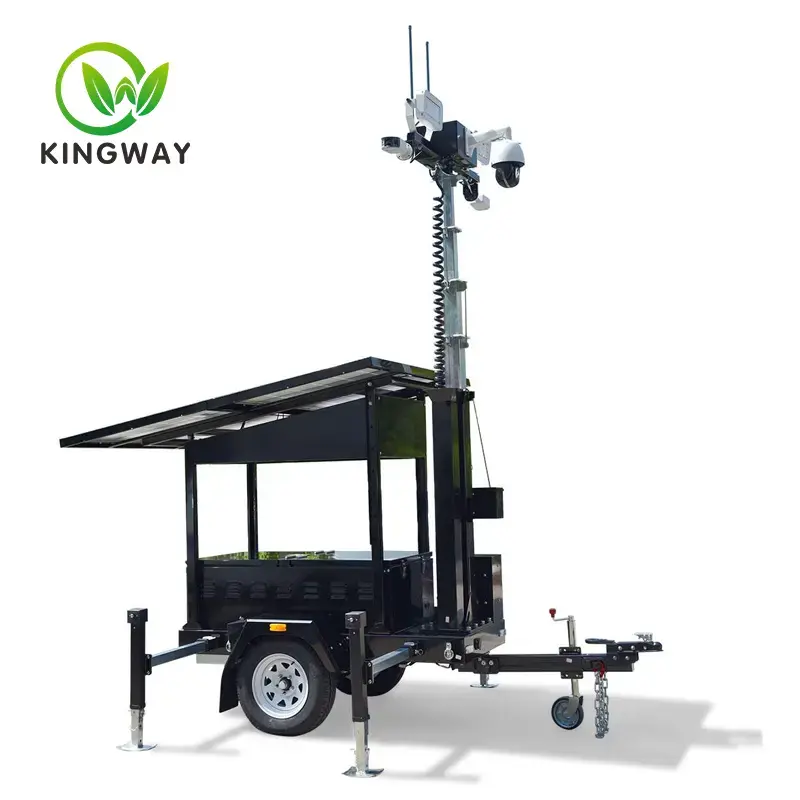
II. Environmental Adaptability: Ultimate Protective Design to Meet the Challenges of Harsh Port Conditions
The unique geographical environment and operating conditions of ports place far greater demands on the protective performance of equipment than ordinary outdoor equipment. The mobile lighting monitoring lighthouse, through its comprehensive protective design, confidently withstands the corrosive effects of salt spray, wind, rain, and sandstorms.
Its core protection rating reaches IP67 certification, meaning the equipment is completely dust-proof and can still operate normally even after being submerged in 1 meter of water for 30 minutes, sufficient to withstand sudden downpours and wave splashes in ports. Addressing the salt spray corrosion problem unique to marine environments, the equipment shell is made of 304 stainless steel with a fluorocarbon coating. It has undergone 5000 hours of salt spray testing without rust, ensuring long-term stable operation in coastal ports.
In terms of structural stability, it adopts a triangular support frame design, with the base equipped with weighted counterweights or fixed anchors, capable of withstanding the impact of a Category 12 gale, making it suitable for ports in typhoon-prone areas. The light pole is made of high-strength aluminum alloy and anodized, which reduces overall weight and improves bending resistance. Combined with a shock-absorbing structure design, it effectively buffers the vibrations generated during port crane operations, preventing camera image shake and light source misalignment.
III. Flexible Deployment: Modular Structure Meets Diverse Operational Needs
Port operations are highly mobile, requiring rapid deployment of lighting and monitoring equipment for temporary berth activation, maintenance area designation, and emergency rescue. The mobile lighting and monitoring light tower achieves a "ready-to-use" operation mode through its modular design and convenient mobility.
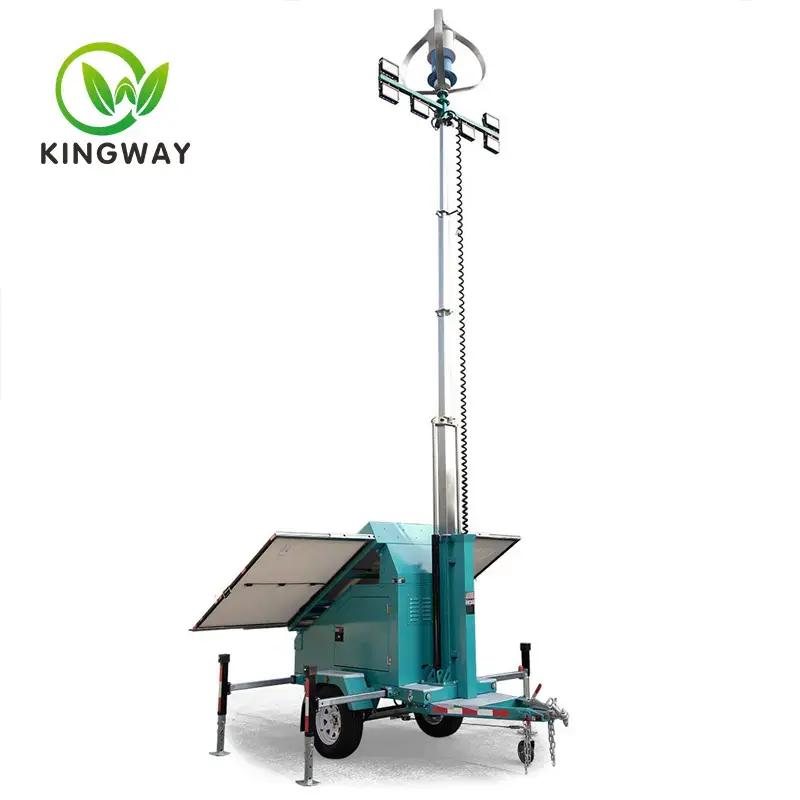
The equipment adopts an integrated trailer-mounted design, weighing less than 2 tons, and can be easily towed by a small forklift or trailer, adapting to various transport vehicles within the port. The light pole uses a hydraulic lifting system, with a stepless adjustment height between 3 and 12 meters. Lifting and lowering operations can be completed via remote control, and switching from transport mode to working mode takes only 30 minutes. For remote areas without power supply, the equipment is equipped with a large-capacity lithium battery pack, supporting solar panel-assisted charging. A single charge allows for 24-hour continuous operation, completely eliminating reliance on the power grid.
Modular design allows for flexible configuration and combination according to actual needs. For example, in container terminals, multispectral cameras can be added for automatic container number identification; in bulk cargo terminals, dust concentration sensors can be added for environmental monitoring; and in oil and chemical terminals, explosion-proof light sources and cameras can be selected to meet safety regulations, truly achieving a customized "one tower, multiple uses" solution.
IV. Intelligent Upgrade: Integration of IoT Technology for Efficient Remote Control
The advancement of smart port construction requires lighting monitoring equipment to shift from isolated operation to networked collaboration. Mobile lighting monitoring beacons integrate IoT technology, building a full-link intelligent management system of "equipment-platform-terminal," significantly improving management efficiency.
The equipment is equipped with a 4G Cat.1 or NB-IoT wireless communication module, using the MQTT IoT communication protocol to ensure a real-time and stable connection with the cloud platform. This protocol, based on TCP, ensures reliable data transmission and is suitable for centralized management of a large number of port devices. Through a cloud-based management platform, administrators can remotely monitor the operational status of the lighthouses on smart terminals such as computers and mobile phones, including real-time data such as light intensity, battery level, and camera feeds. This enables individual light control, group management, and preset scene modes.
The system boasts comprehensive fault warning and data analysis capabilities. When issues such as light source failure or battery depletion occur, the platform automatically sends alarm messages and locates the equipment, facilitating rapid response from maintenance personnel. Simultaneously, the platform can collect statistics on lighting duration, energy consumption data, and alarm records, presenting busy periods and safety hotspots in port operations through data visualization charts, providing data support for port operation optimization.
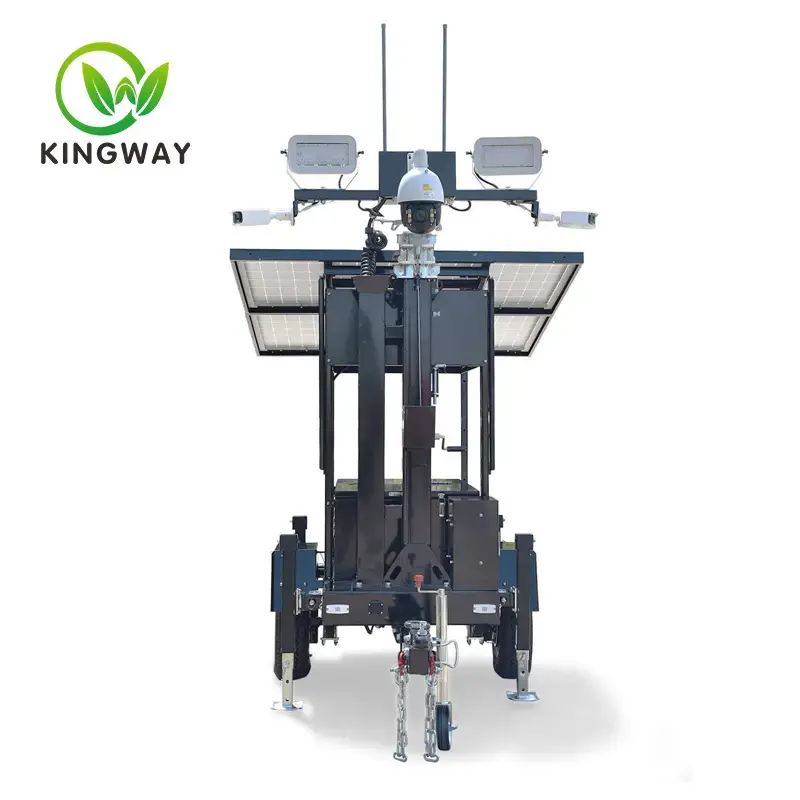
V. Application Value: A Two-Way Breakthrough in Cost Reduction and Efficiency Improvement, Empowering Smart Port Construction
The application of mobile lighting monitoring lighthouses not only ensures safe port operations but also demonstrates significant value in controlling operating costs and improving operational efficiency, becoming a crucial infrastructure for smart port construction.
In terms of cost control, compared to traditional fixed lighting and monitoring equipment, mobile lighthouses save a significant amount of cable laying and infrastructure construction costs, reducing deployment costs by more than 40%. Intelligent dimming and a solar-assisted power supply system reduce equipment energy consumption by 30%. Combined with remote operation and maintenance management, this reduces the need for on-site inspection personnel, resulting in significant annual savings in maintenance costs. The equipment's high protection performance and stable operation extend its lifespan to over 8 years, drastically reducing replacement costs.
Regarding efficiency improvements, rapid deployment reduces preparation time for temporary work areas from several days to just hours. Especially in port emergency rescue scenarios, it provides immediate lighting and monitoring support to accident sites, buying valuable time for rescue operations. The intelligent monitoring system reduces the workload of manual inspections and lowers the accident rate through proactive early warnings. Actual application data shows that port areas with deployed mobile lighting monitoring lighthouses have experienced a 60% decrease in the accident rate and a 25% increase in operational efficiency.
Conclusion: Redefining Port Safety Operation Standards
From illuminating the work site to safeguarding the safety line, from flexible deployment to intelligent management, mobile lighting monitoring lighthouses designed specifically for ports are addressing many pain points in traditional port operations with their multi-dimensional innovative capabilities. Against the backdrop of the global shipping industry's transformation towards efficiency, safety, and intelligence, this type of integrated equipment will become an important support for ports to enhance their core competitiveness and provide a solid guarantee for the stable operation of the global supply chain.
Website:https://site_fc70f0dc-e18d-4131-9144-d72c1199fe1a/
Email:shana@kwenergytech.com
Whatsapp:+86 18857031358