
Mobile Lighting Trailer Supplier
International Safety Standards for Solar Mobile Lighting Trailers
International Safety Standards for Solar Mobile Lighting Trailers
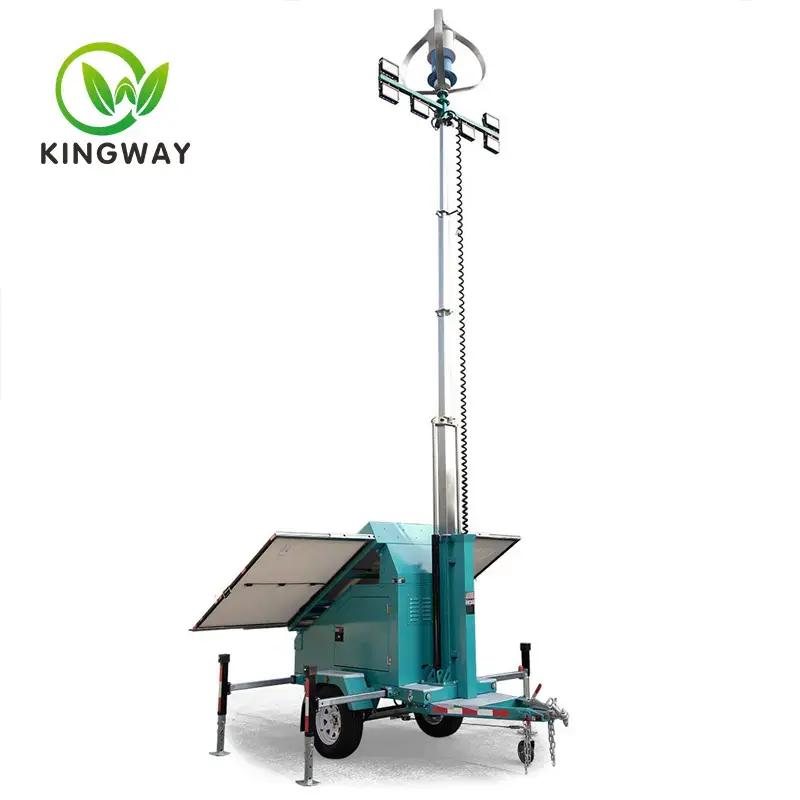
Amidst the growing global demand for infrastructure, emergency rescue, and outdoor operations, solar mobile lighting trailers, with their zero-emission and high mobility, have become a popular category for international wholesale procurement. However, safety regulations and technical standards vary significantly across countries and regions, and compliance directly determines whether a product can successfully enter the target market. This article systematically analyzes the safety standards systems in core global markets, detailing the technical requirements and certification processes to provide buyers with a professional basis for product selection.
I. The Core Value of International Safety Standards: More Than Just a "Barrier to Entry"
Safety-compliant solar mobile lighting trailers are not only a fundamental prerequisite for circumventing trade barriers but also a key guarantee for reducing operational risks. EU market surveillance data shows that in 2024, 12% of imported mobile lighting equipment was detained for non-compliance with safety standards, 70% of which involved electrical safety and mechanical stability issues.
The core value of compliant products lies in three dimensions:
Legal Compliance: Meeting mandatory certification requirements in target markets avoids customs seizures, fines, and the risk of market delisting;
Safety: Ensuring operator safety in extreme environments and with frequent movement, reducing accidents;
Commercial Competitiveness: Compliance certification serves as a brand endorsement of trust, facilitating access to government procurement and large-scale project supply chains.
II. Deconstructing the Safety Standards System in Global Core Markets
Different regions have developed distinctive standards systems based on climate characteristics, application scenarios, and technological traditions. The requirements of the EU and North American markets are the most representative and play a leading role in global standards.
(I) EU: A Multi-Directive Control System Core to CE Certification
The EU implements a dual control model of "directives + harmonized standards" for solar mobile lighting trailers. CE certification is required to enter the market, covering four core directive requirements:
1. Electrical Safety Foundation: Low Voltage Directive (LVD 2014/35/EU)
This directive applies to equipment operating between 50V AC and 1000V AC or 75V DC and 1500V DC. The corresponding core harmonized standards include:
EN 62368-1: An electrical safety standard for audio, video, information technology, and communications equipment, requiring battery management systems (BMS) to have comprehensive overcharge and over-discharge protection;
EN 61010-1: Safety standard for measurement, control, and laboratory equipment, stipulating that clearances and creepage distances must not be less than 8mm;
Specific to photovoltaic modules: They must comply with the shock resistance requirements of EN 61215 and withstand a 20J shock test and a 2000Pa wind pressure test. Electrical safety testing must include three core items: insulation resistance (≥1MΩ), withstand voltage testing (minimum 2Un + 1000V), and leakage current testing (≤3.5mA). Key components, such as the junction box, must be verified to meet IP65 protection levels or above.
2. Electromagnetic Compatibility (EMC) Directive (2014/30/EU)
As mechatronic devices, mobile lighting trailers must meet both electromagnetic emission (EMI) and immunity (EMS) requirements:
Emission limits must comply with EN 61000-6-3 to avoid interference with surrounding communication equipment;
Emission immunity must pass EN 61000-6-1 testing to protect against common electromagnetic shocks, such as electrostatic discharge and radio frequency interference.
Note: If the device is equipped with a wireless remote control module, it must also comply with the Radio Equipment Directive (RED 2014/53/EU).
3. Machinery Safety: Machinery Directive (2006/42/EC)
Safety requirements for trailer structures and moving parts are centered around the following:
The support structure must pass a static test at 1.5 times the maximum design load;
All moving parts must be equipped with dual guards, and the emergency brake of the solar tracking system must respond within 0.5 seconds;
The trailer chassis and lifting system must comply with EN 12312-19, a standard specifically developed for solar-powered mobile equipment, covering special scenarios such as airports and construction sites.
4. Environmental Protection and Material Control: RoHS Directive (2011/65/EU)
The RoHS 2.0 revision, which came into effect in July 2024, adds four new phthalates (DEHP, BBP, DBP, and DIBP), each with a limit of 0.1%. Homogeneous materials in solar mobile lighting trailers, such as welding materials, connectors, and plastic casings, must meet these requirements and be labeled with material codes according to EN 50543. Technical documentation must be retained for at least 10 years, and the CE mark must be associated with RoHS compliance.
(II) North America: Dual Protection of DOT Certification and UL Standards
Regulation of mobile lighting trailers in the North American market is divided into two major dimensions: "transport safety" and "equipment safety," led by the U.S. Department of Transportation (DOT) and Underwriters Laboratories (UL), respectively.
1. Road Transport Safety: Core Requirements of DOT Certification
All lighting trailers used for road towing must comply with Federal Motor Vehicle Safety Standards (FMVSS), specifically:
FMVSS 108: Vehicle Lighting and Reflectors Standard, which requires trailers to be equipped with compliant taillights, brake lights, turn signals, and reflective signage;
Braking System: Must pass the FMVSS 105 performance test, and the mechanical parking brake must be able to maintain stability on a 15% grade;
Structural Safety: The trailer frame must be constructed of tubular steel with a wall thickness of 4.76mm or greater. AL-KO hitch and axles are preferred for towing devices to ensure driving stability.
2. Equipment Safety Certification: UL Standards
Electrical and photovoltaic systems must be UL certified. Key standards include:
UL 1703: Solar Photovoltaic Module Standard, which requires panels to withstand 1-inch hail (52 mph);
UL 8750: LED Lighting Equipment Safety Standard, which covers electric shock protection and thermal management requirements;
UL 2743: Energy Storage System Safety Standard, which requires Lithium Batteries to undergo additional testing and verification under UL 1642.
The North American market places particular emphasis on adaptability to extreme environments. Qualified products must operate within a temperature range of -40°C to 55°C and have a wind resistance rating of at least Force 8 (65 mph). Some military-grade products even require an operating temperature range of -40°C to 65°C.
(III) Standard References for Other Regional Markets
UK: CE certification mutual recognition will be retained after Brexit, but the towing device will be required to use a 50mm AL-KO hook and be equipped with a manual support leg;
Southeast Asia: IEC international standards will be used as a reference, with a focus on IP54 protection and continuous lighting capability for three rainy days;
Australia: SAA certification is required, electrical safety complies with the AS/NZS 60950 series of standards, and environmental testing emphasizes UV resistance.
III. Technical Implementation of Core System Safety Standards
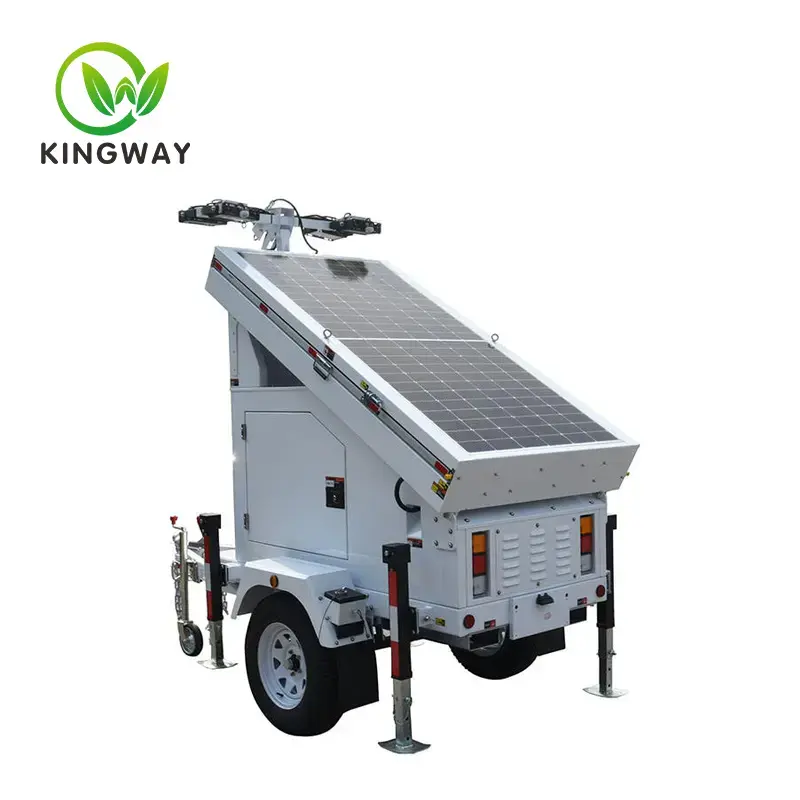
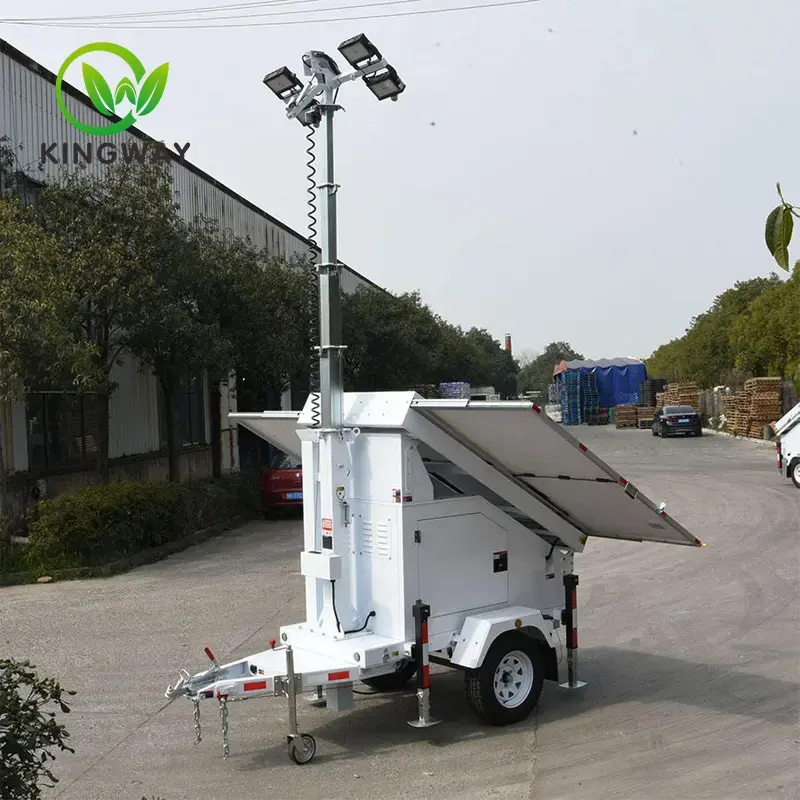
Solar mobile lighting trailers consist of four major systems: photovoltaic power generation, energy storage, lighting, and trailer chassis. The implementation of standards for each system directly determines product reliability.
(I) Photovoltaic Power Generation System: Balancing Efficiency and Safety
Module Performance: Crystalline silicon modules must have a conversion efficiency of ≥17%, and thin-film modules must comply with GB/T 18911. All modules must pass thermal cycling (-40°C to +85°C) and humidity-freeze cycling tests.
Electrical Protection: Reverse polarity protection and anti-islanding devices must be installed, complying with the EN 62109-1 inverter safety standard.
Installation Specifications: The bracket must be adjustable and able to withstand 1.5 times the maximum design wind load. Products for coastal areas must pass a 168-hour salt spray corrosion test.
(II) Energy Storage System: Battery Safety is Core
Battery Selection: Sealed lead-acid batteries must comply with GB/T 19638.2; lithium batteries must pass IEC 62133 and UN 38.3 transport tests.
Capacity Design: The battery must provide at least 48 hours of backup lighting, with a discharge depth not exceeding 60% for three consecutive rainy days.
BMS Functionality: Overvoltage, undervoltage, overcurrent, and overtemperature protections must be provided, and the charging temperature must be controlled between 0°C and 45°C.
(III) Lighting and Trailer Structure: Combining Practicality and Safety
Lighting Performance: The LED light source must have a luminous efficacy of 50 lm/W or higher, a color rendering index of Ra ≥ 70, and a lighting protection rating of at least IP65.
Lifting System: The hydraulic lift mast must be constructed of Q235 galvanized steel, with both longitudinal and lateral adjustment ranges of 0-358 degrees and a low-voltage emergency lift function.
Safety Devices: Equipped with a leakage protection device and an emergency stop button, the chassis must have four adjustable support legs to ensure operational stability.
IV. Compliance Certification Process and Key Points for Purchasing and Selection
(I) Typical International Certification Process
Taking the EU CE certification as an example, the complete process includes:
Standard Confirmation: Identify the applicable directives (LVD, EMC, Machinery Directive, etc.) and harmonized standards for the product;
Technical Document Preparation: Prepare product specifications, circuit diagrams, parts lists, test reports, etc.;
Type Testing: Commission a notified body such as TÜV Rheinland or SGS to conduct full-scale testing;
Conformity Assessment: Choose between self-declaration or third-party audit based on the product's risk level;
Certification Obtaining and Marking: Sign a Declaration of Conformity (DoC) and affix the CE mark conspicuously to the product.
North American DOT certification uses a "self-certification + market sampling" model. Manufacturers are required to conduct their own testing and submit a DoC. The DOT reserves the right to conduct random inspections.
(II) Compliance Verification Guidelines for Purchaser Selection
Certification Document Verification: Require suppliers to provide complete certifications (CE, UL, DOT, etc.) and verify their validity through official channels, focusing on confirming the product models and parameters covered by the certificates.
Test Report Review: Request test reports for key items, including electrical safety testing, IP protection testing, and environmental adaptability testing, paying particular attention to items prone to failure, such as junction box protection and ground resistance (must be <10Ω).
Production Consistency Verification: Verify factory quality control documents to ensure that mass-produced products are consistent with certified samples. Conduct factory audits if necessary.
Regional Suitability Assessment: Select products of appropriate grades based on the target market's climate. For example, for coastal areas, select products that have passed the 168-hour salt spray test. For cold regions, confirm low-temperature start-up performance.