

Mobile Lighting Trailer Supplier
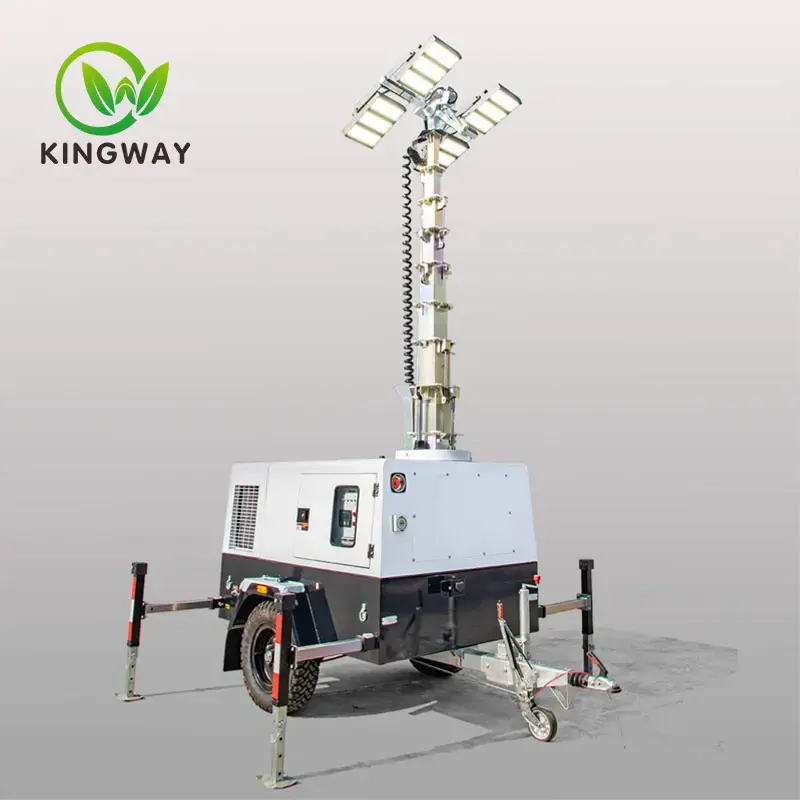
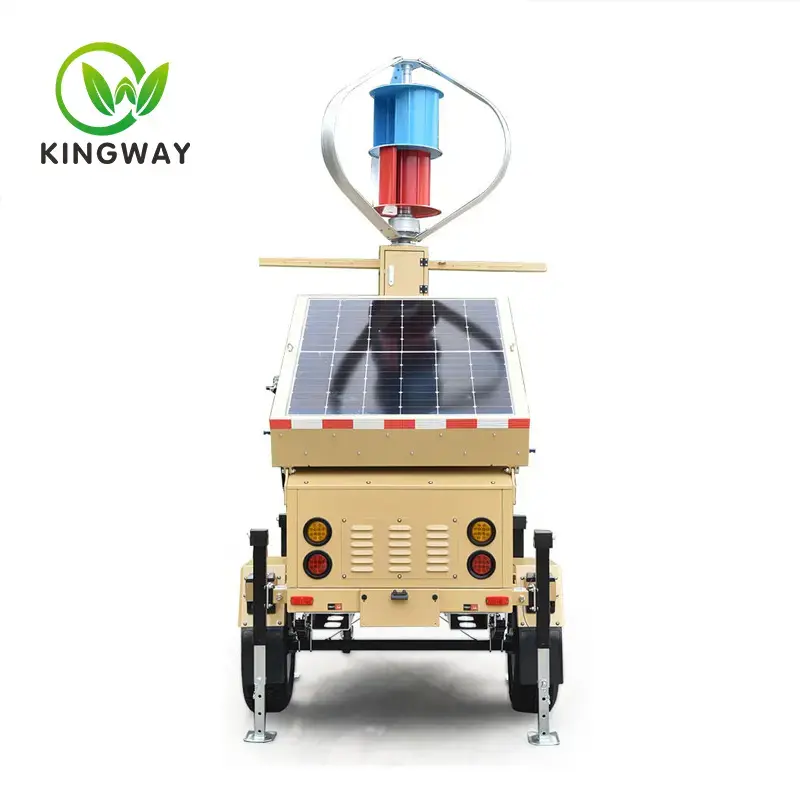
How to Select the Appropriate Power for Mobile Lighting Trailers in Different Application Scenarios
How to Select the Appropriate Power for Mobile Lighting Trailers in Different Application Scenarios
I. Breakdown of Mainstream Application Scenarios in Overseas Markets
As an overseas distributor, accurately identifying the customer's application scenario is the prerequisite for power selection. In overseas markets, the core demand scenarios for mobile lighting trailers fall into five main categories, with the following key pain points and lighting requirements:
Road/Construction Scenarios: Clients are primarily engineering contractors and municipal units. Requirements include continuous nighttime operation (8-12 hours), wide coverage (30-100 meters), and resistance to severe weather (heavy rain, strong winds). Pain points include "insufficient brightness leading to low construction efficiency" and "frequent power outages affecting progress."
Emergency Rescue Scenarios: Clients include fire departments and emergency management agencies. Core requirements include rapid deployment (start-up within 5 minutes), strong light penetration (suitable for smoke/rain), and stable battery life. Pain points include "inability to quickly illuminate the rescue area in emergencies" and "lack of external power supply in remote areas."
Outdoor Event Scenarios: Clients are event planning companies and competition organizers. Requirements include flexible mobility, quiet operation (no interference with events), and aesthetically pleasing design suitable for various scenarios (weddings/music festivals/sports events). Pain points include "high-power equipment being noisy" and "insufficient coverage from low-power equipment."
Mining/ Oilfield operation scenarios: Clients are primarily resource extraction companies, requiring ultra-high brightness (to penetrate dust), explosion-proof safety, and continuous operation for extended periods (24 hours). Their pain points are "high equipment failure rate in harsh environments" and "blind spots affecting operational safety."
Agriculture/livestock scenarios: Clients are farm owners and livestock ranch operators, requiring convenient mobility (adaptable to field/pasture terrain), energy efficiency (reducing operating costs), and waterproofing and corrosion resistance. Their pain points are "insufficient lighting for nighttime irrigation/feeding" and "easily damaged during outdoor storage."
II. Core Logic of Power Selection: Balancing Brightness, Coverage, and Cost
When recommending power ratings, distributors need to convey the concept of "optimal fit" to customers—higher power is not always better. A balance must be struck between three core factors, while also considering the characteristics of overseas markets (such as energy costs and certification requirements):
Power-to-Brightness/Coverage Relationship (Key Data Reference):
1000-2000W: 8000-15000lm lumen output, coverage radius 10-30 meters, suitable for small-scale operations (such as small repairs, temporary stalls);
2000-4000W: 15000-30000lm lumen output, coverage radius 30-60 meters, suitable for medium-sized scenarios (such as small to medium-sized construction projects, outdoor weddings);
4000-8000W: 30000-60000lm lumen output, coverage radius 60-100 meters **100m+:** Suitable for large-scale scenarios (e.g., road construction, mining operations); **8000W and above:** Lumen value 60000lm+, coverage radius over 100 meters, suitable for ultra-large-scale scenarios (e.g., large-scale events, oil field extraction).
**Special considerations for overseas markets:**
* **Energy costs:** Fuel/electricity costs are high in Europe and America, requiring recommendations for products with "power adaptation + energy-saving design" (e.g., lithium battery models, solar-assisted power supply) to reduce long-term operating costs for customers;
* **Certification requirements:** CE, UL, and other certifications have clear power limits (e.g., some European countries limit single-unit power to over 8000W), ensuring recommended products comply with local regulations;
* **Transportation costs:** High-power equipment (4000W and above) often weighs over 500kg, resulting in high sea/land transportation costs. It is recommended to suggest "multiple low-power units replacing a single high-power unit" (e.g., two 3000W units covering 60 meters, resulting in lower transportation costs).
III. Industry-Specific Power Recommendation Guide
Based on overseas market scenarios, the following "Scenario - Power - Recommendation Reason" comparison table is provided to help distributors quickly match customer needs:

IV. Key Factors for Distributor Purchasing Decisions
As a wholesaler, power selection must not only meet customer needs but also consider inventory turnover and profit margins. Three key points need to be considered:
Inventory Structure Optimization:
* Core Inventory: 2000-6000W products (covering 80% of overseas market demand), especially the 3000W and 5000W "all-rounder" models, suitable for construction, events, agriculture, and other scenarios;
* Replenishment Inventory: 1000-2000W (for individual customers) and 6000-8000W (for engineering/resource customers), adjusting the ratio according to the industry distribution of the target market (e.g., stock more 6000W and above models in mining areas);
* Slow-moving Warning: 8000W The demand for these high-power products is niche, and it is recommended that their inventory ratio not exceed 10% to avoid tying up capital.
Prioritize Product Added Value: Prioritize modular products with adjustable power (e.g., 2000-4000W switchable), allowing one device to adapt to multiple scenarios, reducing inventory pressure on distributors, and increasing customer repurchase intentions; Focus on energy-saving designs (e.g., LED light source + lithium battery life), as overseas customers have a high acceptance of premium pricing for environmentally friendly and energy-saving products, which can increase distributor profit margins.
Supply Chain Adaptability: Confirm whether suppliers offer customized power services (e.g., adjusting power limits for specific markets) to meet the needs of niche customers; Verify product certifications (CE/UL/FCC, etc.) and the distribution of overseas after-sales service outlets to reduce the after-sales service burden on distributors.
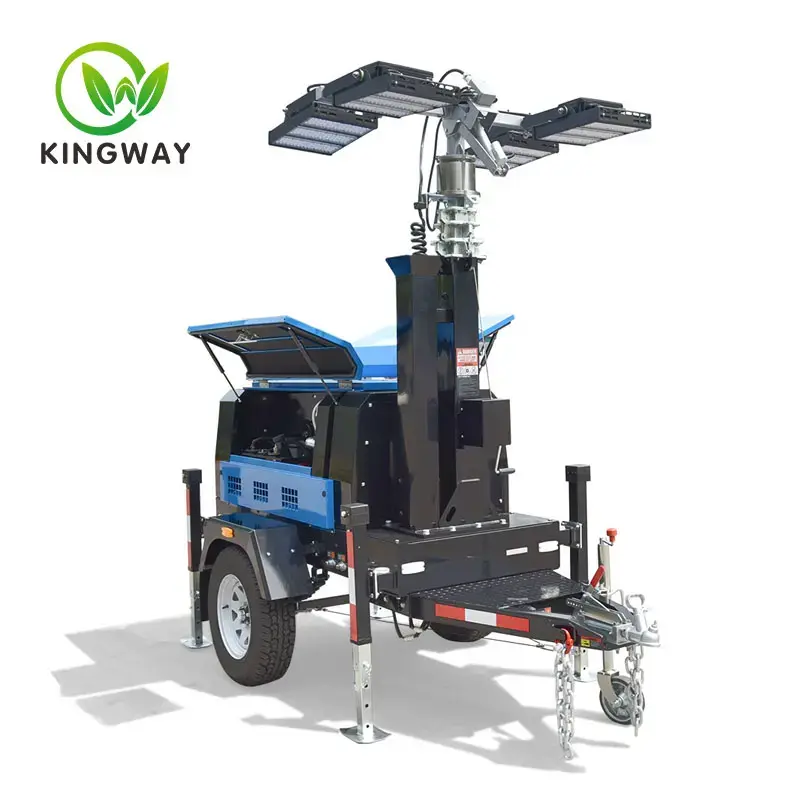
V. After-Sales Support and Customer Education Strategies
The core competitiveness of overseas distributors lies not only in product supply but also in "solutions + after-sales empowerment." Regarding power selection, the following can be implemented:
Customer Education Toolkit:
* Create "Scenario - Power" selection posters (multilingual versions) including core data such as lumen values and coverage area to facilitate quick customer decision-making;
* Shoot product test videos (e.g., coverage effect of 3000W in a construction scenario, penetration of 5000W in rainy weather) to enhance customer trust.
After-Sales Empowerment Support:
* Obtain "Power Adaptation Troubleshooting" manuals from suppliers (e.g., "How to upgrade power modules when customers report insufficient brightness") to quickly resolve customer issues;
* Stock readily available spare parts (e.g., LED bulbs, power modules) and provide "on-site repair" cooperation solutions for high-power equipment to improve customer satisfaction. Customer repurchase guidance: For small customers, we recommend a "low-power entry-level model + power upgrade package" (e.g., buy 2000W initially, and upgrade to 4000W later); For large customers, we offer "multi-unit power combination solutions" (e.g., 3 units of 5000W covering a 150-meter construction area, more flexible than a single 10000W unit), increasing the average order value.