

Mobile Lighting Trailer Supplier
How to Choose a Mobile Solar Light Tower for a Construction Site
How to Choose a Mobile Solar Light Tower for a Construction Site
1. Quantifying the Lighting Needs of the Construction Site (Coverage Area, Brightness Standards, Continuous Working Duration)
2. Performance Evaluation Standards for Core Components (Solar Panels, Batteries, Lighting Fixtures, Lifting System)
3. International Safety Compliance Certification Requirements (Protection Level, Wind and Earthquake Resistance, Electrical Safety)
4. Energy Consumption and Maintenance Cost Control (Charging Efficiency, Lifespan, Ease of Operation and Maintenance)
5. Environmental Adaptability and Practical Function Configuration (Harmful Weather Tolerance, Mobility Flexibility)
1. Quantifying the Lighting Needs of the Construction Site: Precisely Matching the Construction Scenario
The lighting needs of a construction site need to be comprehensively judged based on the construction area, work type, and shift schedule:
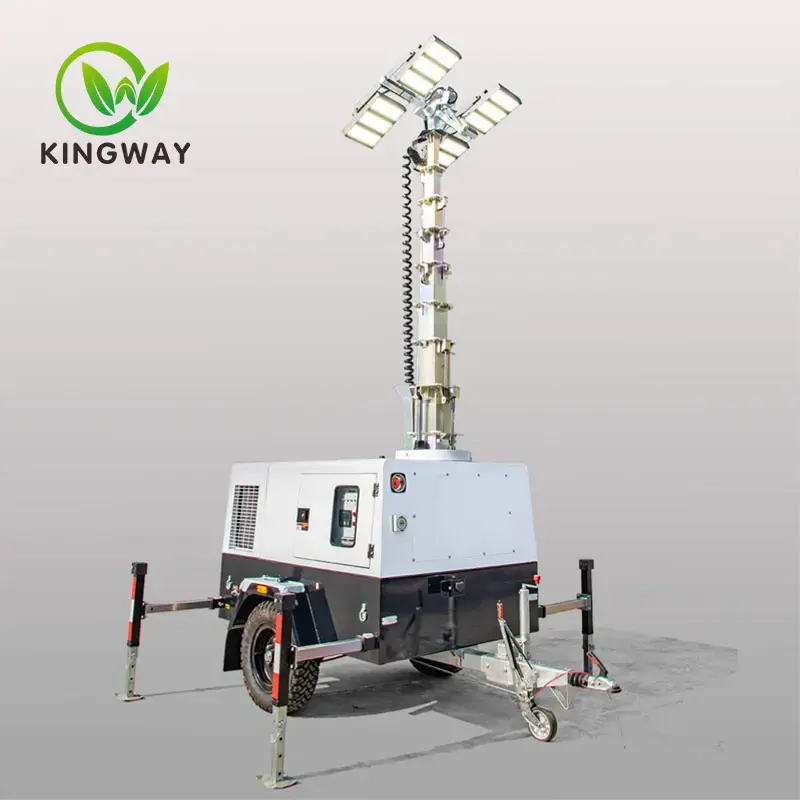
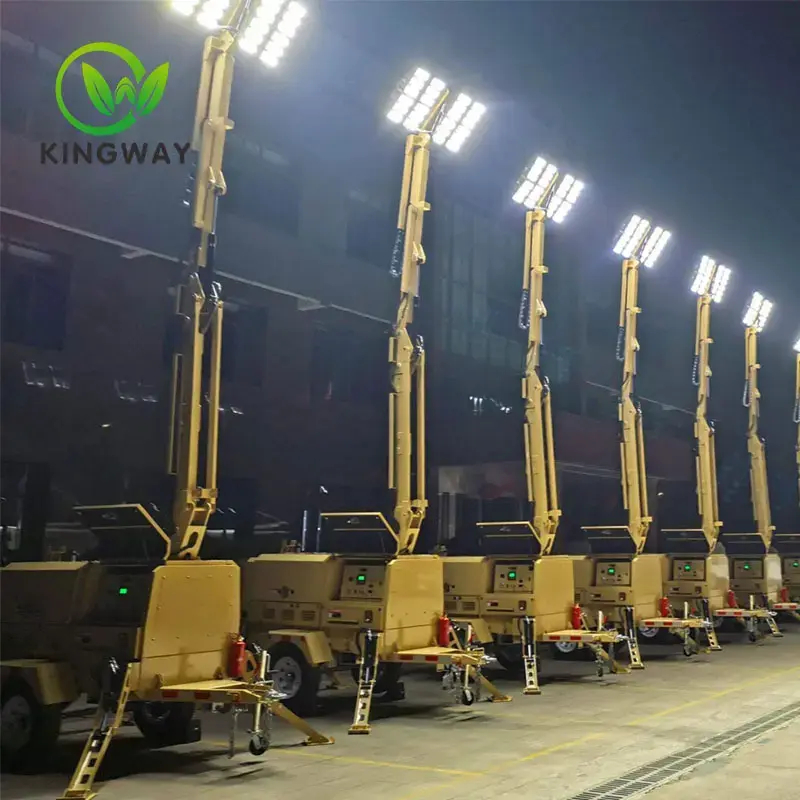
Coverage Area: Select the radiation radius based on the actual area of the construction site. Conventional construction sites require 100-200 meters of lighting coverage, which can be achieved through lamp head adjustment to achieve 360° all-around lighting or directional focused lighting. For high-altitude operations (such as scaffolding construction and tower crane operations), models with lamp posts raised to over 9 meters should be selected to ensure uniform brightness on the vertical working surface. Brightness Standard: Referring to international construction lighting standards, the illuminance in the main work area must reach at least 300 lux. A configuration of four 100W high-efficiency LED light sets can meet the needs of high-intensity construction. A 6000K daylight color temperature is chosen to facilitate the identification of construction details.
Continuous Working Duration: Two-shift construction requires at least 20 hours of continuous lighting. In areas with frequent cloudy or rainy days, models with stronger battery life should be selected. Some high-end products can achieve continuous illumination for 30 days in cloudy or rainy weather (based on 12 hours of work per day).
2. Core Component Performance Evaluation: Focusing on the Durability of Key Components
Core components directly determine the lifespan and stability of the lighthouse and require special attention:
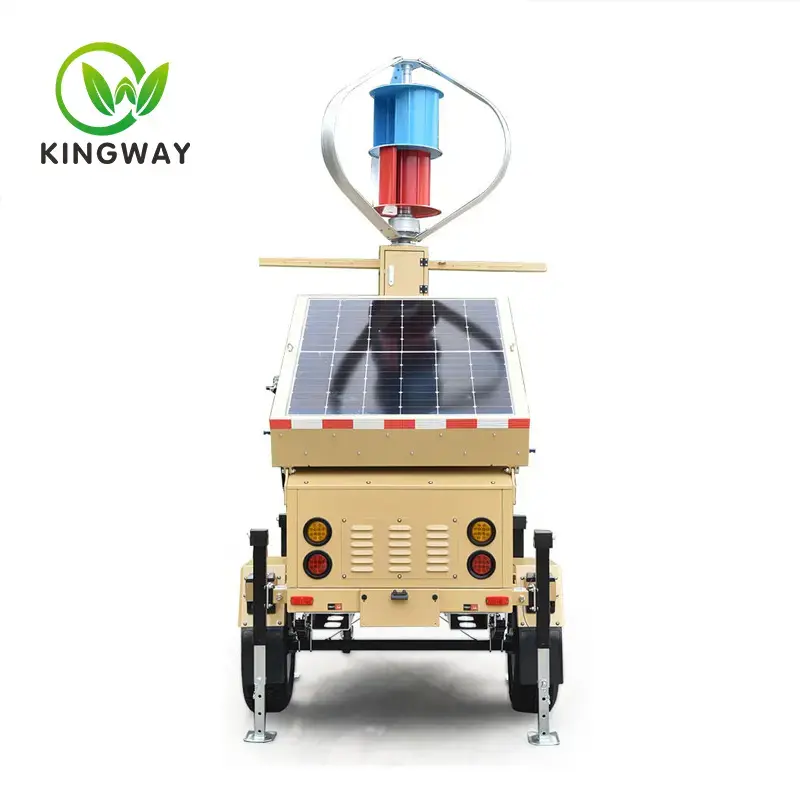
Solar Panels: Monocrystalline silicon arrays are preferred due to their higher conversion efficiency and adaptability to complex lighting conditions. It is necessary to confirm whether the components have passed UL certification to ensure stable power generation. Battery System: Gel cells have a cycle life of over 1000 cycles, making them more suitable for frequent charge-discharge scenarios, with a lifespan extended to 100,000 hours; low-temperature discharge performance is crucial, ensuring normal operation in environments ranging from -55℃ to 85℃.
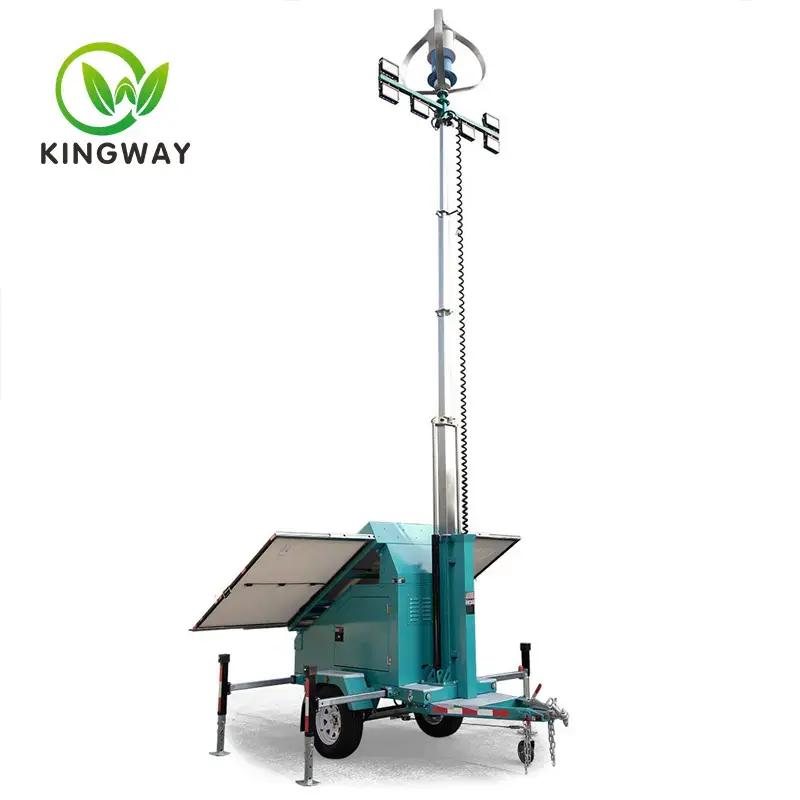
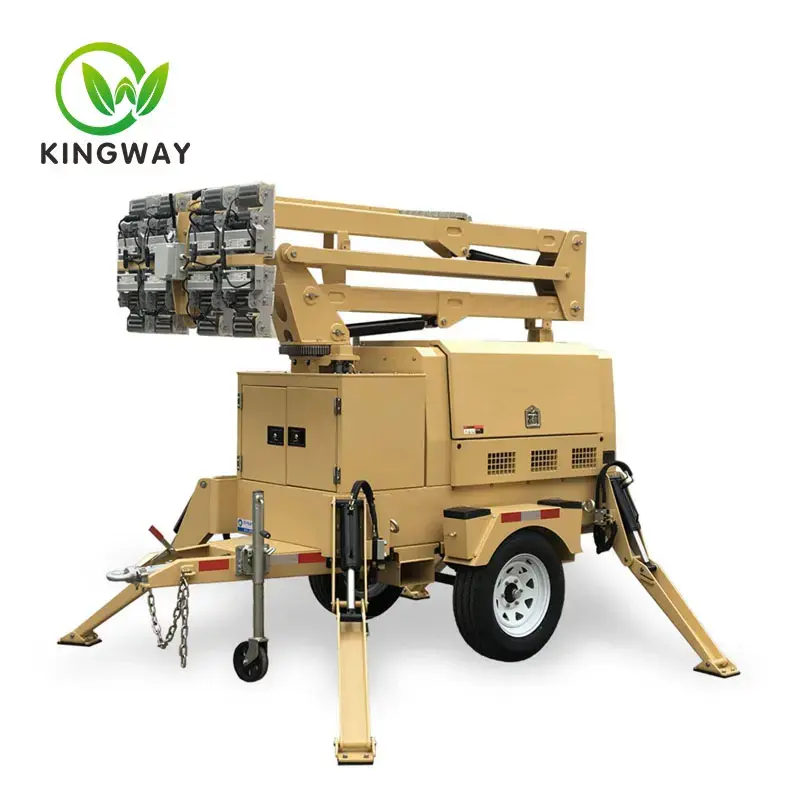
Lighting Fixture Configuration: LED lamp heads must be UV-resistant and impact-resistant, with PC material used for the lampshade to enhance durability; independent lamp head adjustment or 250° lamp panel rotation should be supported to achieve both near and far lighting effects. Lifting System: The hydraulic lifting mast must stably raise to a height of 6-9 meters, with fall protection; the control panel should support independent lamp head switching and rotation operation.
3. International Safety Compliance Certification: Strengthening Construction Safety
Construction sites are high-risk environments, and lighthouses must meet stringent international safety standards:
Protection Level: The overall protection level must be no less than IP65, and the battery box and light head must reach IP67 or higher, capable of withstanding heavy rain and dust intrusion. For some offshore or chemical-surrounded construction sites, an IP68 fully waterproof model can be selected.
Wind and Earthquake Resistance: Wind resistance must reach 80 m/s (equivalent to a Category 17 typhoon). The light pole uses Q235 thickened steel (thickness ≥ 3.5 mm), passing a Category 14 strong wind simulation test, with bending controlled within 0.15 mm.
Electrical Safety Certification: The entire unit must pass CE certification, and core components (LED lights, batteries, solar panels) must also have UL certification, complying with NEMA Electrical Design Standard 6 to prevent leakage and short circuit risks. Special Scenario Certification: For airport perimeters or high-altitude construction sites, low-intensity warning lighthouses with ICAO Type A certification must be selected to ensure aviation safety.
4. Energy Consumption and Maintenance Cost Control: Balancing Economy and Long-Term Effectiveness
When selecting a model, a comprehensive calculation of the total lifecycle cost is necessary, not just the purchase price:
Charging Efficiency: Solar panel charging time should be controlled within 10-16 hours (under standard sunlight conditions), equipped with an intelligent charge/discharge controller to prevent overcharging and over-discharging damage to the battery.
Maintenance Convenience: Modular design products should be selected, allowing for quick disassembly and replacement of the battery and light head; the light pole and trailer frame should be corrosion-resistant to reduce the frequency of maintenance due to rust in outdoor environments.
Intelligent Energy Saving Functions: Features include automatic start/stop with light sensing and brightness adjustment, automatically switching operating modes according to ambient light to reduce ineffective energy consumption; models supporting remote control facilitate unified management of multiple devices.
5. Environmental Adaptability and Practical Functionality: Adaptable to Complex Construction Environments
Construction site environments are highly variable, requiring lighthouses to possess strong environmental resilience and practical functionality:
Harsh Weather Resistance:Stable operation in temperatures ranging from -55℃ to 85℃, capable of withstanding extreme weather conditions such as hail and sandstorms. The base is made of marine-grade corrosion-resistant materials, suitable for coastal or chemically polluted construction sites.
Mobility Flexibility: Equipped with a NATM/DOT standard trailer frame, supporting towing and movement. The wheeled design allows for flexible maneuvering on uneven construction sites. Weight is kept within a range suitable for hoisting and transport, eliminating the need for large equipment for installation.
Additional Practical Functions:An integrated timer facilitates usage time tracking; an independent lamp head control switch allows for adjustable lighting range; some models are equipped with a cylinder-driven 360° rotating lamp panel, adapting to multi-directional operation needs.