

Mobile Lighting Trailer Supplier








How does the solar lighthouse monitoring system ensure data security?
How does the solar lighthouse monitoring system ensure data security?
In today's digital age, data security has become the focus of attention in various industries, and the solar lighthouse monitoring system is no exception. Ensuring data security is not only a technical issue, but also an important part of system design and management. Here are a few ways for solar lighthouse monitoring systems to ensure data security:

1. Site selection and environmental safety
The site selection of the solar lighthouse monitoring system is the first step to ensure data security. The system should be installed in a sunny and unobstructed place, while avoiding areas prone to natural disasters such as floods and landslides. This not only helps the system to operate stably, but also reduces the risk of data loss due to environmental factors.
2. Structural stability and lightning protection
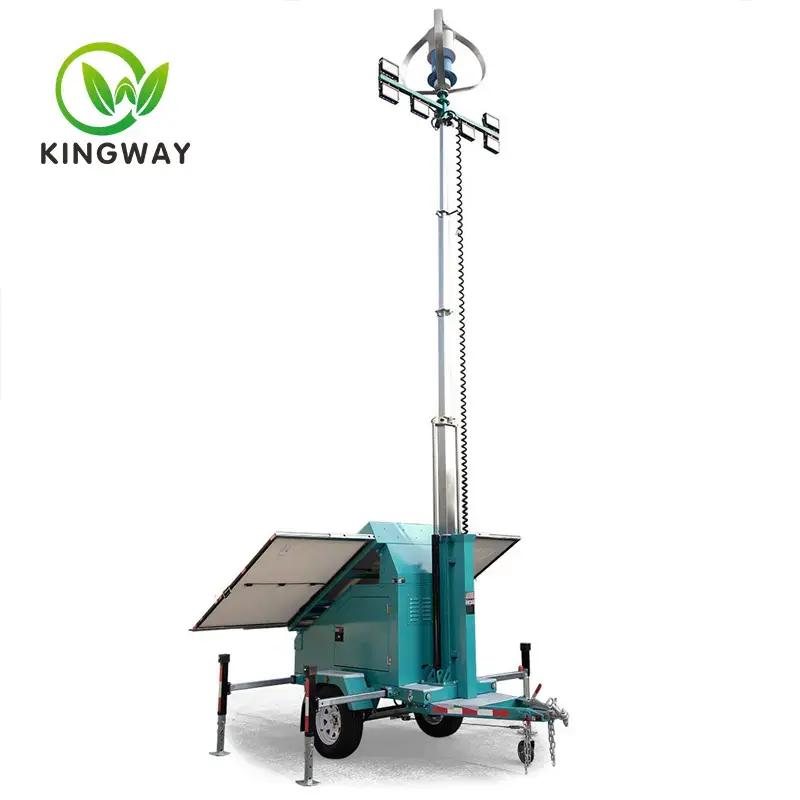
The bracket of the solar monitoring power supply system must be stable to ensure the safety and service life of the solar panels. In addition, lightning protection is also crucial. Install a lightning rod above the system and ensure that the system is well grounded to prevent the accumulation of charge caused by lightning strikes and damage to electrical equipment
3. Sensors and monitoring
The installation of temperature sensors, light sensors, current sensors, and voltage sensors can monitor the temperature of the battery, the intensity of solar radiation, the current input and output, and the voltage of the battery pack in real time. These sensors help optimize the installation position and angle of solar panels, ensuring the stability and security of the system
4. Intelligent Tracking System
Solar tracking control methods track the position and movement of the sun through specific equipment and systems to maximize the efficiency of solar power generation. This tracking system can avoid interference from harsh environments such as clouds, fog, rain, and snow, and adopts an intermittent tracking method to reduce energy consumption while increasing power generation
5. Encrypted Communication
The data transmission of the solar lighthouse monitoring system should adopt an encrypted communication protocol to prevent data from being intercepted or tampered with during transmission. The use of strong encryption standards such as TLS/SSL can ensure the confidentiality and integrity of the data.
6. Access Control
The system should implement a strict access control policy to ensure that only authorized personnel can access sensitive data. This includes the use of strong passwords, multi-factor authentication, and regular updates of access rights.
7. Data Backup and Recovery
Back up critical data regularly and ensure the security and recoverability of the backup data. In the event of data loss or corruption, rapid data recovery is essential to maintaining system operation.
8. Software Update and Patch Management
Keep the system software up to date and apply security patches in a timely manner to prevent known vulnerabilities from being exploited. This includes updates to operating systems, database management systems, and applications.
9. Security Audits and Monitoring
Perform regular security audits to identify and fix potential security vulnerabilities. At the same time, implement real-time monitoring to respond quickly when security incidents occur.
10. Regulatory Compliance and Best Practices
Comply with relevant data protection regulations and industry standards, such as GDPR, ISO 27001, etc., to ensure that data processing complies with legal requirements. At the same time, follow best practices such as using firewalls, intrusion detection systems, and security information event management (SIEM) solutions.
Through the above measures, the solar lighthouse monitoring system can effectively protect its data security, ensure the stable operation of the system and the integrity of the data. With the development of technology and the continuous evolution of security threats, continuous security assessment and improvement are the key to ensuring data security.

The implementation of encrypted communication is a complex process involving multiple technologies and methods. Here are some key technologies and steps that together ensure the security of data during communication:
1. Use of encryption algorithms
Encryption algorithms are the core of encrypted communication. They define how to convert plaintext information into ciphertext. Common encryption algorithms include two types: symmetric encryption and asymmetric encryption
Symmetric encryption: Use the same key for encryption and decryption. The advantage of this method is high efficiency and suitable for encrypting large amounts of data, but the secure management of keys is a challenge
Asymmetric encryption: Use a pair of keys, namely public key and private key. The public key is used to encrypt data and the private key is used for decryption. This method improves security because even if the public key is made public, the data cannot be decrypted without the private key
2. Key management
Key management is a key link to ensure communication security, including key generation, distribution, storage and update. In confidential communication, the key generation and distribution process must be secure and controllable, and the key must be updated regularly to reduce the risk of attack
3. End-to-end encryption
End-to-end encryption is an encryption method in which data is encrypted at the sender and decrypted at the receiver to ensure the security of data during transmission. This encryption method can prevent man-in-the-middle attacks, because even if the data is intercepted during transmission, the data content cannot be read without the correct key
4. Digital signature and identity authentication
Digital signature and identity authentication technology is used to verify the true identity of the communicating party and ensure the integrity and non-repudiation of the data. Through digital signature, the sender can prove the source of the data, and the receiver can verify that the data has not been tampered with during transmission
5. Application of security protocols
Security protocols such as TLS (Transport Layer Security Protocol) play an important role in encrypted communication. TLS ensures the secure transmission of data on the Internet by using encryption algorithms and key exchange mechanisms
6. Security testing and optimization of encrypted communication
Security testing of encrypted communication systems, including encryption algorithm strength testing, key management testing, and identity authentication testing, is an important step to ensure system security. Through these tests, potential security vulnerabilities can be discovered and fixed to improve the security of the system.
7. Security design of real-time communication architecture
In real-time communication systems, the use of technologies such as WebSocket and WebRTC can provide a secure communication architecture. These technologies support encrypted data transmission, ensuring the real-time and security of communication

Through the combination of the above technologies and methods, encrypted communication can ensure the security and integrity of data during transmission, protecting user data from unauthorized access and tampering. With the development of technology, new encryption technologies and security measures are also being developed and applied to cope with increasingly complex security threats.