

Mobile Lighting Trailer Supplier
How do solar lighthouse security cameras achieve waterproof and lightning protection?
How do solar lighthouse security cameras achieve waterproof and lightning protection?
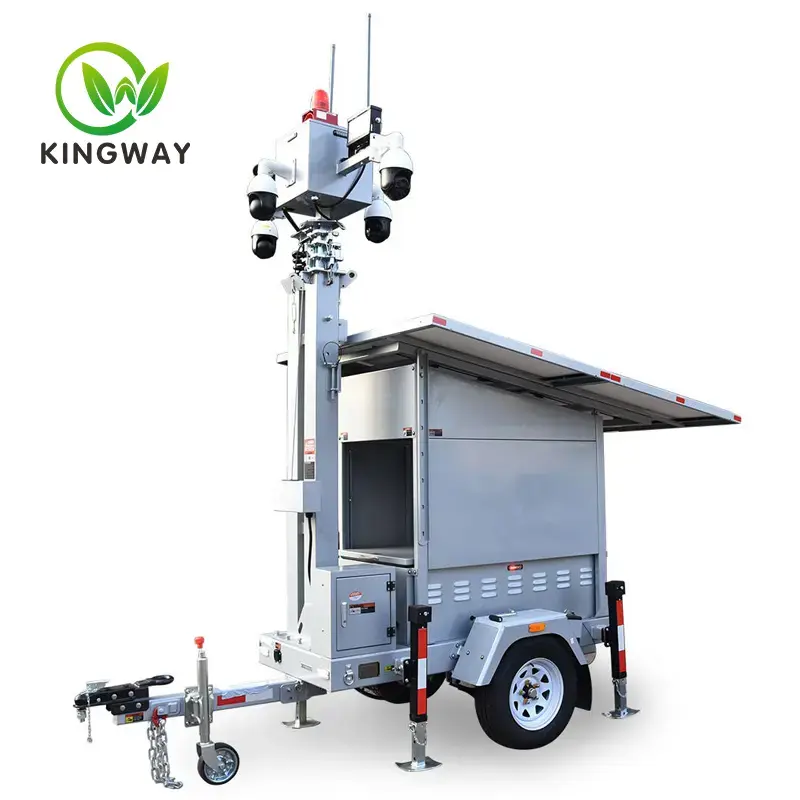
As an outdoor surveillance device, solar lighthouse security cameras need to face various severe weather conditions, including rain and lightning. The waterproof and lightning protection functions of these devices are important considerations in their design. The following is a detailed analysis of how solar lighthouse security cameras achieve waterproof and lightning protection.
Waterproof design
IP rating: Solar security cameras usually have high IP ratings for waterproof and dustproof capabilities. For example, Ubox solar security cameras have an IP66 waterproof rating, which means they can withstand strong water jets without water entering the device. This design ensures that the camera can work properly even in heavy rain.
Sealed structure: The camera housing is sealed to prevent the intrusion of moisture and dust. This sealing structure usually involves the use of rubber gaskets, waterproof glue and high-quality sealants to ensure that the electronic components inside the camera are fully protected.
Material selection: In the manufacturing process, choosing the right materials is also crucial. Weather-resistant materials such as ABS plastic or stainless steel can better resist the effects of severe weather while maintaining the stability and durability of the device.
Lightning protection design
Lightning protection design: Solar surveillance cameras need to have lightning protection design to protect the equipment from direct or indirect damage from lightning. This usually involves installing lightning arresters and surge protectors on the power and signal lines of the camera. These protectors can absorb and disperse the high energy generated by lightning to prevent it from damaging the equipment
Grounding system: A good grounding system is an important part of lightning protection design. By effectively grounding the metal parts of the camera, a safe path can be provided for the lightning current to flow into the ground, thereby protecting the equipment from the effects of lightning.
Circuit protection: In the circuit design of the camera, various protection components such as varistors, gas discharge tubes, and transient voltage suppression diodes are integrated, which can respond quickly when voltage anomalies are detected to protect the circuit from damage.
Independent lightning rod: In some cases, independent lightning rods may also be installed near the surveillance camera to attract lightning current and protect the camera from direct lightning strikes.
Through the above designs and measures, the solar lighthouse surveillance camera can maintain stable operation in various severe weather conditions while protecting the equipment from the threat of water damage and lightning. These features make solar security cameras ideal for outdoor surveillance, especially in remote or difficult to run wiring locations.
How to regularly check and maintain the waterproof and lightning protection function of the solar lighthouse security camera?
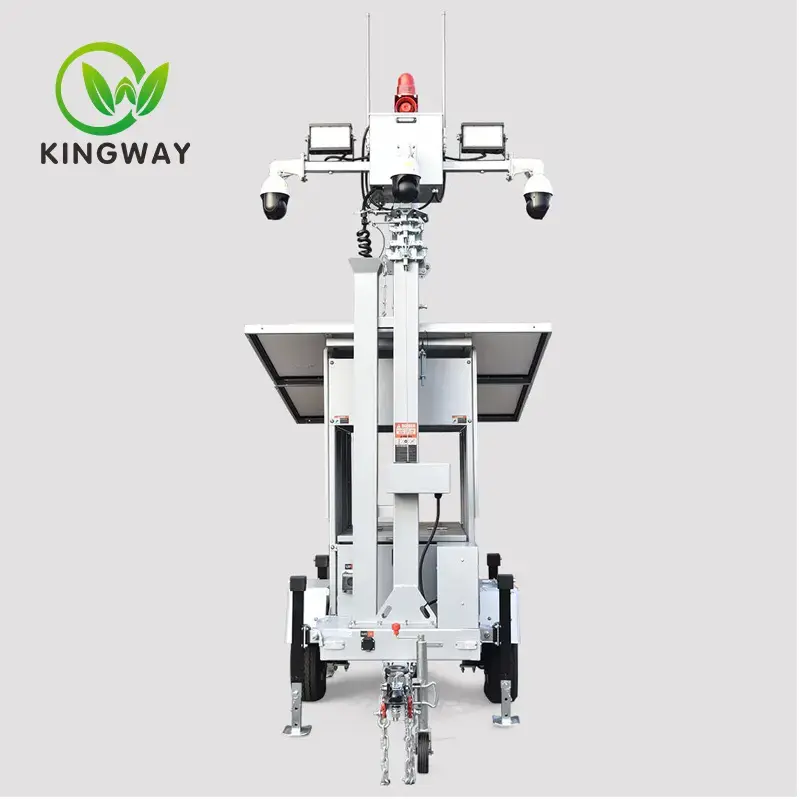
To regularly check and maintain the waterproof and lightning protection function of the solar lighthouse security camera, you can follow the following steps and suggestions:
1. Regular cleaning and inspection
Waterproof performance inspection: Check whether there is any water ingress, leakage or accumulation of water in the camera housing, tail line and appearance. Ensure that the insulation and waterproof measures are solid
Cleaning solar panels: Clean the solar panels regularly to ensure that dust, dirt and other debris do not affect the light absorption efficiency of Solar Energy
2. Check the battery status and solar panel
Battery status: Regularly check the battery status of the solar security camera to ensure that the battery is working properly and replace the battery in time when it needs to be replaced
Solar panel inspection: Regularly check whether the solar panel is damaged or blocked, and clean and repair it in time
3. Check the connection line
Connection line inspection: Check whether the connection line of the solar security camera is loose or damaged to ensure normal connection
4. Lightning protection measures
Grounding system inspection: Before the thunderstorm season every year, the grounding system should be inspected and maintained, mainly to check whether the connection is tight, whether the contact is good, and whether there is any abnormality on the ground near the grounding body
Lightning arrester detection: Before the thunderstorm season every year, the operating lightning arrester should be tested once using the lightning arrester component aging tester. If the lightning arrester module window is red, it should be replaced in time
Lightning protection grounding wire: By connecting the camera's lightning protection grounding wire to an effective grounding system, more reliable lightning protection can be provided
Lightning lightning rod: Installing a lightning rod near the location of the surveillance camera can attract lightning and guide it safely underground to reduce damage to the equipment
5. Maintenance
Regular maintenance: Dust and clean the equipment once a quarter, sweep away the dust exposed by the surveillance equipment, remove the camera, protective cover and other components, blow and dust thoroughly, and then wipe each lens clean with anhydrous alcohol cotton
Equipment maintenance: According to the instructions for use of each part of the monitoring system, test its various technical parameters and the quality of the monitoring system transmission line every month, and deal with potential faults
6. Environmental adaptability assessment
Environmental inspection: It can evaluate the climate and surrounding environment of the installation environment, determine the feasibility of the construction plan, and select the appropriate installation location and angle to maximize the use of solar energy
Through the above steps, it can ensure that the waterproof and lightning protection functions of the solar lighthouse surveillance camera are effectively maintained and inspected, thereby ensuring the safe and stable operation of the equipment.