

Mobile Lighting Trailer Supplier
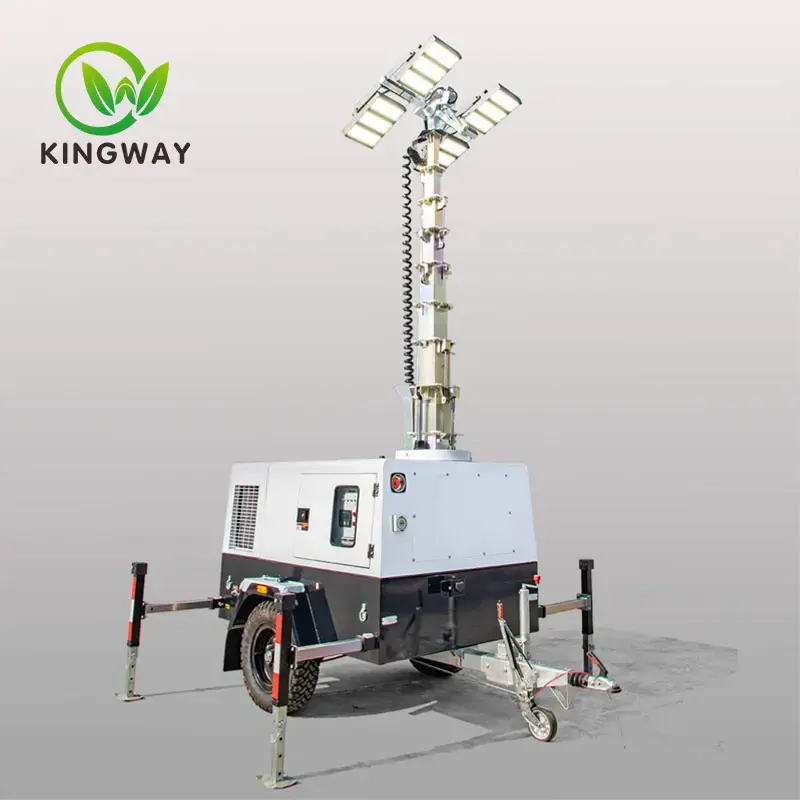
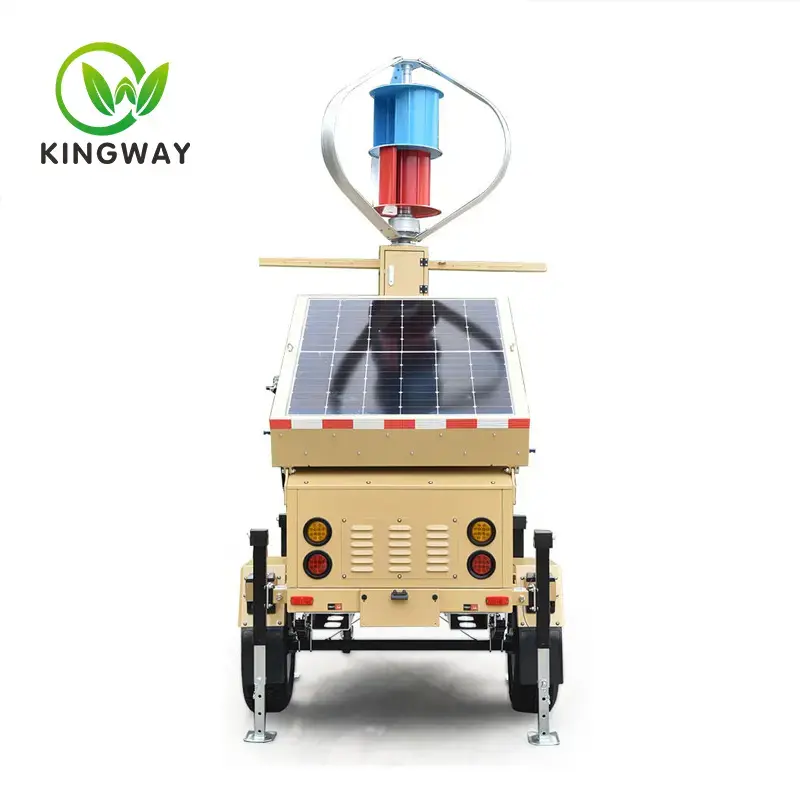
Green Energy Mobile Zero Emission Wind Turbine Solar Lighthouse Overview
1. Green Energy Mobile Zero Emission Wind Turbine Solar Lighthouse Overview
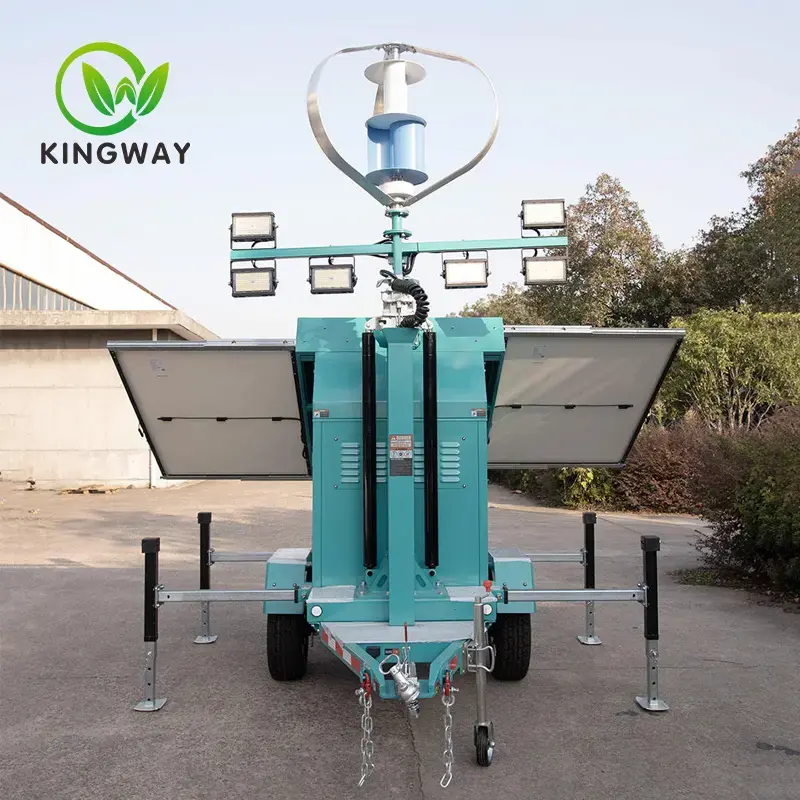
1.1 Definition and Function
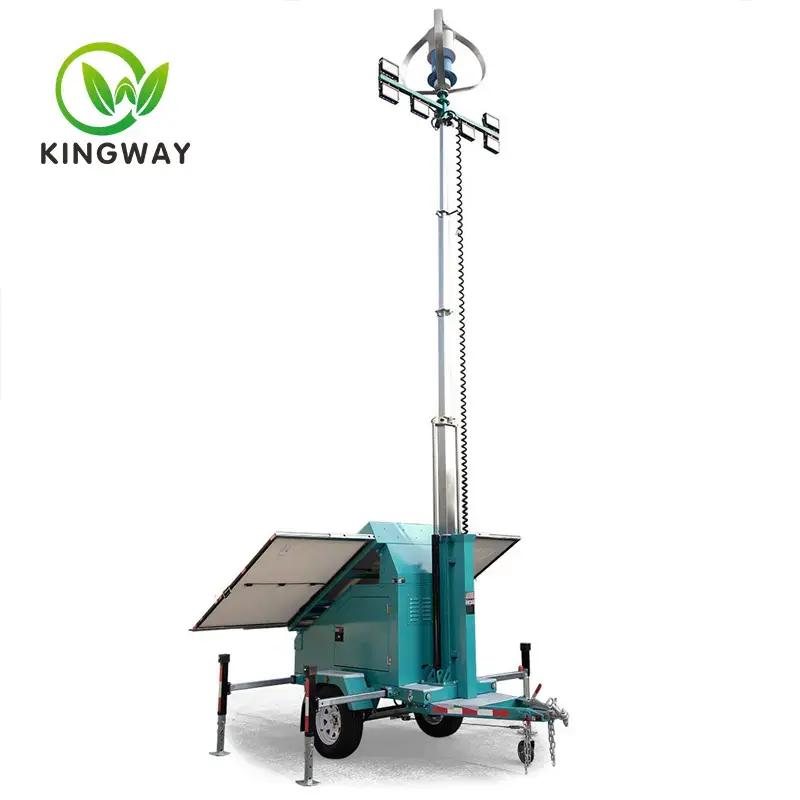
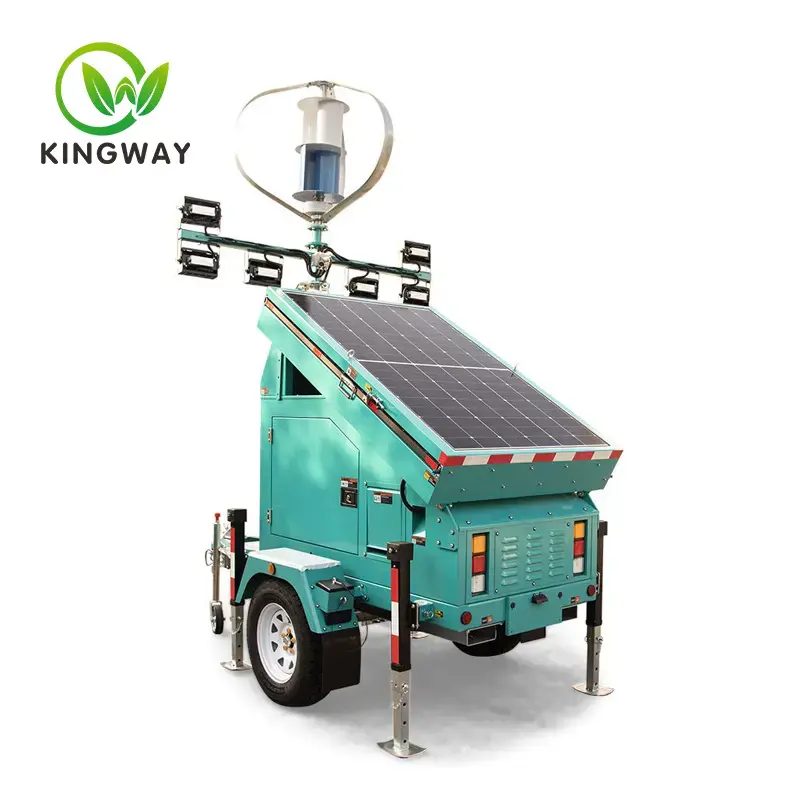
Green Energy Mobile Zero Emission Wind Turbine Solar Lighthouse is a new type of outdoor lighting device that integrates wind power generation and solar power generation technology. It combines the advantages of wind turbines and solar panels to provide independent, reliable and environmentally friendly lighting solutions without grid connection.
Definition:
Green Energy Mobile Zero Emission Wind Turbine Solar Lighthouse is a self-sufficient renewable energy system that captures natural wind and Solar Energy through wind turbines and solar panels, and converts this energy into electrical energy for lighting and other power needs. The system is completely separated from the traditional fossil fuel power generation method and achieves true zero emissions.
Function:
Lighting function: The lighthouse is equipped with high-efficiency LED lamps, which can provide large-area lighting at night and meet the lighting needs of outdoor operations, emergency rescue, temporary activities and other occasions.
Energy self-sufficiency: Through the dual energy supply of wind turbines and solar panels, the lighthouse can achieve energy self-sufficiency without external power supply.
Environmental adaptability: The lighthouse is designed with a rotatable and liftable light pole structure, which can adapt to different wind and sunshine conditions and ensure the effective conversion of energy.
Portable and mobile: The lighthouse is mobile and can be quickly deployed to places where lighting is needed, which is particularly suitable for remote areas or temporary places.
Intelligent control: Equipped with an intelligent control system, it can automatically adjust the brightness of the lamp and the working state of the turbine according to the ambient light and wind force to achieve optimal utilization of energy.
1.2 Environmental friendliness analysis
The environmental friendliness of the green energy mobile zero-emission wind turbine solar lighthouse is mainly reflected in the following aspects:
Reducing greenhouse gas emissions: The lighthouse does not rely on fossil fuels, so it does not produce greenhouse gas emissions such as carbon dioxide during use. According to the International Energy Agency (IEA), the rapid development of renewable energy around the world has significantly reduced greenhouse gas emissions. For example, in 2020, the scale of China's renewable energy development and utilization is equivalent to replacing nearly 1 billion tons of coal, reducing carbon dioxide emissions by about 1.79 billion tons.
Reduce air pollutant emissions: Since it does not involve the combustion of fossil fuels, the use of this lighthouse helps reduce the emission of air pollutants such as sulfur dioxide and nitrogen oxides. This is of great significance for improving air quality and protecting public health.
Promoting biodiversity conservation:
Compared with traditional wind turbines, the design of mobile wind turbine solar lighthouses is more flexible, which can avoid large-scale construction in ecologically sensitive areas, thereby reducing the impact on biodiversity.
Reducing noise pollution:
Wind turbines will generate a certain amount of noise when in operation, while solar lighthouses mainly rely on the electricity stored in solar panels when used at night, and the noise pollution is relatively small.
Saving water resources:
The lighthouse does not require water as a medium for energy conversion, so it does not consume water resources during use, which helps to protect water resources.
In summary, the green energy mobile zero-emission wind turbine solar lighthouse, as a new type of green energy solution, has significant environmental friendliness and is of great significance for promoting the green transformation of energy structure and achieving sustainable development goals.
2. Wind turbine technology and design
2.1 Working principle of wind turbine
As a mechanical device that converts wind energy into electrical energy, the working principle of wind turbines is based on the wind exerting force on the blades to rotate the rotor, which in turn drives the generator to generate electricity. Specifically, the operation of a wind turbine involves the following key steps:
Energy conversion process:
Wind energy capture: When wind blows over the blades of a wind turbine, the aerodynamic design of the blades creates lift, which drives the blades to rotate.
Mechanical energy conversion: The rotation of the blades is transmitted to the generator through the shaft, converting the kinetic energy of the wind into mechanical energy.
Electric energy generation: The magnetic field inside the generator interacts with the conductors in the rotor to generate current according to Faraday's law of electromagnetic induction, completing the conversion of mechanical energy to electrical energy.
System composition:
Rotor: Includes blades and hub, and is the main component of a wind turbine to capture wind energy.
Generator: Converts the mechanical rotational energy of the rotor into electrical energy.
Tower: Supports the rotor and generator, usually made of steel or concrete, and the height can be adjusted according to wind speed conditions to optimize energy capture.
Control system: Monitors and controls the operation of the wind turbine, including starting, stopping, and adjusting the blade angle.
Factors affecting efficiency:
Wind speed: An increase in wind speed significantly increases the power generation of a wind turbine, as energy output is proportional to the cube of wind speed.
Blade design: The shape, size, and material of the blades directly affect the efficiency of energy capture.
Tower height: Increasing the tower height allows the blades to enter the atmosphere with higher wind speeds, increasing energy output.
2.2 Efficiency and optimization of wind turbines
Efficiency optimization of wind turbines is a multifaceted technical challenge involving multiple fields such as blade design, material science, and control strategies.
Blade design optimization:
Aerodynamic characteristics: Through computational fluid dynamics (CFD) simulation, the aerodynamic shape of the blade is optimized to increase lift and reduce drag.
Material innovation: The use of lightweight and high-strength composite materials, such as carbon fiber reinforced plastic (CFRP), reduces blade weight and improves fatigue resistance.
Intelligent regulation: Modern wind turbines are equipped with intelligent regulation systems that can automatically adjust the blade angle and rotor direction according to wind speed and direction to optimize energy capture.
Efficiency improvement technology:
Variable pitch and speed control: Allows blades to adjust their angles as wind speed changes, maintaining optimal power output and reducing loads.
Wake control: Reduces wake effects by adjusting the spacing and layout between wind turbines, improving energy capture efficiency across the wind farm.
Performance monitoring and maintenance:
Condition monitoring system (CMS): Uses sensors and machine learning algorithms to monitor real-time performance of turbines, predict maintenance needs, and reduce downtime.
Fault diagnosis technology: Improves system reliability by analyzing vibration, sound, and temperature data to identify potential faults and maintenance needs.
2.3 Environmental adaptability of wind turbines
The environmental adaptability of wind turbines is key to their stable operation in different climatic and geographical conditions.
Climate adaptability:
Temperature adaptability: The materials and designs of wind turbines must be able to withstand extreme temperature changes, from severe cold to scorching heat.
Humidity and salt spray resistance: In coastal areas, wind turbines need to be corrosion-resistant to cope with high humidity and salt spray environments.
Adaptability to wind speed changes: Wind turbines must be able to operate stably in both low and high wind speed conditions, which requires blades and control systems to be highly adaptable.
Geographic adaptability:
Terrain adaptability: The design of wind turbines needs to consider different terrain conditions, such as mountains, plains and forests, to optimize wind energy capture.
Environmental impact assessment: Before installation, a detailed environmental impact assessment is conducted to ensure that the layout and operation of wind turbines will not have a negative impact on the local ecosystem.
Technological innovation:
Bionic design: Drawing on the structure and function of organisms in nature, wind turbine blades that are more adaptable to environmental changes are designed.
Smart materials: Using smart materials such as shape memory alloys, wind turbines can automatically adapt to environmental changes and improve the stability and reliability of the system.
Through the above-mentioned technical and design innovations, wind turbines can achieve efficient, stable and environmentally friendly operation under various environmental conditions, contributing to the mobile zero-emission goal of green energy.
3.Solar Energy Technology and Design
3.1 Working Principle of Solar Photovoltaic Panels
The working principle of solar photovoltaic panels is based on the photoelectric effect of semiconductor materials, which directly converts sunlight energy into electrical energy. The core of this process is the photovoltaic effect, that is, when light hits the PN junction of the solar cell, a voltage is generated on both sides of the PN junction, thereby generating current.
Basic structure:
Solar photovoltaic panels are mainly composed of photovoltaic cells made of semiconductor materials (such as silicon). These cells are arranged in a specific configuration to maximize energy conversion efficiency. Photovoltaic cells are composed of two layers of semiconductor materials with different doping types, one layer is P-type (hole type) and the other layer is N-type (electron type), which are in contact with each other to form a PN junction.
Energy conversion process:
Photon absorption: When sunlight hits the photovoltaic cell, the energy of the photon is absorbed by the semiconductor material, exciting the electron to jump from the valence band to the conduction band, generating electron-hole pairs.
Charge separation: The built-in electric field in the PN junction separates electrons and holes, and electrons are pushed to the N-type region and holes are pushed to the P-type region.
Current generation: The separated charges form a current in the external circuit, thus realizing the conversion of light energy into electrical energy.
Influencing factors:
Material properties: The band gap size of the semiconductor material directly affects the absorption capacity of the photovoltaic cell for light of different wavelengths.
Light intensity: The greater the light intensity, the more electron-hole pairs are excited, and the greater the current generated.
Temperature: The increase in temperature will reduce the efficiency of the photovoltaic cell, because the increased thermal excitation will cause more electron-hole pairs to recombine, reducing the current output.
3.2 Efficiency and optimization of solar photovoltaic panels
The efficiency of solar photovoltaic panels refers to its ability to convert sunlight energy into electrical energy. Improving the efficiency of photovoltaic panels is one of the key goals of the development of solar energy technology.
Efficiency factors:
Material efficiency: Monocrystalline silicon photovoltaic cells usually have the highest efficiency due to their higher purity and ordered crystal structure, while polycrystalline silicon and thin-film photovoltaic cells have lower efficiency.
Spectral response: The response range of photovoltaic cells to the solar spectrum affects their energy conversion efficiency. An ideal photovoltaic cell should be able to absorb light in a wider wavelength range.
Temperature coefficient: The efficiency of photovoltaic cells decreases as the temperature increases, so lowering the operating temperature can improve efficiency.
Optimization technology:
Bifacial cell technology: Bifacial photovoltaic cells can absorb light from both the front and back sides at the same time, improving energy capture efficiency.
Multi-junction cell technology: By stacking semiconductor materials with different band gaps, multi-junction cells can absorb light over a wider spectrum and improve efficiency.
Surface passivation technology: Reduce surface recombination and improve charge collection efficiency, thereby improving cell efficiency.
Optical thin film technology: By adding anti-reflection film to the surface of photovoltaic cells, the reflection loss of light is reduced and the absorption rate of light is increased.
3.3 Environmental adaptability of solar photovoltaic panels
The environmental adaptability of solar photovoltaic panels refers to their ability to work stably under different environmental conditions. This is crucial to ensure the reliability of photovoltaic systems under various climatic and geographical conditions.
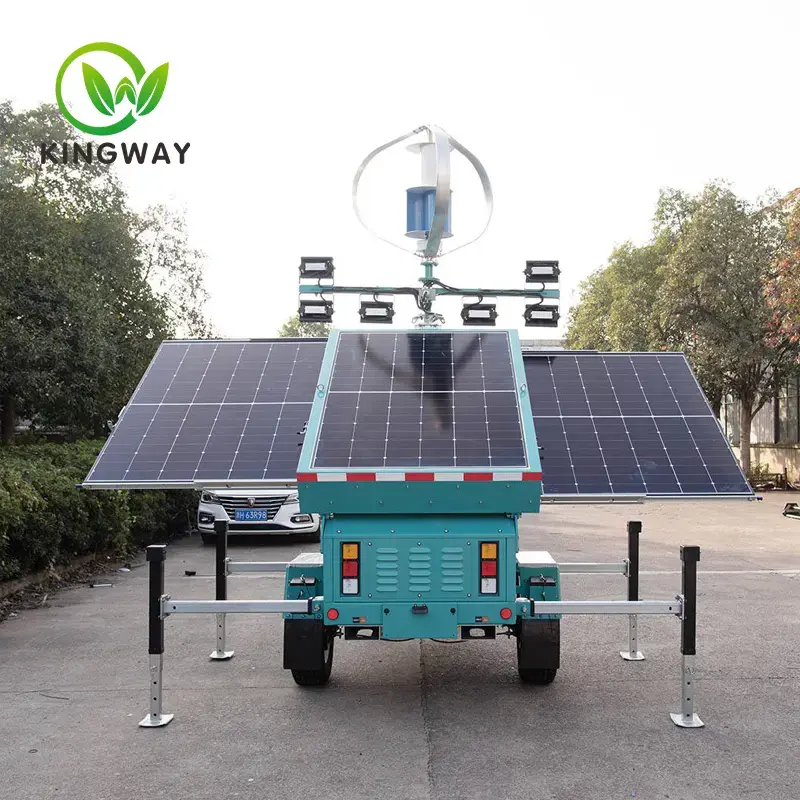
Climate adaptability:
Weather resistance: Photovoltaic panels need to be able to withstand environmental factors such as extreme temperature, humidity, and ultraviolet radiation.
Wind pressure resistance: In high wind speed areas, photovoltaic panels need to have sufficient structural strength to resist wind pressure.
Snow load resistance: In snowy areas, photovoltaic panels need to be designed to withstand the weight of snow and avoid damage.
Geographic adaptability:
Terrain adaptability: The installation angle and direction of photovoltaic panels need to be optimized according to terrain and sunshine conditions to maximize light energy capture.
Minimize environmental impact: The design and installation of photovoltaic panels need to consider the impact on local ecosystems, such as avoiding interference with wildlife habitats.
Technological innovation:
Self-cleaning surface: By adding a special coating to the surface of photovoltaic panels, the accumulation of dust and dirt is reduced and the light absorption efficiency is improved.
Intelligent tracking system: By installing a tracking system, the photovoltaic panels can automatically adjust their angles with the movement of the sun to improve energy capture efficiency.
Environmental monitoring integration: Integrate photovoltaic panels with environmental monitoring sensors to monitor and adjust the working status of photovoltaic panels in real time to adapt to environmental changes.
Through the above design and technological innovations, solar photovoltaic panels can achieve efficient, stable and reliable operation under various environmental conditions, providing continuous power support for green energy mobile zero-emission wind turbine solar lighthouses.
4.Lighthouse structure and integrated system
4.1 Structural design of lighthouse
The structural design of the lighthouse is the key to ensure its stability and functionality. The structural design of the green energy mobile zero-emission wind turbine solar lighthouse needs to consider the following core elements:
Stability and durability:
The structure of the lighthouse must be able to withstand various severe weather conditions, including strong winds, heavy rain, snow loads and earthquakes. Therefore, lighthouses usually use high-strength steel or aluminum alloy materials to ensure the stability and durability of their structures. According to the International Lighthouse Association (IALA), the design life of modern lighthouses is generally more than 50 years.
Wind-resistant design:
The wind-resistant design of the lighthouse needs to consider the impact of wind loads on the structure. By using wind tunnel tests and computer simulations, the shape and structure of the lighthouse can be optimized to reduce wind resistance and wind vibration effects. For example, a streamlined lighthouse design can reduce wind loads by about 30%.
Earthquake resistance:
The earthquake-resistant design of the lighthouse follows international building codes to ensure the integrity of the structure during an earthquake. The earthquake resistance of the lighthouse can be significantly improved by using technologies such as seismic isolation bearings and energy-absorbing shock absorbers.
Corrosion resistance:
Since lighthouses are mostly located in coastal areas, their structural materials must have good corrosion resistance. Anti-corrosion measures such as hot-dip galvanizing, stainless steel or special coatings are usually used to extend the service life of the lighthouse.
Ease of maintenance:
The structural design of the lighthouse should also consider the ease of maintenance. For example, a detachable modular design can simplify maintenance work and reduce maintenance costs.
4.2 Wind and solar energy integrated system
The integrated system of wind turbines and solar photovoltaic panels is the core of the green energy mobile zero-emission wind turbine solar lighthouse. The design of this system needs to consider the following aspects:
Integration optimization:
The integrated system needs to optimize the layout of wind turbines and solar photovoltaic panels to maximize energy capture efficiency. According to the National Renewable Energy Laboratory (NREL) of the United States, the energy output of the integrated system can be increased by more than 20% through precise layout design.
Complementarity:
Wind and solar energy are complementary in time and space. For example, wind is usually stronger at night, while solar energy is stronger during the day. Through the integrated system, the fluctuations of these two energy sources can be balanced to provide a more stable power output.
Energy storage system:
In order to solve the intermittent problem of wind and solar energy, the integrated system is usually equipped with energy storage devices, such as batteries. According to the International Energy Agency (IEA), renewable energy projects equipped with energy storage systems can reduce energy waste by more than 30%.
Energy management:
The integrated system requires an intelligent energy management system to optimize the distribution and use of energy. The system can automatically adjust the working status of wind turbines and solar photovoltaic panels, as well as the charging and discharging strategies of energy storage devices based on real-time data.
4.3 Intelligent control and management of lighthouses
Intelligent control and management are the key to ensuring the efficient operation of green energy mobile zero-emission wind turbine solar lighthouses. The following are several key points of intelligent control and management:
Remote monitoring:
By installing sensors and communication equipment, remote monitoring of lighthouses can be achieved. In this way, managers can understand the operating status of lighthouses in real time, including the output of wind turbines and solar photovoltaic panels, the energy storage status of batteries, etc.
Automatic adjustment:
The intelligent control system can automatically adjust the operation of lighthouses according to environmental conditions. For example, when the wind speed increases, the system can automatically adjust the working status of wind turbines to optimize energy capture。
Fault diagnosis:
The intelligent control system can also perform fault diagnosis to detect and deal with potential problems in a timely manner. This can reduce the maintenance cost of the lighthouse and improve its reliability.
Energy optimization:
The intelligent management system can optimize the use of energy according to actual needs. For example, when the lighting demand is low, the system can store excess energy or use it for other purposes, such as charging electric vehicles.
Environmental adaptability:
The intelligent control system can also adjust the working state of the lighthouse according to environmental changes. For example, when a storm is coming, the system can automatically reduce the working speed of the wind turbine to protect the equipment from damage.
Through the above intelligent control and management measures, the green energy mobile zero-emission wind turbine solar lighthouse can achieve efficient, stable and environmentally friendly operation, and contribute to the realization of zero-emission goals.
5.Application scenarios of mobile zero-emission lighthouses
5.1 Energy supply in off-grid areas
The green energy mobile zero-emission wind turbine solar lighthouse plays a vital role in the energy supply in off-grid areas. These areas are difficult to access the traditional power grid due to their remote location or imperfect infrastructure, so an independent and reliable energy solution is needed.
Energy self-sufficiency:
According to the International Energy Agency (IEA), energy demand in off-grid areas accounts for about 30% of global energy demand, and mobile zero-emission lighthouses can provide necessary power support for these areas. For example, in some remote villages in Africa, such lighthouses have been successfully deployed to provide basic lighting and electricity needs for local residents, significantly improving the quality of life.
Cost-benefit analysis:
Compared with traditional Diesel Generators, mobile zero-emission lighthouses have lower long-term operating costs. According to a report by the World Bank, the cost of diesel power generation is between $0.3 and $0.6 per kWh, while the combined power generation cost of wind turbines and solar photovoltaic panels can be reduced to $0.1 to $0.3 per kWh, making mobile zero-emission lighthouses an economically viable alternative.
Environmental impact:
The use of mobile zero-emission lighthouses reduces dependence on fossil fuels, thereby reducing greenhouse gas emissions. It is estimated that each deployment of a mobile zero-emission lighthouse can reduce carbon dioxide emissions by about 10 tons per year, which is of great significance to the achievement of global emission reduction targets.
5.2 Temporary Energy Solutions in Emergencies
In emergencies, such as natural disasters or emergencies, traditional energy supplies may be disrupted. Mobile zero-emission lighthouses can be quickly deployed to provide temporary energy solutions.
Rapid Deployment Capability:
The mobility and rapid deployment capabilities of mobile zero-emission lighthouses make them ideal for emergency relief. According to a United Nations report, mobile renewable energy systems played an important role in post-disaster reconstruction after the 2010 Haiti earthquake, providing timely power support for rescue operations.
Reliability and Continuity:
In emergencies, the reliability and continuity of energy supply are critical. Mobile zero-emission lighthouses are not only able to provide immediate power, but also to provide continuous power until the grid is restored or a more permanent solution is in place. The energy storage system of this lighthouse can provide at least 24 hours of power supply when there is no wind or sunshine.
Reduced Dependence on Fossil Fuels:
In emergencies, traditional diesel generators may not be able to work due to insufficient fuel supply. Mobile zero-emission lighthouses do not rely on fossil fuels, so they can still provide power in the event of a fuel supply chain disruption, reducing dependence on fossil fuels.
5.3 Energy Support for Environmental Monitoring Stations
Environmental monitoring stations are often located in remote or hard-to-reach areas, and these stations require a stable energy supply to ensure the operation of monitoring equipment. Mobile zero-emission lighthouses provide a green and reliable energy solution for these stations.
Energy stability:
The operation of environmental monitoring stations requires a stable power supply to ensure data continuity and accuracy. Mobile zero-emission lighthouses ensure energy stability through dual energy supply from wind turbines and solar photovoltaic panels. According to the National Renewable Energy Laboratory (NREL), the reliability of integrated renewable energy systems can reach more than 99%.
Reducing environmental impact:
Environmental monitoring stations are established to protect and monitor the natural environment, so energy solutions need to minimize environmental impact. Mobile zero-emission lighthouses do not produce greenhouse gas emissions, noise or vibration, and have minimal interference with wildlife and ecosystems.
Cost-effectiveness:
Compared with traditional diesel generators, mobile zero-emission lighthouses have lower operating costs and less maintenance requirements. This enables environmental monitoring stations to save a lot of energy costs in long-term operation, while also reducing the burden on the environment.
In summary, green energy mobile zero-emission wind turbine solar lighthouses have shown their unique advantages and broad application prospects in energy supply in off-grid areas, temporary energy solutions in emergencies, and energy support for environmental monitoring stations. With the continuous advancement of technology and the reduction of costs, this type of lighthouse is expected to be more widely used around the world, making greater contributions to the realization of green energy transformation and sustainable development goals.
6.Economic Benefits and Market Analysis
6.1 Initial Investment and Long-term Returns
As a new type of renewable energy solution, the initial investment and long-term returns of green energy mobile zero-emission wind turbine solar lighthouses are the focus of potential investors and users.
Initial Investment Cost:
The initial investment cost includes the purchase cost, transportation cost, installation cost, and preliminary research and planning cost of the lighthouse. According to the "2024-2030 China Green Energy (Clean Energy) Industry Development and Operation Status and Investment Potential Forecast Report", the initial investment of green energy projects is relatively high, but due to technological advancement and large-scale production, the cost is gradually decreasing. For example, the cost of solar photovoltaic panels has fallen by about 60% in the past decade, and the cost of wind turbines has also declined.
Long-term return analysis:
Long-term returns are mainly reflected in the following aspects:
Energy cost savings: Since green energy mobile zero-emission wind turbine solar lighthouses do not rely on external power grids, they can save a lot of electricity procurement costs. According to the International Energy Agency (IEA), the cost of electricity in off-grid areas is much higher than in areas covered by the grid. The use of green energy lighthouses can significantly reduce long-term energy costs.
Environmental benefits: In long-term operation, lighthouses reduce dependence on fossil fuels, reduce greenhouse gas emissions, and help achieve carbon neutrality goals. This environmental benefit can be converted into economic benefits, such as carbon credit income in the carbon trading market.
Increase energy security: Lighthouses provide an independent way of energy supply, increasing energy security, especially in areas with unstable power grids or tight power supply.