

Mobile Lighting Trailer Supplier
Design principle of solar rotary monitoring trailer
Design principle of solar rotary monitoring trailer
In today's digital age, monitoring systems have become an important tool for ensuring safety and improving efficiency. As an innovative monitoring solution, solar rotary monitoring trailers are gradually attracting attention from the international market with their unique design principles and powerful functions.
1. Introduction
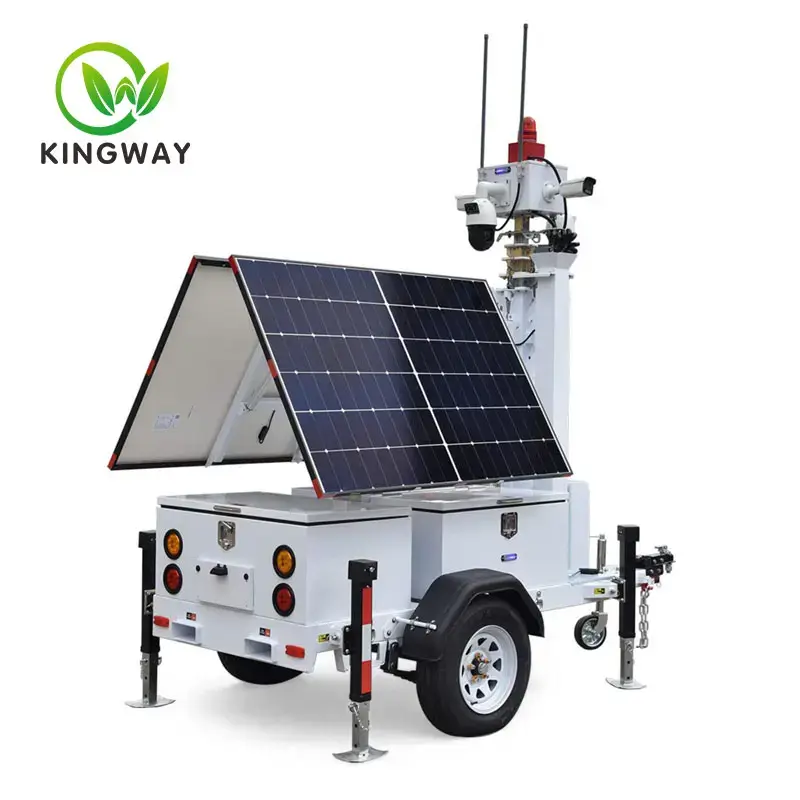
With the global pursuit of clean energy and the growing demand for monitoring, solar rotary monitoring trailers have come into being. It combines advanced technologies in multiple fields such as solar technology, mechanical engineering, electronic monitoring and data transmission to provide an efficient, environmentally friendly and flexible solution for outdoor monitoring. This equipment is particularly suitable for use in remote areas, temporary construction sites, border monitoring and other scenarios where there is a lack of stable power supply.
2. Energy system design of solar rotary monitoring trailer
One of the core advantages of solar rotary monitoring trailers lies in its energy system. The system uses Solar Energy as the main energy source, converts light energy into electrical energy through solar panels, and stores it in high-performance batteries. This design is not only environmentally friendly, but also greatly reduces dependence on traditional power grids and reduces operating costs.
(I) Solar panels
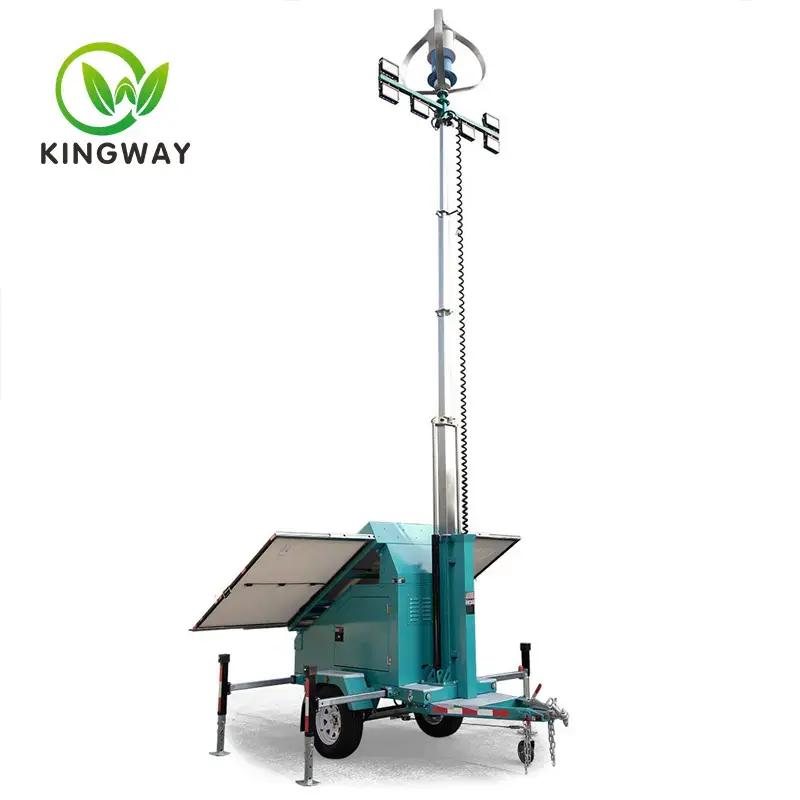
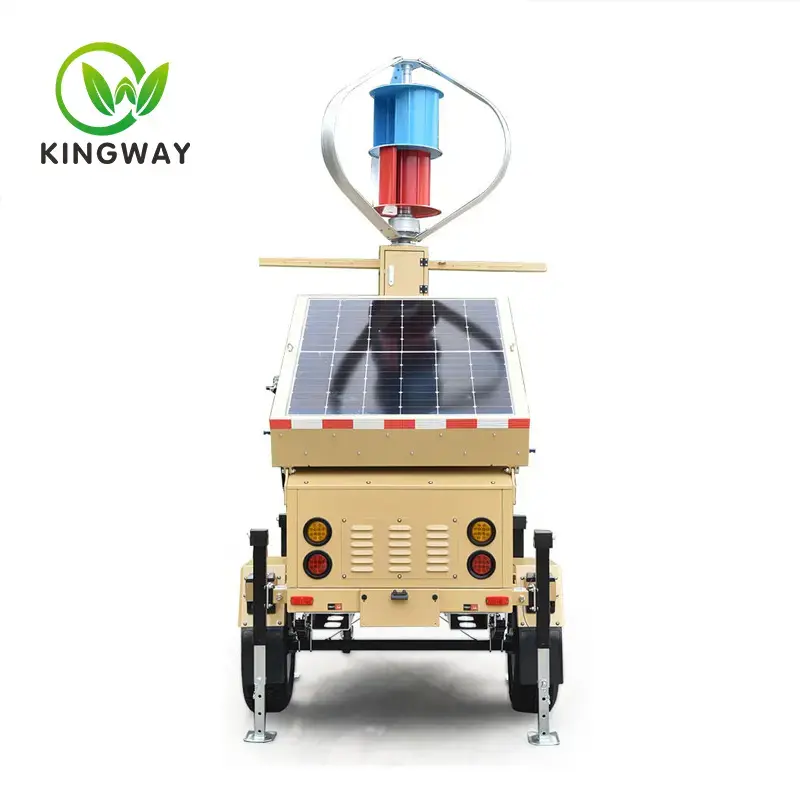
Solar panels are key components of energy systems. They are usually installed on the top or side of the trailer to maximize the reception of sunlight. The power and area of the solar panels are designed according to the energy consumption requirements of the monitoring equipment to ensure that sufficient power can be provided under different lighting conditions. For example, some high-end models of solar rotary monitoring trailers are equipped with high-efficiency monocrystalline silicon solar panels, with a conversion efficiency of more than 20%.
(II) Battery
The battery is a key component for storing solar energy. It needs to have high capacity, long life and fast charging capabilities. Common types of batteries include lead-acid batteries and lithium-ion batteries. Lithium-ion batteries have gradually become the mainstream choice due to their higher energy density and longer cycle life. For example, some models of trailers are equipped with 400Ah lithium-ion batteries that can work continuously for several days without sunlight.
(III) Charge and discharge controller
The charge and discharge controller is a bridge connecting the solar panel and the battery. It is responsible for controlling the charging process, preventing overcharging and over-discharging, and extending the service life of the battery. In addition, the charge and discharge controller can also intelligently allocate power according to the real-time energy consumption requirements of the monitoring equipment to ensure the stable operation of the system.
3. Mechanical structure design
The mechanical structure design of the solar rotary monitoring trailer is designed to ensure the stability and flexibility of the equipment. It needs to be able to work properly in various complex terrains and adverse weather conditions, while being easy to transport and install.
(I) Trailer chassis
The trailer chassis is the foundation of the entire equipment. It is usually made of high-strength steel to ensure the sturdiness and durability of the structure. The chassis design takes into account the trailer's towing stability, turning radius and load capacity, so that it can adapt to different transport vehicles.
(II) Lifting system
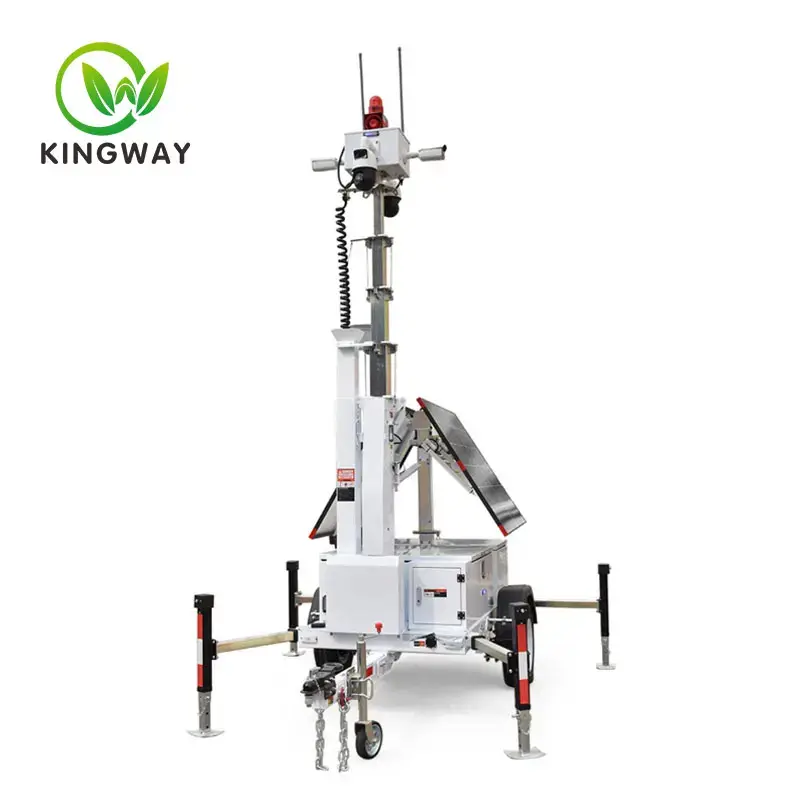
The lifting system is an important part of the solar rotating monitoring trailer. It allows the monitoring equipment to be raised to a certain height when needed to obtain a wider monitoring field of view. The lifting system is usually driven by electric or hydraulic power, has an automatic lifting function, and is equipped with a safety locking device to prevent accidents during work.
(III) Rotating mechanism
The rotating mechanism enables the monitoring equipment to rotate 360 degrees in all directions to achieve monitoring without dead angles. It is usually driven by a motor and equipped with a high-precision gear transmission system to ensure the smoothness and accuracy of the rotation. Some high-end models also support remote control of the rotation speed and direction, further improving the flexibility of monitoring.
4. Monitoring system design
The monitoring system is the core functional part of the solar rotating monitoring trailer. It needs to have features such as high definition, low latency, intelligent analysis and remote control to meet the needs of different users.
(I) HD Camera
The HD camera is the eye of the monitoring system. It is usually equipped with a high-resolution sensor that can capture clear images and videos. For example, some models of cameras support a resolution of 1920×1080P and a frame rate of up to 25/30fps. In addition, HD cameras also have an optical zoom function that can magnify distant objects and provide more detailed monitoring information.
(II) Intelligent Analysis Function
Modern monitoring systems not only need to record images, but also need to be able to automatically analyze and identify potential threats. The monitoring system of the solar rotating monitoring trailer usually has intelligent analysis functions such as regional intrusion detection, cross-border detection, and motion detection. These functions can automatically identify abnormal behaviors and send alarms to the monitoring center in time.
(III) Remote Control
Remote control is a highlight of the solar rotating monitoring trailer. Users can view the monitoring screen anytime and anywhere through the Internet or mobile devices, and remotely operate the monitoring equipment. For example, users can remotely adjust the focal length and rotation angle of the camera, and even control the lifting and lowering of the lifting system. This remote control capability greatly improves the flexibility and efficiency of monitoring.
5. Data transmission design
Data transmission is a key link in solar rotary monitoring trailers. It needs to ensure that monitoring data can be transmitted to the monitoring center quickly and stably. Common data transmission methods include wired transmission and wireless transmission.
(I) Wireless transmission
Wireless transmission is the most commonly used data transmission method for solar rotary monitoring trailers. It transmits monitoring data to the monitoring center in real time through wireless networks such as 4G, 5G, and Wi-Fi.