

Mobile Lighting Trailer Supplier
Demand for mobile lighting equipment grows in the emergency industry
Demand for Mobile Lighting Equipment Grows in the Emergency Industry
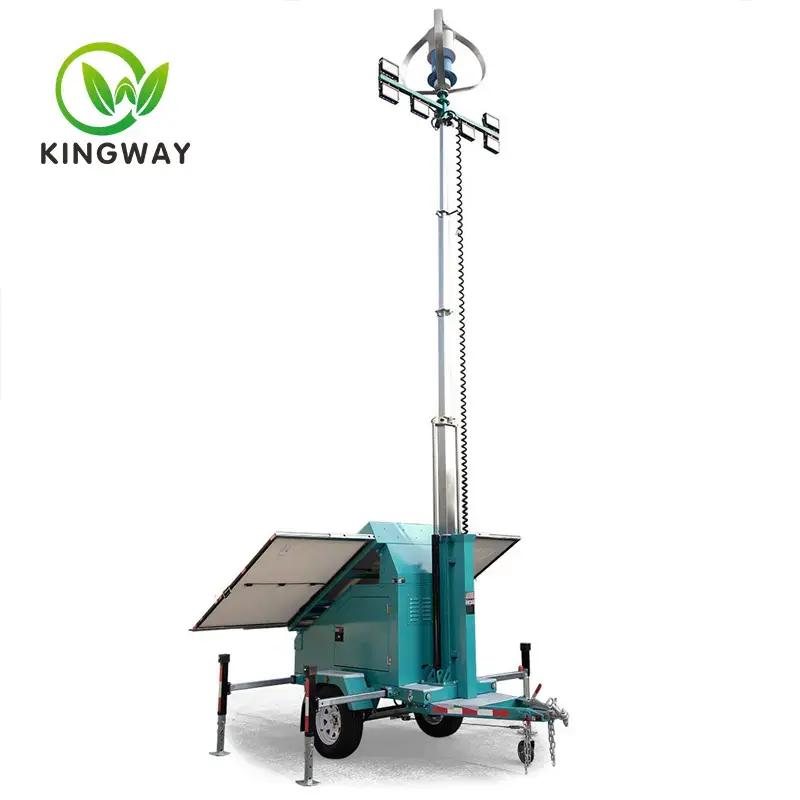
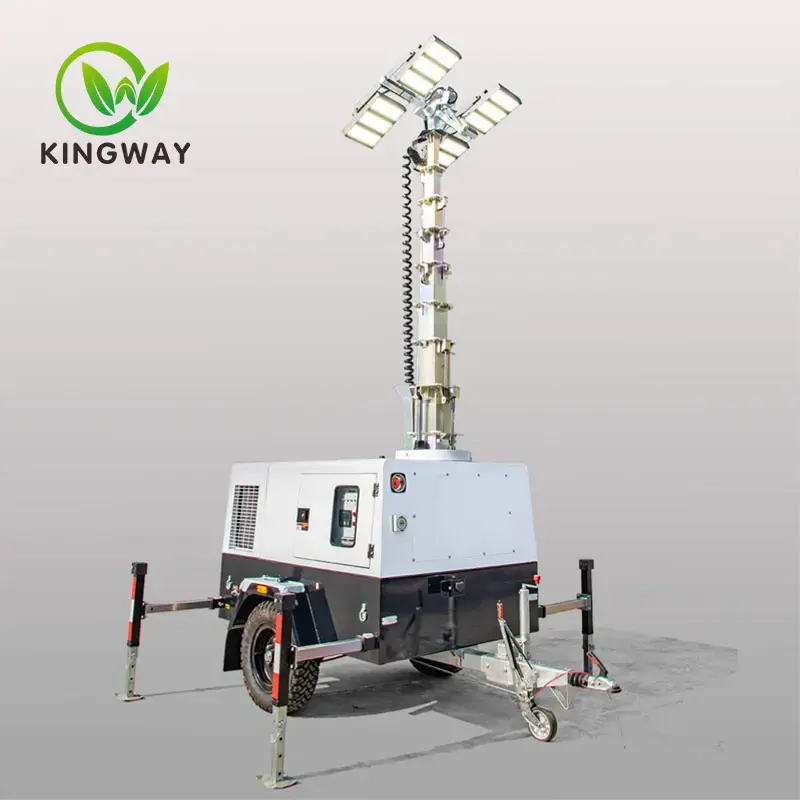
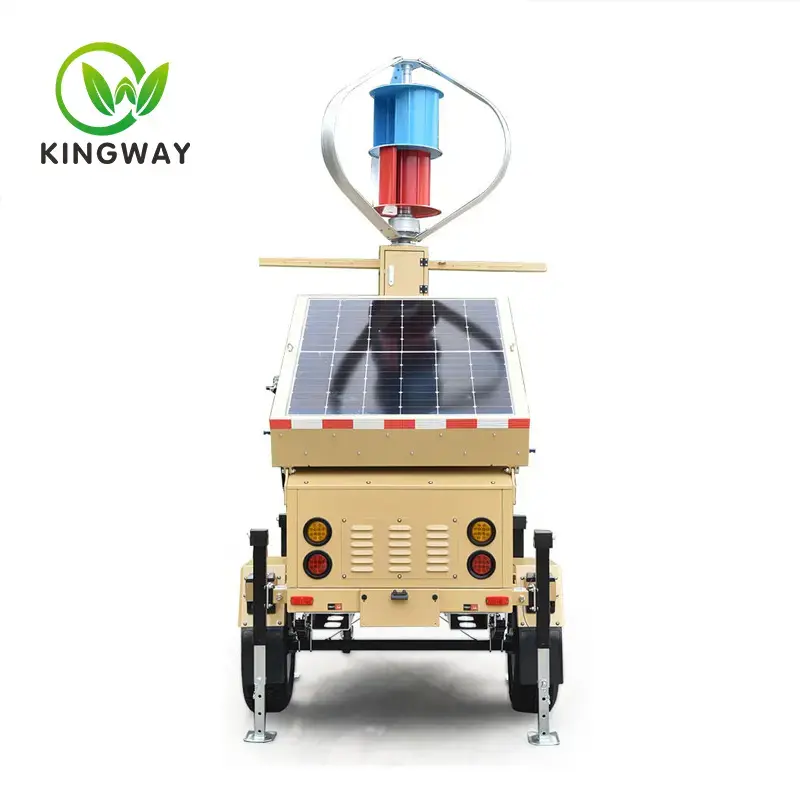
Amid global warming, frequent natural disasters, and sporadic public safety incidents, the emergency industry is experiencing unprecedented development opportunities. Demand for mobile lighting equipment, the "eyes" of emergency rescue, is particularly growing. Solar-powered mobile lighting trailers, with their core advantages of zero emissions, easy deployment, and long battery life, are gradually emerging from traditional lighting equipment and becoming a "new necessity" in the emergency response sector. This article will examine the current state of the emergency industry, deeply analyze the underlying logic behind the growing demand for mobile lighting equipment, interpret the core value of solar-powered mobile lighting trailers, and explore their future market potential.
I. Accelerated Expansion of the Emergency Industry: Mobile Lighting Equipment Becomes "The Most Essential Need"
In recent years, emergency events around the world have become increasingly frequent, diverse, and complex. From typhoon floods in Asia and extreme heat waves in Europe to forest fires in the Americas and emergency support following public health incidents, each emergency presents a higher demand for rapid response and continuous support. Throughout the entire emergency rescue process, lighting remains an essential and fundamental component—whether it's nighttime search and rescue, on-site command, powering temporary shelters, or repairing roads, all require stable and efficient lighting support.
According to the "Global Emergency Industry Development Report (2024)," the global emergency industry market size will exceed US$800 billion in 2023, with the emergency equipment market accounting for over 40%. Mobile lighting, a core subcategory of emergency equipment, has a compound annual growth rate of 15.2%, far exceeding the average growth rate of traditional emergency equipment. Behind this data lie three major shifts in demand for mobile lighting equipment in emergency scenarios:
From "temporary supplement" to "core support": In the past, mobile lighting primarily supplemented fixed lighting. However, in scenarios like earthquakes and floods that cripple power grids, mobile lighting has become the core of 24/7 rescue operations, directly impacting both efficiency and safety.
From "single lighting" to "multi-functional integration": Modern emergency scenarios require not only lighting but also charging, warning, and communication functions. Mobile lighting equipment with multi-module integration is becoming increasingly popular.
From "fuel-driven" to "clean energy priority": With the advancement of the "dual carbon" goals and rising environmental awareness, traditional lighting equipment that relies on diesel and gasoline is being replaced by clean energy devices like solar energy and Lithium Batteries due to issues like high pollution, high noise, and the need for frequent recharging.
II. Four Core Drivers of Demand Growth: Why are solar-powered mobile lighting trailers so popular?
The explosive growth in demand for mobile lighting equipment is no accident. A deeper analysis reveals that the trend is driven by four key factors: policy, technology, scenarios, and the market. Solar mobile lighting trailers precisely address these needs.
1. Policy-Driven: Global Emergency Response System Development Accelerates, Equipment Standards Upgrade
Governments worldwide are placing increasing emphasis on public safety and emergency management, and have introduced policies to increase investment in emergency equipment. For example, China's "14th Five-Year Plan for Emergency Supplies" explicitly calls for "accelerating the intelligent and green upgrade of emergency equipment, with a focus on the development of solar emergency lighting and portable rescue equipment." The U.S. Federal Emergency Management Agency (FEMA) will include "clean energy emergency equipment" on its priority procurement list in 2023, offering a 10%-15% purchase subsidy for solar lighting equipment. The European Union, through its Civilian Protection Mechanism (CPM), is promoting harmonized emergency equipment standards among member states, requiring that by 2025, all member states' emergency lighting equipment contain at least 60% clean energy.
Policy guidance has directly driven a shift in market demand—an increasing number of government agencies and rescue organizations are prioritizing "solar-powered" and "zero-emission" as key criteria when purchasing mobile lighting equipment. Consequently, the market share of solar-powered mobile lighting trailers has rapidly increased.
2. Technology-driven: Breakthroughs in solar energy and energy storage technologies address "range anxiety."
In the past, solar lighting equipment, due to its low conversion rate and weak energy storage capacity, was unable to meet the long-term demands of emergency scenarios. However, with the rapid advancement of technology in recent years, this pain point has been effectively addressed:
Solar cell efficiency has been improved: The conversion efficiency of monocrystalline silicon solar cells has exceeded 26%. Thin-film solar cells offer the advantages of flexibility and ease of integration, allowing them to be adapted to various trailer roof shapes, significantly increasing power generation.
Energy storage battery upgrades: Lithium iron phosphate batteries have seen their energy density increased by over 30%, a cycle life exceeding 2,000 cycles, and stable discharge capabilities in both high and low-temperature environments. Even in temperatures as cold as -30°C or as hot as 60°C, they can still maintain over 80% of their capacity.
Intelligent control system optimization: Some high-end solar mobile lighting trailers are equipped with an AI-powered charging and discharging management system that automatically adjusts lighting power based on light intensity and remaining battery power, achieving "efficient energy storage during the day and precise energy supply at night." This allows for a battery life of up to 72 hours (in low-power mode), fully meeting the needs of small and medium-sized emergency scenarios.
This technological breakthrough has completely shed the label of "dependence on the weather" for solar mobile lighting trailers, making them synonymous with "stability and reliability."
3. Scenario-Driven: Diversified Emergency Scenarios Drive Customized Demand
The emergency industry's scope of scenarios is continuously expanding, extending from traditional natural disaster relief to urban emergency support, outdoor operations, and large-scale event security. The demand for mobile lighting trailers in these scenarios is becoming increasingly customized:
Natural disaster relief scenarios require equipment with a high protection rating (IP67 and above) and wind and earthquake resistance (capable of withstanding force 10 gale). For example, during earthquake rubble rescue, solar-powered mobile lighting trailers can be equipped with 360° rotating searchlights to illuminate complex terrain while simultaneously charging devices like walkie-talkies and life detectors.
Urban emergency support scenarios, such as road repair, pipeline maintenance, and power outage response, require compact equipment with rapid deployment (deployment within 10 minutes). Some cities also require equipment with audible and visual alarms to help with traffic control.
Outdoor operations and large-scale event scenarios, such as mining, oilfield operations, and music festival security, require large-area, high-brightness lighting coverage (a single device can illuminate up to 50 meters). (meters), and supports networking of multiple devices to form a "lighting matrix."
The modular design of solar mobile lighting trailers allows for flexible configuration of modules such as searchlights, floodlights, charging ports, and surveillance cameras to meet diverse needs, perfectly adapting to diverse scenarios. This is a key factor driving their growing demand.
4. Market Drivers: Significant Cost Advantages and Continuously Improving Performance-to-Effect
Although the initial purchase cost of solar mobile lighting trailers is slightly higher than that of traditional fuel-powered equipment, their long-term advantages are significant:
Zero Fuel Cost: Relying entirely on solar power for charging, there's no need to purchase diesel or gasoline, saving thousands of yuan in fuel costs annually.
Low Maintenance Cost: Solar panels have a lifespan of over 10 years, while lithium batteries last 5-8 years. Frequent replacement of consumable parts like oil and filters is unnecessary, resulting in maintenance costs that are only one-third of those of traditional equipment.
High Residual Value: High-Quality Solar mobile lighting trailers can achieve a used residual value of over 40%, while traditional fuel-powered equipment typically has a residual value of less than 20% due to the rapid aging of components. With the expansion of the market and the maturation of production processes, the initial purchase cost of solar mobile lighting trailers has been declining year by year. From 2020 to 2023, the average global price of solar mobile lighting trailers fell by 22%, further enhancing their market competitiveness.
III. Case Study: The Practical Value of Solar Mobile Lighting Trailers in Emergency Scenarios
Theoretical advantages must ultimately be tested in practice. In recent years, solar mobile lighting trailers have played a key role in several major emergency situations, becoming a valuable aid to rescuers.
Case Study 1: 2023 Turkey Earthquake Rescue
In February 2023, a 7.8 magnitude earthquake struck Turkey, causing numerous buildings to collapse and completely paralyzing the power grid. The Chinese rescue team arrived at the disaster area with 10 solar-powered mobile lighting trailers. These devices played a crucial role in the nighttime search and rescue efforts:
A single unit can illuminate an area of 1,000 square meters, supporting six rescue teams operating simultaneously.
Equipped with USB charging ports, they provide continuous power for rescuers' mobile phones, walkie-talkies, flashlights, and other devices.
Because they are solar-powered, there's no need to worry about running out of fuel. Despite the limited fuel supply in the disaster area, they provided 72 hours of uninterrupted lighting.
The rescue team leader stated in a subsequent interview, "The solar-powered mobile lighting trailers gave us 'persistent eyes' in the darkness, greatly improving search and rescue efficiency and reducing safety risks caused by insufficient lighting."
Case Study 2: The 2024 California Wildfires
In the summer of 2024, a large-scale wildfire broke out in California, spreading rapidly and requiring the emergency evacuation of a large number of residents. The local fire department deployed over 50 solar-powered mobile lighting trailers for the following scenarios:
Illuminating evacuation routes to guide residents to safe evacuation;
Setting up "lighting and charging" stations at temporary resettlement sites to provide mobile phone charging and nighttime illumination for affected residents;
Infrared cameras were used to monitor the spread of fires and support decision-making.
Due to poor air quality at fire scenes, exhaust from traditional fuel-fired lighting equipment can exacerbate pollution. The zero-emission nature of solar-powered lighting effectively protects the health of both rescue workers and affected residents.
IV. Future Outlook: Three Major Development Trends of Solar Mobile Lighting Trailers
With the continued development of the emergency response industry and continuous technological innovation, market demand for solar mobile lighting trailers will continue to grow, and three major development trends will emerge:
1. Higher Intelligence
Future solar mobile lighting trailers will incorporate more intelligent technologies, such as:
Internet of Things (IoT) connectivity: Remote monitoring via 4G/5G networks allows for real-time viewing of device power levels, lighting status, and fault information, as well as remote control of on/off and power adjustment;
AI visual recognition: Combining high-definition cameras and AI algorithms, these vehicles can automatically identify the locations of rescuers and disaster victims, adjust lighting angles, and detect abnormal conditions (such as rekindled fires or people fainting) and automatically trigger an alarm;
Autonomous navigation: Some large-scale equipment will be equipped with autonomous driving technology, enabling autonomous movement in complex terrain and automatically deploying lighting upon reaching a designated location, reducing manual operation.
2. More Precise Scenario Adaptation
To meet the specific needs of different industries, solar mobile lighting trailers will offer more customized products:
Medical Emergency Model: Equipped with sterile lighting and UV disinfection, suitable for temporary field medical stations;
Maritime Rescue Model: Made of corrosion-resistant materials, waterproof and salt spray-resistant, suitable for use on offshore platforms or ship rescue operations;
Military Emergency Model: Featuring electromagnetic interference immunity and low noise levels, suitable for field military operations.
3. More Efficient Energy Synergy
Future solar mobile lighting trailers will no longer be isolated devices, but rather key nodes integrated into "emergency microgrids."
Multiple devices can be wirelessly networked to share energy—devices with sufficient sunlight can transfer excess power to those with insufficient power.
They can be linked with emergency generators, energy storage plants, and other equipment to form a hybrid energy system combining "solar + storage + backup power" to ensure energy supply in extreme weather conditions.
Some devices will also feature a "reverse power" function, allowing them to transfer excess power back to the grid after power is restored, enabling dual-use in both emergency and daily life.
Conclusion: Seize the Opportunities of the Emergency Response Industry and Choose the Most Suitable Solar Mobile Lighting Trailer
The rise of the emergency response industry has brought unprecedented development opportunities for solar mobile lighting trailers. Whether for government agencies, rescue organizations, or corporate users, choosing a high-quality, adaptable solar mobile lighting trailer not only enhances emergency response capabilities but also reduces long-term operating costs, achieving a win-win situation of "safety and efficiency." As a company specializing in the research and development and production of solar mobile lighting equipment, we've always prioritized solving the pain points of emergency situations. Our solar mobile lighting trailer offers the following advantages:
High-efficiency solar energy conversion: Utilizing monocrystalline silicon solar panels with a 26% conversion efficiency, it generates an average of 8-12 kWh of electricity daily.
Extreme battery life: Equipped with a 100Ah lithium iron phosphate battery, it offers 72 hours of battery life in low-power mode.
High protection rating: IP67 waterproof and dustproof, with a wind resistance rating of 10, it withstands a variety of harsh environments.
Quick deployment: Deployment takes less than 10 minutes, eliminating the need for specialized personnel.
Customized service: Optional accessories such as searchlights, charging modules, and surveillance cameras can be added upon request.