
Mobile Lighting Trailer Supplier
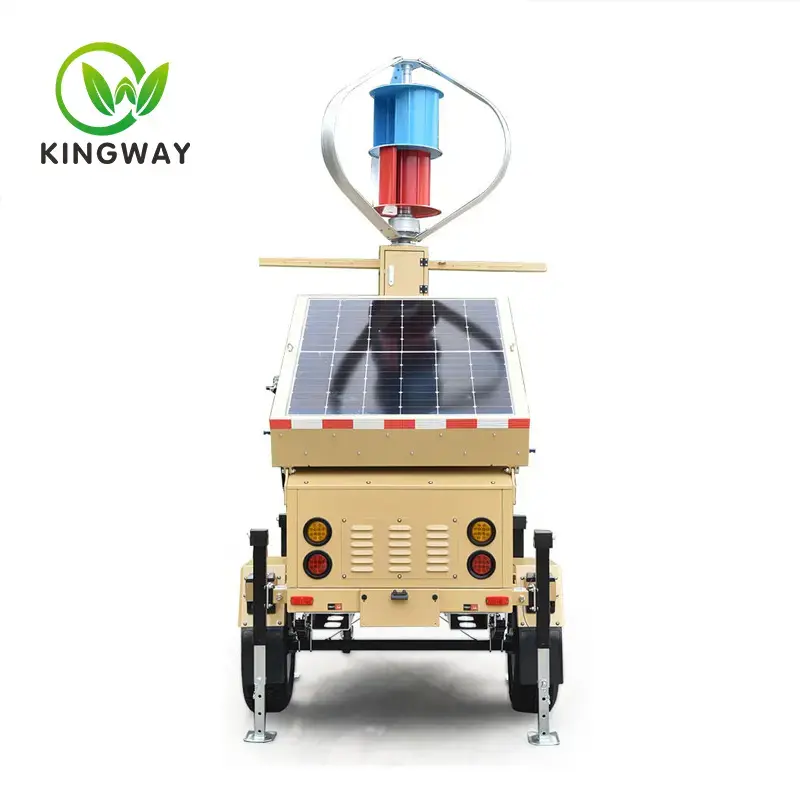
Certification requirements for solar mobile surveillance trailers sold in the United States
Certification requirements for solar mobile surveillance trailers sold in the United States
Introduction
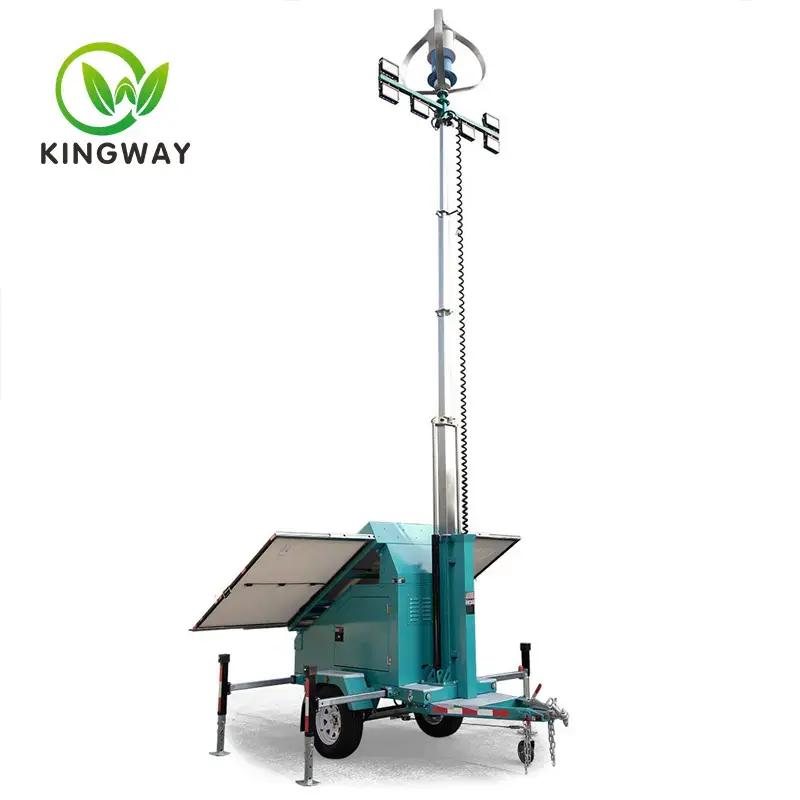
With the continuous advancement of technology and people's increasing attention to environmental protection, solar mobile surveillance trailers, as an innovative security equipment, have gradually attracted market attention. For manufacturers and dealers who want to sell such products in the US market, it is crucial to understand and meet the relevant certification requirements. This article will introduce in detail the main certifications required for solar mobile surveillance trailers to be sold in the United States to help related companies enter the US market smoothly.
1. US Department of Transportation (DOT) Certification
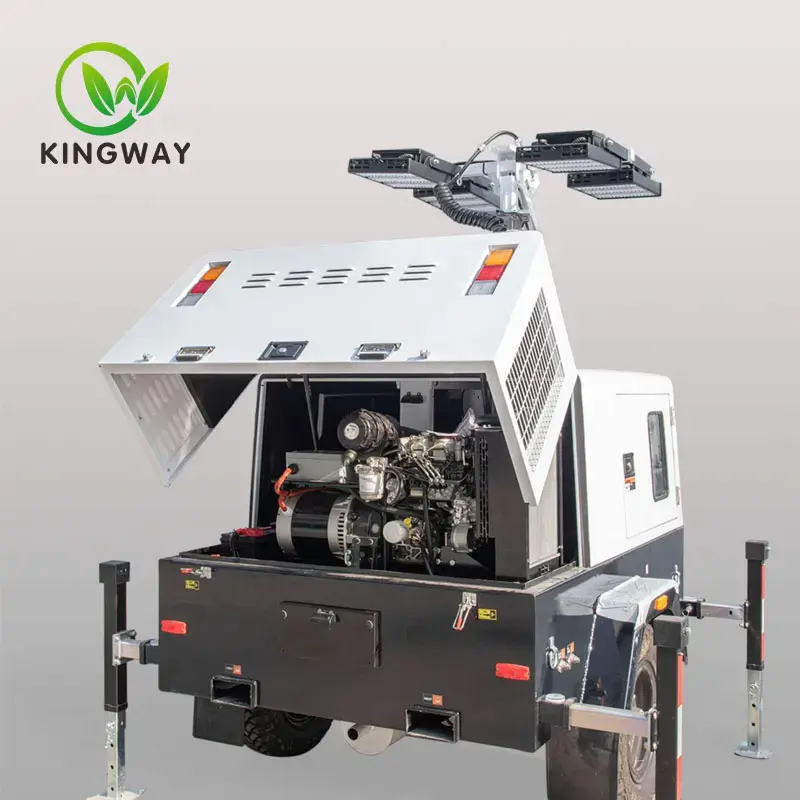
As a mobile device, solar mobile surveillance trailers must be certified by the US Department of Transportation (DOT) before they are sold in the United States. DOT certification mainly focuses on whether the trailer's mechanical structure, braking system, lighting system, etc. comply with the US Federal Motor Vehicle Safety Standards (FMVSS). The following are the key aspects of DOT certification:
1.1 Mechanical structure
The trailer's frame, axle, suspension system, etc. must have sufficient strength and stability to ensure safe operation under various road conditions. Manufacturers need to provide detailed design drawings and material descriptions to prove that their products meet relevant standards.
1.2 Braking system
The performance of the braking system is directly related to the safety of the trailer. Solar powered mobile monitoring trailers must be equipped with a braking system that complies with FMVSS standards, including brakes, brake lines, brake pedals and other components. Manufacturers are required to conduct rigorous braking performance tests and submit test reports.
1.3 Lighting system
The trailer's headlights, taillights, turn signals, brake lights and other lighting systems must comply with U.S. lighting regulations. These lights must not only have sufficient brightness and visibility, but also ensure that their color, position and light intensity distribution comply with regulations.
2. Federal Communications Commission (FCC) certification
Since solar powered mobile monitoring trailers are usually equipped with wireless communication equipment such as cameras, sensors and data transmission modules, they need to obtain FCC certification. FCC certification focuses on whether the electromagnetic compatibility (EMC) and radio frequency (RF) emissions of these devices comply with U.S. regulations.
2.1 Electromagnetic compatibility
EMC testing is designed to ensure that the equipment does not interfere with other electronic devices during operation, and is not interfered with by other devices. Manufacturers are required to conduct rigorous EMC tests on all electronic equipment on the trailer and provide test reports.
2.2 Radio Frequency Emissions
RF emission tests are used to evaluate whether the frequency range, power level, and modulation method of wireless communication equipment comply with FCC regulations. Manufacturers need to ensure that the RF emission of their equipment is within the permitted range and submit the corresponding test results.
3. US Environmental Protection Agency (EPA) Certification
Although solar mobile monitoring trailers are mainly powered by Solar Energy, they may also be equipped with auxiliary generators or other fuel equipment in some cases. For these devices, manufacturers need to obtain EPA certification. EPA certification focuses on whether the fuel efficiency and exhaust emissions of the equipment meet US environmental protection standards.
3.1 Fuel Efficiency
If the trailer is equipped with a fuel generator, the manufacturer needs to provide detailed fuel consumption data and prove that it meets the EPA's fuel efficiency requirements.
3.2 Exhaust Emissions
Exhaust emission tests are used to evaluate whether the pollutants generated by the equipment during operation meet EPA standards. Manufacturers need to conduct strict exhaust emission tests on the equipment and submit test reports.
4. UL Certification
UL certification is one of the most authoritative product safety certifications in the United States. For solar mobile monitoring trailers, UL certification focuses on the electrical safety and fire protection of the equipment.
4.1 Electrical safety
UL certification requires manufacturers to conduct rigorous testing of the trailer's electrical system, including insulation resistance, ground resistance, overload protection, short circuit protection, etc. Manufacturers need to provide detailed electrical safety test reports to prove that their products meet UL's safety standards.
4.2 Fire resistance
Since solar mobile surveillance trailers are usually equipped with a large number of electronic devices and batteries, fire resistance is essential. UL certification requires manufacturers to conduct fire resistance tests on trailers to ensure that they can effectively prevent the spread of fire and protect the safety of personnel and equipment in the event of a fire.
5. NDAA Compliance
According to the US National Defense Authorization Act (NDAA), all surveillance equipment sold in the United States must comply with NDAA compliance requirements. This means that manufacturers need to ensure that their products do not use any prohibited foreign-made parts, especially parts from specific countries.
5.1 Source of parts
Manufacturers need to conduct strict reviews of all parts of the trailer to ensure that their sources comply with NDAA regulations. This includes key components such as cameras, sensors, batteries, solar panels, etc.
5.2 Declaration of Compliance
Manufacturers need to provide a detailed declaration of compliance stating that their products meet the requirements of the NDAA. This statement should include the source of parts, quality control measures in the manufacturing process, and guarantees of compliance.
6. Other related certifications
In addition to the above main certifications, solar mobile surveillance trailers sold in the United States may need to meet some other specific certification requirements. For example, if the trailer is used in a specific industry, such as construction, transportation, or public safety, it may be necessary to obtain certification from the relevant industry.
6.1 Industry Certification
For applications in the construction industry, the trailer may need to comply with the relevant standards of OSHA (Occupational Safety and Health Administration). For applications in the transportation field, it may be necessary to obtain certification from FHWA (Federal Highway Administration). For the public safety field, it may be necessary to meet the specific requirements of the FBI (Federal Bureau of Investigation).
6.2 Quality Management System Certification
In order to ensure the quality and consistency of products, manufacturers can consider obtaining ISO 9001 quality management system certification. This certification helps to improve the management level and product quality of the enterprise and enhance market competitiveness.
6. Certification process and time
The certification process of solar mobile monitoring trailers usually includes the following steps:
7.1 Preparation phase
Manufacturers need to collect detailed information on the product, including design drawings, technical specifications, parts lists, etc., and ensure that their products meet the requirements of relevant standards.
7.2 Testing phase
Manufacturers need to send their products to the certification body for various tests, including mechanical performance tests, electrical safety tests, electromagnetic compatibility tests, etc. The testing process may take weeks or even months, depending on the complexity of the product and the test results.
7.3 Evaluation phase
The certification body will evaluate the test results to determine whether the product meets the certification requirements. If the product does not meet the requirements in some aspects, the manufacturer needs to make improvements based on the recommendations of the certification body and retest.
7.4 Certification phase
If the product passes all tests and evaluations, the certification body will issue the corresponding certification certificate. Manufacturers can mark the certification mark on the product and bring it to market.
The entire certification process may take months or even a year, so manufacturers should start preparations as early as possible to ensure that the product can enter the market in a timely manner.
8. Certification Fees
The certification fees for solar mobile surveillance trailers vary depending on the certification body, certification project, and product complexity. Generally speaking, the cost of DOT certification may range from thousands of dollars to $10,000. The cost of FCC certification is usually around thousands of dollars. The cost of UL certification may also range from thousands of dollars to $10,000. The cost of EPA certification depends on the type of equipment and the complexity of the test.
When selecting a certification body, manufacturers should consider factors such as cost, the reputation of the certification body, and certification efficiency. At the same time, manufacturers should also take into account other costs that may be incurred during the certification process, such as test equipment rental fees, sample transportation fees, etc.