

Mobile Lighting Trailer Supplier
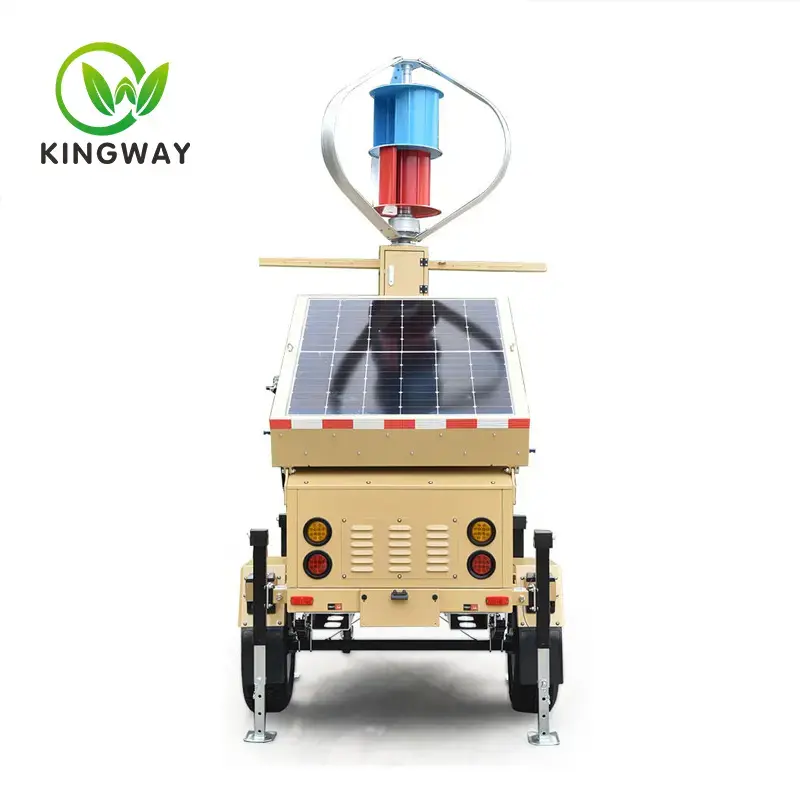
Advantages of using mobile lighting towers in the communications industry
Advantages of Mobile Lighting Towers in the Telecommunications Industry
Mobile Lighting Towers: A Core Support for Efficient Operations and Emergency Response in the Telecommunications Industry
In the development of the telecommunications industry, whether it's base station construction in remote areas, field line maintenance, or emergency communication repair after a disaster, sufficient and flexible lighting support has always been a crucial element. Mobile lighting towers, with their unique advantages, have gradually become indispensable equipment in various operational scenarios within the telecommunications industry, providing strong support for efficient progress and safe operations.
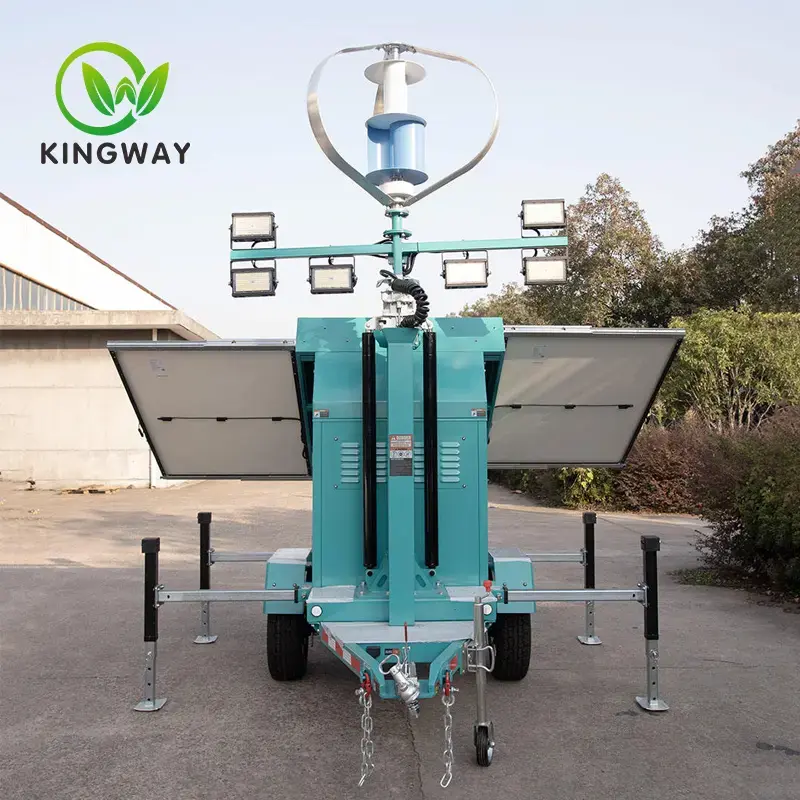
I. Superior Mobility, Adapting to Diverse Operational Needs
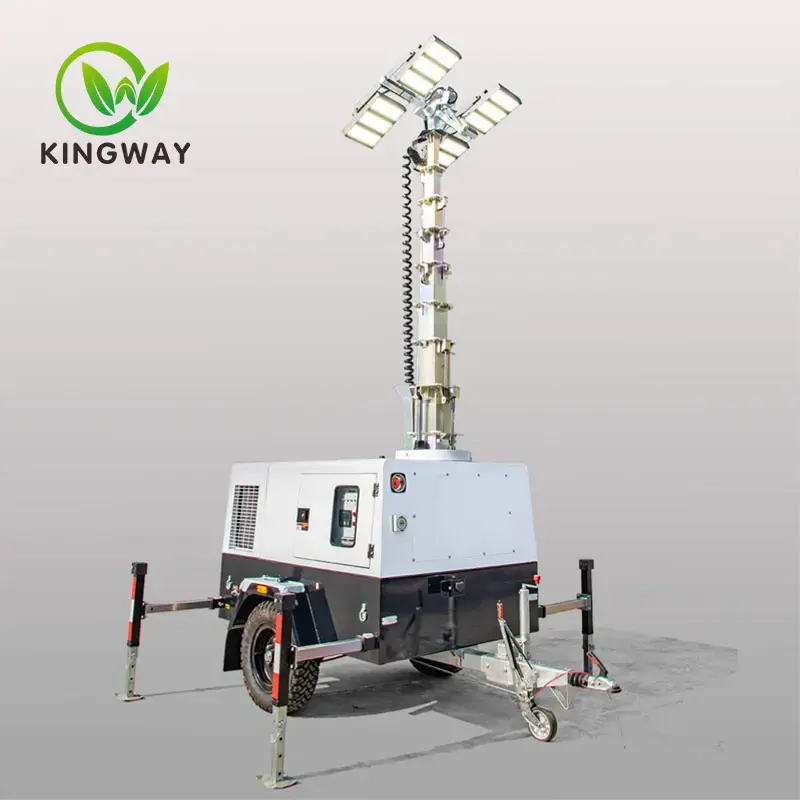
The telecommunications industry's operational scenarios are highly diverse, ranging from base station construction on the outskirts of cities to line laying and maintenance in remote areas such as deep mountains, deserts, and coastal regions. These scenarios often lack fixed lighting facilities and are geographically dispersed with complex transportation conditions. Mobile lighting towers, with their vehicle-mounted, towed, or portable designs, can easily follow work vehicles to any work location, without relying on fixed power supplies or complex installation procedures.
For field base station construction, the work area is usually far from towns, requiring continuous and stable lighting for nighttime construction. Mobile lighting towers can be directly docked around the work site, quickly deploying illumination to cover the entire work area, including base station setup and equipment installation. In cross-regional communication line maintenance, work points are often scattered along the lines; mobile lighting towers can flexibly switch work locations, providing maintenance personnel with "on-the-go" lighting support, significantly improving work efficiency. Furthermore, some portable mobile lighting towers are lightweight and compact, allowing them to be carried manually to steep mountainous areas or narrow alleys inaccessible by vehicles, meeting lighting needs in special scenarios.
II. Efficient Emergency Response, Ensuring Communication Continuity
The stability of communication networks is directly related to social operation and people's livelihood needs. When encountering natural disasters such as earthquakes, floods, and typhoons, or sudden line failures, rapid repair and restoration of communication are paramount. These emergency repair operations often need to be carried out at night or in low-light environments, with tight deadlines and heavy workloads, requiring extremely high response speed and stability of lighting.
Mobile lighting towers offer the advantage of rapid deployment. Most units support one-button start-up and can be deployed and provide high-intensity lighting within 5-10 minutes of arrival at the site, eliminating the need for complex setup procedures. Their battery life is equally impressive; mobile towers equipped with high-capacity batteries or Diesel Generators can provide 12-24 hours of continuous lighting, fully covering the operational cycle of a single emergency repair. At disaster sites, communication facilities may be severely damaged, and fixed lighting systems often cannot function properly. The independent power supply mode of mobile lighting towers avoids reliance on external power sources, ensuring that lighting is unaffected by the on-site environment, buying valuable repair time for personnel and facilitating the rapid restoration of communication networks.
III. High-Intensity Lighting Performance Enhances Operational Safety and Accuracy
Operations in the communications industry often involve precision equipment installation, wiring, signal debugging, and other delicate operations, requiring strict control over light intensity, uniformity, and stability. Mobile lighting towers utilize high-efficiency light sources such as LEDs and metal halide lamps, achieving light intensity exceeding 50,000 lumens. Some high-power units can cover an area of over 1000 square meters, providing uniform, glare-free light that clearly illuminates operational details.
During base station equipment installation, precise visual judgment is required for tasks such as interface connections and wiring. Sufficient lighting effectively reduces installation errors and lowers the risk of equipment failure. During communication line maintenance, lighting towers clearly illuminate critical components such as line joints and insulators, helping maintenance personnel quickly locate faults and improving maintenance accuracy. Simultaneously, uniform, high-intensity lighting eliminates blind spots in the work area, reducing safety hazards such as personnel collisions and equipment damage, creating a safe working environment for personnel. Furthermore, some high-end mobile lighting towers support adjustable beam angles and zoned lighting functions, allowing precise control of the lighting range according to operational needs, avoiding light waste and reducing light pollution to the surrounding environment.
IV. Energy Saving & Environmental Protection + Stable Durability, Reducing Long-Term Operating Costs
Field operations and emergency support in the communications industry often rely heavily on lighting equipment. The energy consumption and durability of this equipment directly impact operating costs. Modern mobile lighting towers generally use energy-saving light sources, with LED light sources consuming only 1/3 to 1/5 the energy of traditional light sources. Under the same lighting intensity, this significantly reduces fuel or electricity consumption, effectively reducing operating costs in the long run.
Furthermore, the core components of mobile lighting towers undergo rigorous environmental adaptability testing, possessing waterproof, dustproof, windproof, and shockproof characteristics. They can operate normally in extreme temperature environments ranging from -20℃ to 50℃, resisting the effects of heavy rain, sandstorms, and strong winds. For coastal environments with high humidity and heavy salt spray, some equipment also uses corrosion-resistant materials, extending its service life. This durability not only reduces the frequency of equipment repair and replacement, lowering maintenance costs, but also ensures stable operation in complex environments, preventing operational interruptions due to lighting equipment failure.
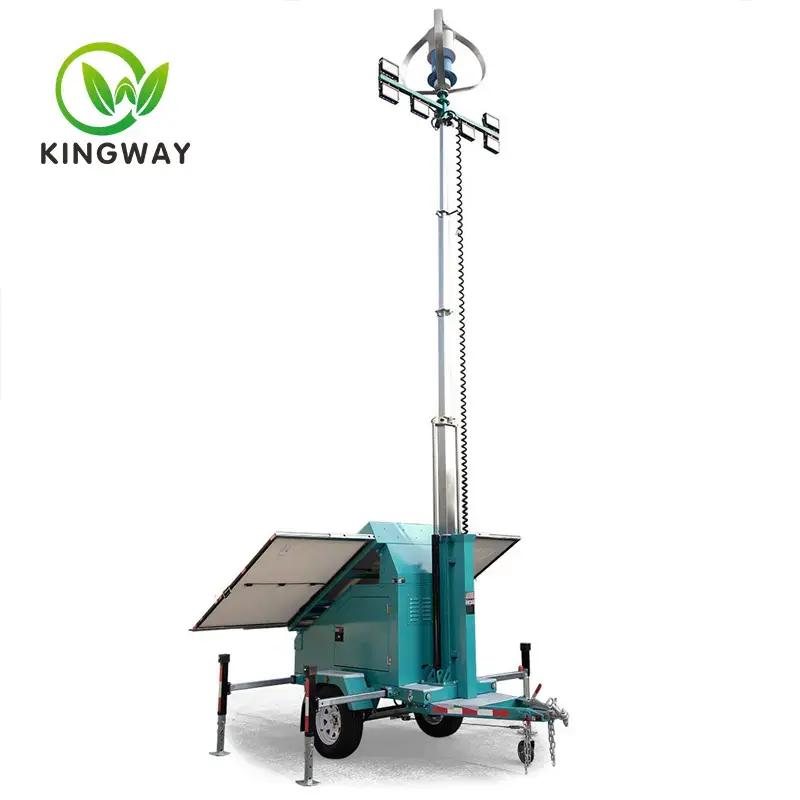
V. Flexible Adaptation to Communication Equipment, Facilitating Integrated Operations
The design of mobile lighting towers fully considers the operational characteristics of the communications industry, enabling efficient integration with various communication equipment. For example, some vehicle-mounted mobile lighting towers can be integrated with communication repair vehicles and emergency communication vehicles, achieving an integrated "lighting + operation" configuration. Once the work vehicle arrives on site, the lighting equipment is deployed simultaneously, requiring no additional resource allocation.
During base station signal debugging operations, mobile lighting towers can precisely illuminate the operation panels of signal receivers, transmitters, and other equipment, providing technicians with a clear view for debugging. During the laying of communication lines in the field, lighting towers can be continuously deployed along the line, forming a "lighting corridor," cooperating with engineering machinery for excavation, cable laying, and fixing operations, ensuring the orderly progress of each stage. Furthermore, some mobile lighting towers also support remote control and intelligent dimming functions, allowing technicians to adjust the light intensity, angle, and on/off status via mobile phone or control console, further enhancing operational convenience.
Mobile lighting towers, with their mobility, emergency response capabilities, high efficiency, and durability, perfectly meet the diverse and demanding operational needs of the communications industry. They not only provide a safe and comfortable lighting environment for workers but also help the industry improve operational efficiency, reduce operating costs, and strengthen emergency response capabilities. As communication technology extends to more remote and complex areas, mobile lighting towers will play an increasingly important role in areas such as 5G base station construction, cross-border communication line maintenance, and global emergency communication support, becoming a crucial support for the high-quality development of the communications industry.