
Mobile Lighting Trailer Supplier
A Detailed Explanation of the Anti-Corrosion Treatment Process for Solar Surveillance Trailer Lighting Frames
A Detailed Explanation of the Anti-Corrosion Treatment Process for Solar Surveillance Trailer Lighting Frames
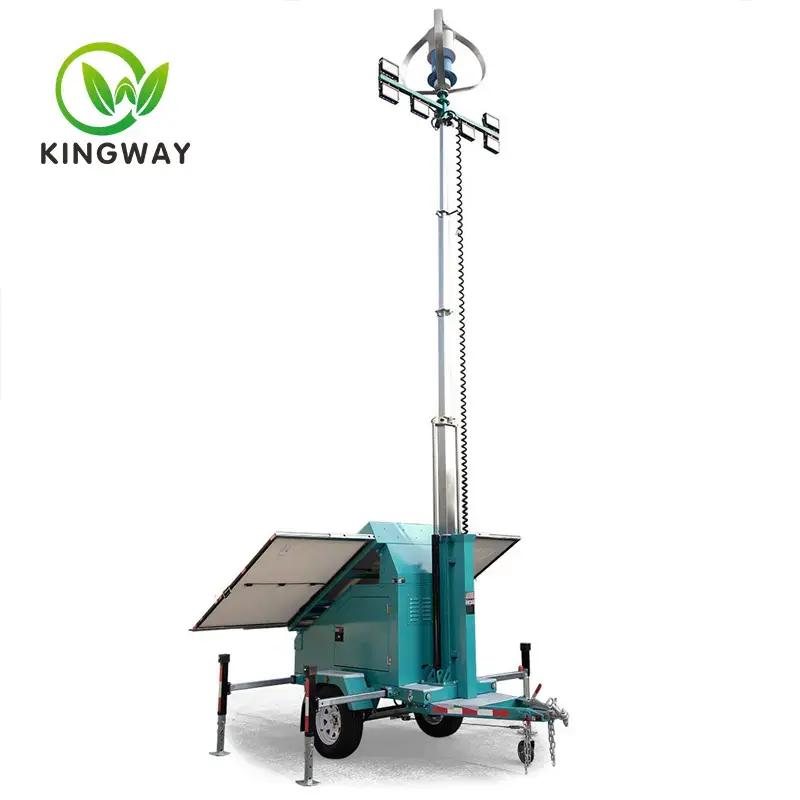
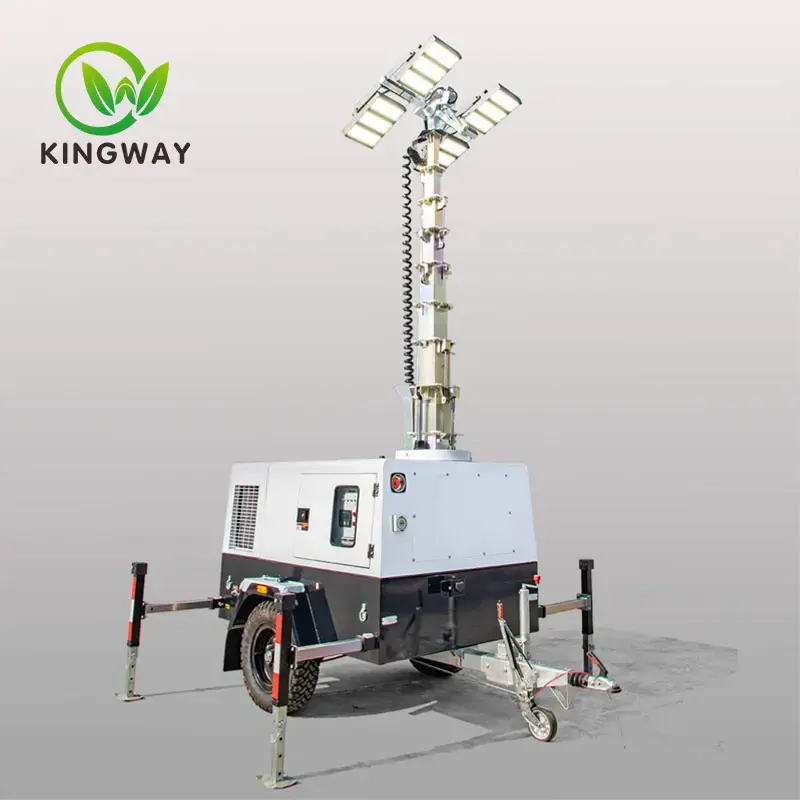
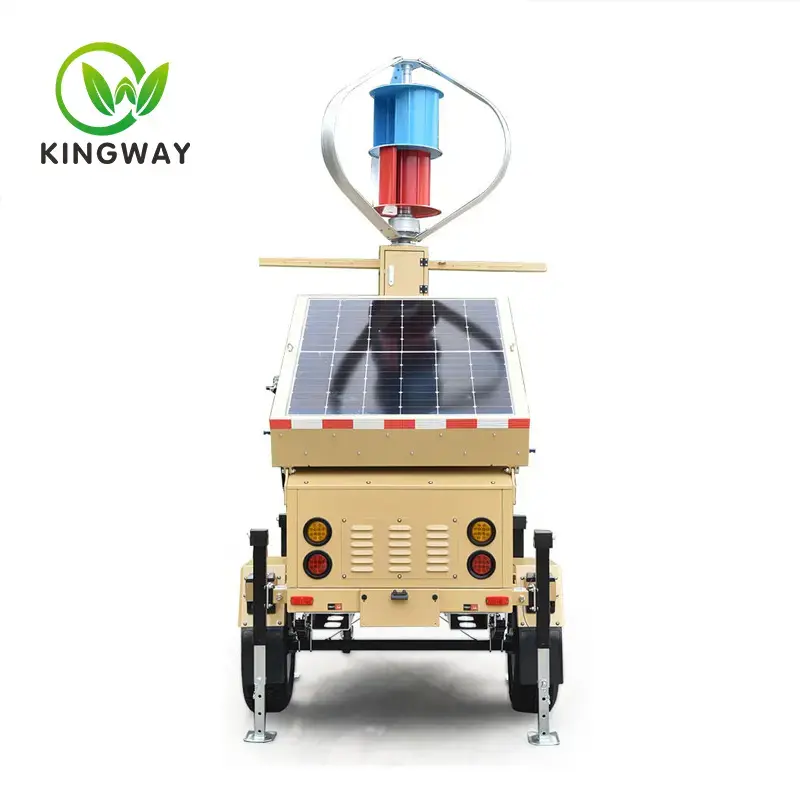
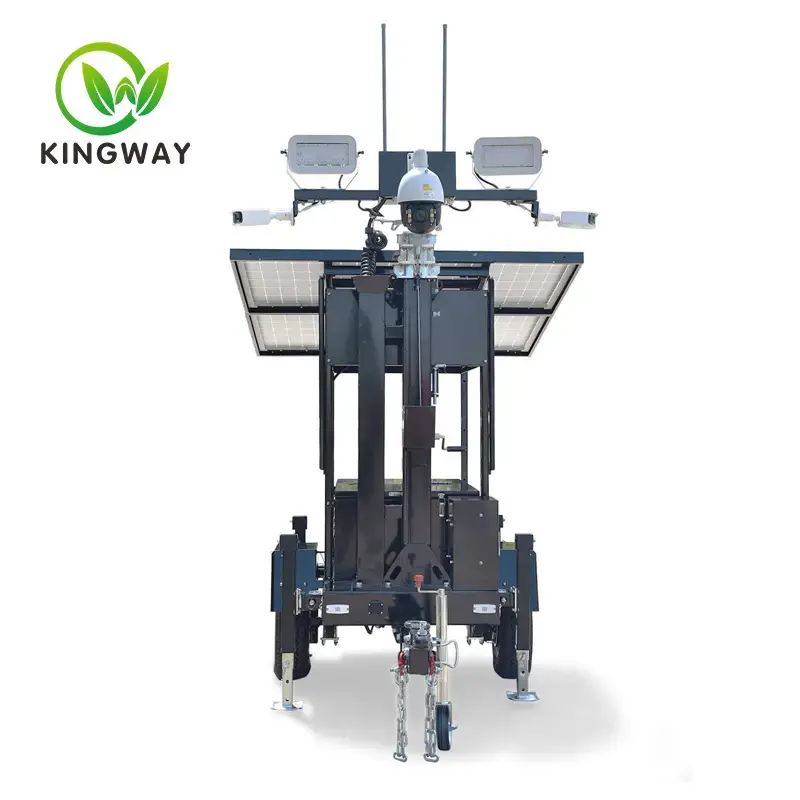
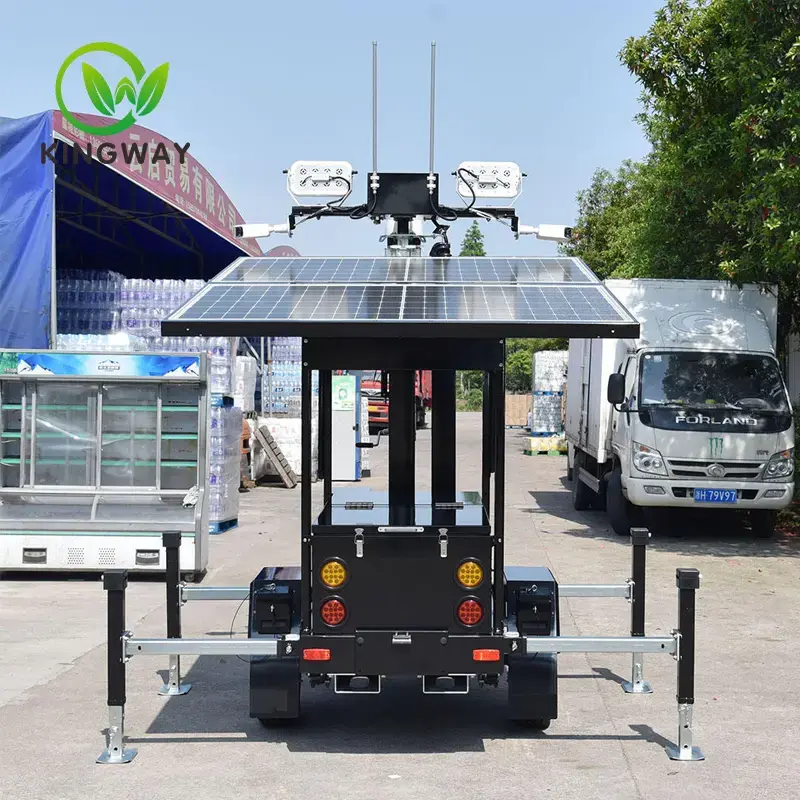
In the field of outdoor security and surveillance, solar surveillance trailers, with their core advantages of requiring no external power supply and flexible mobile deployment, have become essential equipment for remote areas, temporary construction sites, and emergency rescue operations. The light frame, a key load-bearing and functional component of solar surveillance trailers, not only secures surveillance cameras and lighting fixtures, but also bears some of the weight of the solar panels. Exposure to harsh environments like wind, sun, rain, snow, and alternating high and low temperatures, corrosion poses a significant threat to the equipment's lifespan and operational stability.
According to industry statistics, metal light frames that have not undergone professional anti-corrosion treatment will develop noticeable rust after an average of 1-2 years in outdoor environments. After 3-5 years, structural corrosion may lead to loose components and failure. This not only increases maintenance costs but also poses safety risks such as interruptions in surveillance and equipment falls. Therefore, a scientific and comprehensive anti-corrosion treatment process for the light frame is crucial for ensuring the durability and reliability of solar surveillance trailers. This article will comprehensively analyze the anti-corrosion treatment technology for solar-powered trailer light frames from four perspectives: corrosion mechanism, process selection, core procedures, and quality inspection, providing professional reference for industry practitioners and purchasers.
1. Understanding: Why Are Solar-Powered Trailer Light Frames Susceptible to Corrosion? Analysis of the Three Core Factors
Before developing an anti-corrosion process, it's necessary to first identify the source of the "corrosion threat" facing the light frame. Solar surveillance trailers are often used in open outdoor areas (such as grasslands, construction sites, mining areas, and borders). Lighthouse corrosion isn't caused by a single factor, but rather by a combination of environmental erosion, material properties, and stress:
1. Environmental Factors: "All-round Corrosion" in Outdoor Scenarios
Atmospheric Corrosion: Oxygen and moisture in the air react with the metal surface of the lighthouse, forming a base layer of rust. In coastal areas, high salt fog accelerates electrochemical corrosion, with the corrosion rate 3-5 times higher than in inland areas. Pollutants such as sulfur dioxide and nitrogen oxides in industrial areas combine with rainwater to form acidic precipitation, causing "chemical dissolution" corrosion on the metal surface.
Extreme Temperature and Humidity: High summer temperatures and intense sunlight can cause aging and cracking of the lighthouse's surface coating. Low winter temperatures and freezing temperatures can cause internal stress changes in the metal, and repeated thermal expansion and contraction can damage the integrity of the anti-corrosion coating. High humidity keeps the metal surface moist for extended periods, creating a constant "electrolyte environment" conducive to electrochemical corrosion, accelerating the corrosion process. 2. Material Factors: The Inherent Weaknesses of Commonly Used Metals for Lighting Brackets
Currently, solar-powered trailer light brackets are mostly made of low-carbon steel (low cost, high strength) or aluminum alloy (lightweight, good thermal conductivity). However, both are inherently susceptible to corrosion:
Low-carbon steel: Contains no rust-resistant alloying elements (such as chromium and nickel). Once exposed, it easily reacts with oxygen and moisture to form Fe₂O₃ (red rust). This rust layer is porous and unable to prevent further corrosion of the metal underneath, creating a vicious cycle of rust penetration.
Although an oxide film (Al₂O₃) naturally forms on the surface of aluminum alloy, this film is only 0.01-0.1μm thick and easily breaks under outdoor friction, collision, or acidic environments. Once damaged, the aluminum matrix within is exposed, causing pitting or intergranular corrosion, which reduces structural strength. 3. Stress Factors: Corrosion Accelerators Caused by Structural Design
As load-bearing components, the light fixture must bear the static weight of the monitoring equipment and solar panels. Furthermore, it is subject to dynamic stresses from vibration and wind during trailer movement. These stresses can cause:
Cracks in the anti-corrosion coating at stress-concentrated areas (such as welds and bolted connections), forming "corrosion channels";
Stress-induced stress within the metal can cause stress corrosion cracking (SCC). Even in mildly corrosive environments, the accumulation of stress can cause the light fixture to suddenly fracture. This form of corrosion is highly insidious and extremely harmful.
2. Choosing the Right Process: Comparison of Mainstream Anti-corrosion Solutions for Solar Monitoring Trailer Light Fixtures
To address the corrosion problem of light fixtures, the industry has developed a variety of proven anti-corrosion treatment processes. However, their applicable scenarios, costs, and anti-corrosion effectiveness vary significantly. Considering the core requirements of solar surveillance trailers for long-term outdoor use, lightweight design, and manageable costs, the following three processes have become mainstream options:
Anti-corrosion Process
Core Principle
Advantages
Disadvantages
Applicable Scenarios
Hot-Dip Galvanizing
The light fixture is immersed in molten zinc (approximately 450°C), forming a Zn-Fe alloy layer followed by a pure zinc layer on the metal surface, isolating it from oxygen and moisture.
1. The zinc layer is 80-120μm thick, providing a long corrosion life (up to 15-20 years for outdoor use).
2. The zinc layer is tightly bonded to the base metal, offering impact and abrasion resistance.
3. No subsequent painting is required, simplifying the process.
1. The zinc layer has a silver-gray surface and is generally unattractive.
2. Large light fixtures are prone to zinc nodules and plating defects during galvanizing.
3. High energy consumption and higher costs than conventional painting. 30%-50%
For applications requiring heavy corrosion protection (such as coastal areas, mining areas, and rainy regions), the lamp frame lifespan must exceed 10 years.
Powder Coating
Epoxy resin, polyester resin, or other powder coatings are electrostatically adsorbed onto the lamp frame surface and then cured at 180-220°C to form a uniform coating.
1. Customizable coating thickness (50-150μm) with a variety of colors (brand matching possible).
2. Solvent-free and environmentally friendly, the coating provides a smooth, scratch-resistant surface.
3. High coverage of complex structures (such as cutouts and grooves) with no sagging.
1. The coating's adhesion to the substrate is weaker than hot-dip galvanizing, making it susceptible to aging and peeling due to prolonged high-temperature exposure.
2. Outdoor corrosion lifespan is approximately 5-8 years, requiring regular maintenance.
3. Coatings are prone to brittle cracking in low-temperature environments.
High aesthetic requirements, mild operating environments (such as inland plains and urban suburbs), and a moderate cost budget.
Dacromet coating
Zinc powder, aluminum powder, and chromate are the main components. A Zn-Al composite coating is formed by dipping/spraying and then baking at low temperatures (200-300°C).
1. Thin coating (5-15μm) does not affect the dimensional accuracy of the lamp stand, offering significant lightweighting advantages.
2. Excellent salt spray resistance (neutral salt spray test up to 500-1000 hours), suitable for highly corrosive environments.
3. No risk of hydrogen embrittlement, suitable for fasteners such as high-strength bolts.
1. Single coating color (silver-gray), limited aesthetics.
2. Higher cost (20%-30% higher than powder coating).
3. Poor high-temperature resistance (over 300°C coating failure)
Lighting frame components with strong lightweighting requirements, high salt spray environments (such as coastal areas), or high dimensional accuracy requirements
Process Selection Recommendations:
If the project is located in a highly corrosive environment such as a coastal area or mining area, and the budget is sufficient, hot-dip galvanizing with sealer (a layer of clear sealer is applied over the zinc layer to achieve both corrosion protection and aesthetics) is preferred.
If the project requires custom color for the light frame and the operating environment is relatively mild, powder electrostatic spraying can be an option (weather-resistant polyester powder is recommended for improved outdoor aging resistance).
If the light frame includes precision connectors (such as adjustment bolts) or has strict weight control requirements, a combination of hot-dip galvanizing for the main body and Dacromet coating for the connectors can be used to achieve both overall corrosion protection and component accuracy.
3. Core Process: A Complete Set of Standardized Steps for Lighting Frame Anticorrosion Treatment
Regardless of the anticorrosion process chosen, quality control of the four major steps—pretreatment → anticorrosion coating application → curing/cooling → post-treatment—directly determines the final anticorrosion effect. The following is an example of the most widely used "hot-dip galvanizing + powder coating composite process" in the industry to explain the standardized processing process in detail: 1. Pretreatment: Remove surface impurities and "lay a solid foundation" for the anti-corrosion layer. Pretreatment is the "first line of defense" of the anti-corrosion process. If there is oil, rust, or oxide scale on the metal surface, the anti-corrosion layer will not be tightly bonded to the substrate, resulting in problems such as shedding and bubbling. The standard pretreatment process includes:
(1) Degreasing and oil removal Purpose: Remove the cutting oil, stamping oil, fingerprints and other oil stains left on the lamp holder during the processing process; Process: Use "alkaline degreasing agent (such as sodium hydroxide, sodium carbonate solution) + ultrasonic cleaning", control the temperature at 50-60℃, and the cleaning time is 10-15 minutes; Inspection standard: After cleaning, there is no oil film or water stain on the surface of the lamp holder, and the water drips into a film (that is, the water is evenly distributed on the surface without local accumulation of droplets).
(2) Pickling and Rust Removal Purpose: To remove the oxide scale and rust on the metal surface and expose the fresh metal base; Process: Mild steel lamp holders are pickled with 15%-20% hydrochloric acid solution at a temperature of 20-30°C for 15-20 minutes; aluminum alloy lamp holders are pickled with 5%-10% nitric acid solution for 5-8 minutes (to avoid excessive corrosion); Note: After pickling, the lamp holders must be immediately placed in a "neutralization tank" (5% sodium carbonate solution) to neutralize the residual acid to prevent further corrosion of the metal surface.
(3) Phosphating treatment
Purpose: To form a uniform phosphate film (zinc phosphate/manganese phosphate film) on the metal surface, improve the adhesion of the subsequent anti-corrosion layer, and enhance the corrosion resistance of the metal;
Process: Use room temperature zinc phosphating solution, immersion time 10-15 minutes, phosphate film thickness controlled at 5-8μm;
Quality requirements: The phosphate film surface is gray or light gray, no blue, no white spots, and the adhesion test (cross-cut method) reaches level 0 (i.e. no coating falls off after cross-cutting).
(4) Water washing and drying
Purpose: To remove residual chemicals during the pre-treatment process to avoid affecting the quality of the subsequent anti-corrosion layer;
Process: Use three-stage countercurrent water washing (i.e., pass through the clean water tank, pure water tank, deionized water tank in sequence), and finally enter the hot air drying furnace (temperature 80-100℃, time 20-30 minutes) to ensure that the lamp holder surface is completely dry (water content ≤0.1%). 2. Anti-corrosion layer construction: layered protection, building a "multi-barrier" The core logic of the "hot-dip galvanizing + powder coating" composite process is "the bottom zinc layer protects against electrochemical corrosion, and the surface powder coating protects against physical damage and environmental erosion". The specific construction steps are as follows: (1) Hot-dip galvanizing: creating a "metal anti-corrosion armor" Pretreatment: immerse the dried lamp frame in the "plating agent" (zinc chloride-ammonium chloride solution) at a temperature of 60-80℃ for 3-5 minutes to remove the residual oxide film on the metal surface and enhance the bonding strength between the zinc liquid and the substrate; Zinc dipping: slowly immerse the lamp frame in molten zinc liquid (purity ≥99.9%, temperature 440-460℃). The zinc dipping time is adjusted according to the thickness of the lamp frame (2-5 minutes) to ensure that the zinc liquid fully penetrates into hidden parts such as welding points and grooves; Cooling: After taking it out of the zinc liquid, immediately blow off the excess zinc liquid on the surface with compressed air, and then cool it to room temperature. Keep the temperature below 50°C to prevent cracks in the zinc layer due to rapid cooling.
Grinding: After cooling, use an angle grinder to remove any zinc bumps and burrs on the surface to ensure a smooth, even zinc layer with a uniform thickness (testing standard: zinc layer thickness ≥ 85μm, no peeling in adhesion testing). (2) Powder electrostatic spraying: improving the "dual performance of beauty and protection" Surface cleaning: use compressed air to blow away dust and zinc powder on the surface of the galvanized layer, and wipe it with alcohol if necessary to ensure that the surface is free of impurities; Electrostatic spraying: use an electrostatic spray gun (voltage 60-80kV, atomization pressure 0.3-0.5MPa) to evenly spray the weather-resistant polyester powder on the surface of the lamp frame, and control the spraying thickness to 60-80μm; Curing: send the sprayed lamp frame into the curing oven at a temperature of 180-200℃ for 20-25 minutes to ensure that the powder is completely melted and cured to form a dense coating; Cooling: after being taken out of the curing oven, cool it naturally to room temperature to avoid forced cooling that may cause cracking of the coating.
3. Post-treatment: Optimizing Details to Eliminate Potential Hazards
Post-treatment primarily targets weak points such as connections and holes on the light fixture to prevent overall corrosion caused by inadequate local treatment:
Threaded Hole Protection: After spraying, use a tap to clean any remaining powder from the bolt holes on the fixture to ensure smooth threads. Apply anti-rust grease (such as lithium-based grease) to the bolt surfaces during installation to enhance corrosion resistance at the threaded connections.
Welding Point Recoating: If welds are missing after hot-dip galvanizing or spraying, they should be recoated with a specialized repair paint (such as cold-spray zinc paint with a zinc content of ≥95%). The recoating thickness should be no less than that of the surrounding coating.
Appearance Inspection: Visually inspect the entire fixture to ensure the coating is free of defects such as sags, pinholes, bubbles, and color variations. If necessary, perform spot checks with a crosshatch or thickness gauge to ensure compliance with quality standards.
4. Quality Inspection: How can I determine if the anti-corrosion treatment on a fixture is "qualified"?
The quality of anti-corrosion treatments cannot be judged visually; professional testing is required to verify their performance. The following are the core test items and standards for anti-corrosion treatment of solar-powered surveillance trailer light frames, which purchasers should focus on during acceptance inspection:
1. Coating Thickness Test
Testing Tools: Magnetic Thickness Gauge (for steel substrates), Eddy Current Thickness Gauge (for aluminum alloy substrates);
Testing Method: Measure the coating thickness at 10 randomly selected test points on different locations of the light frame (front, sides, welds, and grooves);
Qualification Criteria: Hot-dip galvanized coating thickness ≥ 85μm, powder coating thickness ≥ 60μm, with a single-point thickness deviation of no more than ±10%. 2. Adhesion Test (Cross-cut Method)
Testing Tools: Cross-cut tool (blade spacing 1mm), adhesive tape (600 adhesive tape with a viscosity of ≥3M);
Testing Method: Use a cross-cut tool to create a 10×10mm grid on the coating surface (reaching the metal substrate). Place adhesive tape firmly against the grid surface and quickly remove the tape.
Acceptance Criteria: No coating peeling from the tape surface, no noticeable peeling at the grid edges, and adhesion grade 0 (GB/T 9286-1998 standard). 3. Salt Spray Resistance Test: A core indicator simulating a "highly corrosive environment"
Testing Standard: Neutral Salt Spray (NSS) testing is conducted in accordance with GB/T 10125-2021, "Corrosion Tests in Artificial Atmospheres - Salt Spray Tests";
Testing Conditions: 5% sodium chloride solution (pH 6.5-7.2), temperature 35°C, salt spray deposition rate 1-2 mL/h/80 cm²;
Qualification Criteria: Hot-dip galvanized coatings must pass a 1000-hour salt spray test with no red rust; powder coatings must pass a 500-hour salt spray test with no blistering, peeling, or rust (minor discoloration is permitted). 4. Aging Test: Verifies long-term outdoor use resistance
Test Method: A xenon lamp aging test chamber is used to simulate outdoor UV radiation, high and low temperature, and humidity fluctuations.
Test Conditions: Xenon lamp irradiance 0.71W/(m²・340nm), temperature 63±3°C, relative humidity
50±5%, 1000-hour cycle test;
Qualifying criteria: After testing, the coating shows no noticeable discoloration (color difference ΔE ≤ 3), no cracking, no peeling, and the adhesion grade remains at level 0.
5. Daily Maintenance: Practical Tips for Extending the Anti-corrosion Life of Light Stands
Even after professional anti-corrosion treatment, light stands still require regular maintenance during long-term outdoor use to maximize their service life. The following are routine maintenance recommendations for solar-powered surveillance trailer light gantry:
Regular Cleaning: Rinse the gantry surface with clean water every 3-6 months to remove dust and sand to prevent accumulation of contaminants that could degrade the coating. If the surface is greasy, wipe it with a neutral detergent (such as dish soap). Avoid using strong acids or alkalines.
Inspection and Repainting: Inspect the gantry coating every 6-12 months for cracks, scratches, and rust spots. If localized damage is found, repaint with a special repair paint (sandpaper the damaged area before repainting to remove rust).
Bolt Maintenance: Check the tightness of the gantry bolts every 12 months and reapply anti-rust grease to the bolts to prevent thread corrosion that could prevent removal.
Avoid External Damage: Avoid impacts and scratches on the gantry coating during trailer movement and equipment installation. If drilling or welding is required, immediately apply anti-corrosion treatment (such as cold-spray zinc paint) to the affected area.
Conclusion: Anti-corrosion technology is the core competitive advantage of the solar surveillance trailer's durability.
The value of a solar surveillance trailer lies in its long-term stable operation, and the anti-corrosion treatment of the light frame directly determines the equipment's service life and maintenance costs. A scientific anti-corrosion process not only protects against the harsh outdoor environment but also reduces ongoing maintenance costs, improving the equipment's cost-effectiveness.