2026 Top Outdoor Electric Generator Options for Your Needs?
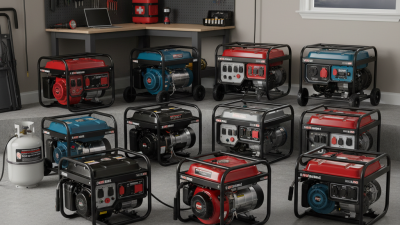
In search of reliable power solutions, many outdoor enthusiasts turn to the Outdoor Electric Generator. These generators provide essential energy for camping, tailgating, or emergency situations. As technologies advance, the market floods with options, making it challenging for consumers to choose the best fit.
The 2026 generation of outdoor electric generators offers a variety of features tailored to diverse needs. You might need lightweight models for portability or robust systems for heavy-duty tasks. Each option can significantly influence your outdoor experience. Additionally, some generators offer eco-friendly alternatives, reducing your carbon footprint while enjoying nature.
It's easy to feel overwhelmed by choices. However, understanding your specific power requirements can simplify the decision-making process. Focusing on efficiency, durability, and user reviews is crucial for finding a dependable generator. Rethinking your needs can lead to a more satisfactory purchase. In the end, the right outdoor electric generator can enhance your adventures and provide peace of mind.

Understanding Outdoor Electric Generators: Key Features to Consider
Choosing an outdoor electric generator involves understanding key features that will best meet your needs. Power output is a primary consideration. Generators are rated in watts. A model providing 3,000 to 5,000 watts suffices for most basic needs, like lights and small appliances. However, larger tools or multiple devices mean higher wattage is necessary. According to industry reports, the average household requires about 5,500 watts during outages.
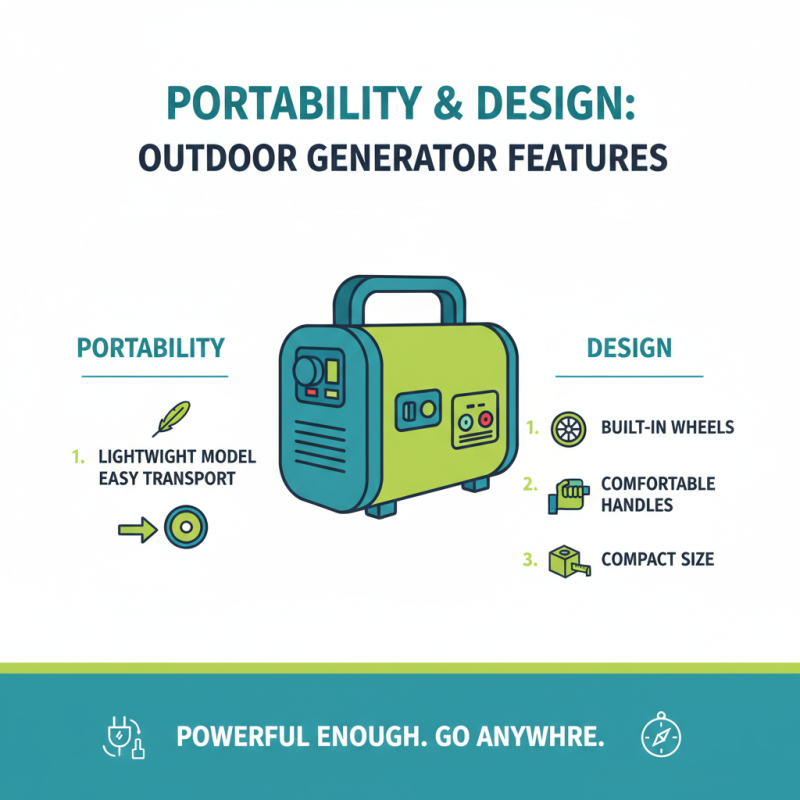
Fuel source is another crucial factor. Most generators run on gasoline, but options like propane or natural gas exist. Propane generators offer longer shelf life and cleaner emissions. A 2021 study indicated that propane-fueled models can operate up to 50% longer than gasoline models. Noise level is also important, particularly for residential areas. Look for models with a noise rating under 60 decibels for a quieter experience. Weigh the benefits of portability versus power requirements – larger generators provide more power but are less mobile.
Durability should not be overlooked. Outdoor conditions can be harsh. Investing in a generator with a weather-resistant design is essential. Read reviews to gauge reliability. A generator failing after frequent use reflects poor investment. Reflect on how often you'll need it. Is it for emergencies, or regular outdoor activities? Understanding these features ensures you select the best generator for your needs.
Top Brands in 2026: A Comparison of Outdoor Electric Generators
When selecting an outdoor electric generator in 2026, it’s crucial to compare the top brands that feature in the industry. Reports indicate that the demand for portable generators has surged by 30% over the past two years. This growth is driven by the need for reliable power during outdoor activities and emergencies. Therefore, understanding what different brands offer in terms of performance and durability can guide consumers toward better choices.
Several key features differentiate these generators. Noise levels, fuel efficiency, and ease of transport are critical factors that consumers look for. A recent analysis revealed that models with inverter technology are preferred for their quieter operation and cleaner power output, making them suitable for sensitive electronics. However, some users have expressed frustration with the limited run time of smaller generators, which can hinder extended outdoor use.
In 2026, the market is still evolving. While newer brands are entering the scene, established players maintain significant credibility. Consumers should pay attention to user reviews and expert ratings to gauge real-world performance. Misinformation about generator capacity and safety features can lead to poor purchasing decisions, so due diligence is essential.
Assessing Power Output: How to Choose the Right Wattage for Your Needs
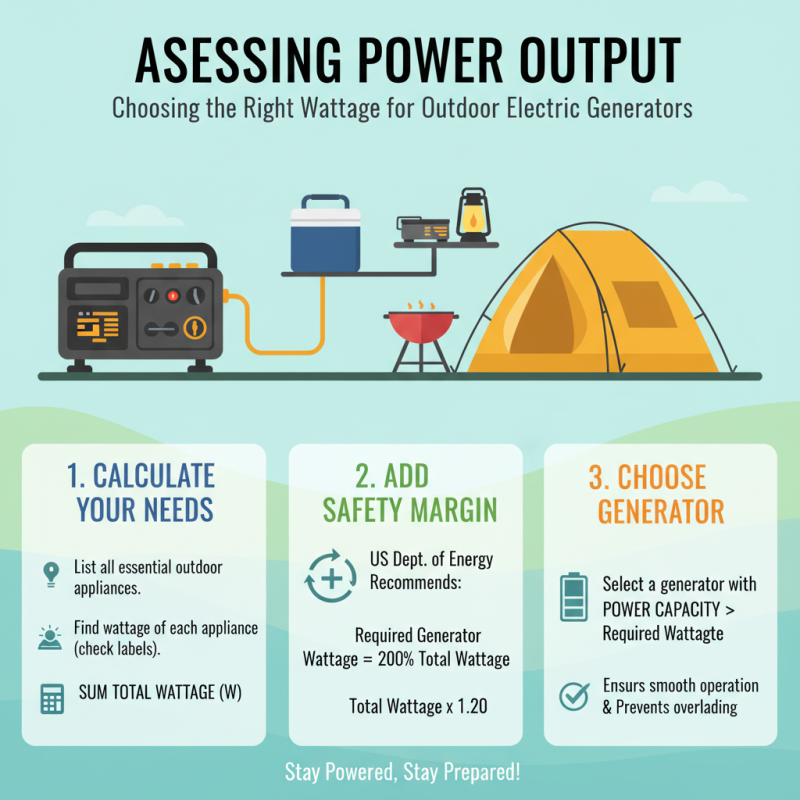
Choosing the right wattage for an outdoor electric generator is crucial. Power output can greatly impact your experience during outdoor activities. According to the U.S. Department of Energy, a generator should have a power capacity that exceeds your combined wattage needs by at least 20%. This will allow you to run your essential appliances smoothly without overloading the generator.
Consider your power requirements carefully. For example, a portable generator may need at least 2,000 watts to comfortably run small appliances like a refrigerator or a couple of lights. Larger setups, like RVs or construction sites, can require upward of 5,000 watts. Assessing your needs will prevent future frustrations. It’s vital to list each device you plan to use and its wattage.
Tip: Don’t forget to account for start-up watts. Appliances like refrigerators often have higher start-up wattage than running wattage. This can lead to unexpected challenges if you’re unprepared. Balancing your needs with the generator's output can make all the difference.
Tip: If unsure, consult with an expert or refer to credible industry reports. Industry experts suggest that user feedback can provide insights into real-world performance. This helps refine your choice. Make informed decisions for a reliable power source.
Safety Considerations: Best Practices for Using Electric Generators Outdoors
When using electric generators outdoors, safety should always be the top priority. Generators emit harmful carbon monoxide (CO). Always operate them in well-ventilated areas. A few feet away from windows or doors is often not enough. Consider using CO detectors nearby to monitor levels while the generator is in use.
Keep the generator dry to avoid electrical shock. Rain can easily create a dangerous situation. Using a generator in wet conditions is risky. Invest in waterproof covers or enclosures. Regularly check for leaks or frayed cords. Small issues can escalate quickly if not addressed.
Maintaining proper distances is also crucial. Place your generator at least 20 feet away from your home. This distance helps reduce the risk of CO poisoning. Avoid running generators near flammable materials. Fuel spills can quickly ignite. Lastly, always follow the manufacturer's instructions carefully. Not doing so can lead to accidents or injuries. Stay informed and practice due diligence.
2026 Top Outdoor Electric Generator Options for Your Needs
| Model |
Power Output (Watts) |
Fuel Type |
Run Time (Hours) |
Weight (lbs) |
Safety Features |
| Model A |
3500 |
Gasoline |
12 |
90 |
Low Oil Shutdown |
| Model B |
3000 |
Propane |
10 |
85 |
Safety Circuit Breaker |
| Model C |
4000 |
Gasoline |
8 |
95 |
CO Alert System |
| Model D |
2500 |
Diesel |
15 |
70 |
Overload Protection |