Quzhou Kingway Energy Technology Co., Ltd

Leave Your Message
Selecting a Mine Drilling Rig is not simply a search for the lowest purchase price. Global buyers must match equipment with rock hardness, hole diameter, drilling depth, altitude, and operating conditions. A rig working in Chilean copper mines may perform poorly in Canada’s frozen ground. Details matter.
Industry data supports this careful approach. Grand View Research estimates that the global mining equipment market reached about USD 135 billion in 2023. Its forecast also points to steady growth through 2030, supported by mine expansion and equipment modernization. The International Energy Agency’s Global Critical Minerals Outlook 2024 reports strong demand growth for lithium, nickel, cobalt, graphite, and rare earth elements. These minerals require reliable exploration and production drilling. The U.S. Geological Survey’s Mineral Commodity Summaries 2024 further shows how strategically important mineral supply has become.
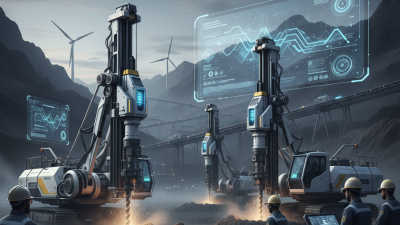
Helena Hedblom, President and CEO of Epiroc, has stated, “Automation and digitalization are key enablers for a safer and more productive mining industry.” Her view highlights a changing market. Buyers now compare autonomous functions, remote monitoring, emission performance, service networks, and spare-parts availability. A powerful rig is not always the best rig. Sometimes, a simpler machine delivers better results because local technicians understand it. That point is easy to overlook.
This guide examines leading Mine Drilling Rig manufacturers for global buyers. It considers product capability, field experience, safety systems, lifecycle costs, and regional support. Manufacturer rankings still require judgment. Public data can be incomplete. Real mine performance may differ from brochure claims. Therefore, buyers should verify specifications through site trials, customer references, and independent technical reviews.
Mine Drilling Rig Manufacturers for Global Buyers
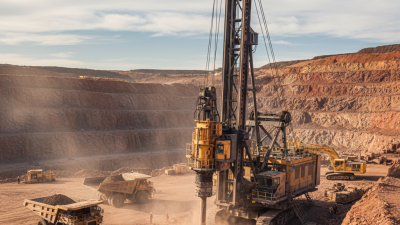
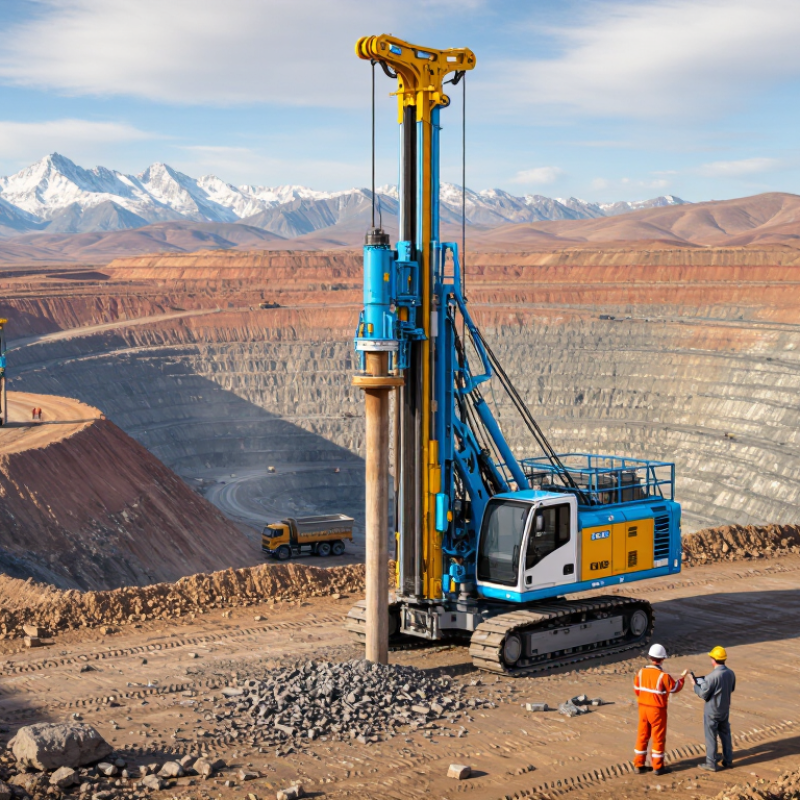
Mine drilling rigs differ by rock strength, hole diameter, depth, and working space. Rotary blast-hole rigs suit large open-pit mines. They use heavy downforce and rotating bits to create production holes for controlled blasting. Their wide frames need stable benches and sufficient room for movement.
Down-the-hole rigs place the hammer near the bit, improving energy transfer in hard, fractured rock. They are useful for deep blast holes and accurate drilling on uneven benches. Top-hammer rigs keep the hammer on the drill string. They work well for smaller holes, quarry faces, and underground development headings. A face drilling jumbo can carry several booms, allowing crews to drill parallel holes in tunnels. It saves time, but its setup may be difficult in narrow headings.
Core drilling rigs recover cylindrical rock samples for geological analysis. Exploration teams use them to examine mineral zones, fractures, and water conditions before mine planning. Reverse-circulation rigs collect rock chips quickly, making them practical for preliminary exploration over large areas. Raise-boring rigs create vertical or inclined openings between underground levels. They reduce worker exposure near unsupported ground, although site access and pilot-hole accuracy remain critical.
The choice is rarely perfect on the first pass. Dust, vibration, water, and operator skill can change field results. A rig that performs well in dry granite may struggle in wet, broken ground. Buyers should compare service access, spare-part availability, fuel use, and safety controls, not only drilling speed. Small details matter.
| Mine Drilling Rig Type | Typical Drilling Method | Common Hole Diameter | Typical Drilling Depth | Operating Environment | Primary Mining Applications | Main Advantages | Key Buyer Considerations |
|---|---|---|---|---|---|---|---|
| Surface Crawler DTH Rig | Down-the-hole hammer with compressed air | 90–305 mm | 30–150 m for common production and blasting work | Open-pit mines Quarries Hard rock | Blast-hole drilling, quarry production, bench drilling, and pre-split drilling | Good hole straightness, strong performance in hard formations, and efficient flushing of cuttings | Compressor capacity, dust control, rod-handling system, crawler stability, and ground clearance |
| Surface Top-Hammer Drill Rig | Hydraulic percussion hammer mounted on the drill feed | 32–127 mm | 10–40 m for most bench-blasting operations | Open-pit mines Road cuts Medium-hard rock | Short-hole blast patterns, contour drilling, secondary breaking, and construction-related mine development | High drilling speed at shallow depths, compact dimensions, and relatively low operating cost | Rock hardness, hole deviation, percussion energy, consumable availability, and noise or vibration limits |
| Rotary Blasthole Rig | Rotary cutting using tricone or rotary drag bits, sometimes assisted by air or mist flushing | 152–381 mm | 15–60 m for typical bench blast holes | Large open-pit mines Coal mines Overburden | High-volume production drilling in soft to medium formations and large-diameter blasting programs | High penetration in suitable formations, large hole capacity, and compatibility with automated drilling systems | Formation abrasiveness, bit life, mast height, dust suppression, fuel or electric power supply, and fleet standardization |
| Reverse Circulation (RC) Exploration Rig | Dual-wall rods with compressed-air return of cuttings through the inner tube | 89–140 mm | 100–800 m, depending on geology and equipment configuration | Mineral exploration Remote sites Dry to moderately wet ground | Rapid grade-control drilling, geochemical sampling, exploration drilling, and resource definition | Fast sample delivery, reduced sample contamination compared with conventional rotary methods, and efficient operation in many unconsolidated formations | Sample recovery, compressor size, water management, rod diameter, access logistics, and environmental controls |
| Diamond Core Drilling Rig | Rotary drilling with diamond-impregnated core bits and circulating drilling fluid | 27–150 mm core-hole diameter, depending on the core size | 100–2,000 m or more with specialized wireline systems | Surface exploration Underground mines Hard rock | Detailed geological logging, resource estimation, structural analysis, geotechnical investigation, and metallurgical sampling | Continuous rock core provides direct information about lithology, fractures, alteration, and mineralization | Core recovery, water availability, rod handling, borehole deviation, drilling-fluid management, and skilled operators |
| Underground Face Drill Jumbo | Hydraulic top-hammer drilling from one or more boom-mounted feeds | 35–64 mm | 3–8 m per round in common underground development headings | Tunnels Declines Drives | Heading development, tunneling, cut-hole drilling, perimeter drilling, and underground blasting rounds | Accurate drilling pattern control, multiple-boom productivity, and improved operator protection | Heading dimensions, boom reach, turning radius, automation functions, water-spray system, and underground service support |
| Underground Longhole Production Rig | Top-hammer or DTH drilling using long-hole rods or downhole tooling | 64–165 mm | 15–60 m for many longhole stoping layouts | Underground hard-rock mines Stopes Narrow or bulk mining | Longhole open stoping, slot raises, upholes, downholes, and production drilling | Supports remote or semi-remote production, reduces drilling positions, and enables efficient blast design in stopes | Drilling accuracy, hole deviation, machine envelope, boom coverage, cable or diesel power, and remote-control capability |
| Underground Ring-Drill Rig | Hydraulic top-hammer or DTH drilling on a boom with fan-pattern positioning | 51–115 mm | 15–45 m for typical ring-drilling patterns | Underground stopes Sublevel mining Hard rock | Fan drilling for sublevel stoping, upholes, downholes, and production rings around an underground drill bay | Flexible angular drilling, good coverage from a single setup, and suitability for narrow or irregular ore zones | Ring accuracy, boom articulation, machine width, drilling data recording, ventilation, and operator visibility |
| Raise-Boring Machine | Pilot-hole drilling followed by upward reaming with a large-diameter cutterhead | 1.0–6.0 m reamed diameter in common mining applications | 50–600 m, depending on rock conditions and machine capacity | Underground mines Competent rock Vertical or inclined raises | Ventilation raises, ore passes, manways, escapeways, and service raises | Produces accurate large-diameter openings with less exposure to unsupported ground than conventional raise excavation | Rock competency, pilot-hole accuracy, reamer diameter, thrust and torque, water inflow, and access for setup |
| Water-Well and Borehole Mining Rig | Rotary, DTH, or mud-rotary drilling with casing and circulation systems | 100–600 mm | 50–500 m for many mine-site water and dewatering wells | Mine infrastructure Alluvial ground Overburden | Mine-water supply, dewatering wells, monitoring wells, drainage boreholes, and groundwater exploration | Adaptable to different formations and capable of installing casing, screens, pumps, and monitoring equipment | Geology, casing program, borehole stability, mud treatment, pump requirements, water regulations, and site access |
Data shown are representative industry ranges rather than limits for every machine. Actual performance depends on rock strength, abrasiveness, groundwater, hole inclination, tooling, compressor or hydraulic capacity, operator skill, and local operating regulations.