How to Safely Charge and Maintain Lithium Ion Batteries?
Charging and maintaining Lithium Ion Batteries is crucial for safety and longevity. Dr. Emily Chang, a leading expert in battery technology, once stated, "Proper handling can significantly enhance battery life." This insight emphasizes the importance of understanding how to treat these batteries with care.
Lithium Ion Batteries power many devices we rely on daily. Improper charging practices can lead to overheating or damage. It's vital to use the right charger and avoid exposing the battery to extreme temperatures. Regularly inspecting batteries for signs of wear can prevent hazardous situations.
Additionally, while many people see Lithium Ion Batteries as low-maintenance, attention is needed. Not all users are aware that leaving a battery uncharged for too long can lead to degradation. Mistakes happen often, highlighting the need for better education on battery care. In a world increasingly dependent on these batteries, safety and maintenance cannot be overlooked.

Understanding Lithium Ion Batteries: Basics and Importance
Lithium-ion batteries power many devices we use daily. They are found in smartphones, laptops, and electric vehicles. Understanding these batteries is crucial, as they have unique characteristics. They charge quickly and provide high energy density. However, they also require careful handling.
Charging often requires attention. These batteries can overheat if charged improperly. Maintaining a stable temperature is vital. Extended exposure to heat can lead to reduced battery life. It’s easy to overlook, yet we must remember to unplug devices after charging. Leaving them plugged in all night is common, but it can harm the battery.
Proper maintenance is also key. Regularly checking battery health can prevent issues. Visual inspections for swelling or leaks are essential. Unlike other batteries, lithium-ion varieties can be unforgiving. A simple mistake can result in diminished performance. Taking shortcuts in care can lead to regrets later. We have more to learn about battery technology, but the basics are simple.
Safe Storage and Maintenance Tips for Longevity
When it comes to lithium-ion batteries, proper storage and maintenance are crucial for longevity.
These batteries prefer cool, dry places. High temperatures can cause them to degrade faster. Ideal storage temperature is between 20°C to 25°C.
Try to avoid leaving them in hot cars. It’s easy to forget them, but it can be damaging.
Here are some tips for safe storage:
- Always store batteries in a protective case. This prevents accidental short-circuits.
- Place them away from metal objects.
- Keep an eye on battery level. Aim to keep them around 50% charged for storage. A fully charged battery is more prone to wear down.
For maintenance, check battery health regularly. Look for any signs of
bulging or
leaks. These are warning signs that something is wrong.
Clean the terminals gently with a dry cloth. This ensures better connectivity.
Don’t rush through these checks; they are vital for safety.
Common Mistakes to Avoid When Charging Lithium Ion Batteries
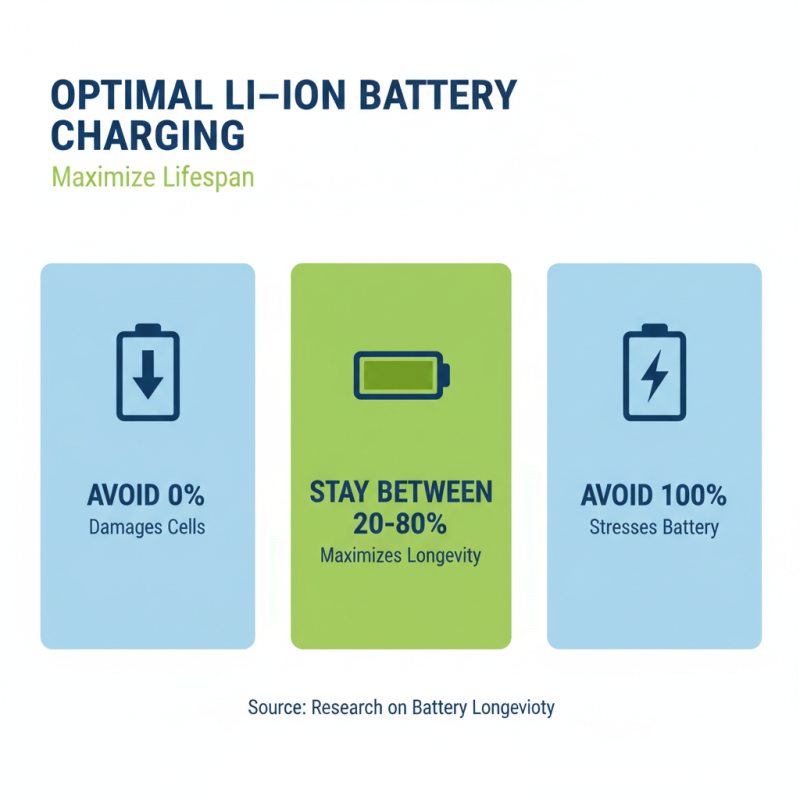
Charging lithium-ion batteries is common, but many make mistakes that can shorten battery life. One major error is letting the battery fully discharge. Research shows that consistently draining batteries below 20% can lead to damage. Ideally, keeping the battery between 20% and 80% prolongs its lifespan and efficiency.
Another frequent mistake involves using rapid charging options too often. A study by battery experts indicates that fast charging can generate excessive heat. Heat is a battery's enemy, leading to degradation over time. It’s better to charge at a slower rate whenever possible.
Overnight charging is also a concern. Many users leave their devices plugged in while they sleep. This habit can overcharge the battery, leading to reduced capacity. Consider using timers or smart plugs to avoid this pitfall. A slight reflection on these habits can help everyone better maintain battery health.
Emergency Procedures for Battery Damage or Overheating
When dealing with lithium-ion batteries, safety should always come first. If a battery shows signs of damage, immediate action is key. Look for swelling, cracks, or unusual sounds. If any of these are present, stop using the device right away. Unplug it and move it to a safe area away from flammable materials. Often, people underestimate the potential risk.
Overheating can also be a serious issue. If a battery becomes excessively hot to touch, it’s crucial to act quickly. Turn off the device and remove any connected chargers. Allow the battery to cool down in a well-ventilated area. Do not attempt to cool it down with water or ice, as this could worsen the situation. Remaining calm is essential during these events, as hasty actions might lead to more danger.
In emergency scenarios, always have a basic plan in place. A fire extinguisher suitable for electrical fires is a smart addition. Ensure it’s easily accessible. Educate yourself about proper disposal methods for damaged batteries. Most importantly, seek professional help if needed. Mistakes often happen in these situations, but learning from them is vital.
How to Safely Charge and Maintain Lithium Ion Batteries? - Emergency Procedures for Battery Damage or Overheating
| Procedure |
Description |
Recommended Actions |
Emergency Response |
| Charging |
Use appropriate charger for your battery. |
Charge in a well-ventilated area, avoid extreme temperatures. |
If overheating occurs, disconnect charger and move to a cool area. |
| Storage |
Store batteries at partial charge (40-60%). |
Keep in a dry, cool environment, away from metal objects. |
If swelling is detected, place in a fire-safe container. |
| Maintenance |
Regularly check for physical damage. |
Clean terminals with a soft cloth to prevent corrosion. |
If leakage is present, avoid contact and seek professional disposal. |
| Disposal |
Dispose of batteries according to local regulations. |
Do not throw in regular trash; use a recycling program. |
In case of fire, use a Class D fire extinguisher. |