How to Choose the Right Diesel Compressor for Your Needs?
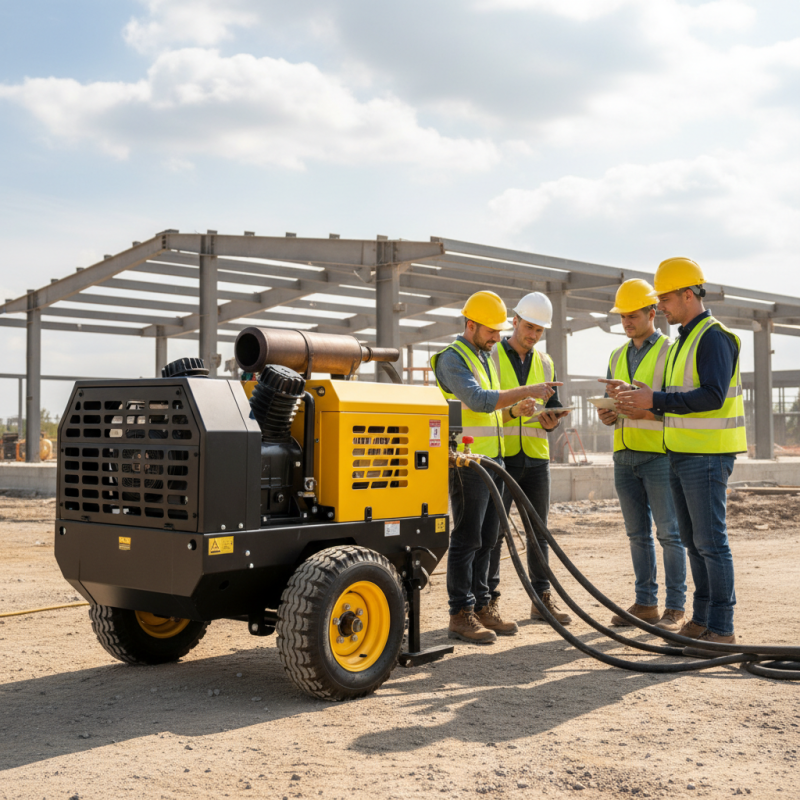
Choosing the right Diesel Compressor is essential for your projects. A Diesel Compressor is a powerful tool, providing reliable compressed air for various applications.
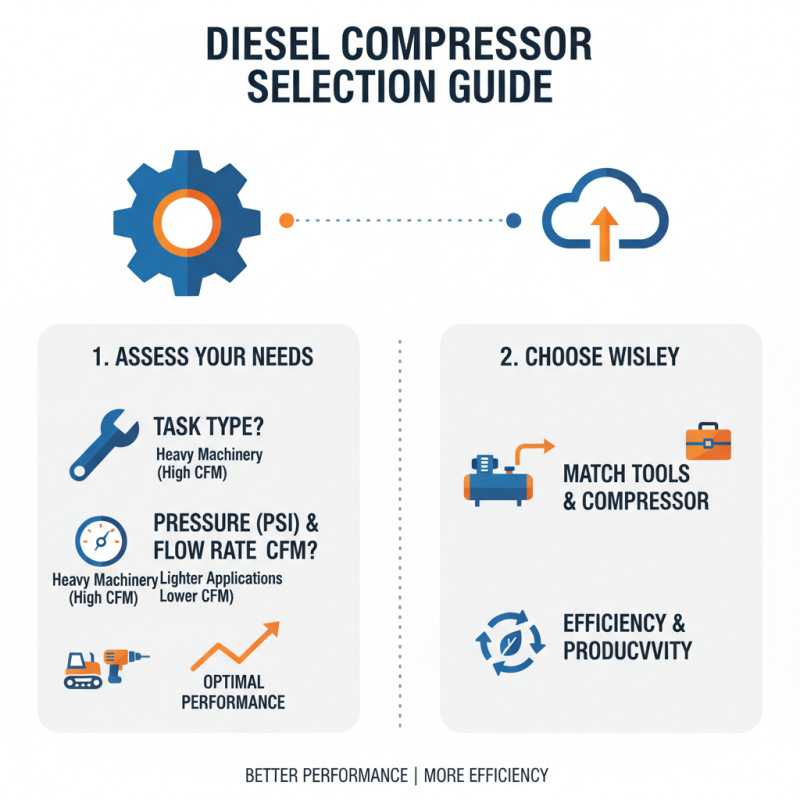
When selecting the right model, consider your specific needs. Think about the required pressure and flow rate. Size also matters; an appropriately sized compressor increases efficiency.
However, not all Diesel Compressors are created equal. Some models may fall short of expectations. This can lead to operational issues and unnecessary costs. Learn from others' experiences to avoid these pitfalls. Engaging with supplier expertise can make a difference.
Understanding the Basic Types of Diesel Compressors for Specific Applications
When choosing a diesel compressor, it’s crucial to understand the different types available.
Portable compressors are ideal for small jobs. They're lightweight and easy to transport. They usually power hand tools and operate in remote locations.
On the other hand, stationary compressors are more robust. They handle larger applications, like construction sites. These are not meant to move around.
Tips for selecting the right type: Assess your air demand. Calculate the required CFM and PSI for your tasks.
Also, consider the environment. Will you use it indoors or outdoors? This matters. Dust, moisture, and temperature can impact performance.
Another vital factor is tank size. A larger tank means longer operation times without interruptions.
However, bigger tanks result in heavier units. They can be harder to move. Reflect on your specific needs.
Do you need the flexibility of a portable unit? Or the power of a stationary one? Always weigh the pros and cons.
Each choice has its advantages and drawbacks. Consider how you plan to use the compressor before making a decision.
Evaluating Required Air Flow Rate and Pressure for Your Operations
When selecting a diesel compressor, understanding your operations' required air flow rate and pressure is crucial. Consider the tasks at hand. Do you need a high flow rate for heavy machinery? Or is a lower rate sufficient for lighter applications? Each task has unique requirements that shape your decision. The air flow rate is often measured in cubic feet per minute (CFM). Knowing the ideal CFM for your tools will lead to better performance and efficiency.
Next, think about pressure. Most tools operate at specific pressure levels, measured in pounds per square inch (PSI). Too low pressure can lead to inefficiencies. Conversely, too high can waste fuel and damage equipment. Finding a balance will ensure optimal performance. Don’t hesitate to reassess your needs. As projects evolve, so do air requirements. Reflect on previous tasks. Were there issues with air supply? Learning from past experiences is key to making better choices now. Each decision impacts productivity and cost, so careful evaluation is essential.
Assessing Fuel Efficiency and Operating Cost of Diesel Compressors
When choosing a diesel compressor, one key factor is fuel efficiency. High efficiency reduces fuel costs and minimizes environmental impact. Look for models that offer optimal fuel usage. This can vary based on engine type and compressor size. Some compressors may seem cheaper upfront but can lead to higher fuel expenses over time.
**Tips:**
Consider the daily workload of your compressor. A smaller workload might not justify a heavy-duty model. Misjudging this can lead to wasted fuel and overpaying.
Operating cost is another concern. Regular maintenance impacts long-term expenses. Neglect can lead to costly repairs. Maintenance frequency can vary widely based on the model and usage. Choose a compressor that balances performance and upkeep requirements.
**Tips:**
Calculate potential operating costs before purchase. Analyze fuel consumption rates and maintenance schedules. This helps avoid surprises later. Every detail counts. It may seem tedious, but understanding these factors leads to better choices. Balancing initial purchase prices with future expenses is crucial.
Fuel Efficiency and Operating Cost of Diesel Compressors
Analyzing the Essential Features and Specifications of Diesel Compressors
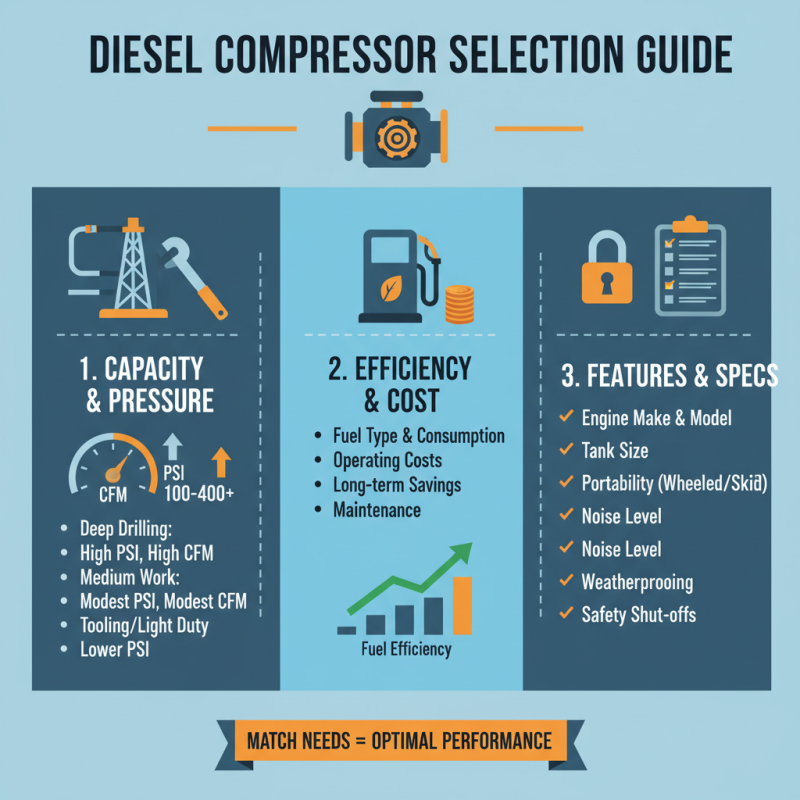
Choosing the right diesel compressor requires careful analysis of features and specifications. Diesel compressors vary widely in capacity, pressure settings, and efficiency. Understanding your specific needs is crucial. Do you require high pressure for deep drilling, or moderate pressure for less demanding tasks?
One essential feature to consider is airflow rate. This determines how quickly you can complete a job. A compressor with too low an airflow rate can slow down your projects. Likewise, noise levels are important. A loud compressor can disturb work environments.
Tip: Always check the fuel efficiency ratings. A model with better efficiency may have a higher initial cost but can save you money over time. Look also at mobility. If your work requires moving the compressor frequently, weight and wheel type are important. A cumbersome unit can become a hassle.
Remember to assess the maintenance needs of potential compressors. Some may need regular servicing while others are more robust. Choose one that fits your maintenance capabilities. Don't overlook warranty and service support, too. A good warranty adds peace of mind.
Comparing Brand Reliability and Service Support in the Diesel Compressor Market
When choosing a diesel compressor, reliability and service support are crucial factors. The market offers varied brands, each with its strengths and weaknesses. Some provide excellent customer service but may lack in product durability. Others may have impressive performance but poor support when issues arise. Evaluating both aspects can save you time and money.
Tips: Always read customer reviews. They offer insights into real experiences. A reliable brand often has a strong community around it. Check if there’s easy access to replacement parts and technical help.
It’s common to make decisions based solely on price. This approach might lead you to choose cheaper options that lack quality. Instead, assess the warranty and support services as well. A longer warranty may indicate better reliability. Look for brands with a history of dependable support. Without this, you may face difficulties in the long run.
How to Choose the Right Diesel Compressor for Your Needs?
| Feature |
Model A |
Model B |
Model C |
| Maximum Pressure (psi) |
100 |
120 |
150 |
| Flow Rate (CFM) |
30 |
25 |
35 |
| Weight (lbs) |
400 |
350 |
420 |
| Fuel Efficiency (GPH) |
2.5 |
3.0 |
2.0 |
| Noise Level (dBA) |
75 |
70 |
80 |
| Warranty Period (years) |
2 |
3 |
2 |