Top Tips for Choosing Diesel Generators for Your Needs?
Selecting the right diesel generators can be challenging. With a wide range of options available, it’s essential to consider various factors. This decision impacts performance, reliability, and overall cost. Diesel generators are commonly used in various settings, from construction sites to remote homes.
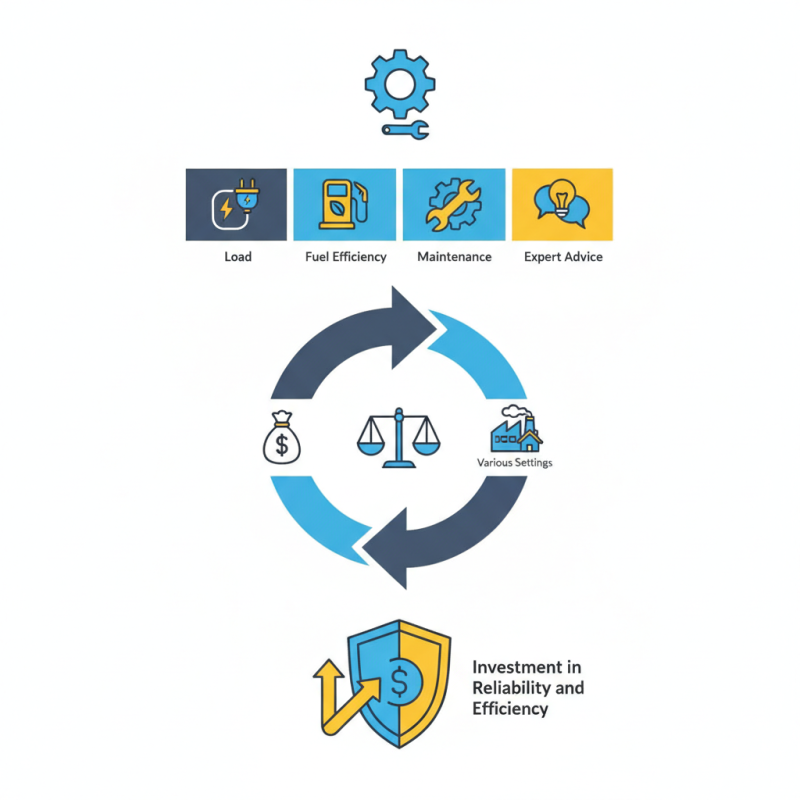
Understanding your specific needs is crucial before making a choice. Think about the load you intend to power. Also, consider the generator’s fuel efficiency and maintenance requirements. Many users overlook these details, leading to costly mistakes later.
It’s vital to seek advice and gather feedback from experienced users. Their insights can reveal potential pitfalls and advantages of specific models. Balancing power needs with budget constraints requires thoughtful consideration. The right diesel generator is not merely a purchase; it’s an investment in reliability and efficiency.
Understanding Your Power Requirements for Diesel Generators
Understanding your power requirements is crucial when selecting a diesel generator. Assess how much power you need based on your appliances and machinery. Reports indicate that over 30% of businesses underestimate their energy demands, leading to generator inefficiencies and potential operational failures. Start by calculating the wattage of each device. Consider both starting and running wattages for accurate planning.
It's essential to analyze peak loads, especially for equipment that requires more power at startup. For example, a motor may need three times its running wattage when starting. This variability highlights the need for a generator that can handle surges without overloading. Some experts recommend a generator that allows for at least 20% extra capacity beyond your calculated needs.
Think about the duration of use too. Will you need a continuous supply or just during outages? According to industry data, around 40% of users fail to account for runtime and fuel consumption adequately. This oversight can lead to more frequent refueling than expected. Runtime estimates should factor in the generator's efficiency and your specific power usage profile. Being thorough in your assessment can save money and ensure reliability.
Top Tips for Choosing Diesel Generators for Your Needs
| Requirement |
Details |
| Power Output |
Select based on total wattage needed by all connected devices. |
| Fuel Efficiency |
Look for generators with better fuel consumption rates for cost savings. |
| Portability |
Consider the weight and size if you need to move the generator frequently. |
| Noise Level |
Check the decibel rating to ensure it meets your noise tolerance. |
| Run Time |
Look for generators with extended run times to reduce refueling frequency. |
| Maintenance Needs |
Evaluate how easy it is to perform routine maintenance. |
| Warranty and Support |
Check the warranty length and the availability of customer support. |
Evaluating the Generator's Size and Capacity for Your Needs
Choosing the right diesel generator is crucial for efficient performance. Evaluating the generator's size and capacity should be a priority. A report by the Electrical Generating Systems Association (EGSA) indicates that oversizing a generator can lead to increased fuel consumption by up to 30%. It's essential to assess your power requirements accurately.
Consider your total load. Calculate the wattage of all equipment. This ensures that your generator meets your needs without excess capacity. Additionally, a study from the International Energy Agency (IEA) states that choosing a generator with a slightly higher capacity than your maximum load can provide a safety buffer. This prevents outages during peak usage times.
Understand that different applications have unique demands. Industrial settings might need generators with a continuous rating, while backup applications can work with standby ratings. Recognize that running a generator constantly at lower loads can lead to inefficient fuel usage and excess carbon buildup. It's important to balance size with actual usage. Regular assessments can help optimize performance and reduce costs over time.
Top Tips for Choosing Diesel Generators for Your Needs
Assessing Fuel Efficiency and Operating Costs of Diesel Generators
When considering diesel generators, fuel efficiency is a critical factor. The most efficient models can achieve up to 45% thermal efficiency, as detailed in recent industry reports. This metric indicates the amount of fuel converted into usable energy. Higher efficiency can lead to significant savings over time.
Operating costs also encompass maintenance and repairs. A study revealed that poorly maintained diesel generators can incur up to 30% higher costs. Routine checks are essential. Neglecting minor issues can escalate into major ones, causing unexpected downtime. It's advisable to factor in long-term operational expenses when making a choice.
Noise levels and emissions are additional considerations. Some generators produce noise above acceptable limits, reaching 75 dB or more. This can lead to compliance issues with local regulations. Choosing a generator that balances efficiency and environmental impact is necessary for sustainable operations. Evaluate these aspects carefully before finalizing your decision.
Considering Noise Levels and Environmental Impact
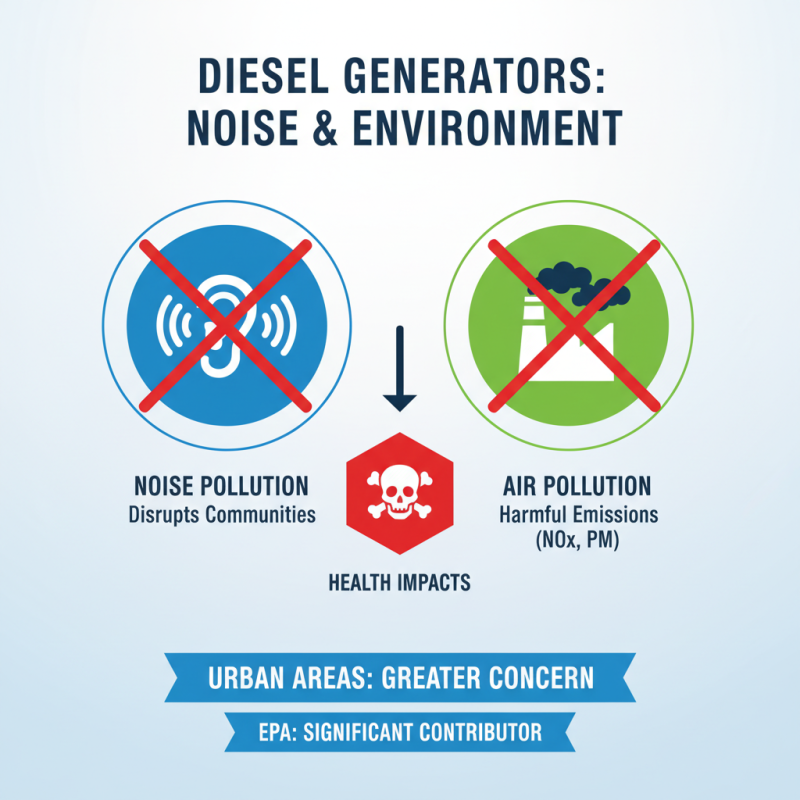
When selecting diesel generators, one must prioritize noise levels and environmental impact. According to the Environmental Protection Agency, diesel generators contribute significantly to air pollution. They can emit harmful nitrogen oxides and particulate matter. This pollution is more concerning in urban areas, where noise and emissions can affect local communities.
Tip: Look for generators with a noise reduction feature. Many models now have advanced technology that lowers noise levels to acceptable standards. The quieter the generator, the less disruption it creates. Typically, units operating below 70 dB are deemed acceptable for residential use.
Another consideration is the generator's efficiency. High efficiency means less fuel consumption and reduced emissions. The U.S. Department of Energy states that low-emission engines can lower overall environmental impact. Choosing a unit with high efficiency also saves fuel costs over time.
Tip: Always check the generator's emissions rating. Selecting a generator with lower emissions can significantly lessen its environmental footprint. Even small changes can lead to more sustainable energy use in your operations. Remember, every detail matters when choosing a generator for your specific needs.
Exploring Maintenance Needs and Warranty Options for Longevity
When selecting a diesel generator, maintenance considerations are crucial for long-term functionality. Regular upkeep ensures efficiency and reliability. Routine oil changes and filter replacements extend the life of the engine. Scheduling service [at specific intervals] can prevent costly repairs.
Be mindful of warranty options when purchasing a generator. A solid warranty provides peace of mind and protection against defects. Ensure you understand the terms. Some warranties might not cover certain damages. It’s vital to clarify what’s included.
Tip 1: Keep a maintenance log. Documenting service dates helps track upkeep. Tip 2: Invest in quality parts for repairs. Cheap replacements may lead to further issues. Balancing cost and quality is important. The generator's longevity relies on both routine maintenance and appropriate warranty choices.