2026 Top Silent Generator Buying Guide for Global Buyers
Choosing the right Silent Generator in 2026 requires more than comparing prices and advertised noise levels. Global buyers must examine performance, operating conditions, service support, and documented compliance. A generator that sounds quiet in a showroom may become noticeably louder beside a hotel, construction site, or residential building.
This guide focuses on practical buying decisions. It explains how to compare rated and standby power, fuel consumption, enclosure design, cooling systems, and automatic transfer switch compatibility. Noise figures should be checked at a stated distance, commonly seven metres, and under defined load conditions. A diesel model may perform reliably in demanding environments, but fuel quality, ambient temperature, altitude, and maintenance access can change its real-world results. Small details matter, such as hinged service doors, emergency stop access, exhaust direction, and space for routine oil changes.
Reliable purchasing also depends on evidence. Buyers should request factory test reports, warranty terms, technical drawings, emissions information, and spare-parts support before placing an order. Local electrical standards and import requirements can differ widely, so professional inspection remains valuable. Marketing claims are not always complete. Even this guide cannot replace a site assessment, especially where hospitals, data rooms, or continuous industrial loads are involved. A carefully selected Silent Generator should deliver stable power, controlled sound, reasonable fuel use, and support that remains available after installation. The cheapest offer may not be the lowest-cost choice.
What a Silent Generator Is and How It Works
2026 Top Silent Generator Buying Guide for Global Buyers
What a Silent Generator Is and How It Works
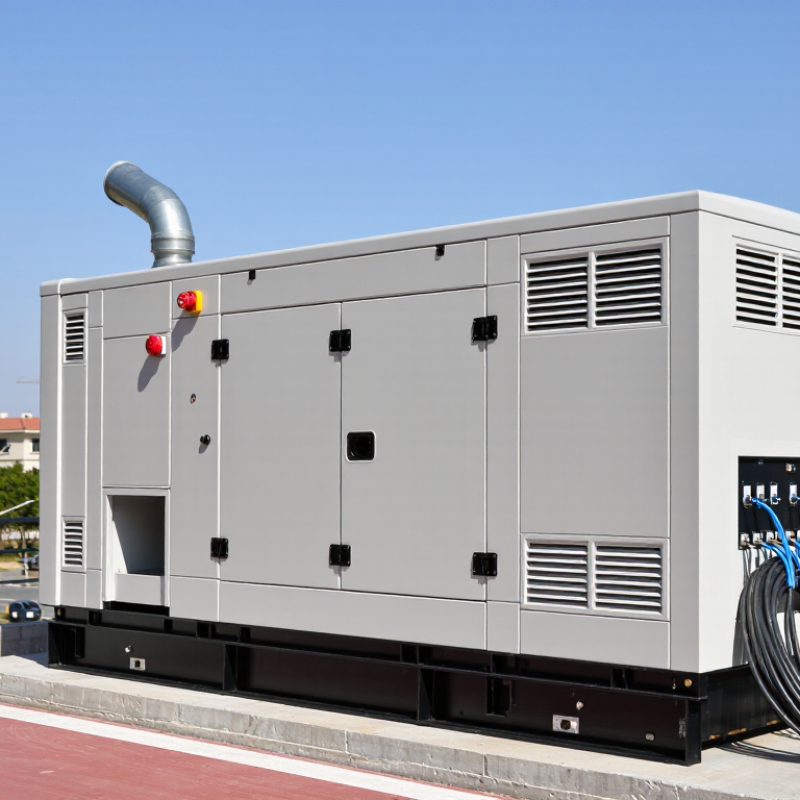
A silent generator is an engine-driven power system built to reduce operating noise. It is not completely silent. A steel or composite canopy surrounds the engine, alternator, fuel system, and control panel. Inside, acoustic foam absorbs harsh mechanical sounds. A muffler softens exhaust noise, while rubber mounts limit vibration through the floor.
The working process is straightforward. Diesel or gas combustion turns the engine crankshaft. The crankshaft drives an alternator, which produces electrical power. A controller regulates voltage and frequency for connected equipment. Cooling fans move hot air through ducted openings. These openings must remain clear. Otherwise, the enclosure can trap heat and reduce engine life.
In field checks, noise ratings should be read carefully. Measurements may change with distance, load, wind, and surrounding walls. A unit rated at 65 decibels may sound louder beside a concrete building. I have also seen buyers focus on canopy thickness while ignoring airflow design. That choice can create overheating problems. Check the rated noise level, fuel use, service access, and emergency shutdown features together. Installation matters too. A level base, flexible exhaust connection, and adequate ventilation improve real-world performance. Quiet operation helps, but maintenance still decides reliability.
2026 Top Silent Generator Buying Guide for Global Buyers
What a Silent Generator Is and How It Works
A silent generator is an engine-generator set fitted with an acoustic enclosure, vibration isolators, a residential-grade exhaust muffler, and controlled ventilation. These components reduce engine, exhaust, and cooling-fan noise while allowing the generator to operate safely.
The chart shows representative sound-pressure levels measured at approximately 7 meters under typical operating conditions. Actual results vary with generator size, enclosure design, installation surface, ambient noise, and measurement standards. Because decibels are logarithmic, a 10 dB reduction represents approximately one-tenth of the acoustic intensity.
How to Compare Power Output, Fuel Type, and Noise Levels
Choosing a silent generator starts with the load, not the advertised wattage. I used to compare only rated watts, and that was a costly mistake. Motors, pumps, and compressors often need extra starting power. List each appliance, record its running watts, then add the highest starting demand. Leave a practical reserve of 20% to 30%. High altitude and hot weather can reduce output, so local conditions matter.
Fuel type changes operating cost, storage, and maintenance. Diesel units usually suit long, heavy-duty operation, while gasoline models can be simpler for occasional use. Liquefied petroleum gas may burn cleaner, but fuel availability varies between countries. Dual-fuel equipment offers flexibility, though it can add adjustment points. Check fuel quality, tank size, runtime at 50% load, and local emissions requirements before purchase.
Noise ratings need careful reading. A figure measured at seven metres may sound impressive but feel different beside a home or worksite. Ask for the test standard, measurement distance, and load percentage. Enclosures reduce sound, but airflow fans and vibration still create low-frequency noise. Place the unit on a firm rubber base, away from walls. Small details matter. My own comparison would also include service access, because a quiet generator becomes frustrating when basic maintenance requires dismantling half the enclosure.
Which Safety Standards, Certifications, and Import Rules Apply
A silent generator is not automatically a compliant generator. Global buyers should check the destination country before placing an order. Requirements may cover emissions, electrical safety, noise, fuel storage, and workplace protection. The applicable rules depend on output, voltage, engine type, and intended use.
Ask the supplier for a complete technical file. It should include rated power, frequency, wiring diagrams, test reports, noise measurements, and engine emission documents. ISO 8528 standards can support generator-set performance evaluation, but they do not replace local approval. In the European market, buyers may need CE-related documentation, electromagnetic compatibility evidence, and engine-emission compliance. In the United States, environmental and state-level requirements can differ. A certificate alone is not enough.
Import paperwork deserves equal attention. Confirm the correct HS code, commercial invoice, packing list, country of origin, and transport classification. Batteries, fuel systems, and residual fuel can create additional shipping controls. Customs may request translated manuals, serial-number records, or conformity declarations. Check local language rules early. Small omissions cause delays.
Do not trust a copied test report. Verify its scope, date, model number, and issuing laboratory. A cheaper unit may fail local noise limits after installation. That risk is often underestimated. Local authorities, an accredited testing body, or an experienced customs broker should review the final documents before shipment. Rules change, and one checklist rarely fits every market.
How to Install, Operate, Maintain, and Evaluate Total Cost of Ownership
2026 Top Silent Generator Buying Guide for Global Buyers
Installation determines more than noise performance. Place the generator on a level, vibration-resistant foundation, with clear airflow around the enclosure. Keep exhaust outlets away from windows, air intakes, and occupied areas. A licensed local electrician should verify grounding, cable sizing, and automatic transfer-switch compatibility. NFPA 110 and ISO 8528-1 provide useful benchmarks, but local electrical and emissions rules still control the project.
Operate the set near its efficient load range, not permanently at light load. Record voltage, frequency, fuel use, coolant temperature, and transfer time during each test. The IEA Electricity 2024 report estimates data centers consumed about 460 TWh globally in 2022, with demand potentially exceeding 1,000 TWh by 2026. That pressure makes reliable standby power more important, but oversizing still wastes fuel and capital. Monthly visual checks should include batteries, belts, leaks, louvers, and acoustic panels. Schedule oil, filter, coolant, and load-bank servicing according to the manual and duty cycle. Do not trust a quiet enclosure blindly. Heat can accumulate inside.
Total cost of ownership includes purchase, transport, installation, fuel, maintenance, spare parts, testing, downtime risk, and eventual disposal. Compare five- to ten-year costs, not only the invoice. Use local fuel prices and realistic outage hours. One weakness remains: projected savings often assume perfect maintenance. Real sites rarely behave perfectly. That uncertainty deserves a contingency budget.
2026 Top Silent Generator Buying Guide for Global Buyers - How to Install, Operate, Maintain, and Evaluate Total Cost of Ownership
Indicative specifications for enclosed diesel generator classes commonly available in international markets
| Generator Class |
Typical Application |
Prime Power
kVA / kW |
Standby Power
kVA / kW |
Noise at 7 m
dB(A) |
Fuel Use at 75% Load
L/h |
Tank Capacity
L |
Approx. Runtime
at 75% Load |
Approx. Footprint
L × W × H |
Operating Weight |
Estimated Equipment Cost
USD |
Typical Installation Cost
USD |
Annual Maintenance Budget
USD |
Estimated 5-Year TCO
USD |
Installation, Operation, and Maintenance Priorities |
| Micro Silent Set |
Small homes, retail kiosks, security systems, light tools |
5 / 4 |
5.5 / 4.4 |
63–65 |
1.1 |
15 |
13–14 h |
1.55 × 0.75 × 1.15 m |
360 kg |
$3,500–$4,900 |
$700–$1,100 |
$120–$180 |
$8,875 |
Use a level, ventilated outdoor location; install an earth connection, weather protection, output breaker, and manual transfer switch. Check oil and coolant before each extended run. |
| Light Commercial Silent Set |
Small offices, shops, farms, telecom backup, residential backup |
10 / 8 |
11 / 8.8 |
64–66 |
1.9 |
28 |
14–15 h |
1.85 × 0.85 × 1.25 m |
560 kg |
$5,800–$7,800 |
$900–$1,500 |
$180–$260 |
$14,275 |
Provide clearance for radiator airflow and service access. Test the automatic transfer switch monthly; change oil and filters according to engine hours or at least annually. |
| Medium Commercial Silent Set |
Restaurants, workshops, clinics, construction equipment, medium offices |
20 / 16 |
22 / 17.6 |
65–67 |
3.5 |
50 |
14–15 h |
2.30 × 1.00 × 1.40 m |
920 kg |
$8,400–$11,200 |
$1,400–$2,200 |
$260–$380 |
$22,725 |
Use a reinforced base, correctly sized cables, exhaust routing, fuel-spill protection, and a lockable enclosure. Avoid prolonged low-load operation; run periodically at a suitable load to reduce wet stacking. |
| Large Commercial Silent Set |
Hotels, warehouses, small data rooms, agricultural and industrial facilities |
30 / 24 |
33 / 26.4 |
66–68 |
5.1 |
75 |
14–15 h |
2.75 × 1.10 × 1.55 m |
1,280 kg |
$11,500–$15,000 |
$1,900–$2,900 |
$350–$500 |
$31,575 |
Obtain local electrical and emissions approvals before installation. Include an automatic transfer system, emergency stop, battery charger, proper ventilation, and scheduled load-bank testing. |
| Industrial Silent Set |
Factories, hospitals, large facilities, critical infrastructure, prime-power use |
50 / 40 |
55 / 44 |
67–69 |
8.2 |
120 |
14–15 h |
3.40 × 1.25 × 1.80 m |
2,250 kg |
$18,000–$24,000 |
$2,800–$4,200 |
$500–$750 |
$49,250 |
Use professional design for foundations, fuel storage, exhaust, acoustic control, protection coordination, and earthing. Maintain critical spares and perform quarterly inspections plus annual load-bank testing. |
Sizing and Selection Rule
Select prime power based on the continuous load, then allow approximately 20–25% spare capacity for starting current, future expansion, and transient loads. Confirm motor-starting requirements separately.
Total Cost of Ownership Assumption
Five-year estimates assume 500 operating hours per year, diesel at $1.10 per litre, routine maintenance, and typical installation. Taxes, shipping, financing, major repairs, and local permits are excluded.
Noise and Fuel Disclaimer
Noise is an indicative sound-pressure range measured at approximately 7 metres under normal load. Fuel consumption, runtime, dimensions, and weight vary with frequency, altitude, ambient temperature, load factor, and enclosure design.
Global Buyer Checklist
Verify voltage, frequency, phase, emissions rules, certification, spare-parts availability, service capability, warranty terms, fuel quality requirements, and compatibility with the local electrical code before purchase.
All figures are planning estimates for comparison purposes and should be confirmed against the final generator datasheet, site conditions, applicable regulations, and a qualified electrical installation design.